Refurbished Iphone 5 Verizon Wireless
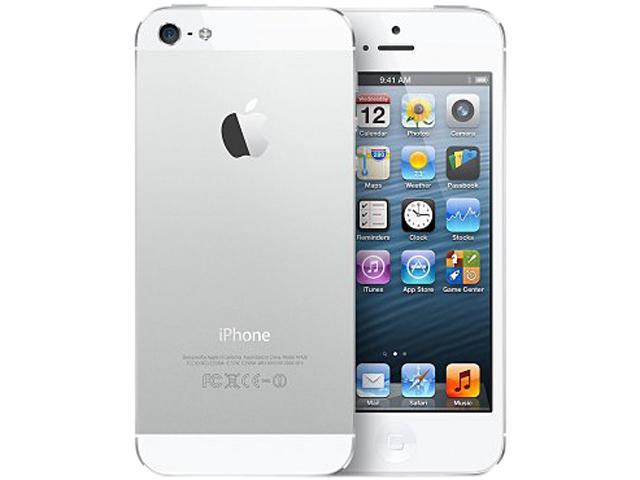
In the grand, glittering boneyard of consumer technology, few artifacts hold the cultural weight of the iPhone 5. Cast in aluminum and glass, it was the device that stretched our thumbs to the then-radical 4-inch screen and introduced the world to the Lightning cable—a connector that simultaneously solved a design problem and created a drawer full of obsolete white cords. Today, in an era of titanium-framed behemoths and AI-saturated software, the notion of buying a refurbished iPhone 5 for Verizon Wireless feels almost like an archaeological dig into the recent past. Yet, this black-slab time capsule is experiencing a quiet renaissance, not among hipsters seeking irony, but among pragmatists, minimalists, and those who simply crave a phone that doesn’t scream for attention every five minutes with a notification.
Why Verizon, specifically? Because the iPhone 5’s CDMA/LTE architecture was a watershed moment for the carrier. It was the first iPhone to fully embrace Verizon’s 4G LTE network, marking the end of the dark ages where AT&T had a monopoly on speed. Buying a refurbished unit today isn’t about getting the best camera or the fastest processor; it’s about accessing a slice of hardware history that still performs a specific, almost monastic function. It is a device that forces you to be present, to type deliberately, and to remember a time when a smartphone was a tool for communication, not a portal to an endless feed. This is a love letter to a machine that refuses to die, and a practical guide to resurrecting it on the largest carrier in the United States.
The Cult of the A6: Why This Old Chip Still Matters
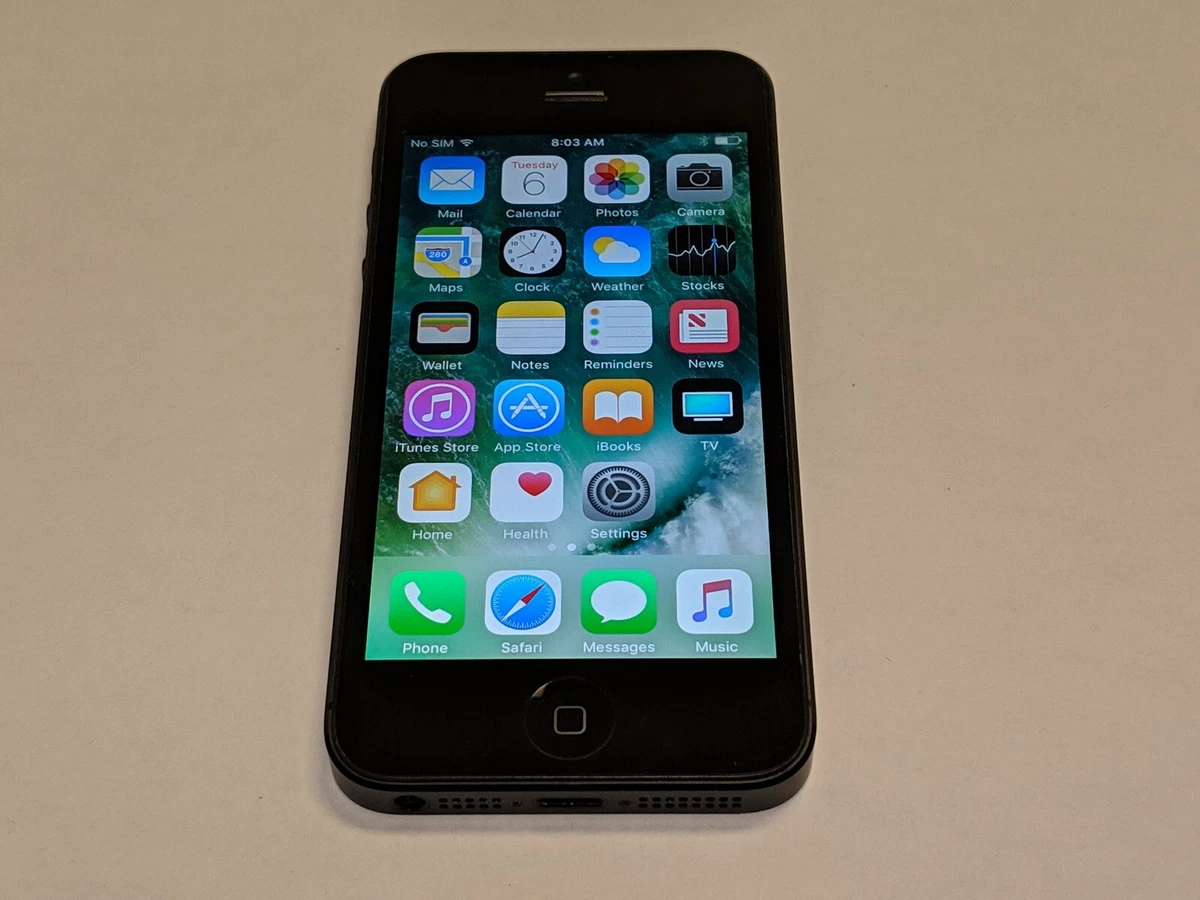
Beneath the polished chamfered edges lies the Apple A6 chip, a 32-bit processor that is now officially a dinosaur in the evolutionary chart of silicon. But here’s the dark and deliciously fun fact: the A6 was the first Apple-designed CPU to use a custom ARMv7-based core, codenamed “Swift.” It wasn’t just fast; it was a declaration of independence from Samsung’s off-the-shelf designs. However, the psychological hook is deeper. Using a refurbished iPhone 5 is a form of digital asceticism. It runs iOS 10, an operating system that feels like a breath of stale, yet clean, mountain air compared to the cluttered, feature-bloated iOS 17 or 18. There is a strange cognitive relief in a UI that has no Dynamic Island, no StandBy mode, and no App Library. You simply have icons on a grid. It’s the digital equivalent of a tiny, uncluttered studio apartment in a city full of McMansions.
Must Read
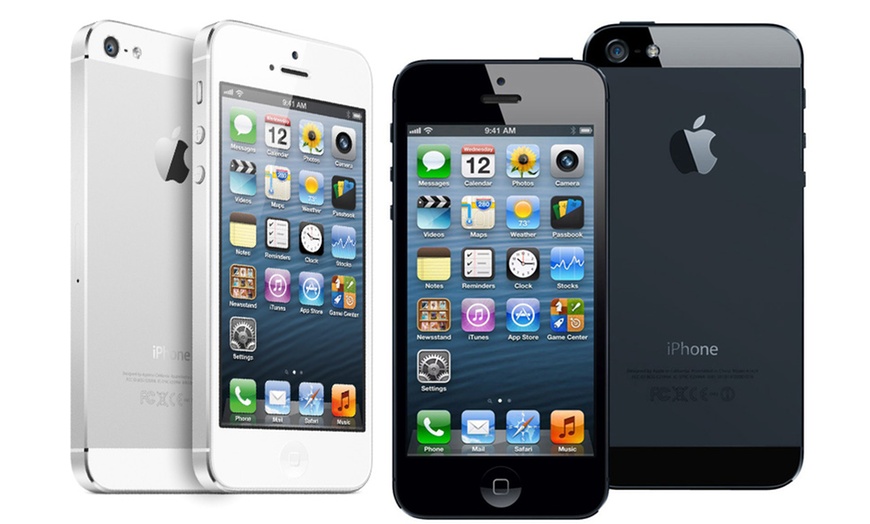
From a cultural standpoint, the iPhone 5 on Verizon is a Rosetta Stone for understanding the shift towards global network compatibility. Before this device, a Verizon iPhone was a walled garden, useless on international GSM networks. The iPhone 5 changed that with a single, elegant model that supported both CDMA and GSM, a feature that we now take for granted. Owning a refurbished one is like holding a passport from a bygone era. Yet, there’s an inherent fragility to this nostalgia. The anodized aluminum back is notorious for scuffs—the "slate" color scratches if you look at it wrong. This isn't a bug; it’s a patina. A battered iPhone 5 tells a story of drops, pockets, and hurried thumbs. It’s a physical manifestation of your own history, far more honest than the sterile, glass-sandwich slabs of today.
Moreover, the psychological aspect of downgrading is profound. Neuroscientists have discussed "digital fatigue" at length, but the iPhone 5 offers a tactile antidote. The 4-inch Retina display at 326 ppi is still, objectively, sharp. But the lack of True Tone and wide color gamut means your eyes adjust to a cooler, more artificial light. This hardware limitation becomes a feature: the screen is so "blue" that it tricks your brain into thinking it's daylight, which paradoxically keeps you more alert when scrolling at night, but also makes you less likely to do so for hours on end. It’s a natural, analog limiter. You can’t watch a 4K HDR movie on this thing; the screen and speakers simply can't do it justice, so you don't. You read an article, you send a text, you take a mediocre photo. And somehow, you feel lighter.
Navigating the Used Market: The Verizon Specifics and Pitfalls
Let’s get practical, because buying a refurbished iPhone 5 on Verizon is not as simple as ordering a new one. First, the IMEI nightmare. Verizon has slowly been decommissioning 3G CDMA towers, but the iPhone 5’s LTE band 13 and 4 are still active, which means voice calls now fall back to VoLTE—and here is the kicker: the iPhone 5 does not support Voice over LTE (VoLTE). This is the single most critical fact you must know. As of 2024 and beyond, Verizon is aggressively shutting down their 2G and 3G CDMA networks. An iPhone 5 that hasn’t been updated to iOS 10.3.4 (which enables a token, temporary LTE data connection) will be a brick. But even with the patch, there is a high probability that a refurbished unit will not pass Verizon’s IMEI checker for activation on the current network, because the phone lacks the hardware to send voice over LTE. You will get data, but calls will fail.
However, there is a loophole—a dark, beautiful hack. Many users buy the iPhone 5 specifically as a "SMS-only" or "WiFi-only" device. You purchase an unlocked or Verizon-locked refurbished unit, put it in Airplane mode, and turn Wi-Fi back on. It becomes an ultra-secure, distraction-free messaging device using iMessage, WhatsApp, and Signal over your home internet. It is a brilliant case study in repurposing obsolete hardware. Alternatively, if you are dead set on carrier service, you must use a third-party MVNO (like US Mobile) that still has legacy CDMA fallback or allows you to provision the device solely for data. Most Verizon corporate stores will look at you with a mixture of pity and confusion, as their systems will refuse to activate the SIM card.
When shopping, look for a grade A or B refurbishment that explicitly states the battery health is above 90%. The iPhone 5 battery is soldered in? No, it’s not—it’s glued in, but it’s user-replaceable with a bit of heat and patience. This is a double-edged sword: a poor DIY replacement job by a previous owner might mean a swollen battery bulging against the screen, a common "fun" surprise in old iPhones. Check the Lightning port for whitish corrosion—a sign of water damage, which is death for the logic board. Pay particular attention to the power button; on the iPhone 5, this button’s ribbon cable is notoriously flimsy and prone to snapping, leading to the dreaded “sudden death” scenario where the phone won’t wake up. A refurbisher worth their salt will have replaced the flex cable, but many don’t.
Finally, consider the cost versus the utility. You can buy a refurbished iPhone 5 for around $40 to $80 on eBay or dedicated refurb sites. That price is less than a month of a streaming service. But what are you actually buying? You are buying a dedicated music player with a 3.5mm headphone jack—a rarity that commands a premium among audiophiles who despise Bluetooth dongles. You are buying a device that you will never confuse with another person's phone in a pile. And if it breaks, there is no anxiety, no insurance claim, no loss. It’s a burner phone for the soul. The case study here is the "digital detox" enthusiast who uses the iPhone 5 as their primary phone for work but forces themselves to use a dumbphone for personal calls. The iPhone 5 fits perfectly in this ecosystem: it's not dumb, but it is smart enough only for essential tasks, not for doom-scrolling.
The "Zombie" Lifestyle: Practical Integration
For the modern professional, the refurbished iPhone 5 on Verizon offers a radical, liberating workflow. Imagine leaving your $1,200 Pro Max in your drawer and leaving the house with the iPhone 5. You can still navigate using Google Maps (though slowly), you can still receive iMessages, and you can still make calls using Wi-Fi calling (if you can find a carrier that allows it, ironically, most don't for this model). The practical takeaway is to treat it as a "Grayscale Companion." Set the accessibility settings to grayscale, turn off all notifications except for calls and texts, and watch your screen time plummet. The small screen becomes a tyranny of inconvenience, forcing you to consciously decide if an app is worth using. You will quickly find that Instagram is a chore, Twitter is a squint-fest, and the only thing that remains delightful is sending a long, well-typed email via the physical feel of the glass keypad.
There is also a thrilling subculture of "iPhone 5 Hacking" for Verizon. Because the device is locked down but old, there are known exploit chains for checking carrier locks. Some users purchase a Verizon-locked phone and use illegal or grey-market "RSIM" adapters to trick the phone into thinking it’s on a different network, unlocking it for T-Mobile or AT&T LTE (bands 2 and 4). This is a high-risk, high-reward game that frequently ends with the phone being banned. Our advice is to avoid this; the iPhone 5 is best enjoyed in its native habitat—on a Wi-Fi network, or as a collector’s item that occasionally gets powered on to play "Tiny Wings." The emotional benefit is that you separate your identity from your device. When you hand this phone to a friend to show a picture, you have to actively navigate to it, and they have to hold it close. It forces a connection.
From a security perspective, this is a catastrophe waiting to happen—and that is the point. iOS 10 is riddled with unpatched vulnerabilities. You cannot log into your banking app; you wouldn't want to. This artificial security fence is a blessing. It forces you to use the phone for non-sensitive tasks. However, you must be honest with yourself. If you are a paranoid person, this device is a liability. But if you understand that this is a "dumb companion," then the lack of security becomes a feature. The iPhone 5 is not your identity; it is a tool. A hammer also has no security updates, but you don't expect it to keep your secrets. The actionable takeaway is this: buy it, set it up as a dedicated communication device with a pre-paid SIM (if you find a compatible MVNO), or just keep it as a home phone. It plugs into a dock, sits on your nightstand, and charges via Lightning. It wakes you up with a shrill, un-missable alarm that sounds like a fire alarm in a 2012 school. It is reliable, annoying, and beautiful.
Frequently Asked Questions & Truth Bombs
1. Will a refurbished iPhone 5 actually work on Verizon’s current 4G LTE network?
Technically, no, not for standard voice calls. Verizon has shut down its 3G CDMA network (December 2023 in many areas), and the iPhone 5 relies on that for voice calls unless it has VoLTE. The iPhone 5 lacks the necessary hardware configuration for VoLTE on Verizon (it was added in a patch, but Verizon never enabled it for this model). You might get a faint LTE data signal, but activation will likely be rejected by Verizon's system with an "incompatible device" error. Some third-party MVNOs may provision it for data only, but for 99% of users, the answer is a heartbreaking "no" for active carrier service.
However, if you are a savvy user, you can bypass this entirely. As mentioned, an iPhone 5 works flawlessly as a Wi-Fi-only device with iMessage and FaceTime. Because it uses your Apple ID, it syncs perfectly with your Mac. It never has a weak signal because it is always connected to your router. For a fixed location—home, office, or studio—it is the perfect "desk assistant." It looks cool in a vintage aluminum dock, and it gets notifications for emails and texts even when your primary phone is in another room. Just do not expect to hand it to a Verizon employee and have them smile.
2. Is it safe to use a refurbished iPhone 5 for personal data like photos and notes?
From a physical standpoint, yes. But from a cyber-security standpoint, it is an open book. The last iOS update (10.3.4) was released in 2019. Since then, several critical jailbreak exploits have been discovered and patched only on newer iOS versions. Your data on the iPhone 5 is encrypted at rest, but anyone with technical know-how can connect it to a computer and use forensic tools (like GrayKey or Cellebrite) to brute-force the simple 4-digit passcode, extracting iMessage logs and photos. It is a risk that is arguably acceptable for low-sensitivity data, but it should never be used for storing passwords, financial info, or intimate personal photos.
Treat the iPhone 5 like a public notebook. You would not write your social security number in a notebook you leave on a park bench, right? Use it for music, podcasts, and simple notes that you don't mind being read. For sensitive tasks, use your modern phone or a computer. The psychological benefit is that you become more mindful of what data is truly "sensitive." The old phone disciplines you into compartmentalizing your digital life. It’s not that the phone is dangerous; it’s that danger is a characteristic of age. The best practice is to disable the lock screen entirely and use it as a home appliance, never leaving it out of your sight. And if you have a secret, write it on paper.
3. What is the real battery life of a refurbished iPhone 5 after all these years?
You will be surprised, and then you will be disappointed. If you find a unit with a genuinely new battery, the standby time is a marvel of efficiency—the aging A6 chip sleeps like a hibernating bear. You can go two days without charging if you are barely using it. However, under any active load (playing a game, streaming music over Wi-Fi), the battery depletes like a leaky bucket. Expect 4-5 hours of on-screen time max, and that's generous. The original battery was rated for 8 hours of talk time, but that was on 3G. On LTE (if you manage to get it connected), it becomes a radiator, heating up and draining in 2 hours.
The practical recommendation is to buy a refurbished unit from a vendor that explicitly states they install a "new high-quality battery" (usually in the product description). Even then, do not expect modern longevity. This is a phone that lives on a charger. The beautiful part is that it charges via Lightning, and you can find Belkin charging docks from 2013 for $5 on eBay. Put it on the dock, and it becomes a desk clock, a photo frame (via the lock screen), and a message center. You will learn to stop treating battery life as a metric of anxiety and start treating it as a reminder to plug in—just like you would a lamp. It’s a shift in expectations from mobile "permanent connectivity" to "temporary utility."
4. Can I easily transfer my data from a modern iPhone 15 to a refurbished iPhone 5?
No, not seamlessly. Apple’s ecosystem has moved forward, and the syncing protocols (CloudKit) and app architecture are incompatible. iCloud backups from iOS 17 cannot be restored to iOS 10. You can, however, sync contacts and calendars using your Apple ID's basic CalDAV/CardDAV functions, which still work on older devices. You can also transfer photos via AirDrop from the newer phone to the 5, but the 5 can only receive them if they are smaller formats; HEIC files (default on new iPhones) will be re-encoded to JPEG automatically, which is a nice touch of compatibility, but slow on the old Wi-Fi 4 chip (802.11n).
For messages, you are out of luck. iMessage texts won't sync back to old ones. This further solidifies the iPhone 5 as a "fresh start" device. The act of transferring data is a conscious, physical effort. You plug the lightning cable into a computer, you drag and drop music via Finder (on macOS Catalina and later) or iTunes. You curate what goes on the device. This is the antithesis of the modern "cloud everything" philosophy. The friction of transferring data is a feature—it forces you to ask, "Do I really need this app?" The answer is almost always no. The iPhone 5 is a single-player, single-purpose machine. You are the architect of its contents, and that is deeply satisfying.
5. What is the most dramatic "dark fact" about the iPhone 5 on Verizon?
Here is a chilling piece of history: The iPhone 5 was the device used in the initial FBI investigation of the San Bernardino shooter in 2015. While that specific phone was a work iPhone 5C, the security architecture was identical to the 5. The FBI famously demanded Apple build a backdoor to bypass the passcode lock, which Apple refused. The saga ended with the FBI paying a third-party hacker to unlock the device. Why does this matter for your refurbished phone? Because it proves that law enforcement and malicious actors have had a decade to perfect cracking tools for this hardware. The iPhone 5's Secure Enclave is primitive by modern standards.
The darker fun fact is that the iPhone 5’s GPS chip has a known "drift" issue, where it can mislocate you by up to 200 meters near tall buildings. This means that if you use it for navigation, you might end up walking into a lake according to the blue dot. But more critically, the phone’s baseband processor (the one that talks to Verizon) has known vulnerabilities that allow a malicious attacker to force it into sending your location to a rogue cell tower without your consent. It is a surveillance vulnerability. For the 99% of the population, this doesn't matter. But if you are a journalist, an activist, or a privacy enthusiast, carrying a refurbished iPhone 5 is like wearing a sign that says "I have nothing of value, but here is my location for free." The irony is that most people buy this phone to escape the surveillance of big tech—but it is actually the easiest phone from the last decade to track. Consider that before you rely on it for anything clandestine.
At the end of the day, the refurbished iPhone 5 on Verizon is a paradox. It is an obsolete, insecure, and practically useless device for traditional carrier service. Yet, it is crammed with utility for those who see the future as a burden. It speaks to our human nature of nostalgia, our desire to slow down time, and our inherent love for objects that have weathered years of use. It is a reminder that human connection does not require fiber-optic speeds or 48-megapixel cameras. It requires attention. The phone’s small screen, weak processor, and terrible camera all conspire to force you to look up at the world around you.
We are creatures of habit, and the iPhone 5 whispers to us from a simpler time—a time when we sent texts with T9 word prediction and celebrated the novelty of a "panorama" mode. It connects to our daily lives by being an object of resistance against the relentless treadmill of upgrade culture. It doesn't ask for your subscription, it doesn't beg for your biometrics, and it doesn't follow you into the bedroom with a screen that emits a circadian-disrupting glow. It simply works, quietly, until it doesn't. And when it fails, you can replace the screen with a $10 part and a hairdryer.
Ultimately, owning a refurbished iPhone 5 for Verizon is a meditation on the nature of value. We hoard the newest, fastest, thinnest gadgets, believing they will make us happier. But joy is found in simplicity. The iPhone 5 is a beautiful, dumb little brick that serves as a powerful sidekick. It doesn't fight for your soul; it just holds your music. In a world where our attention is the most mined commodity, the most radical act of rebellion is to pick up a phone that is too slow to mine it. Let it be a trophy of your defiance, a paperweight, a beacon of digital humility. Buy it, refurbish it, give it a second life, and let it remind you that you are not your inbox. You are the hand holding the phone, not a fingerprint stored within it.