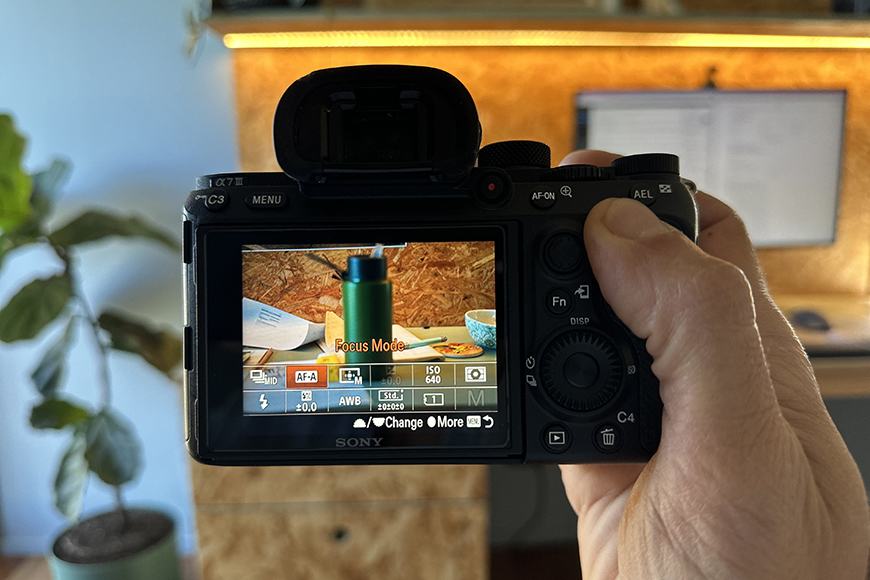
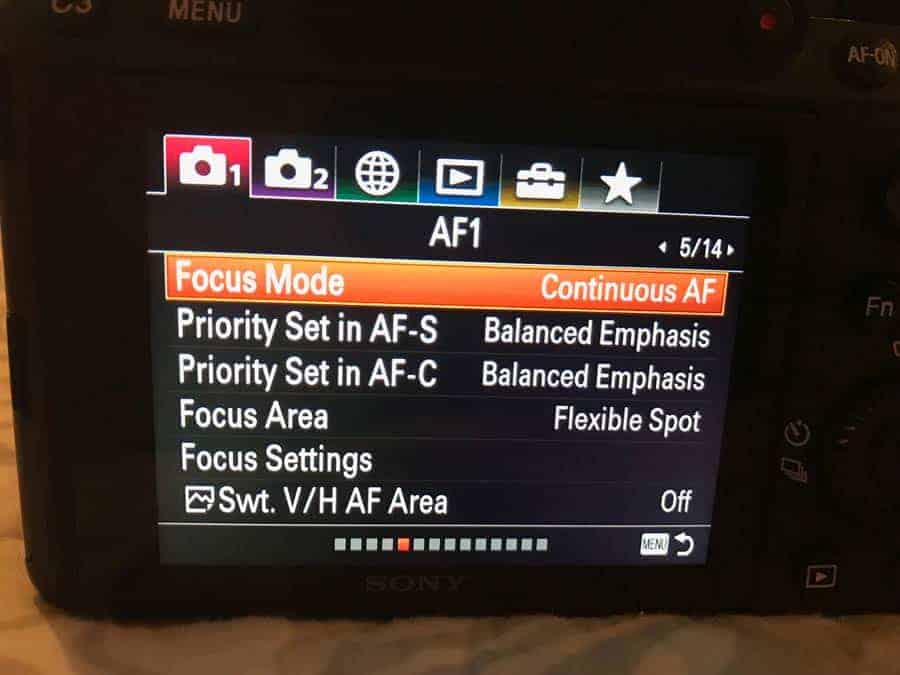
How To Change The Focus Of A Picture
There is a photograph, yellowing at the edges, tucked into the lining of my grandmother’s travel trunk. It shows her at twenty-two, standing on a windswept pier in Brighton, the sea a hazy smear of grey behind her. But she isn’t looking at the camera; she’s looking at something just off to the left, a fraction of a second of unguarded joy frozen in time. For decades, I assumed the photographer had simply missed the perfect moment. But as I grew older and my own fingers found the dials of a 35mm SLR, I realized the truth: that focus was a choice. The photographer had deliberately pulled the viewer’s eye away from the distracting horizon, away from the static of the world, and placed it squarely on the vibrant, breathing subject of his affection. This simple act—the manipulation of what is sharp and what is soft—is one of the oldest, most profound tricks in the visual language. It wasn’t always as simple as tapping a screen. The history of changing focus is a story of human impatience, mechanical genius, and a desperate, timeless desire to tell which part of our story matters most.
Before the autofocus motor, before the micro-prism and the split-image rangefinder, there was the brute force of mathematics and the delicate dance of fingertips. In the late 19th century, a photographer working with a large-format camera would disappear under a black cloth, not for drama, but for precision. To change the focus, they didn’t zoom or tap. They physically moved the entire front standard of the camera—a bellows mechanism—forward and backward in infinitesimal increments, judging the exact point of sharpness on a ground-glass screen that was often darker than a moonless night. It was a slow, meditative ritual. The subject had to hold a pose for seconds, sometimes minutes, while the photographer wrestled with the physics of light. This was the era of the pictorialist, where focus was not just about clarity but about mood. A soft focus, achieved by slightly misaligning the lens or using a special diffusion disc, was considered the height of artistic sophistication. It was a way to make the photograph look more like a painting, to soften the harsh reality of a world that had just been industrialized. The initial human necessity wasn't just to see clearly—it was to render the world ideally, to control the narrative by controlling the blur.
This manual struggle carried a certain poetry, but also a profound limitation. You had to be in front of the camera, or have a skilled assistant, to make those changes. The idea of capturing a moving subject—a child mid-spin, a horse at full gallop—with precise focus was a near-impossible feat. The initial necessity then pivoted from art to speed. Humanity wanted to crystallize action, to freeze the blurry chaos of life into a decisive, sharp document. This yearning set the stage for a technological arms race that would entirely redefine the relationship between the photographer, the lens, and the accelerating world.
Must Read
The Mechanical Gaze: From Split-Images to the Holy Grail of Autofocus
As the 20th century surged forward, the process of changing focus became a battle against time. The 1930s brought the rangefinder camera—a gorgeous, compact piece of engineering that used a double-image system. The photographer would turn a ring until two overlapping ghostly images of the subject merged into one, signifying focus. This was faster than ground glass, but it still required human cognitive calculation. Then came the era of the Single-Lens Reflex (SLR) in the 1960s and 1970s, which introduced the split-image focusing screen. In the center of the viewfinder, a circle was split in half; if the subject was out of focus, the top and bottom halves of the subject didn’t align. It was brutal and effective, a physical puzzle solved with a flick of the wrist. I remember the visceral feel of that—the greasy resistance of the focus ring, the satisfying click when the micro-prisms settled into a coherent image. It was a tactile feedback loop that connected my eye to my hand in a way that modern screens have completely severed.
But there was a strange, forgotten interlude in the 1970s—the era of the "focus trap" and the "honeymoon" of experimentation. The Leica M3 and its kin were for the patient elite, but the masses wanted instant gratification. Enter companies like Canon and Nikon, who began experimenting with electronic rangefinders and early CCD-based sensors in the viewfinder. These prototypes were bulky and slow, often hunting and racking the lens back and forth in a frantic, indecisive dance that made photographers nauseous. There is a bizarre vintage fact that in some early 1980s cameras, you could program a pre-focus function: you would lock focus on a point at a known distance, and then the camera would automatically trigger the shutter when the subject walked into that invisible plane of sharpness. This was called "focus trapping," and it used infrared beams and complex electromechanical relays—a bizarre, almost sci-fi approach to portraiture that often resulted in blurry pictures of just-missed noses.
The true revolution came with the introduction of the Canon T80 in 1985, but it was the Minolta Maxxum 7000 in the same year that changed everything. It was the first truly integrated autofocus SLR system, putting the motor inside the camera body and using a sophisticated phase-detection sensor. This was a stunning moment in technological history. Suddenly, the necessity shifted from controlling focus to delegating it. The photographer no longer needed to understand optics or distance; they just needed to point and press. This democratization was incredible, but it also introduced a new, generational anxiety: the autofocus hum. We all remember the early whirring, the audible zzzzzzzz of the lens seeking the subject, often locking onto the background rather than the eye. It was a step forward, but also a loss of that intimate connection with the physical world.
In the 1990s, the focus shifted to computational prediction. Cameras began to calculate the trajectory of a moving subject and pre-adjust the focus for the future position of the object. This was the era of AI-Servo and continuous focusing. The myth that you had to "focus and recompose" became a slow, archaic habit. We began to trust the machine to chase the bird, the ball, the running child. And yet, even then, the principle was the same as my grandmother's pier photograph—focus is the intention of the image. The machine was just getting better at reading my intention faster than I could physically act on it. The bizarre part of this era was the rise of the "kit lens" and its limitations; a standard f/3.5-5.6 lens was often too slow to focus in dim light, forcing photographers to revert to the ancient art of manual focusing, stuttering through the modern world with vintage instincts.
Hacking the Algorithm: The Modern Age of Computational Focus
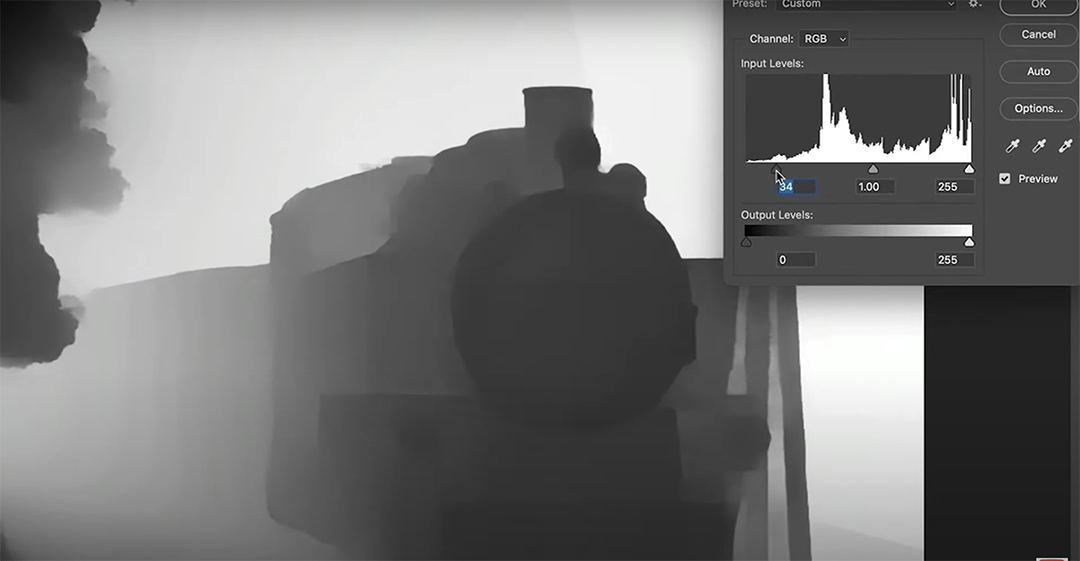
Today, in the 2020s, we have entered a completely new paradigm—the era of the computational eye. The smartphone camera, that omnipresent slab of glass and metal, has hacked the old laws of physics. We no longer have moving lenses for focus in many cases; we have arrays of sensors and machine-learning algorithms that calculate depth from multiple simultaneous images. The focus is no longer a mechanical adjustment but a data analysis. You tap a face on the screen, and the camera uses eye-tracking AI to lock onto the pupil with a stubbornness that would have baffled the old rangefinder masters. This is a hack of attention. In a fast-paced world of constant movement, the camera predicts the subject's next blink and nails the shot while you’re still thinking about it. The classic principle of "selective focus" has been re-imagined through "portrait mode," which doesn't use a shallow depth of field lens at all—it uses a computationally generated depth map that fakes the bokeh of a luxury f/1.2 lens from the 1970s.

This modern hack has also changed the very concept of where focus lies. We are obsessed with edge-to-edge sharpness on our phones, yet we crave the artistic blur of a full-frame mirrorless camera. The modern answer is to allow the user to specify the focal point after the fact. This "light-field" technology, while still in its infancy in consumer products, allows you to change the depth of field in post-processing. You take one picture, and the camera stores all the directional data of the light; later, you can click on the background to make it sharp and the subject blurry, or vice versa. This is the ultimate hack of the 1940s lens monkeys who had to physically rack the bellows. The few micro-seconds of patience required by the old masters has been replaced by a burst of processing power that happens in milliseconds. It’s a loss of tactility, but an immense gain in creative agility, allowing even the most rushed parent to get a perfect school-sports photo without begging the kids to stand still.
Echoes Through the Lens: Your Questions Answered
1. Does the old "Rule of Thumb" about focusing one-third into the scene still apply?
The classic rule of hyperfocal distance, famously advocated by landscape photographers like Ansel Adams in the 1930s, told us to focus roughly one-third of the way into the frame to maximize sharpness from the foreground to the distant horizon. This was a mathematical shortcut for using the lens's depth of field scale. In the vintage world, with a manual lens, you would look at the distance scale and set the infinity mark against the f/11 or f/16 aperture marker, effectively "cheating" the focus to cover everything.
In today's digital world, this rule is not dead, but it’s now a software principle rather than a manual one. Modern cameras and phones calculate hyperfocal distances for you automatically in "landscape" modes, but the underlying physics remain identical. The myth that we don't need to worry about it is false; the necessity is still there. However, modern high-resolution sensors are so demanding that the old "just set it to f/8 and shoot" advice is often too imprecise. We are now using focus stacking—taking multiple shots at varying focus distances and blending them—to achieve the hyperfocal sharpness that Adams achieved in one exposure. The ancient rule is hacked, not erased; it's evolved into a computational process that yields even greater detail than the human eye could perceive in a single glance.

2. Why do modern lenses sometimes "hunt" for focus in low light, and is there a vintage secret to beat it?
The infamous "hunt"—that drunkard's dance of the focus ring moving back and forth—was a plague in the 1980s and 1990s, and it hasn't fully disappeared. The reason is that phase-detection autofocus relies on contract and light parity between two sensors. In low light, the signal-to-noise ratio drops, and the camera receives ambiguous data—it can't tell if the subject is slightly front of the focal plane or slightly behind it. The vintage secret, which still works brilliantly today, was to pre-focus manually. In the days of the Nikon F3 and the Canon AE-1, photographers knew that autofocus was a lie; we used a technique called "focus trapping" or zone focusing. You would switch to manual, set the focus to a known distance (say, 3 meters), and then simply wait for the subject to walk into that zone. This is making a comeback amongst street photographers.
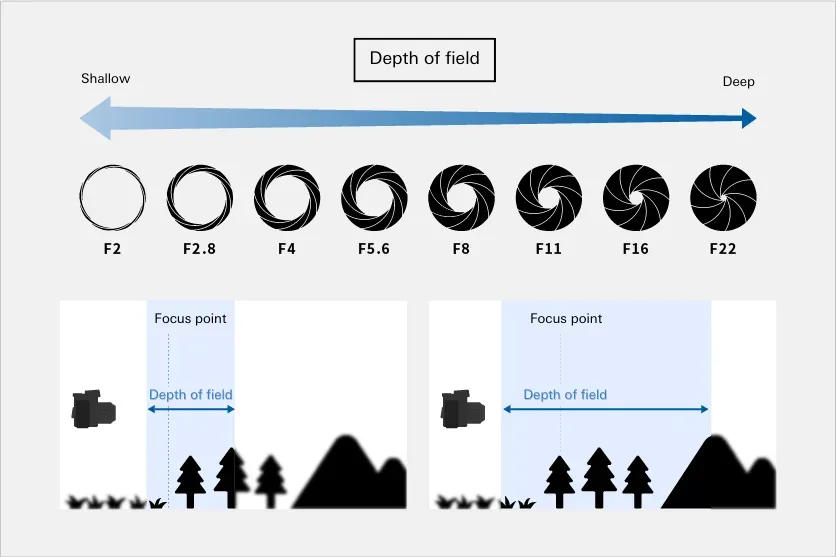
The modern hack is even better: you flip the lens to manual mode and use focus peaking—a live view feature that overlays a colored highlight on the edges of the in-focus area. This is a direct homage to the ground-glass viewing of the 19th century, but in real-time digital. Another modern secret is to assist the autofocus with an infra-red beam or a constant LED light. But the most retro-grade, performance-enhancing trick is to simply stop down the aperture to f/5.6. A wider aperture gives the autofocus sensor less to "bite" on; a stopped-down lens provides a larger depth of field, making the autofocus system less sensitive to its own miscalculations. Thus, the vintage secret of ultra-wide tolerance is the ultimate hack for the modern hard-to-focus lens.
3. Is it cheating to use AI to change the focus of a picture after you've taken it?
This is the philosophical dilemma of our generation. In the darkroom days, a photographer could "dodge and burn" to alter the appearance of focus, but changing the focal plane itself was flat-out impossible. To shift focus from one object to another was a moral sin; it punished the inattentive photographer. The Lytro camera in 2012 was the first consumer attempt to do this, and the photography community largely reviled it, calling it a gimmick and a nanny-state device that erased the discipline of composition.
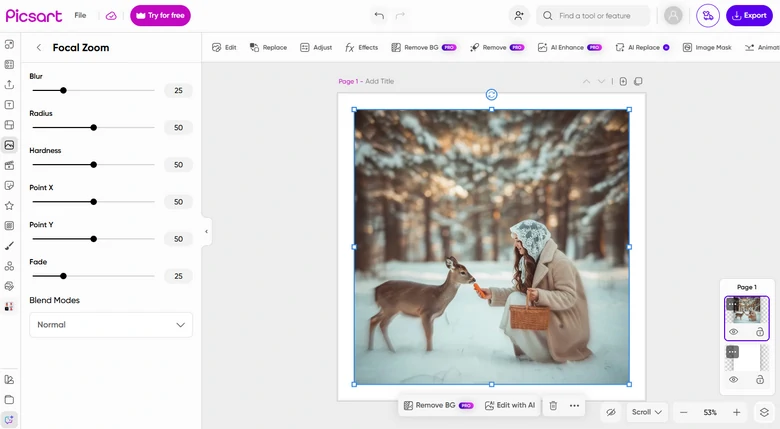
However, we have to ask: what is the purpose of focus? It is to direct the eye. If modern AI can use depth mapping to render my friend's face sharp while hiding a distracting background, isn't that simply the same intention as the old manual adjustment? The difference is the data. The vintage photographer changed focus by moving the lens before the light hit the sensor; the modern photographer does it after. Is it cheating? I argue it's merely a shift in medium. It's the difference between a sculptor carving wood versus casting bronze. The myth that it's "easier" is a lie—it takes a great deal of skill to properly mask a depth map without creating halos or warping edges. Just because we can manipulate the pixels doesn't mean the image is destitute of truth. The intent is still human. The data is still real. It is simply a new tool, and like a sharpened pencil vs. a blood-quill, both produce writing that can be beautiful, as long as the author wields them with intention.
Looking ahead to the next 20 years, we are speeding toward a reality where changing focus is an entirely post-hoc, holographic experience. I envision a future where our cameras, or perhaps our smart glasses, capture "4D light fields" as a standard format. There will be no concept of "out of focus" in the capture stage. You will walk around your memory, and your visual interface will let you look at a crowd scene and instantly focus on the face of your child, then turn your gaze to the musician in the back, pulling them into pristine clarity while the edges soften. The mechanics of the 1900s camera will be entirely forgotten, just as the typewriter is a museum relic to some. But the principle—the desire to isolate the ephemeral, to make the tiny and transient important—will remain the core of visual storytelling. We will not have lost the magic; we will have stolen the very physics of light itself, turning it into a pliable clay under our cognitive command.
Reflecting on my grandmother's photo, I realize the future won't be about how we change the focus, but why. The emotional impact of that sharp, smiling face against a soft, forgotten world is timeless. Whether we achieve that through a greased metal ring or a swiping gesture on a translucent screen, the human need to call out, "Look here, not there," is an eternal one. The camera of tomorrow won't just change focus; it will change meaning in real-time, reacting to our heartbeat, our pupils, our neural impulses. Yet, I hope we retain the nostalgia for the effort—the weight of a lens, the sound of the motor, the quiet panic when the subject moves. For in that struggle was the proof of our presence. The future will give us perfect focus, but the past gave us perfect patience. And in the end, the most interesting story is never about the sharpness of the image, but the sharpness of the memory we chose to preserve.