Ux Research Methodology Guidebook

We begin not with software, but with the quiet, often unacknowledged tremor in your chest when you present a design you believe in, only to have it met with a polite, vague, "Hmm, that's interesting." That feeling—a cocktail of defensiveness, self-doubt, and a desperate scramble for validation—is the true starting point of any user research methodology. Our brains are wired for certainty and psychological safety; a direct critique feels like a threat to our competence and, by extension, our identity. We are biologically predisposed to fall in love with our own mental models, the elegant symmetries we construct in our minds. User research, at its core, is an act of radical vulnerability: it forces us to hold our cherished assumptions up to the harsh, beautiful, and unpredictable light of another person’s reality.
In our modern, hyper-connected, data-saturated age, we are suffering from a peculiar paradox: we have more information than ever, yet feel more disconnected from genuine human truth. We hide behind metrics, dashboards, and A/B test results, mistaking quantitative noise for qualitative meaning. We've built a culture that worships the "visionary" hunch, while simultaneously demonizing the slow, patient art of listening. This is where methodology becomes more than a process—it becomes a sanctuary. It is a disciplined return to empathy, a structured way to quiet our own internal monologue and make space for the often-messy, illogical, and profoundly human stories that should be guiding every decision we make. This guidebook is not about checklists; it is about re-wiring your relationship with uncertainty itself.
The Hidden Architecture of Bias: Why We See What We Want to See
Imagine you are interviewing a user about a fitness app. You have spent weeks painstakingly designing a social leaderboard feature, convinced that competition is the ultimate motivator. The participant, a soft-spoken woman in her forties, tells you she felt anxious using the feature, that it made her feel judged and inadequate. Your brain, a masterful storyteller, immediately offers you a narrative: She just isn’t the target demographic. The millennial power-users will love this. You smile, nod, and gently steer the conversation back to your favorite feature. This is the confirmation bias at its most seductive. It is not that you are a bad person; it is that your brain is protecting you from the cognitive dissonance of having wasted time and energy on a flawed premise. It seeks out evidence that confirms your initial hypothesis and quietly filters out the painful dissonance of contradictory data.
Must Read
Beyond confirmation bias, there is a more insidious player at work: the curse of knowledge. Once you understand a system, it is psychologically impossible to imagine not understanding it. When you test your prototype with a user, you are watching them through a lens fogged by your own expertise. You see them struggle, and your internal voice screams, "The button is right there! It's so obvious!" You are not seeing their struggle; you are seeing your own insecurity mirrored in their frustration. This leads to the classic facilitation error: the leading question. "Do you think this button is easy to find?" you ask, your tone subtly pleading. The user, a social creature craving harmony, picks up on your cue and happily agrees, perpetuating the very illusion you sought to dismantle. This is the emotional labor of research—fighting your own ego's desperate attempts to maintain a comfortable reality.
Then there is the most exhausting hurdle of all: analysis paralysis born from the fear of misinterpreting others. After you've collected your qualitative data, you are faced with a mountain of transcripts, notes, and sentiment graphs. The fear of drawing the wrong conclusion, of making a decision that gets publicly lambasted, can freeze you. You begin to over-code, over-analyze, and look for patterns that aren't there. This is a protective mechanism. As long as you are analyzing, you are not responsible for and acting upon a potentially flawed insight. You are avoiding the vulnerability of commitment. The cognitive load of holding all these conflicting voices in your head—the user's, your stakeholder's, your own inner critic's—is immense. It creates a mental fog that makes even simple decisions feel like monumental acts of courage, leaving you feeling drained and creatively empty.
A Ritual for the Soul: Practical Methods for Grounded Empathy
To navigate this psychological minefield, we must treat research not as a task, but as a mindfulness practice. The first step is to consciously surrender your design. Before you even begin a session, perform a mental "letting go" ritual. Look at your prototype and say to yourself, "This is a hypothesis, not a part of my identity." Write down your assumptions on sticky notes—the features you love, the arguments you have prepared. Then, physically put them in a drawer or a box. This symbolic act helps your primal brain understand that you are entering a space of discovery, not a space of defense. You are transitioning from the role of a designer to the role of a student of human nature.
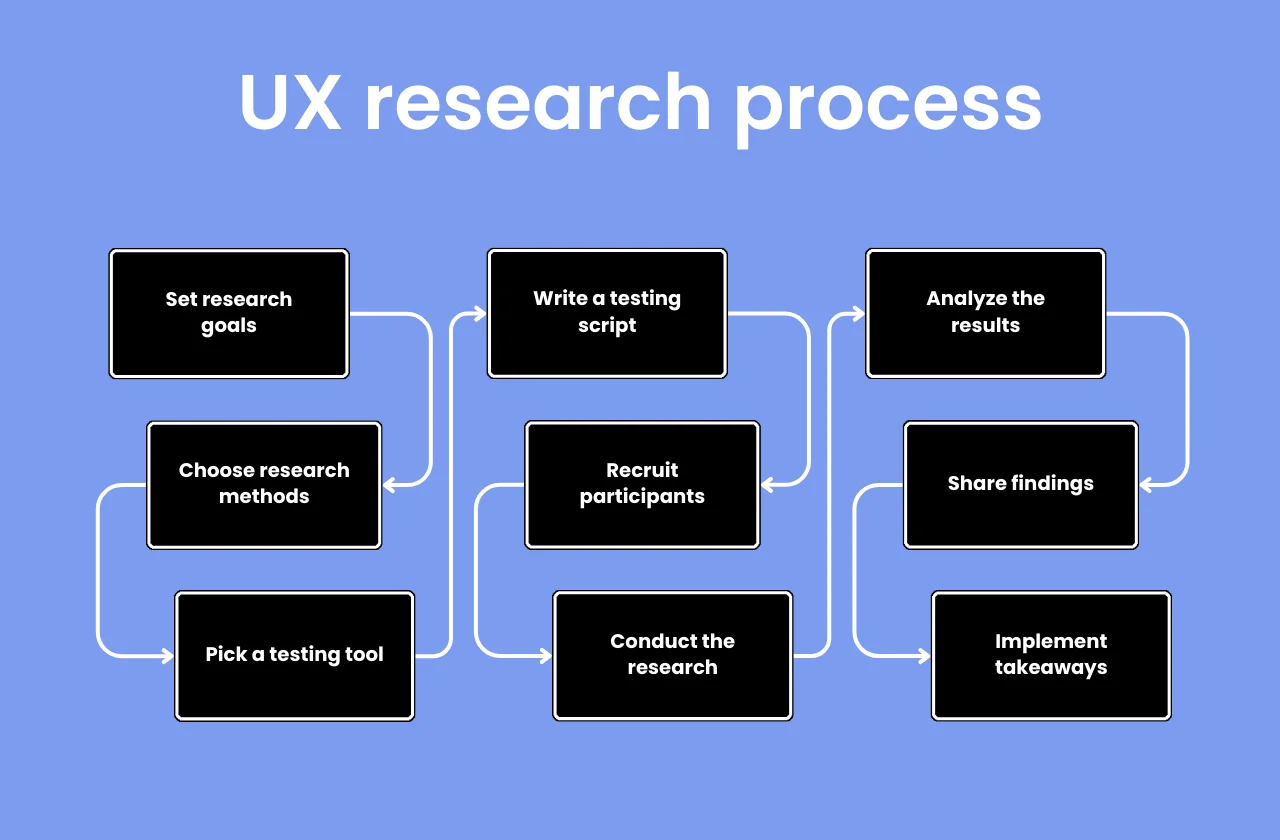
Next, cultivate the skill of active, silent observation. This is the hardest work you will do. During your sessions, your only job is to watch and listen. Focus on the participant's non-verbal cues: the sigh of relief, the hesitation before a click, the furrow of the brow. These physiological responses are the unvarnished truth. To quiet your internal monologue, practice the "two-loop listening" technique. In the first loop, you simply absorb the participant's words and actions without any judgment or categorization. In the second loop, while they are finishing their thought, you make a mental note of a neutral observation. You are not writing a critique; you are writing a description: "She paused for 3 seconds before clicking next." This disciplined observation builds your tolerance for ambiguity, teaching you to sit with discomfort without needing an immediate resolution.
When it comes to synthesis, adopt a mindset of hypothesis generation over hypothesis proving. Instead of looking for data that supports your idea, actively hunt for the "negative space"—the frustrations, the workarounds, and the things left unsaid. Use an "affinity mapping" exercise where you write down every single observation, even the ones that seem irrelevant, on individual post-it notes. Group them, not by theme, but by emotion. Which quotes express confidence? Which express confusion? Which express delight? This emotional clustering allows you to see the psychological journey of your user, not just their logical flow. This method transforms raw data into a narrative of human experience, making the insights feel less like abstract features and more like empathetic companions on the user's journey.
Finally, institute a weekly, fifteen-minute "Empathy Review" with your team. This is not a status meeting. Instead, the team takes turns simply reading a single user quote out loud. No context, no commentary. Just the raw voice of the user. Then, you sit in silence for a minute, letting the words land. You might ask, "How does that make us feel?" not "What should we build?" This practice build a collective emotional intelligence. It forces you to regularly re-connect with the human cost of your decisions. It is a powerful antidote to the dehumanizing nature of agile sprints and release deadlines. It re-centers your team's shared purpose, shifting the focus from shipping features to serving human beings, which is a deeply nourishing and fulfilling way to work.
Frequently Asked Questions on the Inner Journey
How do I cope with the overwhelming feeling that my design is "stupid" after a bad research session?
This feeling is a classic ego-trigger, often described as "imposter syndrome's evil twin." Your brain is conflating the quality of your work with the quality of your self-worth. This crash is a biological reaction to a perceived social defeat. The first step is to validate the feeling—it is completely normal. Do not try to intellectualize it away. Say to yourself, "I am feeling shame because my identity as a competent designer is threatened." This labeling activates your pre-frontal cortex, reducing the amygdala-driven panic.
The second, more crucial step, is to reframe the session's outcome. A "bad" session is a successful data point. It is a gift of information that you could not have received otherwise. The goal was never to be right; the goal was to learn. You did learn—you learned a significant truth about your users and your assumptions. Separate your creative output from your core self. The design is a temporary artifact; your curiosity is a permanent trait. Treat your design like a rough draft in a journal. You wouldn't judge your entire life by one poorly written paragraph. Shift your focus from "failure" to "feedback," and the sting of vulnerability will transform into the energizing thrill of discovery.
What if I feel like I am burdening the participants with my questions?
This anxiety stems from a fear of being seen as an intruder or a corporate voyeur. It is rooted in a scarcity mindset—the feeling that you are taking something from them (their time, their insight) without giving back. To combat this, shift to an abundance mindset. You are not extracting; you are collaborating. You are offering a rare, invaluable gift: your genuine, focused attention. In our world, being truly heard without judgment is a scarcity. You are validating their experience.
To further alleviate this guilt, alter your introduction. Instead of saying, "Can you help me test my app?" frame it as, "I am working on a project to improve this service, and I need your expert voice to help us guide it. Your lived experience is the most important data we have." This respects their autonomy and positions them as the expert, not the guinea pig. If you feel a session is emotionally heavy, end it with a moment of gratitude. Acknowledge the emotional labor they just performed: "I know that feature was frustrating for you. Thank you for sticking with it and sharing that with me. That insight is incredibly valuable." This cements a transaction of mutual respect, leaving both of you feeling more connected, not burdened.
How can I convince my stakeholders to appreciate qualitative research over only metrics?
This is a battle of perception. Stakeholders often feel safer with quantitative data because it leads to a feeling of objectivity and reduces their own decision-making anxiety. Your argument should never be "qual over quant," but rather "the reason why behind the number." Frame your research as the "meaning-making" layer that will make their metrics more powerful. Tell them, "The analytics show a 20% drop-off at this page. The qualitative research tells us why—it reveals the emotional trigger causing the behavior."
On an emotional level, you are asking them to be vulnerable. You are asking them to trust their gut, but a better-informed gut. To ease this transition, create highly visual, non-technical "user journey maps" that illustrate the emotional arc of a user—sad moments, confused moments, happy moments. Do not present a 40-page report. Present a single slide showing a storyboard with speech bubbles. Force them to read a quote out loud. When a stakeholder sees a user's tear or hears the frustration in their voice, their brain releases oxytocin—the empathy chemical. This is a biological hack. Once they have that emotional connection, the metrics become backdrops, not the main character. You are not just giving them data; you are giving them a human connection, which ultimately makes their jobs feel more meaningful.
How do I avoid forming a "new bias" based on a single powerful user story?
The "vividness bias" is real. A single, emotionally charged story (e.g., a user who cries because she can't book a flight) can easily overwhelm 50 boring, neutral responses. This happens because our brains prioritize emotional salience over statistical frequency. The danger is that you become a champion for a unique edge case and lose sight of the mainstream experience. To protect against this, you must practice "triangulation" as a mental discipline.
First, never act on a single session. Treat every session as a chapter in a book. After you feel emotionally moved by a participant, challenge yourself to find three other neutral instances that either support or refute the narrative. Ask, "Is this a systemic problem, or an individual circumstance?" Secondly, separate the specific pain point from the underlying emotion. The woman crying about flights might be signaling a deeper need for safety and control, not necessarily a need for a "skip-queue" feature. Focus on the emotion as the data, not the specific ask. Finally, explicitly review your notes for any session that was "boring." The boring sessions often contain the majority truth. By forcing yourself to give equal weight to the quiet majority as you do to the loud minority, you train your mind to seek balance, overcoming the brain's lazy tendency to generalize from a single, intense experience.

What do I do when I feel burnt out from constantly empathizing with other people's frustrations?
Empathy is a finite resource. It is a muscle that requires recovery. "Compassion fatigue" is rampant in design and research roles. You are absorbing the emotional weight of hundreds of users, and if you don't have a release valve, you will become cynical and detached. The first step is to identify the difference between empathy (feeling with someone) and sympathy (feeling for someone from a distance). Constantly drowning in the user's frustration is enmeshment, not research. You must establish a professional boundary.
Create a "switching off" ritual. When you close your laptop, literally wash your hands and say, "Their story is over. My story is beginning now." Do not carry their data into your dinner table. Schedule a "digital sabbath" of at least two hours each day where you do not think about user flows or usability. This is non-negotiable for your mental hygiene. Furthermore, find an outlet for your own personal creativity that is unrelated to problem-solving. Paint, hike, play an instrument—do something that has no objective other than the joy of doing it. You cannot pour from an empty cup. The best researchers are not those with the deepest analytical skills, but those with the most profound capacity for self-compassion, enabling them to hold space for others without losing themselves.
Mastering this guidebook is not about becoming a better technologist; it is about becoming a better human. It is a continuous process of unlearning your own certainty and re-learning the art of listening—not just with your ears, but with your entire being. Every time you sit with a user, you are practicing a form of spiritual humility. You are acknowledging that your version of the world is not the only one, and that there is profound wisdom in the struggling, reaching, and hoping of others. This practice softens the rigid edges of your ego, replacing judgment with curiosity, and fear with wonder.
As you integrate these methodologies into your daily flow, you will notice a shift. You will walk through the world differently. You will start to see the why behind the what. You will observe the elderly woman confused by a self-checkout kiosk not as an inconvenience, but as a story of isolation in a digital world. You will understand that the colleague who resists your design is not being obstinate, but is protecting a deeper fear. This lens of user research becomes a lens of radical human forgiveness. It grants you the patience to see the person behind the interaction, the soul behind the click. This, ultimately, is the greatest growth—not in your portfolio, but in your capacity for grace, in the quiet, confident knowledge that understanding others is the surest path to understanding yourself.