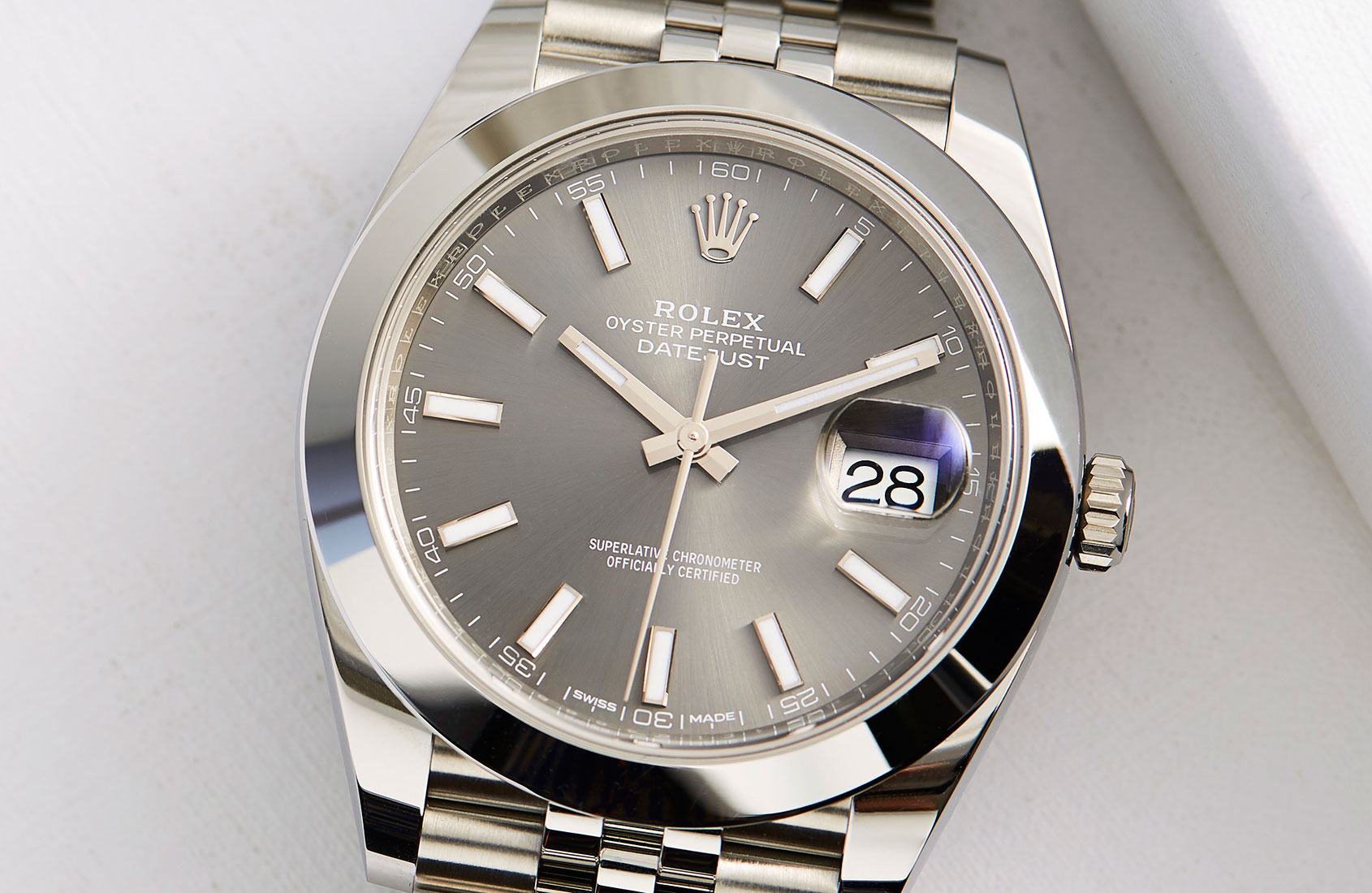
Let’s be honest—when you hear the name Rolex, you don’t think “cheap.” You think of grainy movie scenes, polished yacht decks, and that unmistakable crown logo. But the Oyster Perpetual Datejust is more than a status symbol; it’s the watch that started the whole “everyday luxury” game. And figuring out its cost is like unlocking a secret level in a video game—full of surprises, traps, and bonuses.
Why Does the Datejust Cost So Much (or So Little)?
The short answer: it depends on which Datejust you’re staring at. A brand-new steel model with a simple dial will set you back around $8,000 to $9,000 at an official boutique. But walk into the same store asking for a two-tone gold version, and you’ll be looking at $13,000 to $15,000 before taxes.
Now, here’s the fun twist: the pre-owned market changes everything. A vintage Datejust from the 1980s can cost as little as $4,500, while a rare “fluted bezel, jubilee bracelet” combo might hit $20,000 or more. You aren’t just buying time—you’re buying a lottery ticket of dial colors, bezel styles, and bracelet options.
First, there’s the caliber movement—a tiny mechanical engine that ticks 28,800 times per hour, hand-assembled by Swiss artisans. That precision doesn’t come cheap, but it also means your watch will outlive your grandchildren if you treat it right.
Second, the Oyster case is a waterproof marvel. It was the world’s first truly water-resistant watch case, tested by swimming the English Channel in 1927. Today, it’s still guaranteed to 100 meters, so you can wear it while washing your car or fighting a rogue wave (not recommended, but possible).
Third, the Datejust’s iconic cyclops lens—that tiny magnifying bubble over the date—is pure Rolex theater. It distorts the date so you can read it without squinting, and it’s been copied by every watch brand since 1953. You’re paying for that legacy of innovation, not just shiny metal.
The Hidden Costs: Retail vs. Gray Market
Here’s the kicker: you can’t just walk into a Rolex store and buy one. Most boutiques have months-long waiting lists, and some models (like the green dial “Hulk” or the palm-motif ones) are discontinued or ultra-rare. That scarcity pushes desperate buyers to the gray market, where dealers charge 10% to 30% over retail just for the privilege of skipping the line.
“A Rolex is not a watch. It’s a savings account that you wear on your wrist.” – Anonymous collector
Rolex Oyster Perpetual Datejust 31: Malaysia Price And Review - Crown
But here’s the good news: you don’t need to pay over retail. If you’re patient, you can find a pre-owned Datejust from a trusted seller at a fair price. Just remember to ask for the original papers and box—they add resale value and prove the watch isn’t stolen or cobbled together.
Why It’s Worth Every Penny (or Not)
Let’s talk value retention. A Datejust typically holds 80% to 90% of its value after five years, unlike a new car that loses 30% the second you drive it off the lot. In fact, some vintage steel models have appreciated in value—the 1601 “pie-pan” dial now sells for triple its original 1970s price.
Rolex Oyster Perpetual Vs Datejust: Which Shines Brighter?
But if you’re buying it as a daily beater, beware of the service cost. A full Rolex overhaul runs around $800 to $1,200, and you should do it every 8 to 10 years. That’s the hidden tax of owning a mechanical icon—but ask any owner, and they’ll say it’s like a spa day for their wrist.
The Real Price? It’s Emotional
Ultimately, the cost of a Datejust is about what it does to your brain. It makes you check the time with a smirk. It starts conversations at dinner parties. It tells the world you value craftsmanship over smartwatch notifications. And if you buy wisely, it’s a piece of history that you can pass down—with a story attached to every scratch.
So, is a Rolex Oyster Perpetual Datejust expensive? Yes, if you’re comparing it to a Casio. But as a wearable piece of engineering art, it’s a bargain—especially when you realize that a 1960s model still ticks perfectly today. Start your hunt with a budget, but leave room for obsession. Because once you try one on, the price becomes the last thing on your mind.