
Piercing To Help With Weight Loss
In the quiet hush of a modern wellness studio, the faint, sharp click of a piercing gun or the decisive press of a needle is often met with a wince, a deep breath, and then—release. We tend to associate that momentary pain with adornment, with rebellion, or with the reclamation of one’s own body. But for a growing number of individuals, that specific, localized sting is being sought not for aesthetics, but for a profound, internal recalibration. The conversation has shifted from the lobe to the ear’s inner cartilage, from the navel to the tragus, and the whispered question is no longer “Does it hurt?” but rather, “Will this finally quiet the noise?”
At its core, the desire to alter our physical form to influence our psychological state is as ancient as humanity itself. The brain is a master of association, a neural superhighway where sensory input—pressure, pain, a metallic coolness—is instantly wired to emotional memory. When we introduce a chronic, low-level stimulation to a specific nerve cluster, we are not just adding jewelry; we are installing a physical anchor for a mental intention. This is where the modern relevance of the “weight-loss piercing” emerges, not as a magical metabolic hack, but as a deeply human, tangible ritual for those struggling with the invisible weight of compulsive eating and body dissatisfaction. It is a way to say to one’s own mind, “I see you, and I am changing the rules from the outside in.”
The Psychology of the Pinch: Unpacking the Emotional Trigger
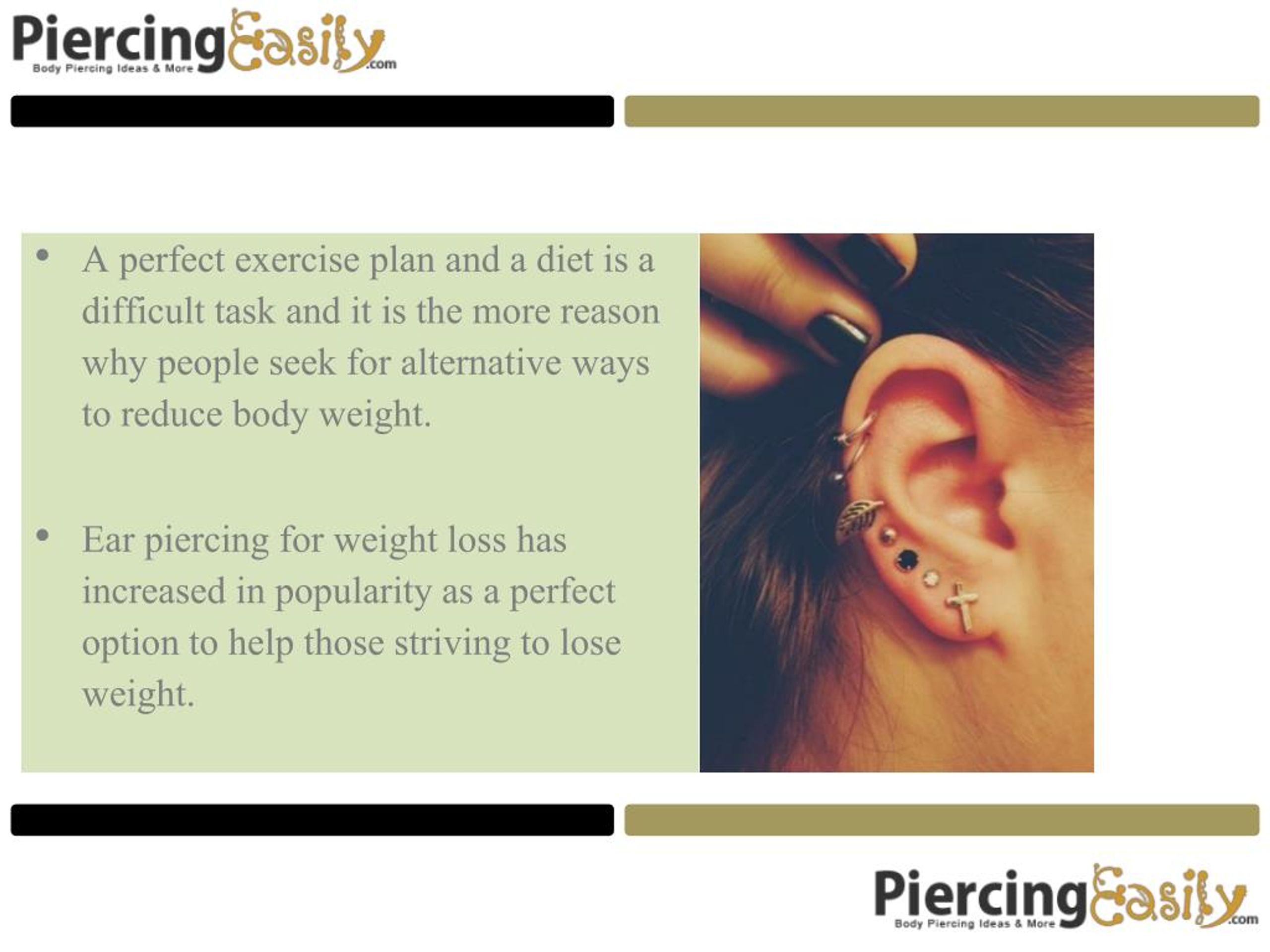
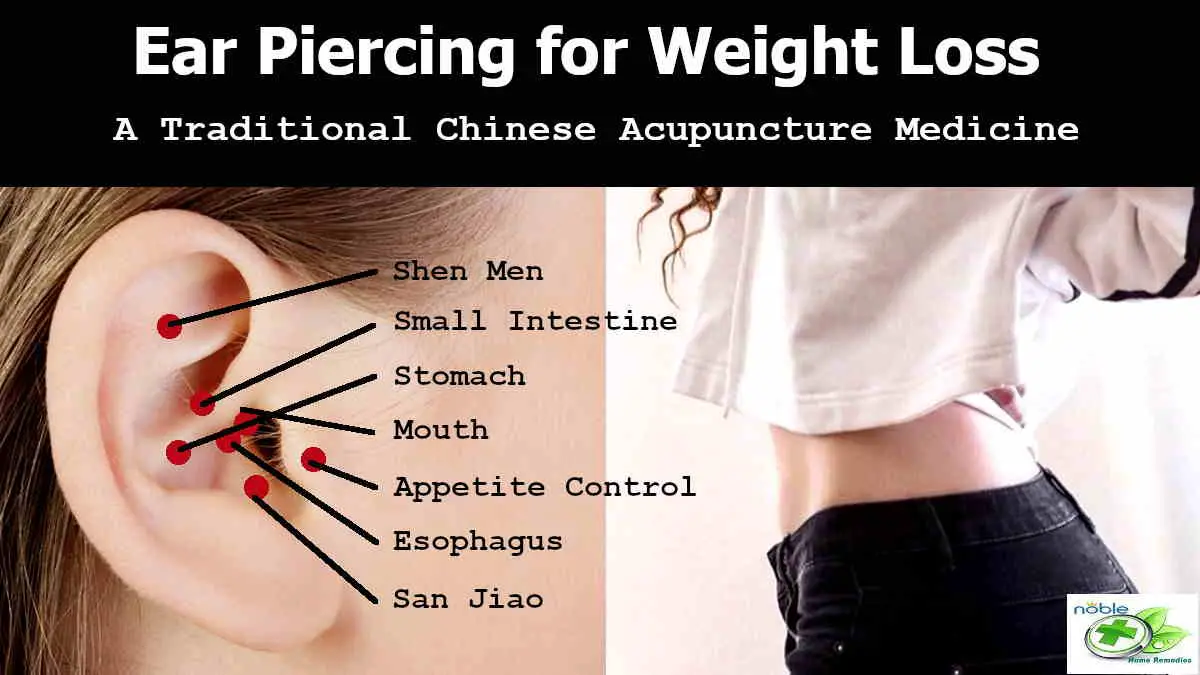
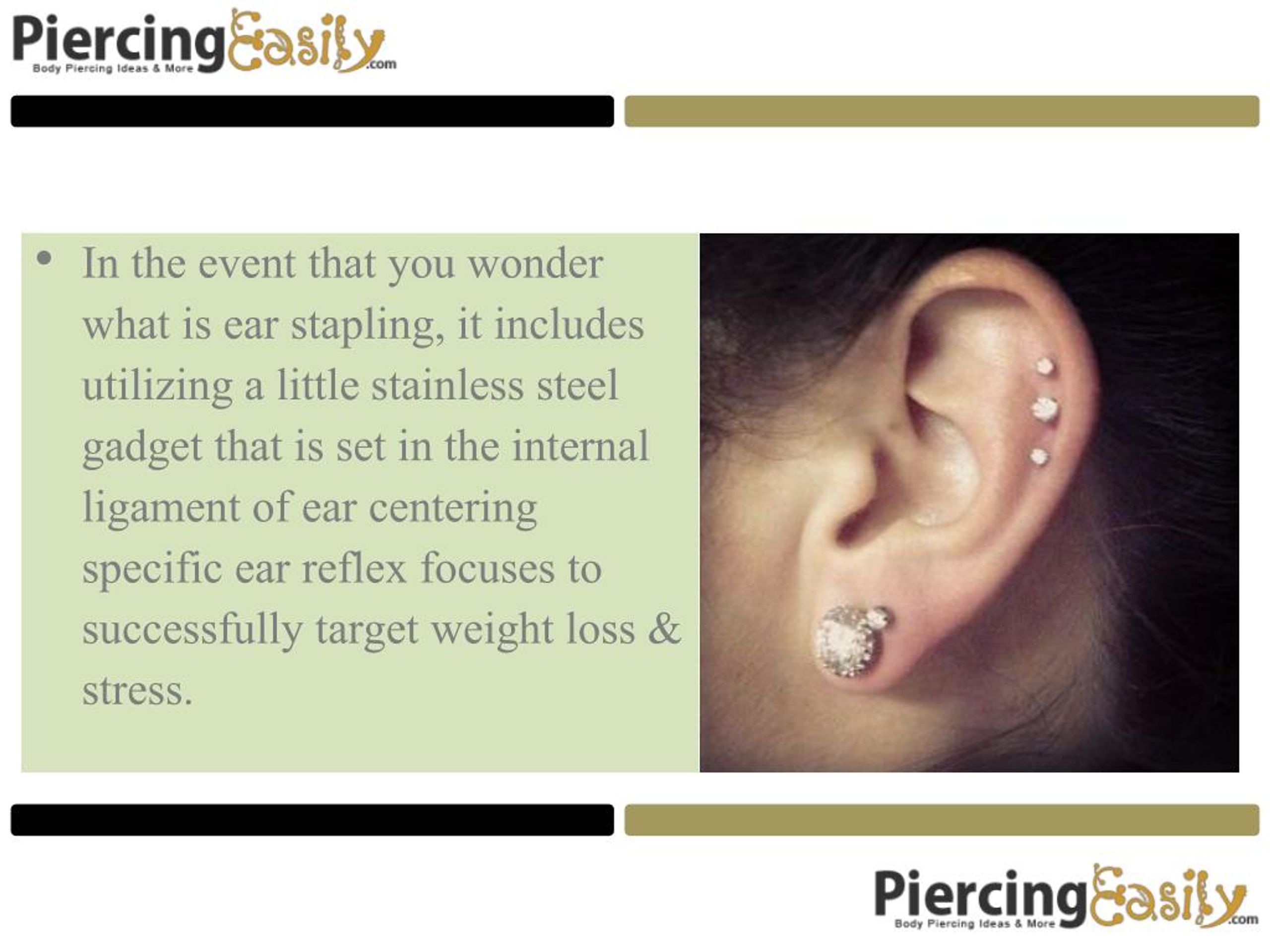
The most often cited piercing for appetite control is the auricular staple—a piercing on the inner ear’s tragus or the daith. Scientifically, the evidence is anecdotal rather than clinical; the vagus nerve, which runs near the ear, can be mildly stimulated, potentially influencing heart rate and digestive relaxation. But the true mechanism at play is far more complex and resides in the frontal lobe. For someone who eats to soothe anxiety, the piercing becomes a cognitive checkmate. Consider Sarah, a 34-year-old teacher who has tried every diet. Her binge episodes are not about hunger; they are about a feeling of emptiness that food paradoxically both fills and punishes. When she got her daith pierced, she wasn’t expecting a physical sensation of fullness. Instead, she discovered that every time she touched the small, cool titanium ring, she was interrupting the autopilot of her hand-to-mouth motion.
Must Read
This is the crux of the psychological hurdle: mindless consumption versus mindful interruption. The piercing serves as a somatic anchor, a point of tactile awareness that pulls the brain out of a dissociative haze. The cognitive bias at play is known as the “spotlight effect,” where we overestimate how much others notice our appearance. A piercing forces us to focus on a specific body part, paradoxically making us more present in our own skin rather than hiding from it. Yet, there is a hidden danger: the belief that the jewelry itself will do the work. This is a classic external locus of control, where the individual relinquishes responsibility to a passive object. The emotional hurdle is the disappointment that follows when the scale doesn’t move immediately, and the subsequent self-blame—what I call the “sacred object fallacy.”
The mental hurdles are deeper than willpower. For many, the ear is a sensitive, vulnerable zone—a threshold between the inner world and the outer world. Piercing that zone can feel like an act of self-violation, even when voluntary. This creates a paradoxical form of self-care. The pain of the needle is a controlled pain, a scripted event with a beginning and an end, unlike the chaotic, shameful pain of a binge. Psychologically, this allows the individual to re-write their relationship with discomfort. The piercing process says, “I am strong enough to endure this, and I chose this pain.” This is a profound cognitive shift. However, if the motivation is rooted in self-hatred—“I deserve this pain because I am fat”—the piercing will fail and can exacerbate a cycle of self-harm. The brain must re-frame the act as one of curiosity and compassion, not punishment.
Reshaping the Ritual: Actionable Steps for Mindful Transformation
If you are considering this path, the first step is not to book the appointment. It is to sit with your intention. Do not pierce out of desperation; pierce out of preparation. For two weeks leading up to the needle, I urge you to engage in a “pre-piercing mindfulness practice.” Every time you feel a craving, do not reach for food; instead, gently pinch the exact spot on your ear where you intend to place the jewelry. This mimics the future sensation and begins to build the neural pathway—the connection between “touch here” and “pause.” This routine is not about denying hunger, but about creating a delay. A two-minute delay is often enough to let the cortisol spike of a craving subside, allowing your logical brain to catch up with your emotional brain.
![Daith Piercing for Weight Loss [Benefits, Price and More] - HealthCarter](https://www.healthcarter.com/wp-content/uploads/2023/11/Daith-piercing-for-weight-loss-2.png)
Once the piercing is done, treat it with the same reverence you would a new philosophy. The aftercare—touching it only with clean hands, rotating the stud gently during a saline soak—becomes a meditation. I challenge you to convert this cleansing ritual into a journaling prompt. Every time you clean the piercing, ask yourself: “What am I feeding today? Is it food, or is it the need to feel in control?” The physical sensation of the sterile fluid cooling the healed skin is a direct metaphor for emotional hygiene. You are washing away the residue of old habits. This is a step-by-step routine: Wake, clean the piercing, set an intention for one meal only. Do not plan the whole day. Break the overwhelm into micro-units of success.
You must also build a “trigger map” around the jewelry. When you feel the piercing, do not just pause; you must pivot. Have a physical alternative ready—a fidget cube, a very cold glass of water, or a scented hand cream. The goal is to interrupt the neural loop of “stress → eat.” You are replacing it with “stress → touch ear → (tactile feedback) → breathe deeply.” The piercing is a cue, not a cure. It is the bell in Pavlov’s experiment, but you are both the experimenter and the subject. You are re-conditioning your response. I also recommend a “no-scale certification” for the first month. The weight loss will be slow, and if you are weighing yourself daily, you will miss the psychological gains—the reduced anxiety, the improved sleep, the 15 extra minutes you used to spend eating that you now use to walk.
Finally, embrace the power of the social declaration. A visible piercing is a conversation starter. When someone asks, “Is that a daith? Did it hurt?” you have a choice. You can be vague, or you can be raw. I encourage you to have a two-sentence script ready: “It’s a reminder to slow down. It helps me check in with my body before I check out with a snack.” This public acknowledgment is a form of accountability that strengthens your resolve. It moves the transformation from a private struggle to a public, albeit subtle, commitment. You are planting a flag in the territory of your own identity, telling the world—and more importantly, telling yourself—that you are actively working on becoming a person who eats with intention, not with impulse.
Frequently Asked Questions: The Mental and Emotional Layers
Will a piercing physically reduce my appetite, or is it purely a placebo?
This is the most honest question you can ask. Physiologically, there is limited evidence that ear piercings stimulate the vagus nerve enough to change ghrelin (the hunger hormone) levels. But here is the psychological nuance: the placebo effect is not fake. It is real neurochemistry driven by belief. When you get a piercing with the intention to reduce appetite, your brain releases dopamine and endorphins. These chemicals reduce stress. Since stress is a primary driver of emotional eating, the piercing does reduce appetite—but indirectly. It does not lower the “physical hunger” for sustenance; it lowers the “psychological hunger” for comfort. If you go into this expecting a stomach full of butterflies, you will be disappointed. But if you go in expecting a brake pedal on your anxiety, you will likely find it. The key is to not over-attribute power to the metal, but to attribute power to your focus.
Emotionally, the act of getting pierced is a rite of passage. It signals to your subconscious that you have crossed a threshold. This psychological momentum is stronger than any hormonal shift. You are more likely to make better food choices simply because you are paying attention. The piercing is a magnifying glass on your habits, not a filter for them. If you can accept that the placebo is a positive ally, rather than a deception, you will find great freedom in it. You are using the brain’s own healing mechanisms to facilitate a change in lifestyle. That is not delusion; that is smart cognitive strategy.
I am terrified of the pain. Does that mean I am not strong enough for this?
Fear is not a sign of weakness; it is a sign of respect for your body’s boundaries. If you are not afraid, you are likely not taking the decision seriously. The fear is part of the therapeutic value. When you endure that 10 seconds of sharp pain, and it passes, you have concrete, empirical evidence of your own resilience. The pain is finite. A binge episode feels infinite—that shame is a spiral with no end. The piercing gives you a deadline: “This pain will stop in 10 seconds.” This translates into the food world. When you face a craving, you can say, “This discomfort will pass if I just ride the wave for 5 minutes.” The needle teaches you the temporality of suffering. It is a crash course in distress tolerance.
Emotionally, the anticipation of pain is often worse than the pain itself—a phenomenon called “anticipatory anxiety.” By going through with it, you are actively telling your internal critic, “I heard your warning, but I decided to proceed anyway because I value my future self more than my current comfort.” This is a massive shift in self-worth. For those who have spent years numbing emotional pain with food, the act of choosing a brief, clean, controlled pain is a revelation. It shows you that you can feel pain without needing to escape into food. You can simply breathe and let it wash over you. That skill alone is worth more than any diet.

If I feel the piercing and I still binge, have I failed completely?
Absolutely not. This is the most critical mental hurdle. A piercing is a tool, not a magic wand. If you put a hammer on a table and a nail remains unbroken, you do not blame the hammer. You must reframe your idea of failure. A set-back is data, not a verdict. If you binged, it means the trigger was stronger than the tactile warning. That is not a reason to remove the jewelry; it is a reason to add another layer of support. Perhaps you need a support group, a therapy session, or simply a stricter environment—like not keeping trigger foods at home. The piercing is your wake-up call, but you still have to get out of bed.
Emotionally, we tend to engage in “all-or-nothing” thinking. “I ate a cookie, so the piercing is useless, so I might as well eat the whole cake.” The piercing is the perfect tool to break this loop. Immediately after a slip, touch the piercing. Feel the solid, cool reality of it. Ask yourself: “Is the piercing angry at me? Is the metal judging me?” The answer is no. The piercing is neutral. It is you who is attaching shame to the action. Use the piercing as a physical prompt to practice self-forgiveness. Say out loud, “That was a mistake, but my commitment is still intact.” The jewelry is a witness to your journey, not a judge. It is a constant physical reminder that the path is still open, even if you stumbled.
How long should I keep the piercing in if I don’t see results?
Psychologically, you should commit to a minimum of six months. The healing process for cartilage is 3 to 6 months, and during that time, the novelty will wear off. You will forget it is there. This is precisely when the real work begins. The initial “honeymoon phase” of excitement fades, and you are left with a mundane object. If you can maintain your mindful habits during the boring phase, you have succeeded. If you remove it before it’s fully healed because you are impatient, you are teaching your brain that you quit when results are slow. This is a dangerous pattern that mirrors why diets fail. Do not let the piercing become another failed project. Let it be a long-term companion.
Emotionally, a piercing is a scar. It requires time to calcify into the surrounding cartilage. Similarly, new eating habits require time to become neural dendrites. If you are obsessed with the scale, you will look at the piercing and see a failure. But if you look at the piercing and see a reminder of your courage to try something unconventional, you will see a victory. I recommend setting a calendar reminder for six months from the piercing date. On that day, do not weigh yourself. Instead, write a letter to your pierced ear, thanking it for its service. Then, decide consciously whether to keep it. If you have changed your relationship to food even by 10%, the piercing has done its job. The decision to keep it should be based on connection, not performance.
Can I get this piercing if I am currently struggling with a severe eating disorder?
I must approach this with deep empathy. If you are in the acute phases of anorexia, bulimia, or BED, a piercing is not a substitute for professional medical and psychological care. In fact, a piercing can become a form of self-harm if used as a punishment or a way to override the body’s signals entirely. The act of getting a piercing can be used by the eating disorder as another ritual of control, another way to “fix” a body that the disorder says is broken. If you are experiencing syncope (fainting) due to low calorie intake, or if you are purging, getting a piercing is dangerous due to impaired healing and increased risk of infection. Your body needs nutrients to heal the wound, and if you are not providing them, you are inviting a severe infection.
However, if you are in recovery—if you are working with a therapist and a dietitian, and you are stable—this can be a beautiful complementary ritual. It is an act of re-embodiment. Touch the piercing and say, “This is my body, I am decorating it, I am caring for it.” It can be a symbol of the reconciliation between mind and body. But please, please, let this be a step in a larger recovery plan, not the plan itself. The piercing is a lantern in the dark, but you still need a map and a guide. Please seek a professional who can help you navigate the deeper water. The piercing is a trailer, not the entire movie. You are the director, and you have the right to a full, healthy script.
As you navigate this path, you will find that the piercing is less about the ear and more about the echo. The echo of the needle’s click will reverberate through your daily choices. It will be the quiet voice that says, “Wait,” when your hand reaches for the bag of chips. It will be the cool comfort against your finger when you feel the heat of shame rising. The true mastery of this practice is not in eating less, but in listening more. You are learning to that the body speaks in whispers, not just in roars of hunger. The piercing is a tuning fork, helping you calibrate your internal frequency to one of awareness.
The balanced human experience is not about perfect restraint; it is about present engagement. A piercing, in this context, becomes a metaphor for the delicate balance between pain and beauty, between impulse and intention. It is a small, shining badge of honor that says, “I am willing to undergo a little discomfort to achieve a greater peace.” It does not solve the puzzle of weight loss, but it invites you to sit with the puzzle for a while longer, to feel the edges of the pieces, and to trust that with patience, you can put yourself back together—not smaller, but more whole.

![Daith Piercing for Weight Loss [Benefits, Price and More] - HealthCarter](https://www.healthcarter.com/wp-content/uploads/2023/11/Daith-piercing-for-weight-loss-1.png)
