Piano Marvel Vs Playground Sessions

The modern adult brain is a master of deferred gratification, yet it harbors a stubborn myth: that learning a musical instrument requires a decade of childhood sacrifice. We now know this is biologically inaccurate. Neuroplasticity—the brain's ability to reorganize neural pathways in response to experience—remains robust well into our forties and fifties, particularly for motor skills and auditory processing. The real barrier is not age, but the feedback loop. Traditional piano methods suffer from a lag between action and reward, between striking a key and knowing if it was right. This is where digital learning platforms like Piano Marvel and Playground Sessions have inserted themselves, not as shortcuts, but as precision tools that hack the brain’s reward system. They are not just apps; they are behavioral engineering systems designed to convert the repetitive, often dull, work of skill acquisition into a measurable, dopamine-dosed protocol.
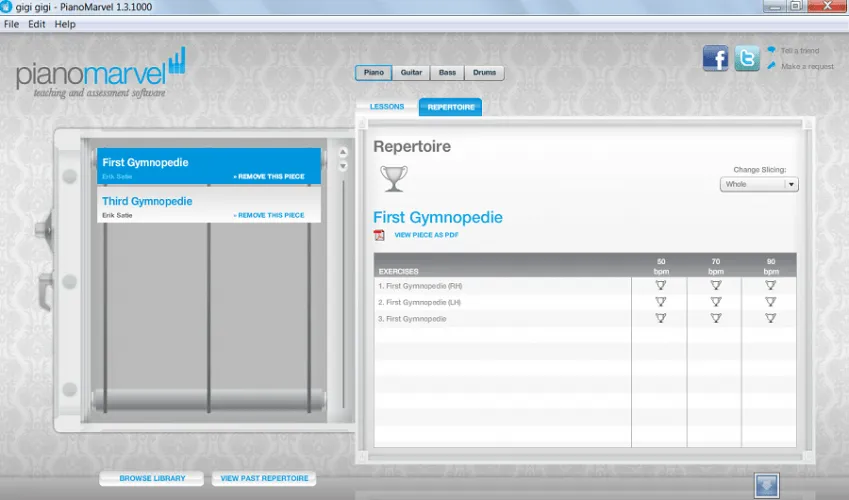
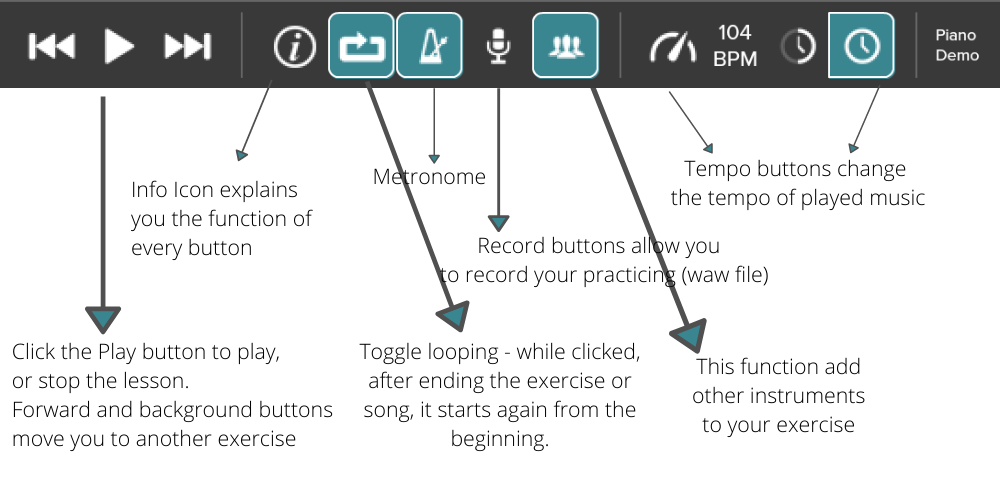
At their core, both platforms operationalize the same scientific principle: chunking. Cognitive load theory suggests our working memory can hold only about four to seven discrete chunks of information at once. Piano Marvel uses a methodical, page-by-page progression that breaks pieces into microscopic phrases, forcing the user to master a two-note interval before touching a four-bar melody. Playground Sessions, conversely, deploys visual patterning—a color-coded, falling-note interface that maps pitch to spatial location on the screen, bypassing traditional notation initially. This taps into our innate visuospatial reasoning, the same neural hardware used for catching a ball or navigating a crowd. The difference in their approaches is not merely aesthetic; it is a fundamental disagreement about how to optimize the brain’s encoding phase. One forces deep, deliberate decoding; the other encourages immediate, pattern-based motor mimicry.
The data tells us that neither approach is superior in a vacuum; it is a question of bandwidth allocation. If your goal is to read sheet music fluently (a process requiring the visual cortex to decode symbolic syntax), Piano Marvel’s constraints are essential. If your goal is to feel the joy of playing a pop song tonight, Playground Sessions’ immediate gratification loop wins. However, the most pragmatic users understand that they are not choosing a teacher; they are choosing a training treadmill. Both platforms provide synchronous feedback on pitch and rhythm—a feature that mirrors the corrective role of a human instructor. This real-time auditory-motor coupling is critical. When you play a wrong note, the immediate visual red flag allows your brain to erase the error trace before it becomes myelinated. The longer the gap between error and correction, the harder it is to unlearn. Here, we dissect the biology, the hacks, and the delicate art of optimizing your practice hours.
Must Read
The Neuroscience of Feedback: Why Your Brain Demands Immediate Error Correction
Delving deeper, the efficacy of these apps hinges on a specific neural mechanism: predictive coding. Your cerebellum constantly generates predictions about the sensory consequences of your motor commands. When you press a key expecting a C, your brain pre-fires a simulation of that sound. If the actual sound is a C#, a mismatch signal—an error prediction—is generated, triggering a cascade of attention and synaptic adjustment. Piano Marvel’s assessment engine, which scores every note in real-time, amplifies this prediction error signal by forcing you to confront the mistake instantly, often within 200 milliseconds. This is biologically superior to practicing alone, where you might not notice a mistake until the end of a phrase, by which point the incorrect motor pattern has already been reinforced. The app effectively turns every practice session into a series of micro-neurosurgical corrections.
Furthermore, we must consider the role of myelinogenesis—the process of insulating neural pathways to increase signal speed. Myelin is deposited around axons primarily during deeply focused, slow, and accurate repetitions. Both platforms inadvertently address this, but with different side effects. Piano Marvel’s methodical, grades-based progression forces a slow tempo (often 40 beats per minute), which is the ideal speed for maximizing myelin density. Rushing through a piece, as Playground Sessions encourages when you try to keep the backing track, can lead to sloppy, partially myelinated pathways. Conversely, Playground Sessions offers a "waiting" feature that pauses the backing track until you hit the right notes, which—paradoxically—teaches your brain to integrate rhythm with physical action under pressure. The key chemical mediator here is acetylcholine, released during high-focus states, which primes the cortex for plasticity. The gamified scoring in both apps triggers a dopamine spike upon success, which paradoxically locks in the prior motor sequence, good or bad. Thus, you must hack the scoring system to ensure you are rewarding precision, not just completion.
The lesser-known biological aspect is the impact on the default mode network (DMN). When you passively listen to music, your DMN is active—you daydream, associate, and wander. When you actively play an instrument in a structured feedback loop, the DMN is suppressed, and the central executive network takes over. The constant visual prompts of falling notes in Playground Sessions keep your working memory continuously updated, preventing mind-wandering—a state that is the enemy of skill acquisition. Piano Marvel’s old-school notation reading forces a more intense, borderline meditative concentration, as your brain must translate abstract symbols into motor commands. This is why a 20-minute session on Piano Marvel can feel more exhausting than a 45-minute session on Playground Sessions. Understanding this, you can schedule your practice time to align with your natural circadian energy peaks, not just your free time.

Optimizing Your Practice: Measurable Life Hacks for Neural Efficiency
Stop practicing randomly. You need a protocol that treats your practice session like a high-intensity interval training (HIIT) workout for the brain. First, conduct a 2-minute "activation" phase. Do not play the piano. Instead, simply press the keys in a pattern you already know. Why? Because this warms up the corticospinal tract—the neural highway from the motor cortex to your fingers—increasing blood flow to the prefrontal cortex. Then, set a strict time limit: 25 minutes. Use a timer. Neuroscience shows that the vigilance decrement—a decline in attention over time—begins after roughly 20 minutes on a single task. Split your practice into two 25-minute blocks per day, separated by at least 3 hours, rather than one 50-minute block. This utilizes the spacing effect, a robust finding that memory consolidation is superior when information is encoded in distributed sessions.
Second, manipulate the software’s scoring thresholds. In Piano Marvel, do not advance to the next lesson until you score 94% or higher on a specific exercise three consecutive times. Why? Because an 85% score means you are reinforcing multiple errors. The 94% threshold forces you to slow down to a tempo where myelin can properly wrap the axons. For Playground Sessions, disable the visual falling notes after you’ve learned the notes (approximately 3 attempts) and rely solely on your ear and the vertical keyboard. This forces the brain to transition from sensory-guided motor control to predictive motor control, which uses the basal ganglia—a much more efficient system that requires less energy. This is the ultimate biological hack: weaning yourself off training wheels.
Third, use the "Pre-session Recall" hack. Before you even open the app, visualize the first line of the piece in your head for 90 seconds, seeing the keys moving. Brain imaging studies show that merely imagining playing a piano activates the same motor cortex regions as actual playing, and it strengthens the cortico-thalamic loops. Then, immediately play the section without the app’s feedback. Ask yourself: "What did I predict, and what happened?" Then turn on the app’s assessment. This process of prediction-error tagging significantly accelerates learning speed. Fourth, track your effector load. The fingering is the most cognitively expensive part. Spend 5 minutes of your session specifically looking at the fingering annotations in the sheet music, not the notes. Practice the right-hand fingering silently on your lap while watching TV—this is "shadow playing," which increases contact time with the motor sequence without auditory fatigue.
Finally, hack the variable reward schedule. Both apps use points and streaks. Recognize that your brain is addicted to the uncertainty of a high score. Use this to your advantage. Do not practice the same song more than three times in a row. Rotate between three songs of varying difficulty. This is called interleaved practice. The slight increase in cognitive effort required to switch contexts between songs should be celebrated, as it leads to better long-term retention and generalizability than blocked practice. And crucially, remember to hydrate. Even a 2% dehydration level impairs cognitive performance and reduces your reaction time to those falling notes. Keep a water bottle next to your piano stand; optimize your physiology for optimal data intake.
Frequently Asked Questions: Troubleshooting Your Digital Piano Journey
1. I'm a strict beginner. Which app keeps me from getting frustrated and quitting?
Biologically, frustration is a threat response driven by the amygdala. Playground Sessions is engineered to minimize this threat via its support of popular melodies and a robust backing band. You get immediate musical satisfaction, which creates a powerful positive association with the instrument. The falling notes are purely visual, so you don't have the mental overhead of decoding sheet music, which reduces cognitive dissonance and feelings of overwhelm. If you are prone to anxiety, the low initial barrier to entry here is your friend. You will feel like you’re socializing with music, not studying it.
However, if your specific frustration is that you feel you are "not really learning" because you are just mimicking colors, then Piano Marvel might actually be less frustrating long-term, despite its steeper initial curve. Its method is granular, and the built-in sight-reading tool gives you a clear metric for improvement. Frustration often stems from a lack of perceived progress. Piano Marvel gives you a percentage score on every exercise, turning "vague feeling of inadequacy" into "clear, numeric improvement." The hack is to start with Piano Marvel’s methodical path but supplement it with a 5-minute "fun song" of your choice every session. This dual-track approach addresses both the amygdala (emotional satisfaction) and the prefrontal cortex (skill acquisition).
2. Can I actually learn to read sheet music using Playground Sessions, or just fake it?
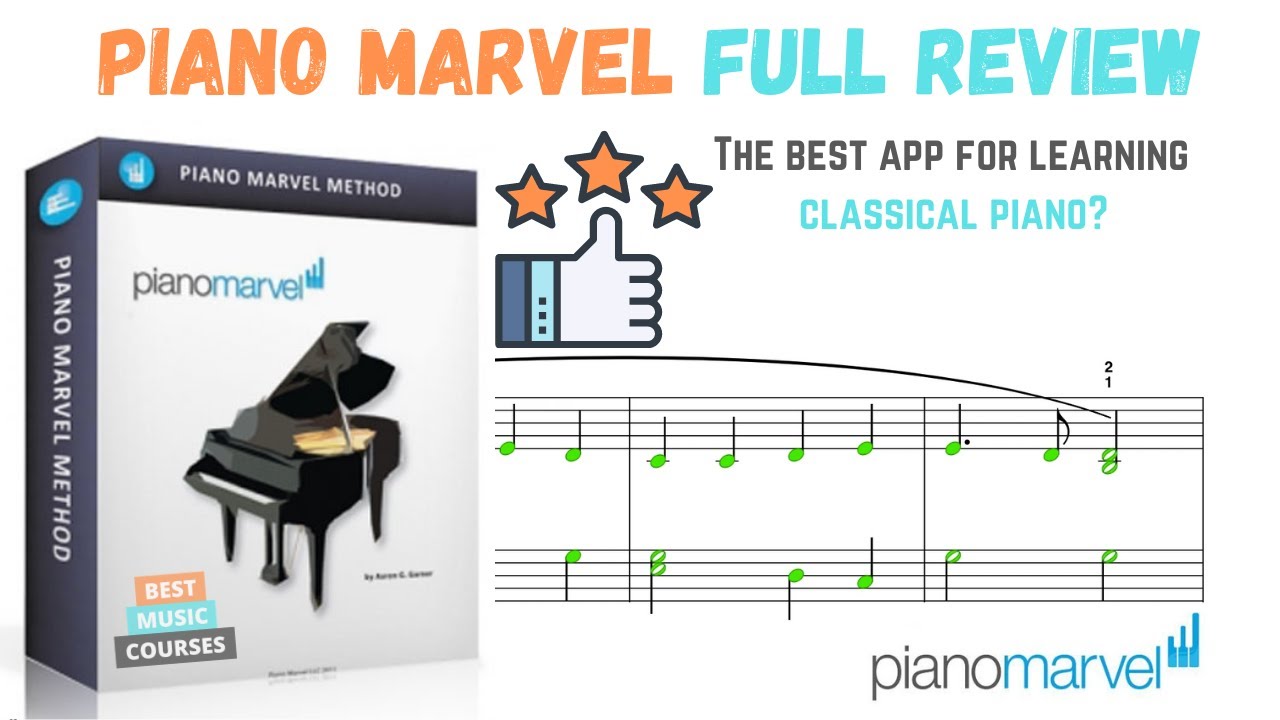
Playground Sessions is not designed for traditional literacy. Its primary interface teaches the geography of the keyboard—spatial mapping. However, a powerful hack is to deactivate the visual falling notes after 3 successful plays and force yourself to look at the on-screen sheet music that is displayed alongside. The software has a notation view that highlights the note you are supposed to be playing. This synchronization allows your brain to slowly attach the spatial action to the symbolic representation. The science is all about bimodal fusion—associating the sound (auditory) with the symbol (visual) and the location (somatosensory).
The honest answer is: Playground Sessions gives you a rough draft of reading. Piano Marvel is a full literacy course. If your biological goal is to achieve true fluency—reading ahead of your hands—you must eventually switch or supplement. For the sake of efficiency, I suggest using Piano Marvel for 15 minutes of formal reading drills, then using Playground Sessions as a "reward" for those drills. This leverages the dopamine from Playground Sessions to make the hard work of Piano Marvel feel worth it. You are not faking; you are using a scaffolded approach to a higher-order cognitive skill.

3. My practice time is minimal—20 minutes a day. Which platform gives me the most bang for my buck?
Time is your most limited resource, so you need to optimize for neurotransmitter efficiency. With only 20 minutes, you cannot afford the time to read complex notation and struggle with notes. In this scenario, Playground Sessions wins because its UI eliminates the cognitive overhead of reading symbols. You can be in a "flow state" within 90 seconds of opening the app, playing a recognizable melody. The biological payoff is immediate dopamine release, which reinforces the habit of sitting down to practice. Habit formation is more critical than skill acquisition in the early weeks of minimal time.
However, if you have 20 minutes, I present a better hack: use Piano Marvel for the first 8 minutes to do a specific technical exercise for reading, using their assessment tools to track your accuracy. Use the remaining 12 minutes on Playground Sessions to play a song you love. This is a high-intensity interval training structure—short bursts of hard focus, followed by a fun, lower-stress reward. This prevents the cortisol buildup from tedious reading, which would make you quit eventually. The data suggests that combining the two, even in a small segment, is superior to exclusively using one for 20 minutes.
4. Why do I keep making the same mistake at the same spot? The app isn't fixing it.
This is a classic data feedback loop failure. You are likely playing the piece too fast, and your brain is relying on muscle memory from the erroneous pass. The scientific reaction to a plateau is to distort the time dimension. Zoom into the problem spot—the one bar—and increase the tempo digit by digit until you fail. Then, slow down to 60% of that failing tempo and play it correctly three times. This forces a process called synaptic pruning, where the weak connections are erased. The mistake is likely a fingering issue. You are using a biomechanically inefficient finger, which causes a stumble. The app can’t fix that; it only hears the wrong note.
Another critical biological factor is sleep consolidation. If you practice the mistake 10 times and then stop, your brain will consolidate the mistake overnight. The correct hack is to stop practicing the piece immediately after you have played it correctly twice, and then go to sleep. This ensures the latest memory trace is the correct one. If you change apps to see if the other one helps, it won’t. The issue is your motor program, not the interface. The pragmatic solution is to isolate the problem, slow it down drastically, and finish on a successful repetition before you end your session.
5. Do I need to invest in a weighted key digital piano for either app to work?
Yes, and this is a non-negotiable biological necessity. Weighted keys provide kinesthetic feedback—the tactile sensation of force. This feedback activates the proprioceptive receptors in your muscles and tendons. This information is sent to the cerebellum to refine motor accuracy. On a cheap, unweighted keyboard, the keys are springs; they offer no variance in resistance. This means your brain gets no information about force, only velocity. This is a shallow learning signal. Your fingers will develop a poor sense of dynamic control. Both apps have algorithms that can detect velocity (how fast you press), but on a spring-loaded keyboard, that algorithm is reading a crappy on/off switch.
Specifically for Piano Marvel, the assessment engine relies on precise timing of key release and press. Stiff, unweighted actions often lead to ghost notes or missed triggers due to hammer bounce. For Playground Sessions, the musicality of the backing track requires you to play with expression—quiet parts and loud parts. Without weight, you will play everything at the same volume, ruining the musical pleasure that keeps you motivated. My strict advice: purchase a 88-key digital piano with a hammer-action keybed, even if it’s used. Look for specifications that mention "tri-sensor" scanning. This is an investment in your brain’s data quality, not just a musical toy.
Respecting the science of learning means accepting that you are a biological machine with specific maintenance requirements. You cannot hack your way to mastery without acknowledging the need for sleep, the power of spacing, and the necessity of error to trigger plasticity. When we stop thinking of these platforms as entertainment and start treating them as laboratory equipment, our practice time becomes quantifiable and efficient. We stop feeling guilty for not playing "real songs" and start feeling proud of our consistency and our slow, steady accuracy metrics.
The better human is not the one who plays faster or more songs. It’s the one who understands that every wrong note is a data point, not a failure. By leveraging the immediate feedback of these digital tools, we condition ourselves to accept feedback in other areas of life—our jobs, our workouts, our relationships. We become iterative, not static. The piano becomes a meditation on optimization, a microcosm where we learn that the path to fluency is paved with deliberate, tense, and deeply focused repetitions. And that is a life hack that transcends the keyboard.