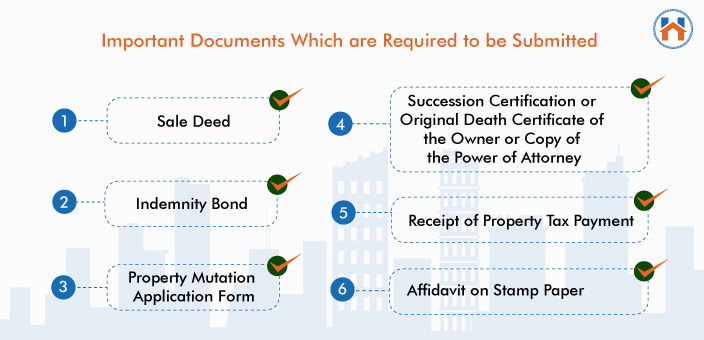
Name Change In Property Tax Hyderabad
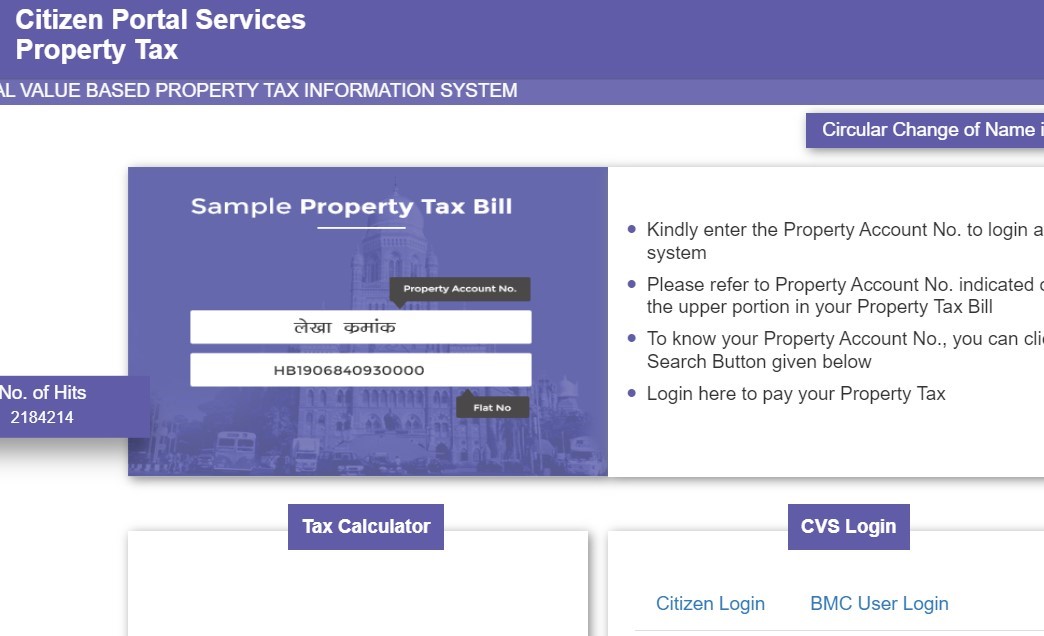
In the sweltering, dust-laden afternoons of a Hyderabad that existed before the glass facades of Financial District, the city’s identity was etched in chronologies of ownership—in the creaking ledgers of the Muncipal Corporation, the yellowed patta papers passed down through generations, and the whispered negotiations in the bylanes of Charminar. To change a name on a property document was not merely a bureaucratic transaction; it was a rite of passage, a quiet acknowledgement of a life’s turning point. A daughter’s marriage, a father’s final will, a partition between brothers—these were the deeply human necessities that first pushed people toward the imposing counters of the old GHMC office. The process, back in the 1980s and 90s, was a test of patience, a pilgrimage of attesting gazetted officers, and a marathon of affidavits on non-judicial stamp paper that often cost more in time than in actual fees.
The original motive was profoundly simple: legitimacy in inheritance. In a city where the Quli Qutb Shah dynasty had once assigned lands with a royal firman, and where the Nizam’s administration later introduced a more formalized land registry, the act of changing a name was a sacred seal on familial continuity. There was no digital record, no online portal; the only truth was the physical file, moving from the Tehsildar’s desk to the sub-registrar’s chambers, often requiring a tout or a local broker who knew the exact corridors to walk and the correct hands to grease. The nostalgia of that era lies not in its inefficiency, but in its tangible nature—every stamp, every signature, every fingerprint was a physical testament to a human journey. It was slow, yes, but it was story-driven, with each applicant carrying a miniature saga of their family’s history to the dusty shelves of the land record office.
Yet, beneath this romance of paperwork lay a deep anxiety. The fear of a wrong spelling, a mismatched father’s name, or a missing mutation entry could render a property legally orphaned. The initial necessity was not just about changing a name; it was about survival of the asset. In a city where land prices began to spike in the late 1990s, fueled by the IT boom’s early tremors, the mutation of records became a shield against encroachment and dispute. The humble beginnings of the process were rooted in a pre-internet consciousness where the physical map of the city was the only truth, and the name on the document was its guardian.
Must Read
The Digital Tsunami and the Death of the File
The transformation of the name change process in Hyderabad is a tale of two centuries. The first seismic shift came with the 1998 computerization of land records under the National Land Records Modernisation Programme, a precursor to the far more radical Dharani portal. For the first time, a property’s history was visible on a cathode-ray tube screen, albeit in a flickering, green-on-black interface. The old, handwritten Settlement Register—a massive, leather-bound tome that held the genealogy of every plot in Secunderabad—was slowly relegated to the archives. The bizarre vintage fact of this transitional period was the use of photocopied survey maps that were often taped together, manually annotated with blue ink, and then re-photocopied to create a “true copy” for the applicant. If you didn’t know the exact khasra number, your request for a name change would be lost in a labyrinth of mismatched polygons.
The real revolution, however, arrived with the Mee Seva centers in 2011, and later, the full-force implementation of the Dharani portal in 2020. The era of the tout began to fade, replaced by biometric authentication. The process that once took months of running between the MRO office and the Registration office was compressed into a single digital workflow. But the transition was not smooth; it was a violent, chaotic birth. Long-forgotten properties with unresolved family partitions suddenly surfaced as “anomalies” in the digital system, leading to temporary freezes. The analytical mind marvels at how the city’s memory—its collective land history—was being forcibly migrated from human brains and paper files into a centralized, unforgiving database. The human necessity of speed and transparency clashed with the legacy of ambiguity.

In this digital era, a peculiar vintage behavior emerged: the duplicate mutation application. People who had successfully changed their name in the old GHMC records in 2005 discovered that their mutation was not automatically migrated to the new Dharani system, forcing them to re-litigate their grandfather’s inheritance all over again. This bizarre redundancy came to be known colloquially as the “second-name-change”—a phantom process where you had to prove that you had already proven your ownership. During this period, the Aadhaar linking became mandatory, and the simple act of adding a spouse’s name became an ode to the UIDAI database, requiring the OTP to be routed through a mobile number that might belong to a long-departed relative. The nostalgia here is for the certainty of the old paper, but the reality is the fluidity of the new data.
Furthermore, the last decade saw the rise of the aggregator consultants—not the old touts, but tech-savvy lawyers who offered “name change audit” services. They would scan the Dharani portal for historical discrepancies, unearthing forgotten “corrections” made in the 1980s that had never been formally stamped. This hack of the system, while legal, highlighted the deep generation gap in property cognition: the older generation viewed the name change as a one-time event, while the younger, digitized generation treats it as an ongoing metadata management exercise. The laws of stamp duty revision in 2012 (increasing registration charges) also changed the calculus, making people delay name changes to avoid the 6% stamp duty, only to be caught later in a web of penalty fees that now populate the digital invoice.
Hacking the Heritage: Modern Workarounds for an Ancient Ritual
The classic principles of the name change—proof of linkage, verification of identity, and mutation of record—have been ruthlessly hacked by the modern era. The biggest hack is the “Guideline Value” loophole where individuals now perform a “gift deed” instead of a sale deed or a simple mutation, solely to make the name change cheaper. This is a direct modernization of the ancient “Hiba” system under Islamic law prevalent in the old city, where a gift needed no registration if possession was transferred. Today, the same principle is being applied legally, but with a digital twist: the gift deed is registered online, and the name change is executed through a single e-signature, bypassing the physical visits that once defined the process. Another modern hack is the use of “self-attestation”—a concept that would have scandalized the old bureaucrats who demanded gazetted officer signatures. Now, a simple upload of a PAN card and a selfie is enough to validate a legal heir, collapsing weeks of notarization into minutes of typing.

Furthermore, the introduction of the Real Estate (Regulation and Development) Act (RERA) in 2016 forced a parallel system where the name change is now often pre-validated at the builder’s level before the title is even registered. This is a top-down hack: the property developer’s legal team now performs the primary due diligence and files the name change with the Telangana State Industrial Infrastructure Corporation (TSIIC) or the local municipal authority as a batch process. This modernized approach prioritizes portfolio efficiency over the individual’s story. However, the hacks have also given birth to a new anxiety: the digital ghost. A name change executed online but with a minor typo in the survey number can create a parallel digital shadow of the property, leading to a frozen ledger that is far harder to fix than the old paper files. The classic principle of “custodial verification” has been replaced by the algorithmic trust of the Dharani server, which is both a liberation and a risk.
Frequently Asked Questions: Bridging the Ledger and the Cloud
1. Is a name change in the property tax records (GHMC) the same as a mutation in Dharani, and how does the older “Khata” fit into this?
Ah, the eternal confusion. Historically, the GHMC Khata was the municipal tax receipt, a document that showed you paid the property tax, but it was not a title deed. In the pre-2000s, many Hyderabadi families used the Khata as their primary proof of “ownership,” which was a tragic mistake, as it held no legal value for title. The Dharani portal, however, is the land records repository; a name change there is the mutation of the patta, which is the true legal ownership. The modern hack is that the GHMC now synchronizes with Dharani, but a mismatch is common. If you changed your name in the GHMC tax records in 2015 but didn’t update the Dharani patta, you are in a “limbo”—you pay the tax under the new name but are legally the owner under the old name. The modern advice is to treat the Dharani mutation as the mandatory core, and the Khata update as merely a beautification layer.
Historically, the Khata system was used for a bizarre purpose: to avoid paying the higher stamp duty on a sale deed. People would simply transfer the Khata name via a sada (simple) agreement and consider the property “sold,” a practice that led to numerous litigations in the City Civil Court. The modern fix requires you to retroactively pay the market value stamp duty to convert this unregistered transfer into a valid Dharani mutation. The myth that “Khata is sufficient” is a dangerous antique; the reality is that only the Dharani passbook (issued post-2020) is the state’s official word. Therefore, your name change must be executed at the Mee Seva center via a Form 11B for sale and Form 3 for inheritance, bridging the old municipal logic with the new land governance.
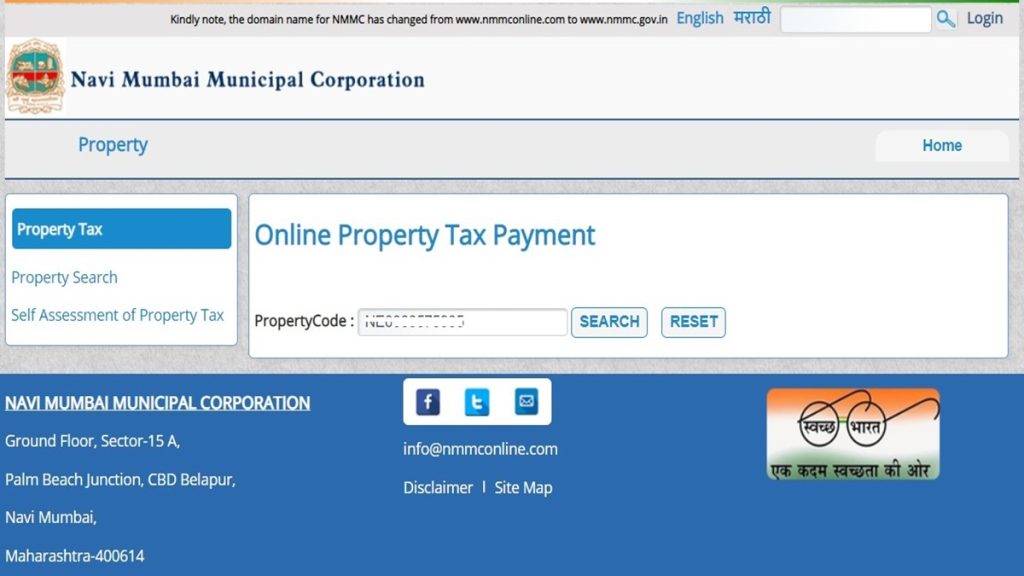
2. What happens if my parents passed away before the Dharani portal started, and our family property is still in their name? Is the process more complex than the “heirship” certificates of the past?
In the era before 2010, the legal process for a name change after a death was a journey through the Civil Court to obtain a Succession Certificate (if there was a will) or a Legal Heirship Certificate* from the MRO, a process that took months and often required a lawyer’s constant nagging. The initial data of deaths was manually recorded in the Birth and Death Register, and the name change was a manual write-off in the ledger. Today, the Dharani portal has induced a digital blockade if the land is held in a deceased person’s name without a clear mutation. The complexity has actually increased because the system demands a digital heirship certification that is often cross-linked with the e-District portal.
However, the modern hack is the “Simplified Succession” via a Family Membership Certificate on the T-App Folio platform, which, when combined with a sworn affidavit and two witnesses, can often bypass the civil court for small, residential properties. But the historical myth is that the “legal heir” is automatically the sole inheritor. In reality, under the Hindu Succession Act (applicable to most in Hyderabad), the name change requires the consent of all Class I heirs. The old process allowed the eldest son to informally claim the name; the new Dharani system will reject the application unless every sibling has appended their biometric signature, even if they are in the US or UAE. This is a harsh, futuristic reality check: the digital system is more democratic, but far less accommodating to the patriarchal shortcuts of the past.
3. Can I perform a name change for a property in Hyderabad if I am an NRI, and how does the “General Power of Attorney” (GPA) from the 1990s play into this?
For decades, the NRI’s only option was to execute a General Power of Attorney in favor of a relative, who would then physically stand in the queues at the Ibrahim Bagh sub-registrar’s office. This GPA was often written on ₹100 stamp paper, and its validity was a constant source of dispute. The Supreme Court’s ruling in 2011 (Suraj Lamp Case) essentially banned the transfer of title via GPA alone, making the old documents almost worthless unless accompanied by a registered sale deed. For an NRI today, the name change process is a hybrid of nostalgia and futurism. You must either appear in person at the Indian Consulate in your country of residence to execute a Special Power of Attorney (SPA) for the specific mutation task, or (since 2021) you can use the online e-Office protocol to file a virtual application with video verification via a Facilitation Center.

The modern method allows the NRI to upload their passport and a digital OTP authenticated copy of the SPA. Yet, the forgotten vintage fact is that the Dharani platform’s software was originally coded with a requirement for a physical signature on the final registration, a throwback to the Indian Evidence Act’s distrust of remote attestation. The hack now involves a “Digital Signature Certificate” (DSC) which, for an NRI, often requires a physical USB token mailed to them, adding a whimsical week of shipping into the narrative. The historical myth that a “blank GPA” could fix everything in the future is now dead, replaced by the reality of a two-factor authentication that links the NRI’s Aadhaar (if they still have an Indian phone number) to the property. The future is clearly a borderless ledger, but the passport—the ultimate name-change document of the nation—remains the key.
The Next Two Decades: The Sentient Ledger and the End of the “Name”
Looking toward 2045, the concept of a “name change” in property tax will likely become an archaic phrase, a nostalgic artifact akin to a floppy disk. The trajectory points toward blockchain-based fractional titling where the property will not be owned by an individual’s name but by a cryptographic identity hash linked to a biometric soul. The central database will not just record the change; it will predict it. If you inherit a property upon your mother’s death, the smart contract on the ledger will automatically trigger a mutation in your digital land pass, based on the state’s birth and death registry feeding directly into the land records. The six-month waiting period will vanish, replaced by a real-time settlement. Furthermore, with the rise of AI-driven governance, the property tax will be dynamically assessed based on usage intensity, and the “name change” will be replaced by a “usage role reassignment”—a bureaucratic zombie that has mutated beyond human casework.
Yet, the nostalgia will remain. We will fondly remember the days when we had to plead with a Sahib at the MRO office, when a stamp paper carried the scent of authority. The human necessity behind the name change—the desire to leave a legacy, to protect one’s children, to formalize love—will never disappear. The future will strip away the friction but also the ritual—the emotional closure that comes from physically holding a new document. In twenty years, the query will not be “how to change the name?” but “how to share the digital key?” The story of Hyderabad’s property evolution is not just about technology; it is about the eternal human struggle to say “this is mine, and it will be yours.” As we hurtle toward a sentient ledger, we carry with us the ghosts of the patta papers, and the city, in its silent, dusty streets, remembers every name it has ever held.