Interactive Brokers Margin Loan Rates
Let’s be real for a second: you’ve probably seen the memes. The “degen” trades, the “YOLO” screenshots, and the absolute chaos of someone turning a used Honda Civic into a million dollars—or, more likely, turning a million dollars into a used Honda Civic. But beneath the viral clips of Reddit’s WallStreetBets and the frantic TikTok “finfluencers” screaming about their portfolios, there’s a quieter, less glamorous engine driving it all: margin debt. And right now, Interactive Brokers is the cool kid on the block, flashing the lowest rates in the industry like a Rolex at a dinner party. Everyone is talking about it, not because it’s sexy, but because it’s the financial equivalent of finding out your favorite underground DJ also owns the club.
The discourse has shifted. It’s no longer about just picking a stock; it’s about how you leverage your existing holdings to buy more. In a world where the “main character energy” is defined by financial flexibility, the margin loan rate has become a status symbol. The average rate at legacy banks is a brutal 12% to 14%—a financial vampire that sucks the life out of your returns. But Interactive Brokers is out here offering rates that hover near the benchmark plus a tiny spread, often sitting in the 6% range for smaller accounts. It’s the financial equivalent of finding a luxury penthouse at a rent-controlled price. This isn’t just a rate; it’s a personality trait. It says, “I’m not just rich; I’m efficient.”
Why the sudden obsession? Because we are living in the era of the “Money Glitch.” TikTok is saturated with videos claiming you can “beat the system” by borrowing against your portfolio to pay for a house or a car, then investing the cash you would have used into a high-yield ETF. The algorithm loves this shit. It’s high-stakes, it’s rebellious, and it feels like you’re hacking the economy. But as with any viral trend, the hype obscures the fine print. The truth is, everyone from Gen-Z day traders to boomer real estate moguls is flocking to Interactive Brokers to see if the grass is actually greener on the margin side, and the internet is split between calling it a cheat code and a one-way ticket to homelessness.
The Subculture of "Smart Debt" and the Virality of Leverage
There is a weird, almost fetishistic subculture online dedicated to “good debt.” In these corners of Twitter and YouTube, carrying a balance is not a sin; it’s a strategic move. They mock the Ramsey-ites (followers of Dave Ramsey) for being financially celibate, arguing that refusing to use leverage is like refusing to use a microwave because you’re scared of radiation. The hive mind here believes that if your investment return on capital exceeds the cost of the loan, you’re literally printing money. This has birthed a toxic but fascinating dynamic where users compare their Interactive Brokers statements like trading cards. Screenshots showing a 6.5% rate versus a friend’s 6.8% rate are treated with the same reverence as a rare Pokémon card reveal.
Social media dynamics have also amplified the risk. FinTok’s algorithm rewards extreme results, not moderate caution. The viral narrative is that Interactive Brokers is the “hack” to buy a rental property with zero down payment or to avoid selling your winning stocks to pay taxes. It’s become a badge of honor to have your assets “working for you” while you sip oat milk lattes. However, this subculture often ignores the “pro-cyclical” nature of leverage. When the market dips 2% and the meme stocks hit circuit breakers, these same influencers go silent. The toxic part isn’t the borrowing—it’s the dopamine feedback loop. The 24/7 access to rates and instant borrowing power creates a sense of omnipotence that is historically catastrophic for personal wealth. It’s a culture that celebrates the high but prefers not to discuss the hangover.
Navigating the Margin Maze: How to Use Leverage Without Losing Your Sanity
First things first: stop treating your Interactive Brokers account like a casino slot machine. The rate is low, but the LTV ratio (Loan-to-Value) is the real boss here. If you’re starting, keep your leverage below 25% of your portfolio value. This isn’t me being cautious; this is math. If you borrow $10,000 against a $100,000 portfolio, you have a 10% cushion before a margin call. That’s enough to weather a Tuesday. But if you try to max out the line of credit because the rate is low, you are literally one bad CPI report away from forced liquidation. The algorithm rewards moderation; the liquidation notices do not.
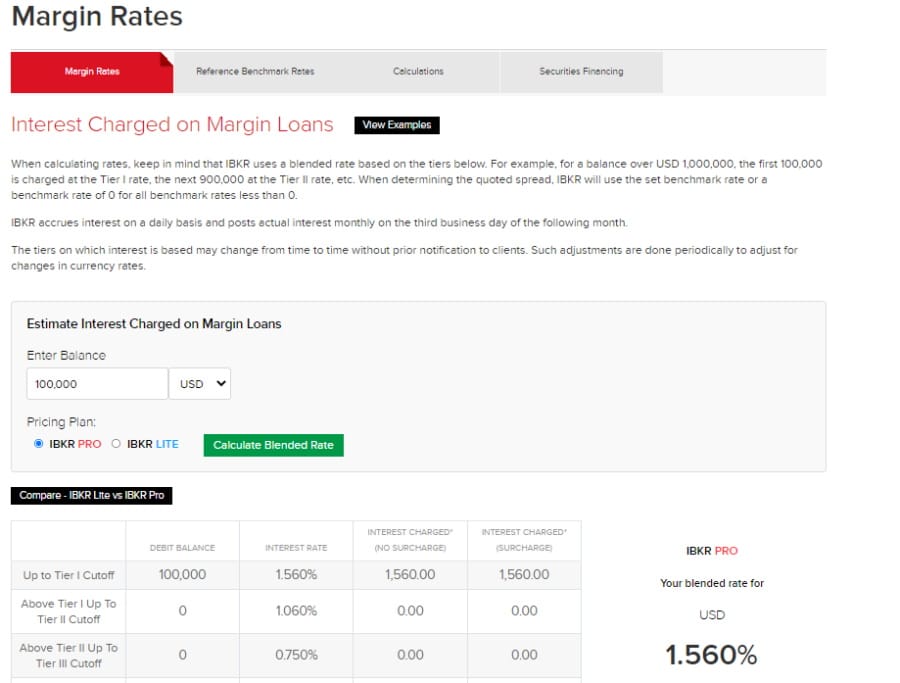
Secondly, understand the “Pro” vs. “Lite” pricing structure. Interactive Brokers offers different tiers. The rates are remarkably similar, but the catch is the margin interest is calculated on a tiered schedule. You don’t pay one flat rate on your entire balance. It’s incremental. Don’t be the guy who calculates the rate on the first $10,000 and assumes it applies to his $500,000 loan. The second thing to monitor is the Fed Funds Rate. IBKR rates are variable and move with the central bank. If the Fed raises rates, your “cheap” money suddenly gets pricey. Track the macroeconomic calendar like it’s a WAG (Wild About Gaming) drop—checking twice a week is mandatory.
Third, use the “Portfolio Margin” account feature only if you have an advanced degree in masochism or finance. This feature offers even lower rates, but it calculates risk on a daily basis. It can chop your required margin in half, which sounds amazing, until a volatility spike—like a war breakout or a Trump tweet—causes your margin requirement to double in minutes. That’s the technological equivalent of your car’s airbags deploying at 70mph for no reason. For the 99% of us, a Reg-T Margin account is sufficient. Keep your life simple; you don’t need the professional-grade instrument if you’re just trying to buy the dip.
Finally, treat margin like a personality flaw you manage, not a superpower. Set a “doom scenario” budget. Before you borrow a dime, calculate what your monthly payment would be if the rate jacks up 3% AND your portfolio drops 20%. Can you survive? If the answer is “I’ll just sell something,” you are missing the point. Selling an asset in a downturn to cover interest is a double loss. The most effective strategy is to only borrow for short-term liquidity gaps—like bridge financing a house purchase—and to have a bulletproof exit plan. Do not borrow to “buy more stock.” That’s how you end up as a cautionary tale on a finance podcast. The industry is full of those.
Your Burning Questions, Answered (With the Good Gossip)
Is the Interactive Brokers rate really as low as people say on Twitter?
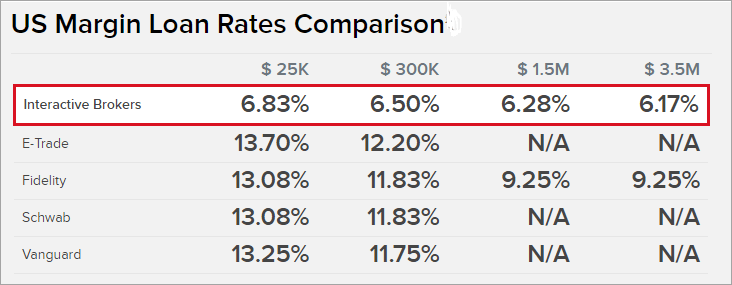
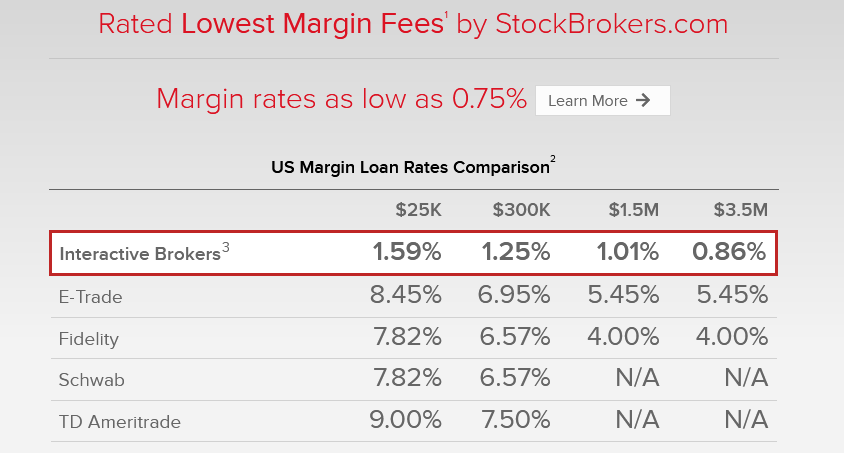
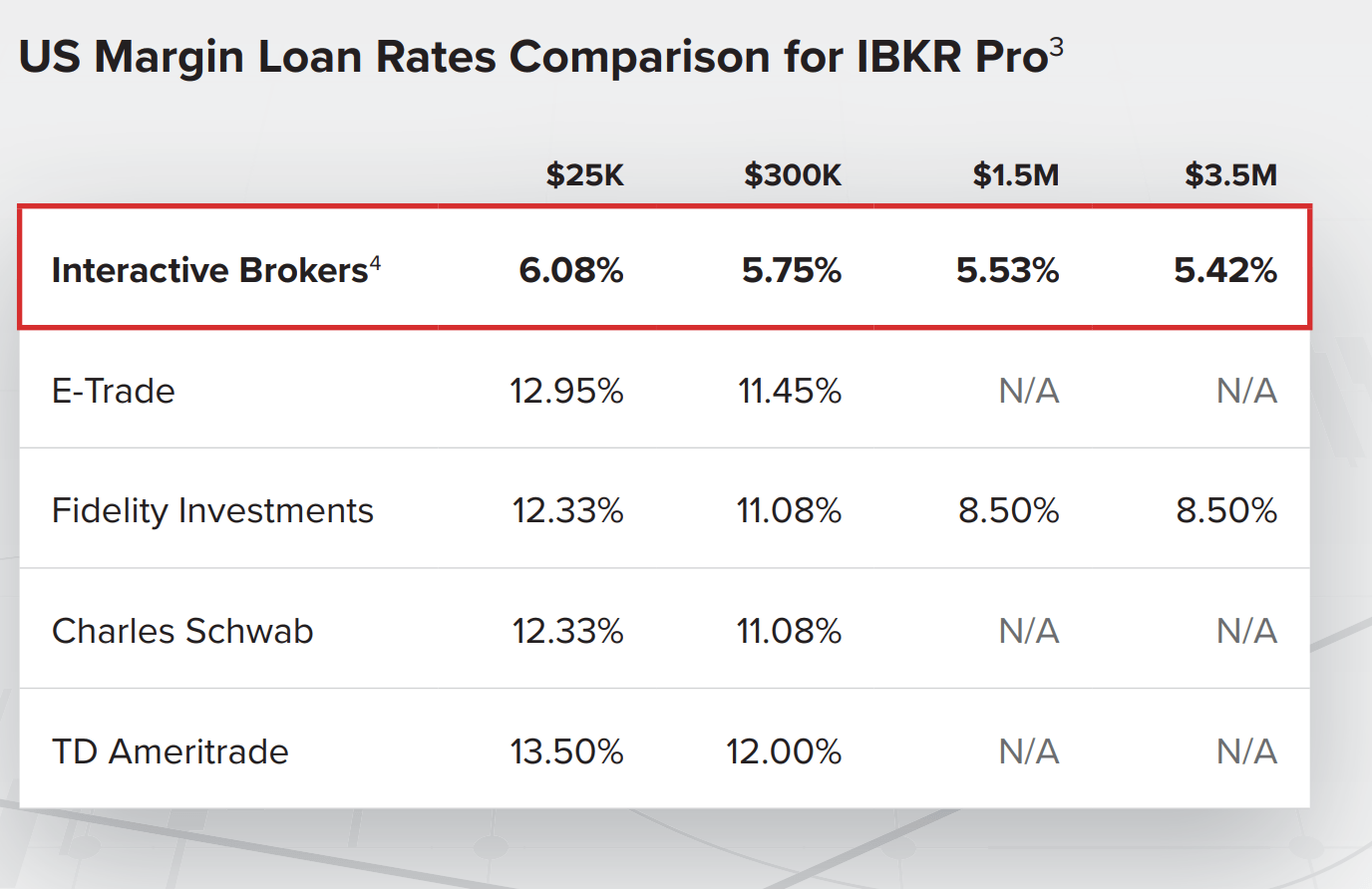
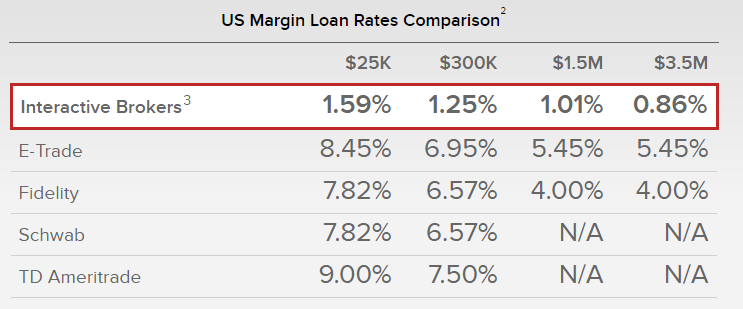
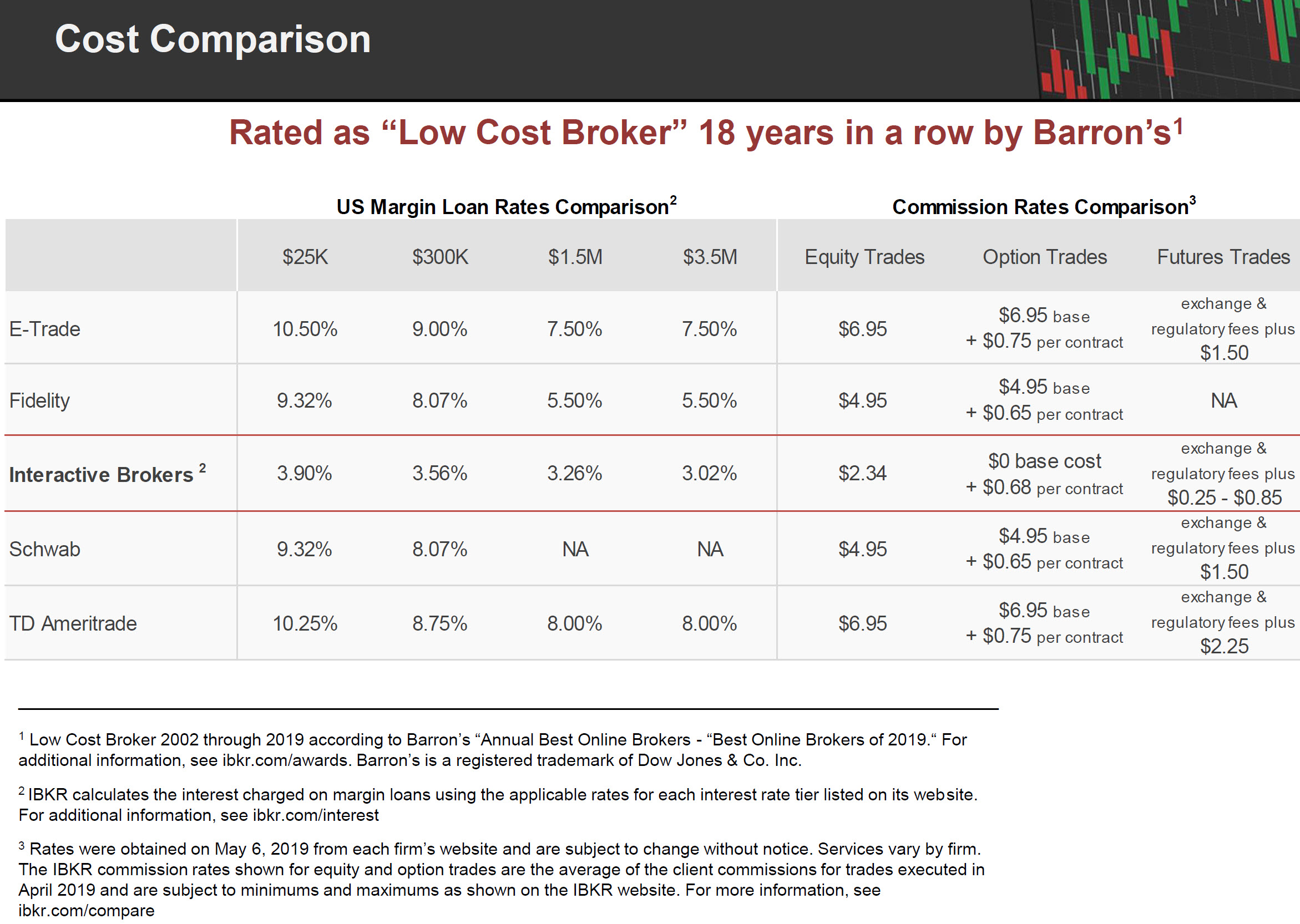
Yes, but with intense caveats. The rate for balances up to $100,000 is effectively the SOFR (Secured Overnight Financing Rate) plus 1.5%. As of late 2024, that puts you around the 6.83% range. For balances between $100k and $1M, the spread drops to 1%, and it gets lower from there. Compare that to Schwab or Fidelity, which are usually closer to 11.5% to 13%, and you see why the internet is frothing. However, the “gotcha” is that while the spread is low, the absolute rate is still >6%. In a high-interest environment, that’s not free money. It’s cheaper than a credit card but more expensive than a 30-year mortgage. The viral claims of “3% interest” are usually from users who are too stupid to realize they are counting their own cash deposits as collateral against the loan, reducing the net interest. Don’t fall for the flex.
Another nuance is the FX conversion fees. If you’re borrowing USD but your collateral is in EUR or GBP, you’ll get hit with a foreign exchange spread that can easily erase the savings. The low headline rate is in US Dollars only. Many “finfluencers” forget to mention that IBKR charges about 0.2% on currency conversions, which can be brutal if you are moving large sums around. Always check your base currency. If your account is in CAD, you are not looking at the same rate chart. This is the technical lag that separates the “viral predictors” from the actual savers.

Can I actually take that money to buy a house? Is that a good idea?
You can, but it’s a nuclear option. Interactive Brokers allows you to write checks or transfer funds against your margin for any purpose. So yes, you can liquidate your margin to buy a rental property. This is the infamous “Rich People Hack” that’s all over Instagram Reels. The logic is sound: instead of selling your Apple stock and paying capital gains tax, you borrow against it to buy the property. Your stock stays in the market, and you keep the upside. However, you are now reliant on the property income to service the 6.8% margin loan. If the property sits vacant for two months, or if the market drops, you now have a debt against a volatile asset to pay for an illiquid asset. This is how millionaires become thousandaires.
The practical answer is: it’s only “good” if you have an exit strategy for the margin call. Banks won’t call your mortgage loan if your house’s value dips. But brokers will liquidate your stocks without warning if the collateral value drops. I know a guy who did this in 2022 to buy a duplex. He was up for six months, then the Nasdaq crashed 30%. He had to dump the duplex at a loss to cover the margin call. The internet shows you the win, not the forced liquidation paperwork. If you must do this, keep the LTV on that specific loan below 15%, ensuring you have a massive buffer against a market crash. And for God’s sake, don’t buy a boat.
What happens if I hit a margin call and I’m a “long-term investor”?
Ah, the delicate question. You lose your leverage, and you lose your dignity. When you hit a margin call, IBKR gives you a few hours—sometimes less—to either deposit cash or sell securities. If you don’t, they liquidate your positions to bring the account back to compliance. They have the legal right to sell anything they want, usually the most liquid assets first, which are often your winners. This is the “forced order” that ruins portfolios. The viral take is that you can “ignore” the email and just wait it out. That is terrible advice. The magic of IBKR’s advanced technology is that it does it automatically; it’s not a human you can negotiate with. It’s a robot that follows the code.

The real issue is that a margin call usually coincides with a market crash—that’s why you got called. So you are selling your lowest-priced assets to pay down debt, locking in your losses. This is the exact opposite of the “buy low, sell high” mantra. If you consider yourself a long-term investor, you need to keep a cash cushion in the account at all times. Not 100% cash, but at least 10% to 15% of your total equity, so you can absorb a dip without triggering the margin alarm. Treat the margin loan as a tool for liquidity, not for leverage. If you’re using it for leverage, you are a trader. And traders get liquidated. It’s a rite of passage.
Is this a passing fad or a permanent shift? I lean toward permanent evolution. The era of the boomer bank charging 12% margin is dying. The “fine print” transparency that Interactive Brokers offers—while complicated—sets a new standard for consumer fintech. We are moving into a world where borrowing rates are algorithmically driven and tied to actual market benchmarks, not corporate greed. The trend of DIY investing is here to stay, and with it, the desire for institutional-grade tools at retail prices. The “fad” part is the reckless use. The viral video of the guy borrowing to buy a yacht will fade, but the infrastructure will remain.
However, the culture around leverage is becoming more sophisticated. We’ve seen the dot-com bust, the 2008 crash, and the 2022 bear market. Each time, the lesson is the same: the rate is never the problem; your position sizing is. The move toward cheaper margin is a good thing for democracy in finance—it levels the playing field against the 1% who always had access to cheap capital. But it’s a double-edged sword. If you treat the 6% rate as an invitation to gamble, you’ll be wiped out by a 7% drop. If you treat it as a smart financial tool, you’ll realize that the trend isn’t about getting rich quick; it’s about getting rich efficiently. And efficiency, my friends, never goes out of style.