Eye Laser Treatment Cost In Dubai

The human cornea is not a static lens; it is a dynamic, living tissue with a refractive index of approximately 1.376, functioning as the eye’s primary focusing element. When we discuss laser vision correction, we are fundamentally altering this biological optics system, sculpting the corneal stroma to bend light with microscopic precision. In Dubai, a city engineered on the principles of optimization and high-output performance, the decision to undergo this procedure is increasingly framed not as a medical emergency, but as a systemic upgrade to one’s daily operational efficiency. The cost, however, is not a monolithic figure; it is a variable dependent on the physics of the laser, the biology of your tissue, and the economic architecture of the city itself.
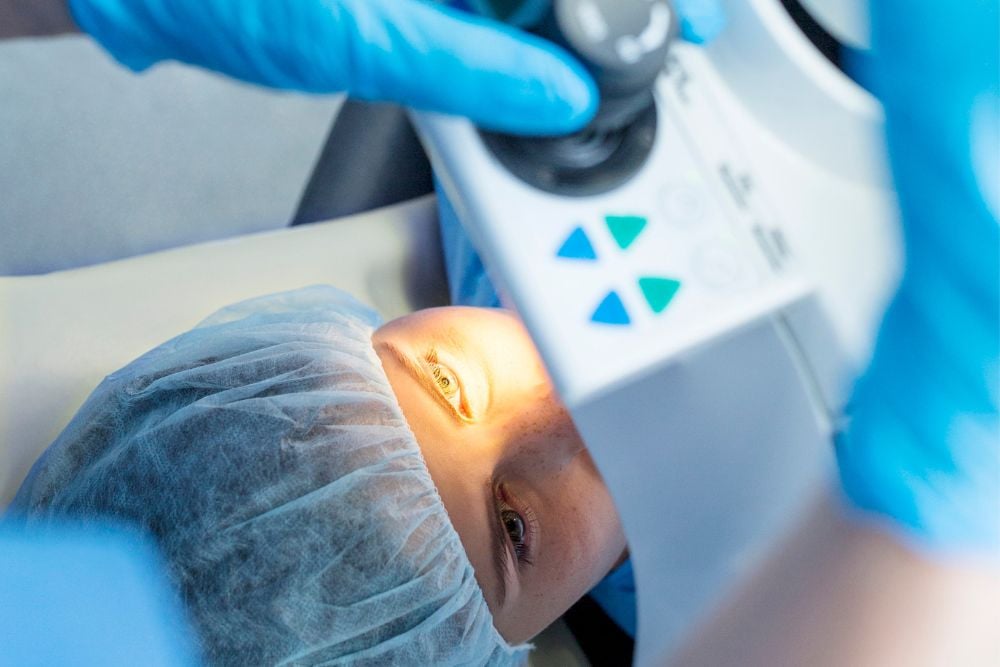
To understand the price, you must first understand the mechanics of the two dominant platforms: LASIK (Laser-Assisted In Situ Keratomileusis) and SMILE (Small Incision Lenticule Extraction). LASIK utilizes a femtosecond laser to create a corneal flap, which is then lifted so an excimer laser (a UV cold laser at 193 nm) can ablate the stroma. SMILE, conversely, uses a single femtosecond laser to create a lenticule—a small disc of tissue—which is then extracted through a 2-4mm incision. The physics differ significantly: excimer ablation relies on photodecomposition (breaking molecular bonds without heat), while femtosecond technology relies on photodisruption (creating microscopic plasma bubbles). This distinction directly impacts surgical time, recovery speed, and ultimately, the quoted price per eye, which in Dubai typically ranges from AED 4,000 to AED 12,000 depending on the technology generation and clinic accreditation.
Your daily interaction with this biology is the reason you are reading this. Every hour spent staring at high-luminance digital displays accelerates the natural decline of accommodative amplitude and increases surface dehydration. The cost of laser eye treatment in Dubai is effectively an investment to eliminate the daily metabolic tax of contact lens maintenance, dry eye management, and the cognitive load of visual correction. This article dissects the pricing matrix with the same rigor as a biostatistician analyzing a clinical trial, ensuring your decision is based on data, not marketing hype.
Must Read
The Biological Economics of Corneal Tissue and Wavefront Technology
Beneath the surface of a price list lies a complex biological marketplace. The thickness of your central cornea is the primary variable controlling which procedure you can undergo, and therefore, what you will pay. The average human cornea is approximately 540 micrometers thick. A conservative LASIK procedure requires a residual stromal bed of at least 250-300 micrometers to prevent biomechanical ectasia (a weakening and bulging of the cornea). If your cornea measures 480 micrometers, your candidacy for LASIK is immediately voided, pushing you towards PRK (Photorefractive Keratectomy) or SMILE, which do not require a flap. Clinics in Dubai perform anterior segment OCT (Optical Coherence Tomography) to map this thickness; the cost of this diagnostic mapping is often bundled into the premium “all-inclusive” packages, but it is a non-negotiable step for biological safety.
The second biological cost driver is high-order aberrations (HOAs). Standard LASIK corrects lower-order errors (myopia, hyperopia, astigmatism) but can induce HOAs like glare and halos. Wavefront-optimized and wavefront-guided lasers capture a digital fingerprint of your entire optical pathway, measuring how light is scattered across a 7mm pupil. This is not a cosmetic feature; it is a biological optimization algorithm that reduces post-operative contrast sensitivity loss. The machinery required for this, such as the Alcon EX500 or the Zeiss VisuMax, represents a capital expenditure in the millions of AED. Clinics amortize this cost into the per-eye fee. A quote of AED 5,000 per eye using a 5-year-old platform will yield different biological outcomes than an AED 9,000 quote using the latest topography-guided software, which accounts for the unique irregularity of your corneal surface.
Furthermore, your body’s inflammatory response dictates the speed of epithelial healing. Although this does not change the surgical fee, it determines the need for adjunctive therapies—lubricating drops, prophylactic antibiotics, and sometimes autologous serum tears—which are often itemized separately in hidden costs. A pragmatic patient must read the quotation carefully: does it include pre-operative viral screening (mandatory in Dubai for Hepatitis B/C and HIV), post-operative steroid drops, and 12-month follow-up consultations? The biological reality is that your corneal tissue will regenerate and remodel for up to six months post-surgery; this phase requires continuous pharmaceutical support, and the cost of this support is frequently the hidden variable that drives a "cheap" procedure into a high out-of-pocket expenditure.
Strategic Optimization: The Life Hacks for Pricing, Choice, and Recovery
To master the economics of this procedure, you must treat the process as a procurement negotiation, not a medical visit. First, demand a raw data dump. Do not accept a free screening that gives you a "candidacy" result. Ask for your specific pachymetry (corneal thickness) reading, your mesopic pupil diameter (pupil size in dim light), and your topography map. This data is your biological leverage. If a clinic quotes you AED 8,000, and another quotes AED 6,000 for the same procedure, the difference is often not surgical skill but technology amortization. Ask which laser model is used for the treatment phase. If it is an older generation, request a 15% discount, citing the reduced efficiency of the tracking system. You are not being rude; you are demonstrating data fluency.
Second, exploit the “shoulder season” pricing in Dubai. The city’s medical tourism influx peaks during the winter months (November to March) when the weather enables outdoor activity. Clinics often run promotional rates during the brutal heat of July and August, when operating theaters are underutilized. A pragmatic hack is to schedule your surgery for mid-August, aligning your post-operative recovery (which requires limiting outdoor UV exposure and avoiding dusty wind) with indoor air-conditioned environments. Furthermore, leverage corporate health insurance. While most insurers in Dubai exclude refractive surgery, many multinational companies offer a Flexible Spending Account or a wellness allowance. Inquire with your HR department whether a medical reimbursement plan covers "elective surgical correction" as a productivity enhancement; this is a loophole often overlooked by expatriates on senior management contracts.
Third, hack the "per-eye" pricing structure through bilateral sequential surgery. Some clinics offer a reduction of 10-15% if you book both eyes within a 48-hour window, as it optimizes their operating room scheduling. Additionally, request the “surgeon’s fee” breakdown. In Dubai, the nominal fee for a high-volume refractive surgeon is often half the quoted price. If you are willing to accept surgery by a fellow (a specialist doctor under supervision) for the laser firing phase, with the senior consultant designing the treatment plan, you can save up to AED 2,000. This is biologically safe—the laser is computer-controlled—but it requires you to reconcile your ego with your wallet. Finally, purchase your post-operative medications from a pharmacy in Deira or Bur Dubai rather than the clinic’s in-house dispensary, where markup can be 50%. A standard post-op kit (antibiotics, steroids, artificial tears) can cost AED 200 at an external pharmacy versus AED 400 internally. These micro-optimizations compound into a total savings of 20-30% off the sticker price.
Fourth, assess the guarantee clause. The most empowering life hack is the "Loyalty Enhancement" program. Premium clinics (e.g., Moorfields Eye Hospital Dubai, Cleveland Clinic Abu Dhabi, or American Hospital) often include a complimentary top-up procedure within two years if your residual refractive error exceeds -0.5 diopters. Ensure this is codified in your consent form. This is not a marketing gimmick; it is a statistical acknowledgment that about 5-7% of patients experience slight regression due to epithelial hyperplasia. Securing this clause is worth more than a 10% discount, as a single top-up PRK procedure costs between AED 3,000 and AED 5,000 separately. Treat this contract negotiation as the most critical life hack of the entire process.
Fifth, optimize your neural adaptation timeline. Your brain must relearn to process the new optical signal. This takes approximately 3-6 months for full neuroadaptation. To hack this, avoid scheduling surgery 48 hours before a major business presentation. Instead, plan it for a Friday morning (the Islamic weekend), allowing ~60 hours of initial healing before minimal desk work. Use the 20-20-20 rule post-surgery (every 20 minutes, look 20 feet away for 20 seconds) to reduce accommodative spasm and accelerate neuro-visual integration. This biological hack reduces the need for multiple follow-up visits (which cost time and money in Dubai traffic) and ensures your visual cortex aligns with the new physical reality of your cornea.

Frequently Asked Questions on Cost and Biology
Why is the SMILE procedure often AED 2,000 more expensive per eye than LASIK in Dubai?
Biologically, SMILE preserves more anterior corneal nerve fibers because it does not create a large flap. This translates to a statistically significant reduction in neurotrophic epitheliopathy and dry eye symptoms at the 6-month mark. The Zeiss VisuMax platform used for SMILE is a singular, highly specialized machine costing over AED 4 million, and its operating license in Dubai requires stringent regulatory compliance from the Dubai Health Authority (DHA). The cost increase is a direct function of the machine’s capital cost and the higher complexity of the surgical learning curve. Furthermore, the procedure duration is longer (about 45 seconds of laser time per eye vs. 20 seconds for LASIK), reducing the daily volume of patients a surgeon can process, thus increasing the unit cost to maintain profit margins.
From a pragmatic standpoint, the higher price buys you a reduced incidence of post-operative dry eye syndrome (from a data perspective, roughly 20% lower incidence at 12 months). If you are a heavy digital user who already has meibomian gland dysfunction (confirmed via a tear film breakup time test), the premium is a biological insurance policy. However, for a patient with robust tear film and low astigmatism, LASIK’s excimer ablation offers identical final visual acuity at a lower cost. The hack is to ask your surgeon to perform a Schirmer’s test during the screening. If your result is above 15mm of wetting, the data suggests you can safely choose LASIK and save the money; if it is below 5mm, you must pay the SMILE premium to avoid a chronic inflammatory cycle.
Is a "budget" clinic offering LASIK for AED 2,500 per eye a good deal, or is it a biological risk?
A price of AED 2,500 per eye is mathematically below the cost of the disposable consumables and laser maintenance in Dubai, which typically totals AED 3,000 per case. This indicates the clinic is either cross-subsidizing the surgery to attract patients for other services (like facial aesthetics) or they are using a “blade” (microkeratome) instead of a femtosecond laser for the flap creation. Microkeratomes carry a higher risk of irregular flap thickness and epithelial defects. Additionally, budget clinics often reuse the patient interface (the contact lens that touches your eye) after sterilization, which, while disinfected, carries a theoretically higher risk of cross-contamination and microscopic surface scratches that degrade laser energy delivery.
Biologically, you are paying for the accuracy of the eye-tracker. High-end systems track at 1050 Hz (1050 times per second) to compensate for involuntary saccades. Budget systems might operate at 400 Hz. If your eye moves faster than the tracker, the ablation pattern is decentered, leading to induced coma aberrations that cause poor night vision and ghosting. The cost of a post-operative topography-guided enhancement to fix this is typically AED 6,000. The life hack is to never negotiate on safety; instead, evaluate the clinic’s accreditation. Only choose a facility with JCI (Joint Commission International) accreditation. If a clinic refuses to show you their laser’s maintenance logs, walk away. Data transparency is the only valid insurance.
Can I negotiate the price if I pay in cash, and what specific line items should I ask to remove?
Yes, cash remains king in Dubai’s private healthcare sector. Clinics incur a 3-4% processing fee on credit card transactions and a potential delay in payment reconciliation. Offering immediate bank transfer or cash can secure a 5% discount. However, the more powerful negotiation targets the line items of a package. Typically, a premium package includes "concierge transfer" or "luxury hotel recovery room." Politely decline these; ask instead for the “non-resident clinical package” which strips all non-medical amenities. You can often reduce the quoted price by 10-15% by excluding the VIP lounge access and chauffeured rides.
Furthermore, ask if the surgeon’s fee is elevated due to the "Medical Director" title. If the surgeon is the Medical Director (a marketing role), their premium fee is substantial. Request a specific consultation with a surgeon who is on the DHA’s "Specialist" register, not necessarily the "Consultant" register. In Dubai’s regulatory framework, a specialist can perform LASIK with the same laser, but their charge-out rate is 30-40% lower due to less administrative overhead. You are not compromising medical quality; you are optimizing for the specific procedural skill rather than the institutional management salary structure embedded in the fee.
Affordable lifestyle hacks to manage recovery costs outside the surgery price?
The hidden recovery cost in Dubai is the UV radiation. Post-operative corneas are more susceptible to UV-B damage, which can cause haze (sub-epithelial fibrosis). Clinics charge AED 150-200 for branded UV-blocking sunglasses. Hack this by purchasing a pair of polarized sunglasses with a UV400 rating from a sporting goods store (e.g., Decathlon) for under AED 80. The polarization is critical for cutting glare; UV400 is a physical standard that blocks 99-100% of UVA and UVB rays. Additionally, while your doctor prescribes preservative-free artificial tears (often AED 45 per vial), you can reduce consumption by using a humidifier in your bedroom (set to 60%) to reduce tear film evaporation during sleep, a major cause of morning discomfort that wastes your tear budget.
For your diet, focus on Omega-3 fatty acids (EPA and DHA) which are metabolized into resolvins, molecules that actively resolve inflammation in the lacrimal gland. Flaxseed oil supplements available in Carrefour cost AED 30 for a month’s supply and are scientifically proven to improve meibomian gland secretion, reducing your reliance on expensive lubricating gel at night. Also, request your post-op steroid drop (usually Prednisolone acetate 1%) to be prescribed as a generic. In Dubai, the generic cost is AED 25 versus AED 60 for the brand; the molecular structure is identical. This is textbook biological optimization—paying for the drug’s active ingredient, not the brand’s marketing campaign.

How does the price differ for treating extreme myopia (-8.00 diopters) versus mild astigmatism (-1.50)?
Clinics rarely transparently disclose this, but the pricing is not linear. Treating -8.00 diopters requires a deeper stromal ablation, up to 80 micrometers of tissue removal. This requires the “high myopia” settings on the excimer laser, which often necessitate a larger optical zone to prevent regression, consuming more laser energy. From a operational cost perspective, this is marginally higher (a few cents of gas) but the procedure takes longer, reducing patient throughput. More importantly, the risk profile is higher. A -8.00 patient has a 2% higher chance of needing an enhancement, which the clinic usually includes in their "premium" package to avoid litigation. Therefore, you will be charged AED 9,000-10,000 for -8.00 versus AED 5,000-6,000 for -1.50.
Biologically, low myopia requires a flatter and holistically less invasive correction. However, a patient with only -1.50 astigmatism is actually getting a better "deal" in terms of value, as the risk of dry eye and loss of contrast sensitivity is significantly lower. My advice is to ask for a complexity-based quote. If a clinic gives you a flat rate regardless of your prescription, it is a red flag that they are using a simplified "one-size-fits-all" treatment plan, which may not use topography-guided ablation for your specific corneal shape. For high myopes, demand a contact lens trial to simulate your predicted post-op visual comfort for 24 hours. This is a free hack that prepares your neuro-adaptation and prevents post-surgical dissatisfaction, which costs more than the surgery in lost productivity and psychological stress.
Respecting the science of corneal biomechanics transforms you from a passive consumer into an informed steward of your biology. When you understand that the price tag is a ledger of femtosecond laser pulse energy, stromal dehydration management, and neuro-inflammatory regulation, you stop negotiating on emotion and start negotiating on physics. This pragmatic approach does not just save you money; it aligns your decision-making with the immutable laws of optics, ensuring that the return on investment is measured not in dirhams saved, but in the clarity of your vision and the efficiency of your daily cognitive output.
The truly empowered human in Dubai is not the one who pays the highest premium, nor the one who hunts the lowest bidder, but the one who recognizes that the eye is a high-performance sensor. By treating the procedure as a precision engineering task requiring rigorous data analysis, you become the project manager of your own biological upgrade. The cost is a parameter to be optimized, not a barrier to be feared. With this mindset, you walk into the clinic armed with pachymetry readings and a negotiation strategy, exiting not just with 20/20 vision, but with a demonstrated mastery over the intersection of human physiology and market economics.