Best Head Harness For Neck Training
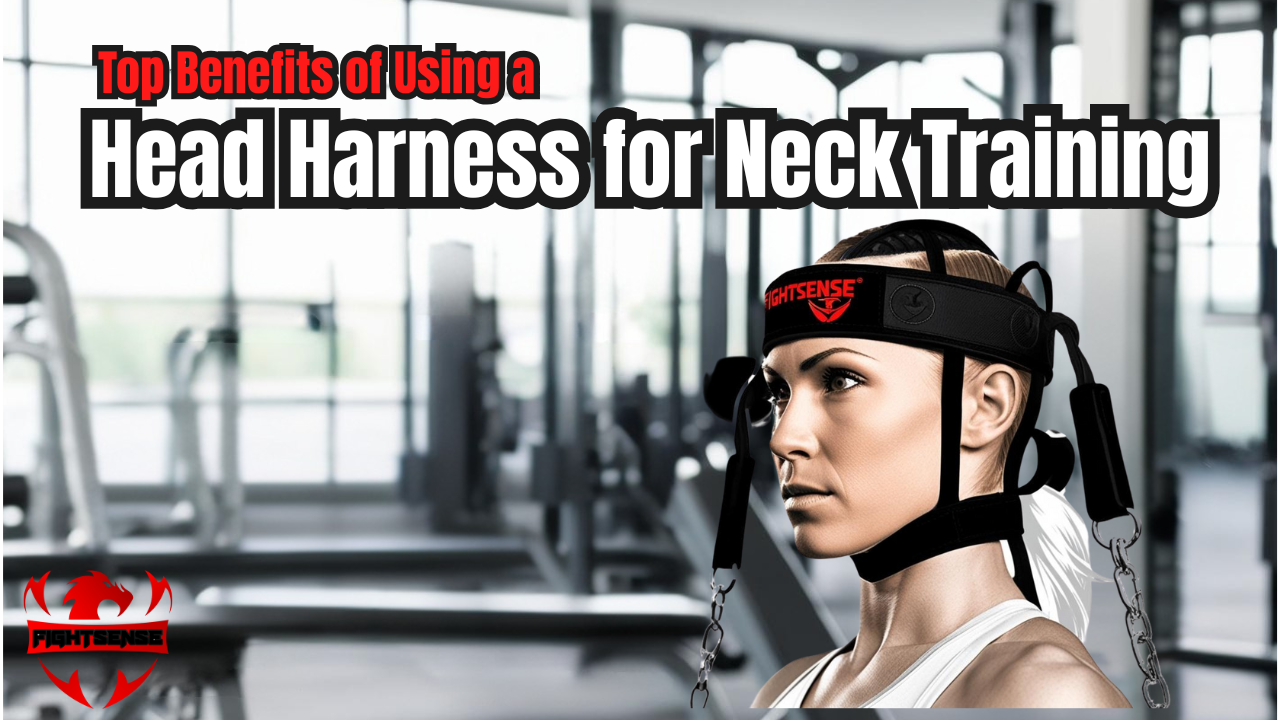
Let’s be honest: three years ago, if you told someone you were strapping a leather-and-steel contraption to your skull to hoist iron plates, they’d have assumed you were either in a Saw movie or auditioning for a niche BDSM production. Fast forward to today, and the head harness has done a full 180 from medical oddity to main-character energy prop. It’s the accessory du jour for gym bros, pilates girlies, and even that one CEO on LinkedIn who claims it “hacked his cortisol levels.” The neck training boom didn’t just creep up—it slammed into the algorithm like a bull seeing red, fueled by UFC fighters, NFL combine clips, and a thousand TikTokkers who discovered that a thick neck makes a jawline look like it was carved by a Greek god with a chisel.
We’re living in the era of aesthetic hypertrophy, where people treat their trapezius like a stock portfolio and their levator scapulae like a secret weapon. The neck—once the ignored stepchild of the gym—is now the ultimate cheat code for looking less like a bobblehead and more like a marble statue. Viral trends like the “Neckzilla Challenge” and the endless cascade of before-and-after photos showing turkey-neck reversal have turned a forgotten muscle group into a status symbol. Even your grandparents know about it; my 68-year-old aunt asked me if “that weird head hat” could fix her posture for an upcoming cruise.
But here’s the twist: with popularity comes chaos. The market is now flooded with everything from $15 Amazon horror stories to $300 gym-grade Swiss-engineered rigs that look like they belong in a Formula 1 cockpit. Some work miracles; others leave you with a cracked cervical disc and a bruised ego. So, before you drop your rent money on a glorified chin strap, let’s dissect the weird, wonderful, and occasionally terrifying world of neck training harnesses. We’re going full detective mode—no fluff, no bro-science, just the raw data on how to get that strongman neck without becoming a cautionary tale on a chiropractor’s TikTok.
Must Read
The Subculture Smorgasbord: From Combat Sports to Comment Section Warriors
Dive deeper into the neck-training rabbit hole, and you’ll discover a subculture that’s equal parts fascinating and horrifying. First, you have the combat sports purists—wrestlers, boxers, and MMA grapplers who understand that a strong neck isn’t for looks; it’s literal brain protection. They’ll tell you horror stories of “whiplash taps” and “sprawl-and-brawl,” where a thick neck is the difference between walking off a slam and eating your lunch through a straw. These folks treat their harness like a seatbelt, often performing manual cervical resistance and harness work for thirty minutes a day, prioritizing stability over aesthetics. Their forums are full of studies about intracranial pressure and nerve compression, and they’ll happily debate the merits of isometric holds versus full-range extensions until 3 AM.
Then, you have the aesthetic-obsessed “looksmaxxing” crowd, a deeply online cohort that has turned the neck into a proxy for masculinity and social dominance. These are the guys quoting ancient Roman statues and referencing the “10:1 neck-to-head ratio” as if it’s a sacred text. They’ve spawned a toxic sphere where failing to hit a 17-inch neck measurement labels you as beta in the comments. But it’s not all gloom—there’s also a surprisingly wholesome posture-correction community that uses these harnesses to combat “tech neck” from endless doomscrolling. They’re documenting their journies with neck braces, cervical traction, and side-lying rotations, turning a simple piece of hardware into a lifeline against chronic forward-head posture. The conflict between these factions is glorious: the fighters think the aesthetics guys are vain idiots, and the looksmaxxers think the fighters are mutants. It’s the gym world’s version of a proxy war, complete with daily arguments about “DOMS of the SCM” and whether nose-breathing during neck curls is a flex.
How to Navigate the Neck Harness Minefield Without Losing Your Cervical Spine
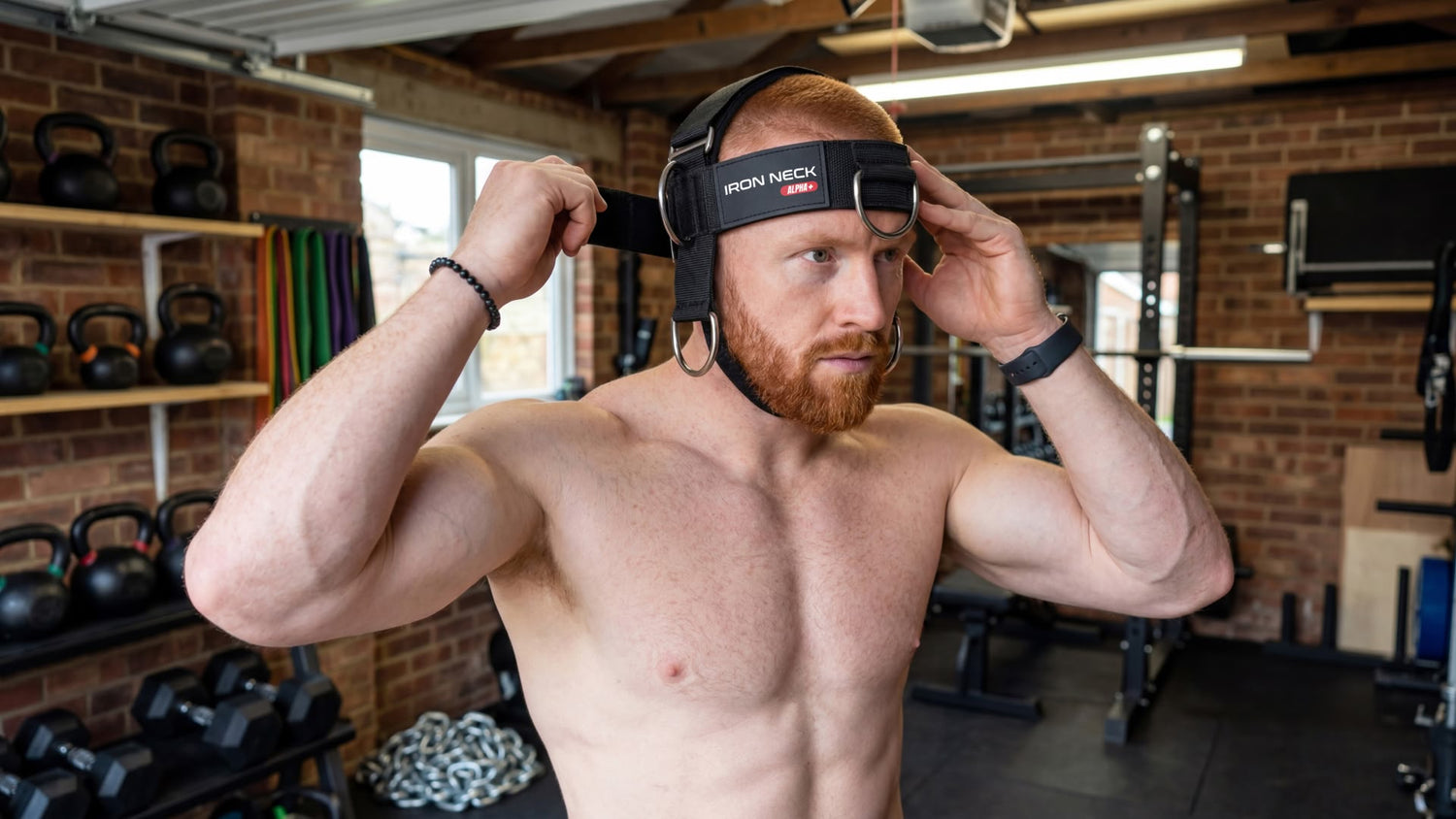
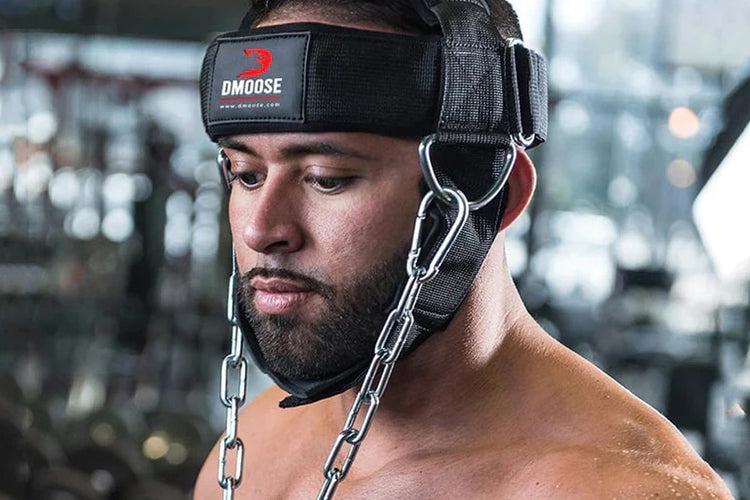
Let’s cut through the noise. Buying a head harness isn’t like buying a new phone case; it’s purchasing a piece of equipment that attaches to your face and your spine. You need to approach this with the same seriousness as buying a car seat for a newborn. Rule number one: Never buy the cheapest plastic clover-style harness. You know the one—it looks like a medieval torture device made of thin straps and foam that smells like a wet dog. Those will grind into your jaw, slip off mid-rep, and put uneven pressure on your temples. Instead, look for a harness with double-stitched nylon webbing, a padded occipital cradle (the part that rests on the back of your skull), and a wide chin strap that doesn’t cut off your jugular. Brands like Iron Neck and Sumo dominate the premium tier, but for beginners, the Bulletproof Isometric Neck Harness offers a solid balance of durability and comfort without requiring you to sell a kidney.
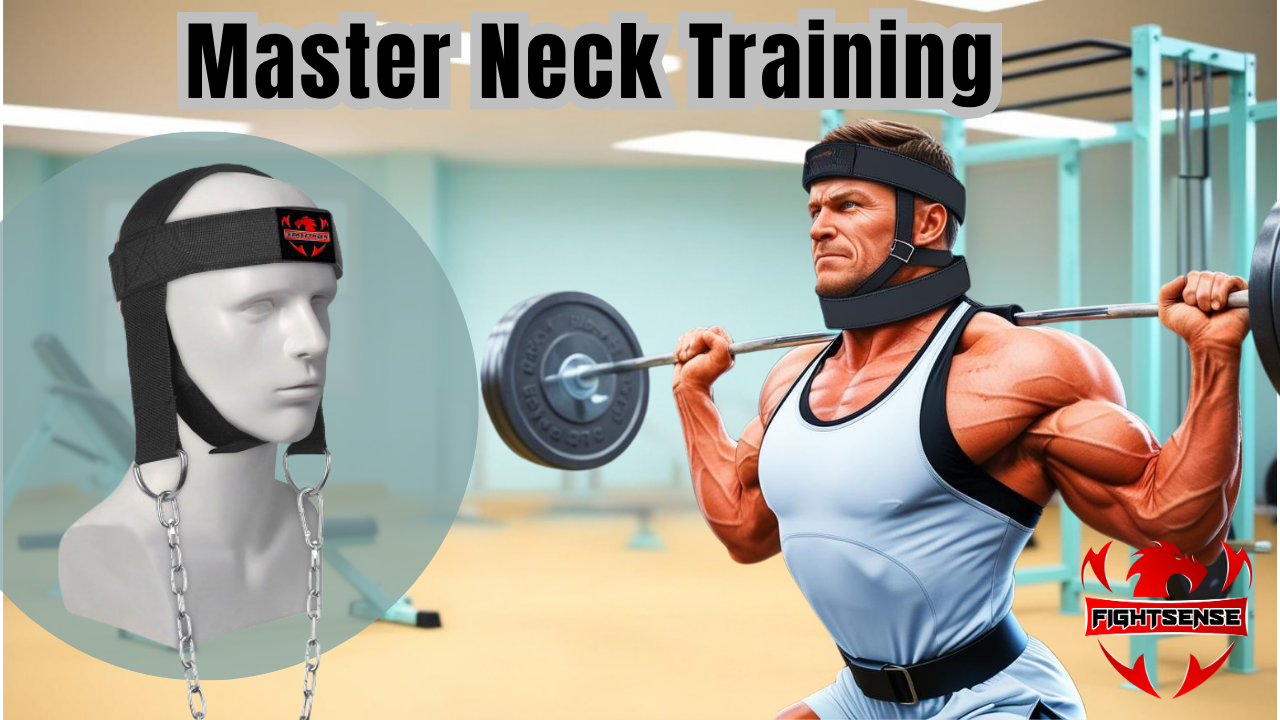
Your next step is understanding which type of training you actually need. There are two main categories: dynamic loading (using plates or a pulley system to move your neck through a range of motion) and isometric resistance (pushing against a stationary force). If you’re trying to build functional strength for combat sports or just want to avoid a trip to the ER, start with gentle isometrics or low-weight, high-rep (15–20 reps) movements. Do not—I repeat, do NOT—load up 45 pounds on day one because you saw a video of a strongman doing neck curls in a monster truck. Your cervical discs are not designed for that prank. Start with a 2.5-pound plate, or even just your body weight, and focus on controlling the eccentric (lowering phase) for at least 3 seconds.

Also, please, for the love of all that is holy, learn the difference between neck flexion and neck extension. Harnesses are great for flexion (nodding forward) and extension (looking up), but they utterly suck for lateral neck rotation (turning your head side to side). For that, you need an inversion table or a specialized multi-directional device. Ignoring this will lead to imbalanced muscles and a popped nerve that feels like an electric eel lodged in your shoulder blade. A good routine starts with a 5-minute warm-up (chin tucks and neck tilts with no weight), then progresses to 3–4 sets of 10–12 reps, and finishes with static holds for 20–30 seconds. Your neck is small; treat it with the respect of a fragile antique vase that also happens to be strong.
Finally, don’t fall for the “the more expensive the better” trap. A $400 premium harness isn’t magically better if it doesn’t fit your head circumference. Measure your skull (just above the eyebrows and around the occipital bone) and check the size charts. A loose harness will chafe and slide; a too-tight one causes migraines. Read Amazon reviews for people who mention “jaw pain” or “dizziness” and treat those as red flags. Check return policies—if a brand won’t let you return a used harness because of “hygiene reasons,” that’s a big neon sign. You want to buy from a company that at least acknowledges that the product touches human skin and sweaty hair.

Your Burning Questions, Answered (And Debated Ad Nauseam)
Will neck training actually make my neck look bigger, or is it just a gimmick?
Yes, it will absolutely increase neck girth—but only if you’re consistent and you’re eating enough protein. The sternocleidomastoid and scalene muscles are like the biceps of the spine; they respond to progressive overload. A study from the Journal of Strength and Conditioning Research found that six weeks of neck-specific training increased neck circumference by up to 12% in untrained individuals. However, the internet will argue that you can’t spot-reduce or target “fat” on the neck, and they’re right—but muscle hypertrophy is a different beast. You’ll notice your collar size going from a 15.5 to a 16.5 in a matter of months. The catch? If you have a naturally long neck, you’ll look more “thick” than “short and stubby.” And if you’re older, skin laxity might make the gain look like a wattle. Start slow; you want to add muscle, not a history of injuries.
Is it dangerous to use a head harness if I have pre-existing neck pain?
This is the battlefield of the comments section. Some physios scream “NEVER!” while functional therapists whisper “maybe, with caution.” The truth is that a head harness is a tool—neither inherently evil nor automatically safe. If you have herniated discs, cervical radiculopathy, or acute whiplash, do not touch a harness until you’ve cleared it with a medical professional. But for general “tech neck” stiffness from sitting at a desk, gentle isometric harness work can be miraculous. It strengthens the deep cervical flexors that support your head, essentially giving you a built-in neck pillow. Start with zero resistance, just the harness itself, and perform slow, half-range chin tucks. If you feel any sharp pain or numbness radiating down your arm, stop immediately. Chronic pain is a signal, not a challenge.

How often should I train my neck, and can I overtrain it?
Your neck muscles are remarkably resilient yet prone to fatigue. Unlike your quads, they get worked subtly every time you hold your phone down. Training them 2–3 times a week is the sweet spot. More than that, and you risk chronic tightness in your upper traps, leading to tension headaches. Less than that, and you’ll see no progress. A classic trap is overtraining because the neck has poor blood flow to flush out metabolic waste, so DOMS can last for five days and feel like a stiff board. That’s why you need to program deload weeks—take a full week off every 6–8 weeks. And don’t do neck training on the same day as heavy shrugs or deadlifts; you’ll overload your cervical extensor chain and wake up unable to turn your head to check for traffic.
So, is the head harness a fleeting fad destined for the graveyard of gym gimmicks like ab rockers and thigh masters? Honestly, it’s an odd one. On one hand, the neck training cult feels deeply rooted in the 2020s obsession with hyper-specific self-optimization—the same impulse that gave us toe spacers, red light therapy, and sleeping in grounding sheets. It taps into a primitive fear of fragility and a deep desire to look imposing, even if you’re just going to Starbucks. However, unlike a waist trainer, the physiological benefits are undeniable. A stronger neck reduces the risk of concussion in falls and sports, and it improves posture for screen-bound zombies. That’s not marketing; that’s biomechanics.
I suspect the harness will survive, but in a more refined form. We’ll see it merge with smart tech—sensors that track your range of motion, apps that gamify your reps, and material science that makes them as light as a feather. It will become standard equipment, sitting next to the foam roller and the massage gun. But the fanaticism will fade, because just like every trend, the neck-building craze will eventually hit its ceiling, leaving behind a core group of sensible lifters and a lot of abandoned, dusty harnesses in garage sales. So, by all means, get one—but don’t forget to stretch, sleep, and occasionally let your neck be a neck, not a pylon. Your future self will thank you, especially when you don’t walk around like a muppet that’s just seen a ghost.