Coursera Intro To Computer Science

Let’s be real for a hot second: if your TikTok FYP has been infiltrated by “Day in the Life of a CS Student” vlogs, or your group chat is suddenly flooded with Python syntax memes, you’ve already witnessed the glow-up of coding. It’s no longer the domain of basement-dwelling hackers or hoodie-clad Silicon Valley bros; it’s the new lingua franca of the ambitious, the anxious, and the chronically online. And at the center of this mass intellectual migration sits a relic from the internet’s polite era—Coursera’s Intro to Computer Science. Yes, that course. The one with the slightly janky UI and the professor who sounds like he’s recording from a closet in 2012. It’s having a cultural renaissance, and it’s not just for nerds anymore.
Why the sudden hype? Blame the techlash and the AI anxiety cocktail. With every ChatGPT update, the job market shifts like a TikTok trend—one day you’re a copywriter, the next you’re obsolete. The collective scream of “I need a skill that won’t evaporate” has driven millions to the digital hallways of Coursera. But here’s the twist: this isn’t the dry, corporate e-learning you remember. It’s become a status symbol—a way to signal on LinkedIn that you’re “future-proof,” while secretly praying you don’t fail the Week 4 quiz on loops. The discourse is hot, the study vlogs are tearful, and the completion certificates are being flexed harder than a Birkin bag. This is the new hustle culture, but with more semicolons.
So, is the Intro to Computer Science course the intellectual savior we need, or just another subplot in the doomscroll economy? Strap in, because we’re dissecting the syllabus, the stan culture, and the existential dread that comes with learning recursion at 2 AM. This isn’t just a review; it’s a lifestyle autopsy of the modern self-improvement industrial complex.
Must Read
The Subculture: From StudyTok to Certificate Flexing
Welcome to the #StudyTok underbelly, where the aesthetic is pastel highlighters, chai lattes, and a laptop covered in stickers that say “sudo make me a sandwich.” The subculture surrounding this Coursera course is a fascinatingly toxic blend of grindset discipline and imposter syndrome theater. On one side, you have the “I finished week five in 48 hours” speedrunners, posting their progress like it’s a speedrun of Elden Ring. On the other, you have the “I’ve been stuck on binary search for a month” chronic procrastinators, who have turned the course forum into a support group. The dynamics are brutal: the comments section of any related YouTube video is a gladiatorial arena where ‘practical learners’ battle ‘theory purists’ over whether you should actually watch the lectures or just cram the quizzes.
The weirdest part? The certificate flex. That PDF with gold and blue accents has become the new social currency. It’s in LinkedIn headers, Instagram bio highlights, and even dating apps (because nothing says “I have emotional and financial stability” like a verified completion in Python). This has created a bizarre hierarchy where the Coursera CS cert is treated as a proxy for intelligence, even though we all know it’s basically a digital gold star. The cultural shift is profound: we’ve moved from “What do you do?” to “What’s in your Coursera cart?”. The subculture is built on the dopamine of checking boxes, but the underlying anxiety is palpable. It’s not about learning; it’s about ownership of the knowledge, or at least the perception of ownership, in a world that demands constant reskilling.
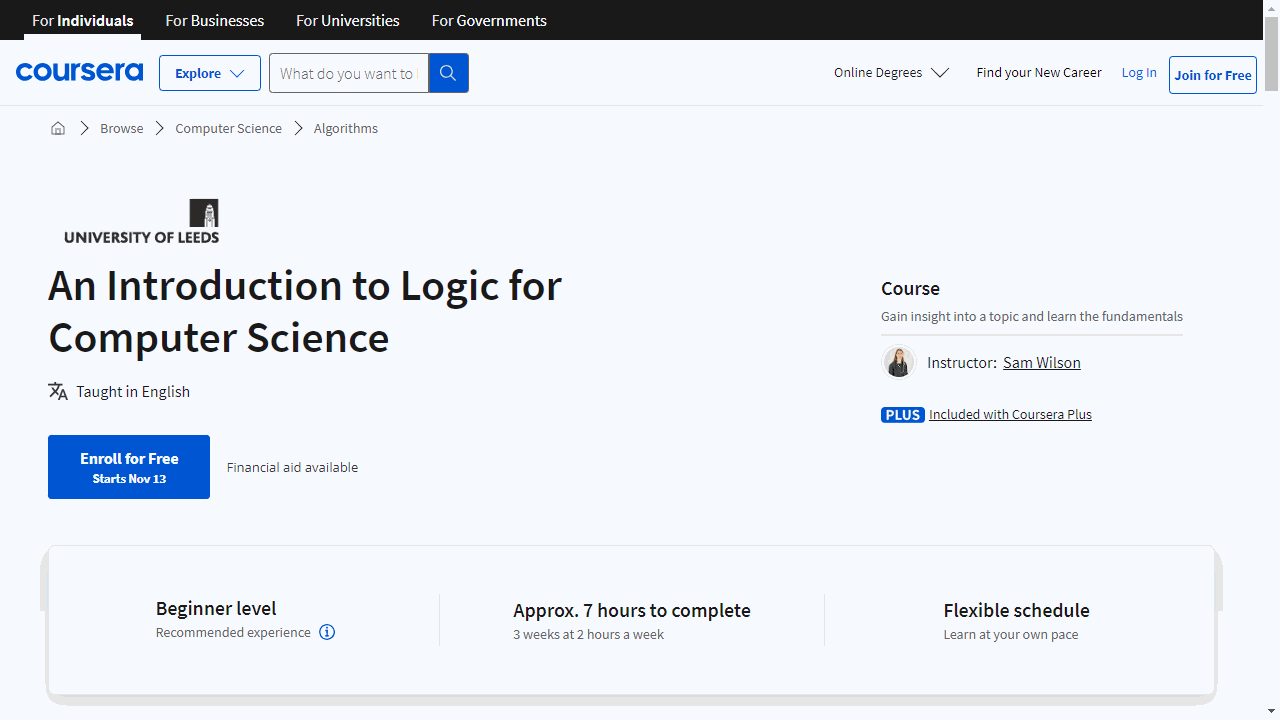
Navigating the Hype: Survival Tactics for the Sane
Alright, you’ve decided to take the plunge. Good for you. But before you shell out cash or sacrifice your weekends to the video player, let’s get pragmatic. First, audit the course—for free. If you’re on a budget, Coursera allows you to audit the course and watch all the lectures without paying. You just don’t get the certificate or graded assignments. That’s fine. The knowledge is the same; the piece of paper is just for the ego. If you need the certificate for a job application, wait for a sale. Coursera has discounts so frequent they’re almost a meme. Never—and I mean never—pay full price. That’s rule number one of the modern digital economy: haggle or walk.
Second, manage your expectations. This is an intro course. It’s not going to turn you into the next Sundar Pichai. It covers the basics: loops, conditionals, arrays, and maybe some object-oriented programming if you’re lucky. The vibe is “college 101,” not “bootcamp.” So, don’t quit your day job or cancel your gym membership to “focus on the code.” That’s the trap. Treat it like a gym session for your brain—30-45 minutes a day, maximum. Consistency beats cramming. If you try to binge it in a weekend, you’ll hit a wall around Week 5 when the abstract concepts start, and you will burn out. The forums will be full of people saying “Is it just me or is this hard?”—it’s not just you. It’s hard because it’s new. Take breaks. Touch grass. The code will still be there.
Third, supplement, don’t depend. The Coursera course is decent, but it’s not the alpha and omega of CS education. Use YouTube (CS Dojo, FreeCodeCamp) and interactive platforms like Codecademy for reinforcement. The key is to apply the concepts. Don’t just watch the professor explain a for-loop; write a stupid script that prints “I love tacos” 100 times. Make it fun. The moment you start treating this as a tedious chore is the moment you’ll quit. Also, join the Discord servers or Reddit subreddits dedicated to the course. Venting about the assignment is half the therapy. Finally, ignore the haters on LinkedIn who say this course is “useless without a math degree.” They’re just gatekeeping. This is about building foundational literacy, not winning a Nobel Prize. And for the love of god, do not buy the “exclusive” course merch—it’s a scam.
Fourth, and this is the spiritual advice: separate your self-worth from the completion screen. If you fail a quiz, it doesn’t mean you’re stupid. It means you found a bug in your logic. That’s literally the job. The course is an exercise in humility as much as it is in syntax. You will feel like an idiot at least three times a week. That’s normal. The victory is in the debugging, not the flawless execution. And if you finish and immediately forget how to write a stack, that’s also normal. You’re not a computer; you’re a human. Revisit the material later. The goal is to build a scaffold, not a cathedral.
The Viral Debates: FAQ of the CAVE Dwellers
Is this course worth it if I already know some JavaScript?
Here’s the tea: if you already know how to manipulate a DOM or fetch an API, this course will feel like watching paint dry for the first four weeks. However, the value lies in the computer science fundamentals—the algorithms, the data structures, the theoretical underpinnings. JavaScript teaches you how to do things, but this course teaches you why they work. If you want to eventually work at a FAANG company or just understand why your website runs slow, the theory is gold. But if you just want to build a portfolio of apps, skip the intro and take a specialized specialization. The internet debate rages because some people treat this as a prerequisite for all programming, and others see it as a waste of time for practical builders. My take? If you’re a coder who’s self-taught, taking this course is like learning the grammar rules after you’ve been speaking the language fluently for years—it feels restrictive, but it clarifies your thoughts. If you’re a total beginner, it’s the perfect, low-stakes launchpad. The only bad approach is buying it impulsively and then ghosting after Week 2.
Let’s address the cheating discourse too. Everyone thinks they can just Google the answers. Yes, you can, and you will. But that’s like copying someone’s gym workout—you’ll get the muscle burn without the strength. The assignments are designed to thwart simple googling, but the quizzes are often reused. The real test is the final project, which requires actual synthesis. So, if you cheat, you’re only cheating your own future self. That’s not a moral judgment; it’s a practical one. The certificate won’t save you in a job interview when they ask you to reverse a string on a whiteboard. The knowledge will. So, be a loyal learner, not a certificate collector.
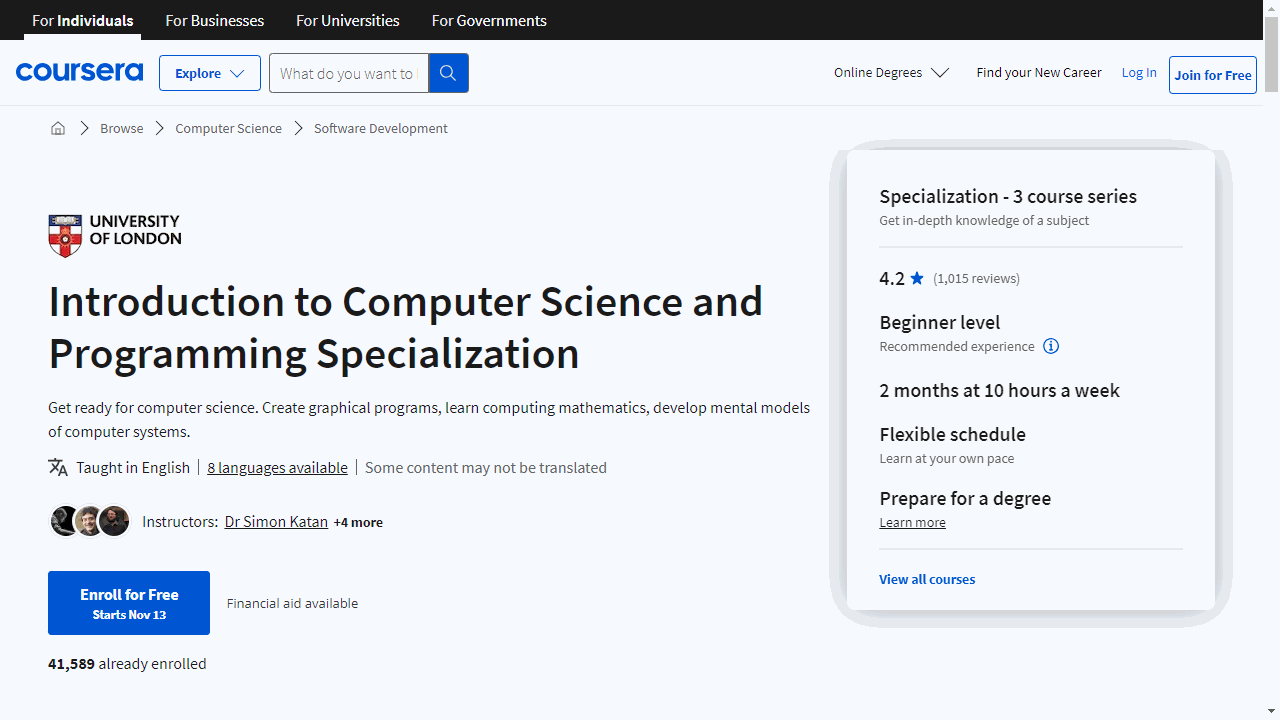
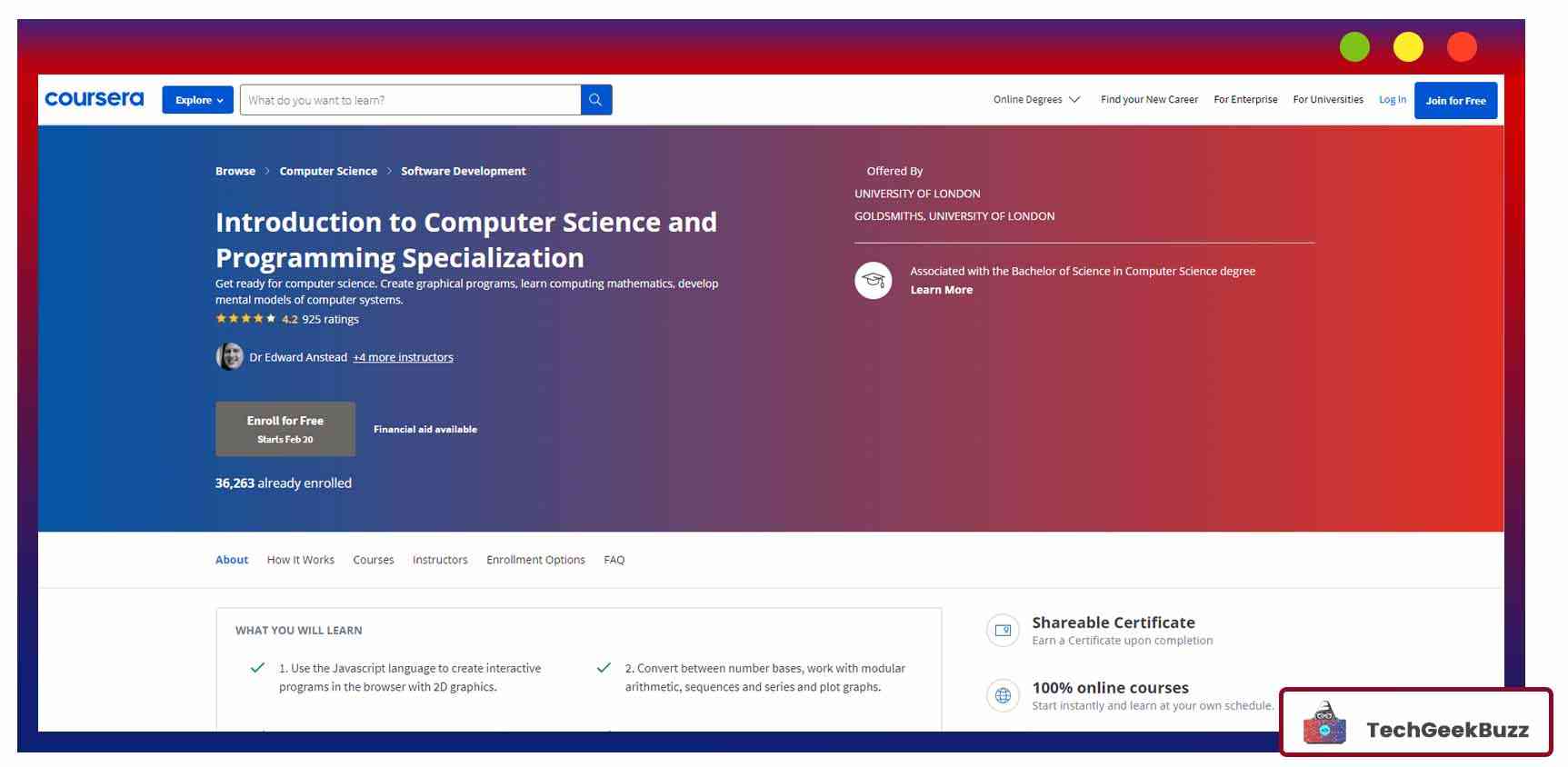
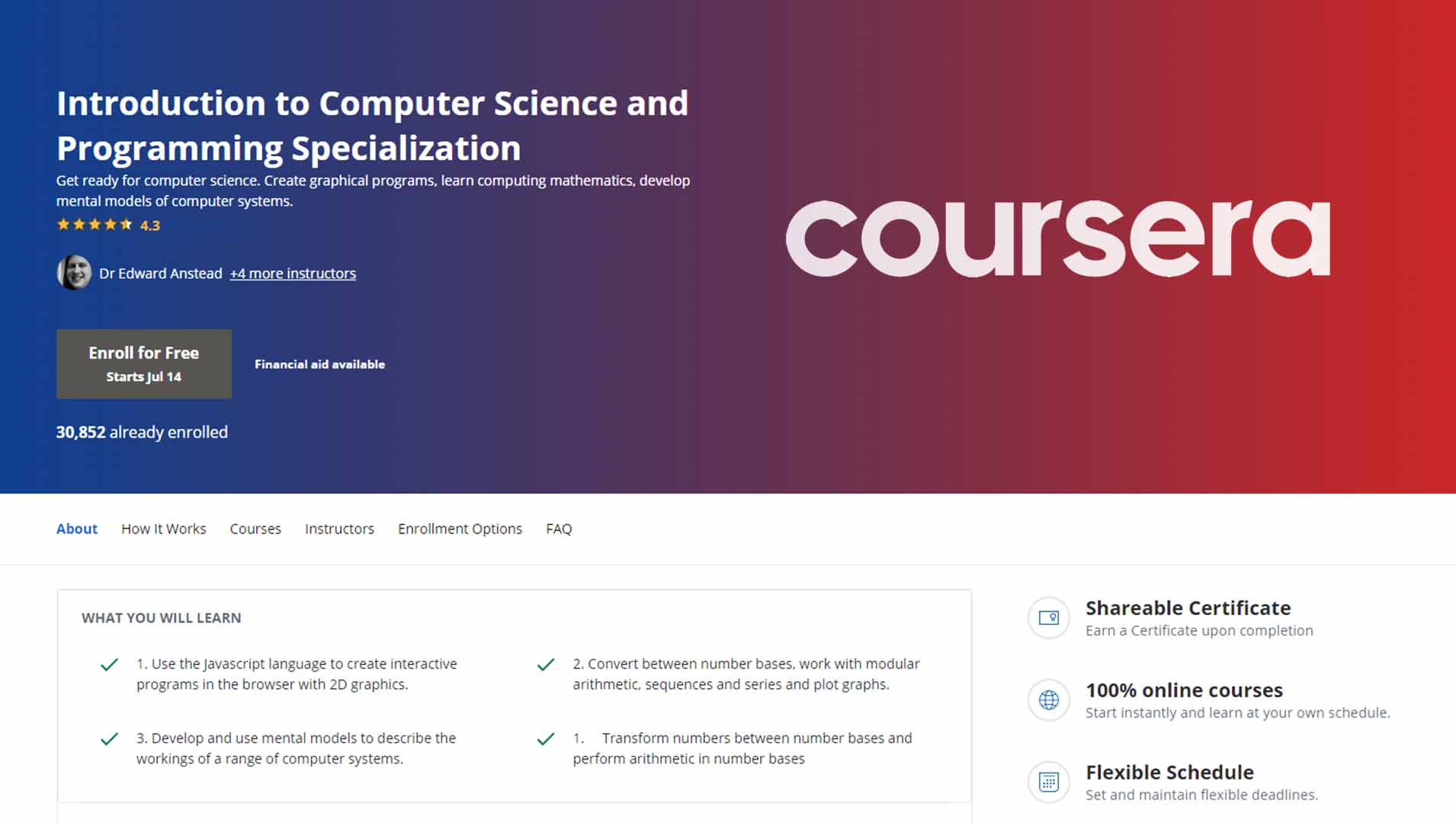
Why is the UI so ancient? Does it matter?
Honestly, it looks like the internet’s equivalent of a beige office. The player interface hasn’t been updated since the Obama administration. Is that a dealbreaker? For the aesthetic-obsessed Gen Z, maybe. It clogs up the feed. But here’s the secret: awful UIs force you to pay attention to the content. There are no shiny distractions, no gamified animations—just the professor and the slides. It’s brutalist in a way that’s kind of refreshing. However, this has sparked a debate about whether Coursera is investing enough in user experience. The company is worth billions, yet the course player feels like an archived forum. The community argues that if the material is good, the UI doesn’t matter. But for users with dyslexia or visual processing issues, the clunky interface is a barrier. So, it matters, but not for the reasons you think. It matters because accessibility is a feature, not an afterthought. If you’re triggered by old-school pixels, download the slides and read them offline. Don’t let the design stop you from getting the data.
The other part of this debate is the video length. The lectures are split into 5-10 minute chunks, which was revolutionary in 2013, but now feels archaic because we all binge content in 15-second increments. Some argue that the short videos are perfect for micro-learning, fitting into a coffee break. Others say they’re too fragmented and disrupt the flow of complex topics like memory management. Honestly, it’s a matter of personality. If you like to pause and take notes, it’s fine. If you want a cinematic deep dive, you’ll be bored. My advice? Watch at 1.5x speed and pray for the best.
Is this course a scam for money-grabbing corporations?
Let’s talk profit margins. Coursera is a publicly traded company, and courses like this are loss leaders to upsell you to paid certificates and specializations. The “audit for free” option is technically still there, but they hide it behind a maze of “Start Free Trial” buttons that try to auto-enroll you in a 7-day trial that secretly charges you $59 a month. That’s a scam. A huge, uncles-in-group-chat style scam. If you don’t read the fine print, you’re getting financial tattooed. However, the core material itself is not a scam—it’s legitimately educational. The scam is the consumer psychology. They prey on your fear of falling behind. They know you’ll panic and click “Subscribe,” hoping to cancel later. You won’t. That’s the trap.
But here’s the counter-argument: the instructors (usually from universities like Princeton or Stanford) are paid, the platform is maintained, and the content is updated regularly. It’s a service. The scam label comes from the aggressive upselling, not the product. If you’re smart, you can navigate it. You can always access the course materials through the free audit, and you can ‘borrow’ the certificate by taking screenshots of your quiz scores (which is ethically gray, but practically common). The real issue is the lack of a clear “Buy Now” option versus the subscription model that auto-renews. That’s predatory. So, my verdict: the educational content is a value; the billing system is a nuisance. Be vigilant. Set calendar reminders to cancel. Use a virtual credit card. Be the one who eats the algorithm, not the other way around.
So, is this a passing fad or a permanent shift? Look closely: the course has been around for over a decade, and every time the tech market hiccups, enrollment spikes. It’s not a fad; it’s a rite of passage. Just like driver’s ed or learning to pay taxes, understanding basic programming logic is becoming foundational to navigating the modern world—even if you never write a line of code professionally. The trend is less about the course itself and more about a societal shift toward digital fluency as a survival skill. We’re seeing that critical thinking is being outsourced to machines, so the only way to stay employed is to understand how to command them. This course is the entry point to that conversation.
Ultimately, whether you finish it with a glowing certificate or drop out in Week 3 with a headache, the fact that you’re even considering it signals that you’re part of the new vanguard—the people who refuse to be passive consumers. You’re engaging with the algorithm on your terms. That’s not a fad; that’s an evolution. So, open that laptop, ignore the hater comments, and remember: the code isn’t going to judge you. The only thing standing between you and a career change is a poorly designed quiz about while loops. And honestly? That’s a battle you can win. Now go touch grass and write some flawed code.