What Is Considered Top Shelf Whiskey
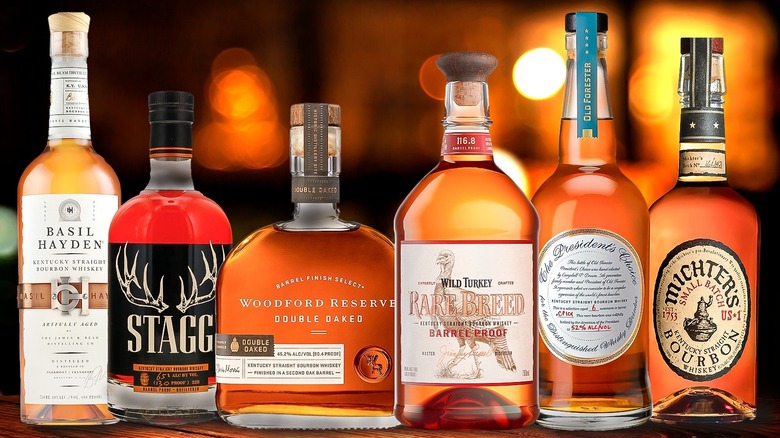
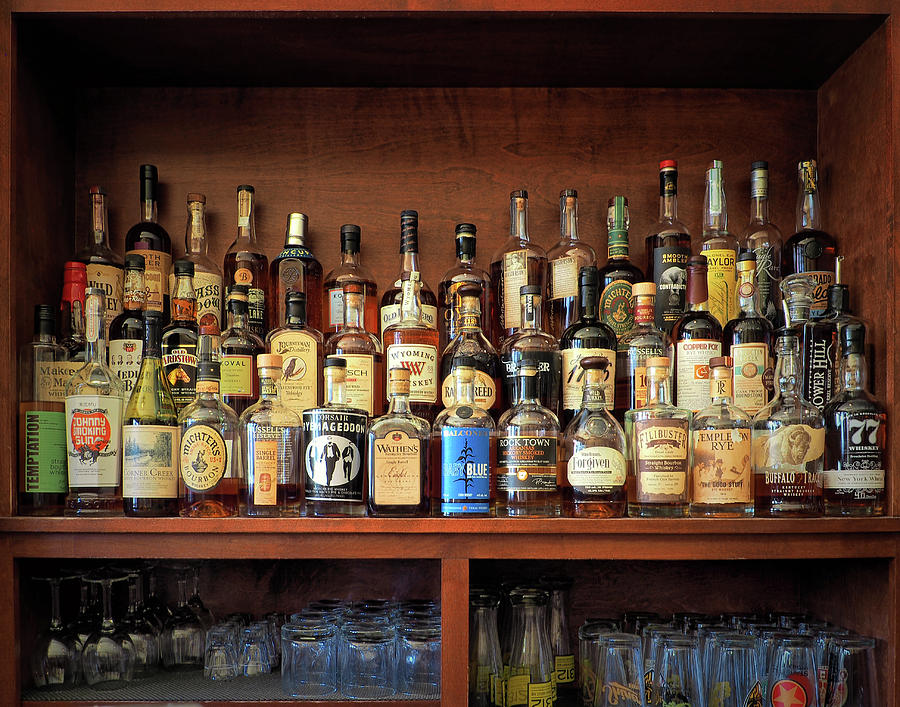
The term "top shelf" is often tossed around as a nebulous badge of quality, but in the world of distilled spirits, it is a functional classification rooted in economics, chemistry, and production methodology. At its core, the designation historically referred to the physical placement of bottles in a bar—the highest tier, out of arm's reach, reserved for premium products that commanded higher prices. However, to truly optimize your palate and your dollar, you must decode the science behind the label. This isn't about snobbery; it’s about understanding the congener profile, the volatile organic compounds (VOCs), and the Mäillard reaction that occur during barreling, which collectively dictate the sensory experience you are paying for.
From a pragmatic standpoint, a top-shelf whiskey is defined by its production floor and aging logistics, not just its price point. The baseline metric involves the mash bill (the grain recipe), the distillation proof (usually kept below 160 proof to retain flavor congeners), and the char level of the new American oak barrels. Cheaper whiskeys often use used barrels or accelerated aging techniques, while top-tier expressions rely on time and thermal cycling—the expansion and contraction of the wood due to warehouse temperature swings—to extract lignin-derived vanillin and oak lactones, which impart that sought-after creamy, woody character. Understanding this mechanics allows you to predict quality before you ever unscrew the cap.
Biologically, your perception of "top shelf" is a neurological feedback loop. The ethanol acts as a solvent, carrying aromatic molecules to your olfactory epithelium via the retronasal pathway. A higher-quality whiskey often contains a higher concentration of fatty acid ethyl esters (FAEEs) and fusel oils (in controlled amounts), which trigger specific receptors in the trigeminal nerve, creating a sensation of warmth and complexity. If a whiskey is filtered too aggressively to remove impurities, it strips these beneficial compounds, resulting in a flat, one-dimensional profile. Thus, the pragmatic drinker isn't chasing a brand; they are chasing a specific chemical equilibrium that stimulates the brain’s reward system without overwhelming the bitter receptors on the tongue.
Must Read
The Alchemy of the Barrel: Chemical Reactions and Biological Imperatives
The transformation from raw white dog to top-shelf whiskey is a process of liquid-liquid extraction followed by oxidative polymerization. When ethanol enters the charred oak, it acts as a polar solvent, pulling out soluble compounds from the wood's cellulose and hemicellulose. The char layer, acting as activated carbon, filters out undesirable sulfur compounds (like dimethyl disulfide) that create a rubbery off-note. Meanwhile, the toasted layer beneath the char breaks down into reducing sugars, contributing to the sweetness. The biological imperative here is time: it takes a minimum of four years for the alcohol to fully penetrate the wood's capillaries and initiate the breakdown of lignin into sinapaldehyde and coniferaldehyde, which then oxidize into aromatic aldehydes.
A lesser-known factor separating top-shelf from bottom-shelf is the barrel entry proof—the alcohol concentration when the whiskey is placed in oak. Data from major distilleries indicates that lowering the entry proof to around 103-105 proof (rather than the legal maximum of 125) allows for a more efficient dissolution of water-soluble wood sugars and a slower, more balanced extraction of phenolic compounds. This is a chemical trade-off: higher proof extracts more aggressive tannins and lignans, which can make the whiskey bitter and astringent, while lower proof creates a more rounded, creamy mouthfeel. The angel’s share—the evaporation rate—also evolves over time; it starts high (around 10% per year in humid climates) and decreases, which concentrates the flavor but also increases the concentration of fatty acids that coat the palate.
Biologically, your liver's processing speed dictates the "smoothness" you perceive. Top-shelf whiskeys often have a higher proportion of short-chain fatty acids (like butyric acid) that are metabolized faster by the mitochondria in your liver cells, reducing the acetaldehyde spike that causes harshness and headaches. Additionally, the pH level of premium whiskey tends to be slightly higher (around 4.2-4.8) compared to young spirits (which can drop below 4.0), due to the slow extraction of potassium ions from the oak. This higher pH reduces the acidity in your saliva, triggering less of a 'tart' reflex and allowing the sweetness to register more prominently on your taste buds. This is not magical; it is measurable data that separates a $15 bottle from a $60 bottle.
Practical Hacks: Engineering Your Optimal Whiskey Experience
To master the art of buying and consuming top-shelf whiskey without breaking the bank, you must adopt a data-driven approach. Hack #1: Chase the "Age-Water" ratio. Look for whiskeys bottled at 46% ABV or higher (92 proof). Below this threshold, the whiskey is often chill-filtered, which removes fatty acids and esters that are essential for flavor density. Non-chill-filtered (NCF) whiskeys ensure you are getting the full molecular spectrum. Use a calculator app to divide the price by the age; if the result is under $15 per year of age, it’s likely a high-value proposition.

Hack #2: Manipulate the glassware physics. Never use a wide-bowled glass. Instead, use a Glencairn glass—its tulip shape concentrates the ethanol vapors at the top, but it has a narrow opening that focuses the heavier aromatic molecules directly to your nose. Furthermore, let the whiskey rest for exactly 10 minutes after pouring. This allows the volatile sulfur compounds to off-gas and the terpenes to fully volatilize at room temperature. Add one drop of ambient temperature water using a pipette. This does not "open" the whiskey by dilution; rather, it interrupts the ethanol-water hydrogen bonding, causing the ester molecules to release from the aqueous phase and enter the vapor phase more efficiently, amplifying the fruity notes by up to 30%.
Hack #3: Use the "single ice cube" logarithmic curve. If you must use ice, use a single, large, dense sphere. A sphere has the lowest surface-area-to-volume ratio, meaning it melts slower. The sub-zero temperature suppresses the bitter tannin receptors (TAS2R genes) on your tongue by reducing the kinetic energy of the molecules, allowing the sweetness to dominate. The hack is in the timing: sip immediately for the first minute, then wait seven minutes. As the ice melts, the dilution gradient changes, and the whiskey will transition from woody to sweet to spicy. This is using thermal progression to your advantage, turning singular drinking into a multi-course sensory meal.
Hack #4: Verify the "copper contact" claim. Top-shelf whiskeys are distilled in copper pot stills or column stills with copper plates. Copper catalyzes the removal of sulfur thiols and dimethyl sulfide, which have a metallic, skunky odor. When browsing, look for distillery transparency about their stills. If they use stainless steel with copper mesh, the efficiency is lower. A pragmatic tip: smell the bottle after opening. If there is a burnt-match odor, the whiskey did not have sufficient copper contact. This is a quantitative red flag, indicating a lower production standard regardless of the label's marketing.
Hack #5: The "second pour" optimization. Data from sensory panels shows that the second pour from a freshly opened bottle is always superior to the first. The first pour is saturated with dissolved oxygen from the bottling process, which can oxidize volatile aromatics prematurely. After opening, cap the bottle tightly and wait 24 hours. The initial oxygen will react with the ethanol to form acetaldehyde, but the whiskey will then stabilize. Additionally, store the bottle upright. Lying it down increases the surface area of the liquid contacting the cork, drawing out lignin phenols from the cork, which can embed a cardboard-like off-flavor. Vertical storage preserves the integrity of the remaining liquid.
Frequently Asked Questions: Troubleshooting Your Top Shelf Strategy
Is a higher proof always better?
No, this is a common misconception. While cask-proof (barrel strength) whiskeys offer the most intense concentration of flavor, they are not objectively "better." The key metric is the balance between alcohol heat and other flavor compounds. At proofs above 60% ABV, the ethanol volume begins to overwhelm the trigeminal nerve, causing a burning sensation that masks subtle esters and phenolics. A top-shelf whiskey at 50-55% ABV often delivers a more refined and complex experience than a 65% ABV "hurricane" expression. In scientific tasting, the aromatic intensity follows a bell curve; the sweet spot is typically between 48-55% ABV where the concentration is high, but the ethanol does not dominate the olfactory reception. You should optimize for the quality of the delivery system, not the pure strength.
Furthermore, the proof impacts how you perceive the alcohol's burn. Higher proof whiskeys require more water to break the hydrogen bonds, meaning they are less forgiving for the novice palate. From a pragmatic standpoint, a 50% ABV whiskey provides a superior cost-to-reward ratio because you get the full concentration of fatty acids without the need to dilution. If you find a cask-strength option, always taste it neat first, then add water in 5% increments to map the dilution curve. You are looking for the point where the spice drops and the caramel notes spike. This data will inform your next purchase, allowing you to skip the higher proof if you are chasing sweetness.
Does the color of the whiskey indicate quality?
The color is a misleading indicator due to the use of caramel coloring (E150a). In the European Union, whiskeys labeled as "whisky" may legally contain this additive, which is a dark, virtually tasteless synthetic sugar syrup used to standardize the shade. A top-shelf whiskey in a blind tasting could be entirely clear, while a mediocre bottle is dark amber. The actual color derived from the barrel is a byproduct of the tannin oxidation and wood char, but it does not correlate linearly with age or flavor. A six-year-old whiskey stored in a warm warehouse in a small barrel (higher surface area) will be darker than a 15-year-old in a large, cold warehouse. The true quality metric is the viscosity—how the whiskey "legs" form on the glass—and the aromatic intensity, not the hue. Always be wary of insanely dark whiskeys that are relatively cheap; it is a red flag for artificial enhancement.
When evaluating color for science, look for gradients. Hold the glass up to a white wall. If the color is uniform and opaque, it is likely filtered and standardized. A high-quality spirit will show a slightly lighter rim (the "meniscus") as the liquid thins, indicating natural variation in the glycerol and fatty acid content. These heavier molecules move slower, concentrating at the bottom of the film. Furthermore, if you add a drop of water and swirl, natural colors will refract a red or golden fleck, whereas artificial coloring will simply dilute uniformly without changing the refractive index. You are purchasing a container of chemistry; color is just the surface reflection of its structure, not its efficacy.
:max_bytes(150000):strip_icc()/best-cheap-scotch-whisky-5088749-a8969f4a242f468abd61f0e76b45f934.jpg)
What is the difference between "Single Malt," "Blended," and "Bottled in Bond"?
These are rigorous legal designations, not marketing terms. Single Malt means the whiskey is produced from a single distillery, using only malted barley and water, and distilled in pot stills. It does not mean a single barrel; it can be a vatting of hundreds of casks from that distillery. Blended whiskey, by contrast, contains a mixture of single malts and neutral grain spirits. The top-shelf category here is "Blended Malt" (which contains only single malts from multiple distilleries) versus "Blended Whiskey" (which includes grain neutral spirits, often cheaper corn or wheat). For optimization, "Bottled in Bond" (BiB) is a specific American legal standard: it must be the product of one distillation season, one distiller, at one distillery, aged in a federally bonded warehouse for at least four years, and bottled at exactly 100 proof (50% ABV). This ensures a baseline of quality and traceability that is absent from standard bottles.
The pragmatic difference for your wallet: BiB whiskeys are often the highest quality-per-dollar top-shelf options because the legal constraints prevent cutting corners. Blended whiskeys are not inherently inferior; they are often engineered to be smoother and more approachable, but they lack the distinct character of a single distillery. When you see a "Single Barrel" label, understand that this is a gamble—each barrel varies by significant margins in flavor due to its location in the rickhouse (the top floors favor sweeter, spicier notes; bottom floors favor oakier, more tannic profiles). The top-shelf classification here is about proof of provenance. If the legal label tells you exactly how it was made, you can reproduce the taste and make informed choices based on your past preferences.
How long does an open bottle of top-shelf whiskey last before it degrades?
Unlike wine, whiskey does not "spoil" in a way that makes it unsafe to drink, but it does undergo oxidative degradation. The primary culprit is oxygen reacting with the polyphenols and terpenes, causing them to polymerize and lose their volatile character. The data suggests a negligible change for the first three months after opening, provided the bottle is sealed properly. However, as the bottle empties, the surface area-to-vapor space ratio changes. At half empty, the air volume is double the liquid volume, and weekly oxidation begins to dull the esters and increase the astringency. To optimize shelf life, transfer the remaining whiskey to a smaller, completely filled container (like a 375ml or 200ml glass bottle) once you are below half a bottle. This minimizes headspace and reduces the oxygen exchange rate by up to 70%.
Temperature is also a critical factor; store whiskey away from direct sunlight and in a stable environment between 15-20°C (59-68°F). Light, particularly UV, triggers photochemical degradation that breaks down the delicate aromatic hydrocarbons. If you notice the whiskey becoming "flat" or less aromatic after six months at half-empty, it is not a loss. You can use it for culinary applications where the nuanced notes are less critical, or mix it into a cocktail where the sweetness and bitter components will mask the degradation. For your most prized top-shelf bottles, decant them into smaller amber glass bottles immediately after opening. This is a low-cost, high-precision life hack that extends the full sensory experience for up to 12 months.
Why do some top-shelf whiskeys taste "hot" even if they are smooth?
The sensation of "heat" (burning sensation in the throat) is distinct from "smoothness" (lack of bitterness and astringency). Heat is caused by the concentration of ethyl acetate and higher-order fusel alcohols like isoamyl alcohol and propanol. These compounds have a higher boiling point than ethanol and activate the pain receptors (TRPV1) in the throat and esophagus. Very old, expensive whiskeys can still have high levels of these compounds if they were distilled at lower proof (which retains them for flavor). Top-shelf classifications often embrace this because these alcohols carry heavy, sunscreen-like fruity and floral scents. The "burn" is a physical response to the alcohol's ability to dehydrate the mucous membranes, not a sign of immaturity.
To mitigate this physiological reaction, you must drink with an adjusted respiration. Breathe in deeply through your nose before the sip, then swallow, then exhale immediately through your mouth. This cools the ethanol vapor as it evaporates, reducing the TRPV1 activation. Additionally, coating your tongue with a small amount of high-fat content food (like a piece of dark chocolate or a few almonds) before sipping will create a hydrophobic lipid layer that temporarily blocks the alcohol from directly contacting the nerve endings. This is not cheating; it is biological hacking. If the heat persists, that is a chemical indicator that the whiskey has a high concentration of acetaldehyde, which is produced during fermentation. Letting the whiskey air out for an additional 15 minutes allows this volatile compound to evaporate, reducing the heat by up to 20% without altering the core flavor matrix.
Respecting the science of whiskey transforms you from a passive consumer into an active analyst. When you understand that the price tag reflects a balance of extraction rates, barrel physics, and chemical stability, you move beyond marketing hype and into a realm of precise decision-making. This pragmatic mindset ensures that you are not merely buying a name, but optimizing your sensory expenditures for peak neurological reward. Optimizing your drinking habits using these biological and chemical principles trains you to appreciate complexity over volume and quality over toxicity. You become a more efficient hedonist, extracting maximum pleasure from every milliliter.
Ultimately, this knowledge empowers you to be a self-correcting system. You will learn to identify when a $30 bottle outperforms a $100 bottle due to better copper contact or a superior entry proof, and you will adjust your purchasing patterns accordingly. In the grand scheme of everyday life, applying this data-driven rigor to even your leisure activities builds a higher baseline of critical thinking and resource management. The top shelf is not a place of elitism; it is a laboratory of flavor, and by respecting the chemistry involved, you take control of your palate, your wallet, and your overall well-being.