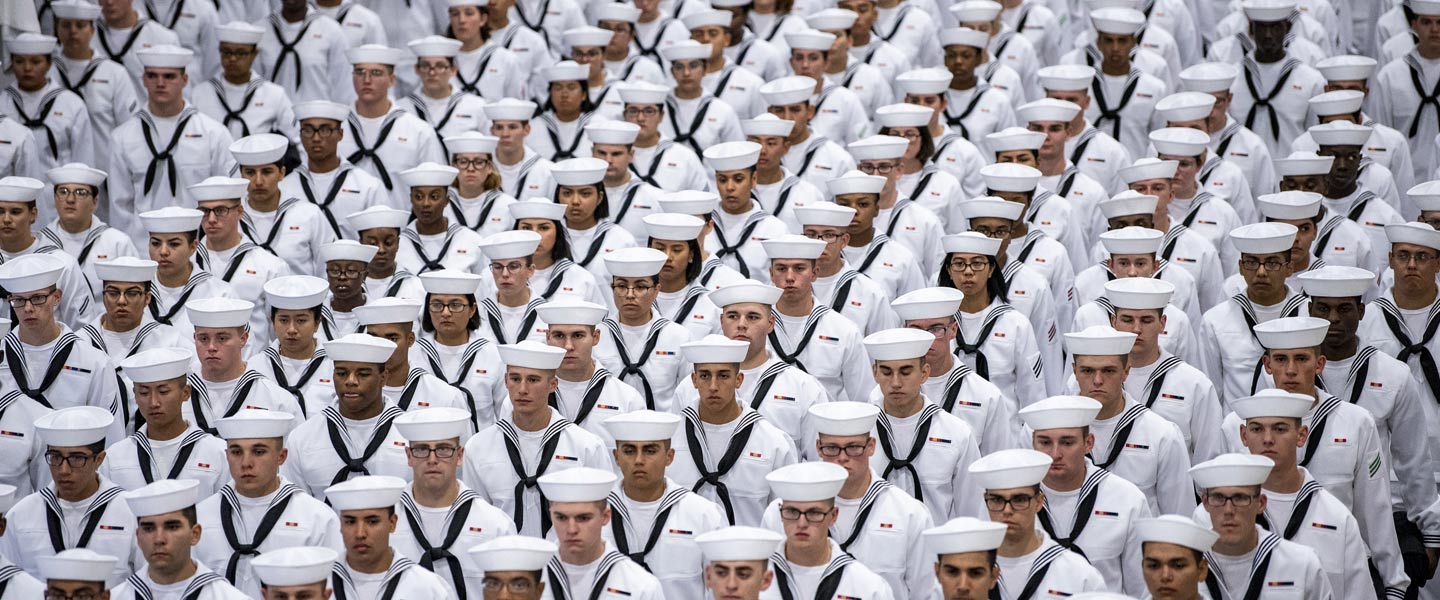
What Do I Have To Do To Join The Navy
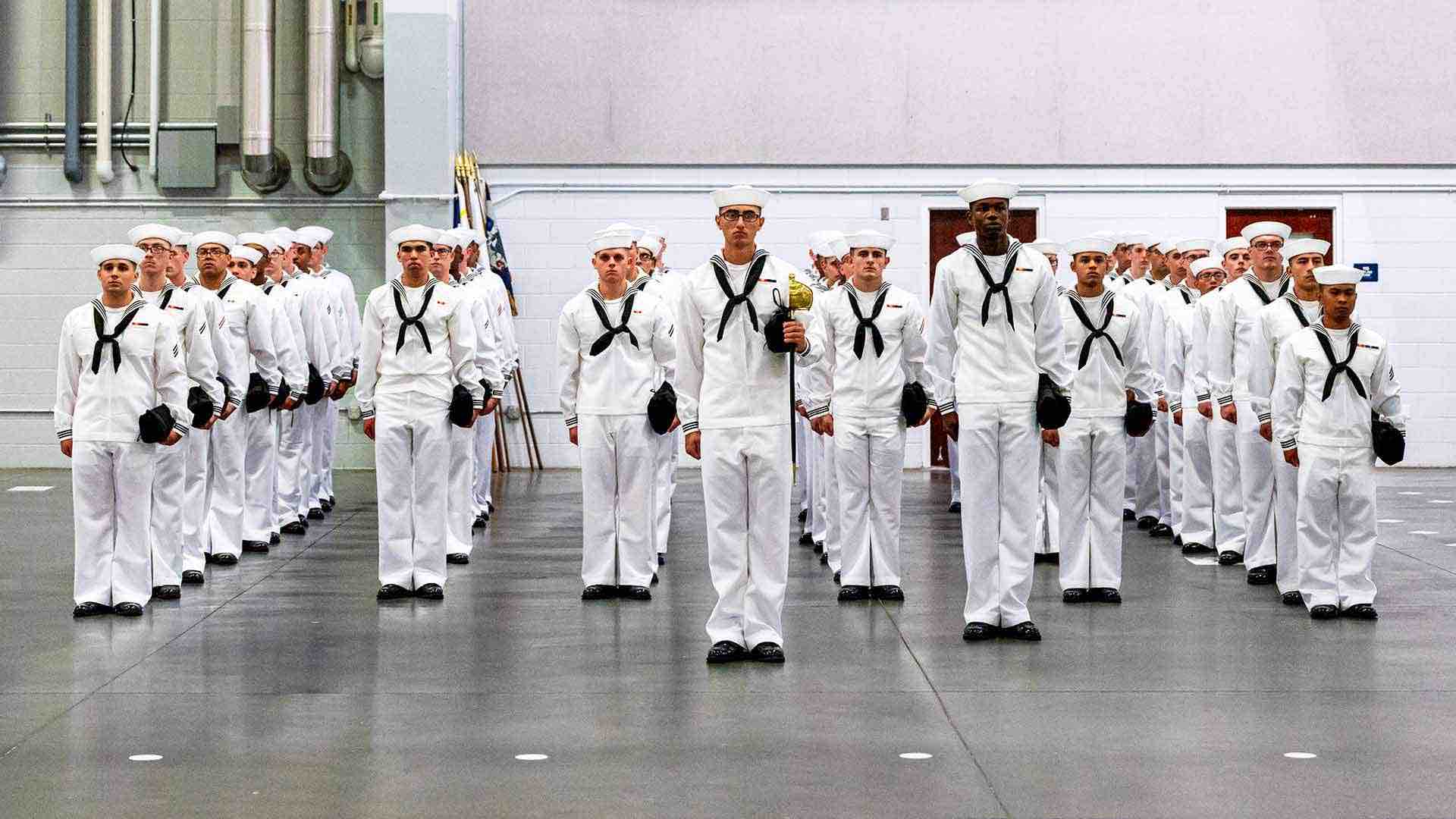
There is a specific, almost magnetic pull to the idea of the Navy. It’s not just the crisp white uniforms or the promise of distant ports; it’s the visceral contrast between the vast, indifferent ocean and the hyper-ordered, steel world we build on top of it. Joining isn't a job application; it’s a total subsumption of identity, a covenant where you trade autonomy for purpose. In a civilian world that often feels fractured, the Navy offers a singular, monolithic clarity: a rank, a role, and a ship beneath your feet. The process, however, is less of a single step and more of a labyrinth designed to test your resolve before you ever smell saltwater.
Historically, the path to the Navy was grimly simple—press gangs and tavern bounties in the 18th century, or a patriotic surge during World War II where you might have walked into a recruiting office on Monday and been in boot camp by Friday. Today, the journey is a hybrid of a corporate hiring process, a medical gauntlet, and a psychological deep-dive. The modern enlistment process can take anywhere from a few weeks to over a year, depending on the complexity of your background and the specific job you’re gunning for. It’s a bureaucratic rite of passage that filters for patience as much as physical capability, ensuring that those who finally raise their right hand actually want to be there—because the ocean will absolutely expose those who don't.
The Paper Chase: MEPS and the Art of the Waiver
The first true hurdle is the Military Entrance Processing Station, or MEPS. This is not a vibe; it’s a stark, government-issued building where you will spend 12 hours doing what feels like a million tiny, humiliating tasks. You will be herded in groups, told where to stand, and asked the same questions repeatedly. The medical exam is famously intrusive—you will cough, bend, and squat in front of a doctor while being assessed for everything from flat feet to psychological stability. The ASVAB (Armed Services Vocational Aptitude Battery) test you take here is the keystone of your future; it determines not if you can join, but what you can do. A low score might relegate you to deck seaman (which is honorable but brutal), while a high score opens doors to nuclear reactor operation or cryptologic intelligence.
Must Read
Here’s the dark fun fact that recruiters won't lead with: the Navy is currently in a recruiting crisis, which makes them more lenient than in decades. Moral character waivers—for minor drug use or juvenile offenses—are being approved at a higher rate than during the post-9/11 era. However, this doesn't mean you should lie. The security clearance investigation digs deep; they will call your ex-roommates, your high school teachers, and possibly your barber. Inconsistencies on your medical history are the top reason for disqualification. The psychological aspect is strange: you are simultaneously being sold on the glamour of the service while being treated like a potential liability. This dissonance is intentional—it’s the Navy’s first test of your ability to compartmentalize stress.
Culturally, MEPS is a great equalizer. You will see a 17-year-old farm kid, a 30-year-old mother trying to restart her life, and a recent college grad with a degree in philosophy, all shuffling through the same fluorescent-lit corridors. There’s an unspoken camaraderie in the shared vulnerability, but also a sharp edge of competition. Everyone is silently ranking each other based on perceived physical fitness and test scores. The recruiters, who wear khaki uniforms with gold stripes, act as your tour guides through this chaos. They’re incentivized to get you in, so they know the loopholes, but they also know that a bad recruit will reflect on their quota. Your best strategy is to be a clean, deferential, and annoyingly prepared applicant—that makes their job easy, and they will fight for your waivers.
From Scrub to Diamond: Boot Camp Survival and Rate Selection
Once you’re contractually obligated, you ship off to Recruit Training Command in Great Lakes, Illinois. This is where the cultural whiplash truly begins. You’ll be met by a screaming Recruit Division Commander (RDC) who is a master of psychological manipulation, but it’s a calculated act. The screaming stops as soon as you learn to move as a unit. The first week is a blur of "P-days" (Processing Days) where you get your haircut, receive your sea bag, and learn to fold your skivvies into perfect, regulation squares. The food is surprisingly decent, but you’ll eat it in 60 seconds flat, often with your eyes locked forward.
The modern Navy boot camp has evolved from the hyper-militaristic to the behaviorally scientific. They don’t just want killers; they want damage control technicians and IT specialists who won't crack under pressure. You’ll spend weeks learning basic seamanship, firefighting techniques, and the history of Naval traditions. The physical training is moderate by military standards—focusing on running, push-ups, and planks—but the real challenge is the sleep deprivation and the constant, crushing pressure to not be "that guy" who messes up the division’s timing. You will learn to iron a uniform in under 10 minutes and shine boots until you can see your own terrified reflection in them.
Your "rate" (job specialty) defines your entire Navy existence. If you’re a Culinary Specialist (cook), you’ll be a hero to the crew but work brutal, unglamorous hours in the galley. If you’re a Sonar Technician, you’ll sit in a dark, cold room listening to the ocean for hours, playing a real-life game of Battleship where the stakes are actual destruction. Here’s a practical insight: choose a rate that translates to civilian life after your contract. Cybersecurity, aviation mechanics, or nuclear operations are golden tickets. Avoid the "undesignated seaman" contract at all costs—it’s the Navy's holding pen where you’ll be used as manual labor until an opening appears, which can feel like a prison sentence at sea. The best case study I know is a friend who took the Navy’s nuke program: six years of intense study and tedious watch standing, but he walked out with job offers from every energy company on the East Coast.
Actionable takeaway: don’t just pick a rate based on cool videos. Research the sea/shore rotation. Some rates deploy on ships for 8 months and are home for 18. Others (like Seabees) are land-based 90% of the time. Your quality of life depends less on the branch and more on this microscopic detail. Also, understand the difference between active duty and Reserves. Reserves is a weekend-a-month gig, but it requires you to remain deployable and attend annual training for 2 weeks, which can disrupt civilian careers just as much as full-time service.
Deep Dive: The Unspoken Contract and Daily Realities
There is a myth of the globe-trotting sailor who visits Singapore on Saturday and Greece on Wednesday. The reality for a junior enlisted sailor on a destroyer is often 100 days at sea with port visits canceled due to "operational requirements." You will experience the Bermuda Triangle not as a mystery, but as a Wednesday afternoon. The psychological toll of "the gray hull" is real; you live in racks stacked four high, and your personal space is a curtain and a shelf. The ocean is a indifferent beast—one day it’s a glass mirror, the next it’s a green-faced monster that has you vomiting into a bucket while still standing watch.
However, there’s an absurd, dark humor that develops among sailors. You share memes about the "coxswain's swain" and joke about the "navy showers" (wet, shut off water, soap, rinse, done) as a rite of passage. The daily reality is a grind of maintenance, drills, and administrative tasks, punctuated by moments of profound beauty—a bioluminescent wake at 2 a.m., or sighting a pod of dolphins during flight operations. The culture is less like the Army’s gun-ho aggression and more like a floating technical college with a drinking problem. The Navy heavily regulates alcohol and liberty, but shore leave in places like Rota, Spain, or Yokosuka, Japan, is a transient hedonism that you’ll talk about for years.

For the enlisted sailor, the first 24 months are the hardest. Junior pay is low, and you are the one scrubbing the bilges and painting the overhangs. But there’s a specific meritocracy of sea life: if you learn your job, stand a solid watch, and pass your advancement exam, you can make Second Class Petty Officer in under four years, which comes with real authority and a six-figure equivalent civilian salary when you include benefits. The community is uniquely tight. You’ll pull 24-hour duty days with the same people, and they become your surrogate family. They are the ones who will drag you out of your rack when you’re depressed, and you will do the same. This is the unspoken contract: you sacrifice your individual comfort for a bond that is impossible to replicate in a cubicle.
The FAQ: Clarifying the Fog of Enlistment
1. Can I join with tattoos or a history of asthma?
The Navy’s tattoo policy is now incredibly liberal compared to a decade ago. Sleeves are allowed, neck tattoos are permitted if they don't cross the "smile line" (the jawline), and hand tattoos are waivable if they aren't extremist or offensive. The crackdown has shifted from aesthetics to functional professionalism. However, asthma is a different beast. If you’ve had asthma symptoms after age 13, you are disqualified by default. This is where the waiver process is brutal. You will need to provide pulmonary function tests, a written statement that you never used an inhaler after 13, and even then, it’s up to a medical board’s discretion, which feels random. If you have a history of severe allergies that cause anaphylaxis, you’re also out. The Navy is cautious because a bronchial spasm on a submarine is a life-or-death emergency. My advice: be transparent, but get a pulmonologist to sign off on a "resolution of symptoms" letter. It’s not fraud; it’s documentation.
Regarding waivers for mental health, the landscape is changing. Depression treated with medication and stable for a year+ is now waiverable in some cases, but ADHD requires you to be off meds for 12 months and pass a cognitive test. The military is starting to realize that excluding all anxiety is exclusionary of a large demographic. But the process is slow and subjective. The best approach is to gather every medical record you have, no matter how minor, and have your recruiter submit a "pre-screen" before you waste a day at MEPS. If the pre-screen is favorable, you proceed. If not, you can wait a year and re-apply, but the decision is final
2. What is the physical fitness test actually like?
The Navy’s Physical Fitness Assessment (PFA) is less scary than the Army’s combat test. You have a 1.5-mile run, push-ups (until failure or 100 max), and planks (until failure, with a 4:30 maximum). The standards are age and gender-adjusted. For an 18-21 year old male, you need to run 1.5 miles in under 14 minutes and do 40 push-ups. For females, it’s around 16 minutes and 20 push-ups. The curve is generous. The real trick isn’t the test itself; it’s the "tape test" (body fat assessment). They measure your neck and waist circumference. If you exceed the body fat percentage (around 22% for males, 33% for females), you fail the PFA regardless of your run time. This causes more anxiety than the PT because a 25-year-old with a thick neck can be fine, while a skinny-fat guy with a soft belly will get flagged.
You'll take the PFA twice a year, and it’s a ticking clock for your advancement. Failing two in a row can lead to administrative separation. The psychological weight of this is real; sailors often go to extremes, like water loading or dehydration to pass the tape. The smart strategy is to start training six months before boot camp. Don't focus on the gym bench press; focus on running in boots and doing flutter kicks. The Navy loves core strength; the plank is their favorite device. If you can hold a plank for 3 minutes without shaking, you’re already ahead of 70% of your future division.

3. How long is the contract? Can I get out early?
A standard active-duty Navy contract is 4 years of active service, followed by 4 years of Individual Ready Reserve (IRR), where you are the "backup" and rarely called up. But there’s a catch: your actual obligation is often 5 years for certain rates. A Marine Corps recruiter once told me that the Navy’s "up-front" bonus is a bait-and-switch because they extend your service time during boot camp if you're late to graduate. The rule of thumb is to expect to be in for 5 years, minimum. You cannot buy your way out. Early separation is only for extreme hardship (family medical crisis), a medical discharge, or legal issues. If you simply "don’t like it" after year two, you’re stuck.
This is the #1 cause of civilian shock. People think they can quit like a desk job. The Navy pretty much owns you. That said, you have rights within the system. You can request to change your rate (re-rate) only under specific conditions—usually if you're disqualified medically from your current rate. But "I want a different job" is not a valid reason. The smartest move is to treat your contract as a 5-year college dormitory stay. You get paid, you learn a trade, and you accumulate GI Bill money for later. Embrace the suck for the first two years; it genuinely gets easier after your first deployment because you gain seniority and your petty officer privileges allow you more liberty.
4. What is Navy "DEP" and why is it risky?
DEP stands for Delayed Entry Program. You sign a contract, but you don't ship to boot camp for 6 to 12 months. You attend weekend drills at the recruiting office where you memorize the General Orders and do PT with other future sailors. The risk is that the training environment is toxic and boring. You are in limbo. The Navy can also change your ship date, and in extreme cases, adjust your rate if the manning needs shift. The advantage is that your basic pay starts as soon as you enter DEP, but it's just a stipend. The real danger is the "ship date shuffle"—you might sign for a nuclear job in March, but the Navy calls you in July saying they need you for a mechanic role or you wait another year.
The psychological aspect of DEP is where most people drop out. You start telling family members, they throw you a going-away party, and then you wait. The excitement curdles into anxiety. You have all this time to overthink. The best way to survive DEP is to not let the timeline sabotage your fitness or your job. Stay off the internet forums that scare you with horror stories. Trust that the bureaucracy is moving. Also, be aware that a recruiter will sometimes pressure you to ship early to fill a quota. You have the right to say "no" and keep your original date. Stand firm; your future is not a quota filler.
:max_bytes(150000):strip_icc()/things-to-consider-when-deciding-whether-to-join-the-navy-3354828-FINAL-5bfc114646e0fb005114d3e4.png)
5. Do I have to be a U.S. citizen to join?
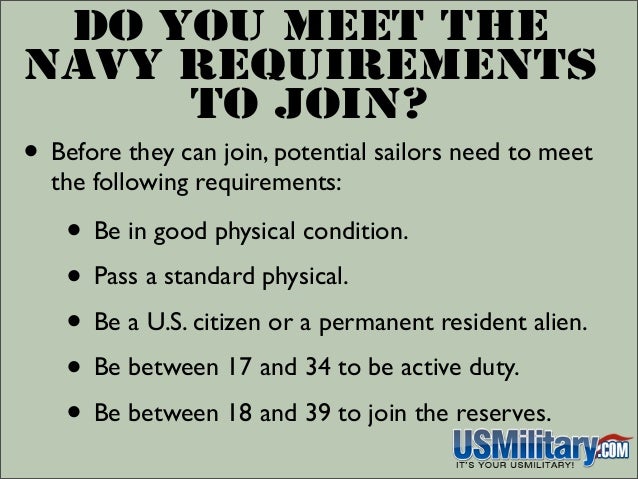
No, but you must be a Legal Permanent Resident (Green Card holder). If you have a green card, you can join the Navy in non-classified roles. You will not be able to get a security clearance initially, which locks you out of high-tech rates like Information Systems Technician (IT), Intelligence Specialist (IS), or Nuclear Power. However, you can join as a Hull Maintenance Technician (HMT) or a Boatswain's Mate (BM). The golden rule is that you must be a citizen to handle weapons systems or see classified codes. The Navy will expedite your naturalization process—you can be sworn in as a citizen after boot camp or on your first deployment on a ship, which is a fast-track path that saves thousands in lawyer fees.
But here’s the dark twist: joining as a non-citizen does not guarantee citizenship if you have certain visa restrictions. Also, you must be physically present in the U.S. legally for at least two years before joining. The process is stricter post-9/11, so the background check for green card holders is intense. They will verify your status with ICE and the State Department. If there’s any shadow on your immigration paperwork, you will be delayed or rejected. It’s a bold workaround for citizenship, but it’s also a commitment where the military is your first landlord. If you fail to complete your contract, your green card status could be jeopardized. It’s a serious gamble that only pays off if you are willing to endure the full service.
Reflecting on the Navy as a microcosm of human nature, we see that we crave structure in chaos. The ocean is the ultimate unknown, a terrifying void, and we respond by inventing a rigid hierarchy to make it safe. Joining the Navy is an extreme form of risk management—you admit you can't control the tides, so you build a perfectly balanced ship and train its crew to respond to leaks, fires, and enemies with muscle memory. This is a metaphor for our own lives; we buy insurance, we create schedules, we map out career paths, all to fight the anxiety of the unpredictable. The sailor, in their absurdly polished shoes and perfect collar, represents the human will to impose order on the wild.
Furthermore, the process of joining teaches us about delayed gratification. We live in a world of instant streaming, same-day delivery, and immediate dopamine. The Navy is the opposite: a 9-month wait in DEP, a 10-week boot camp, and then years of watch standing before you see tangible rank. It forces you to be patient with a timeline that doesn't care about your feelings. This is a profound lesson in humility and acceptance. You learn that not every moment needs to be "optimal" or "fun"; sometimes, value lies in the mundane, repetitive act of keeping the ship sailing straight.
Ultimately, the Navy isn't just about serving your country. It’s about serving a version of yourself that you haven't met yet. It’s a brutal, bureaucratic, and deeply romantic quest where you find out what you're made of not when the enemy fires, but when you're on hour four of a cleaning station leftover puke, or when you miss a holiday but feel the pride of a flight deck launch. The requirements to join are just the paperwork; the real requirements are a willingness to surrender your ego to the machine and trust that the machine—flawed, absurd, and gray—will eventually build you into something unbreakable. If you can handle the silence of the deep, the Navy will handle the rest.