What Are Apps That Give You Money
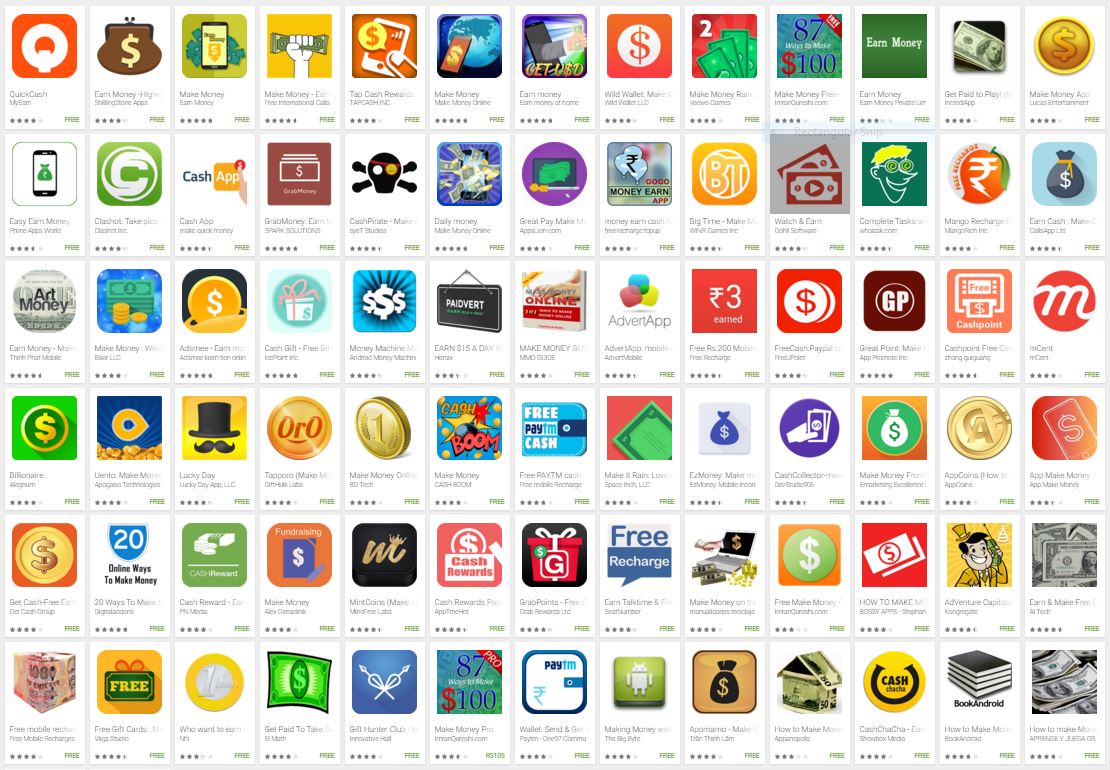
There is a moment, often late at night, when the glow of the smartphone feels less like a screen and more like a slot machine. We swipe, we tap, we answer a survey about our favorite toothpaste, and a digital coin clinks into an invisible piggy bank. It isn't really the money we are chasing; it is the micro-priming of a reward system that has evolved over millennia to keep us searching for berries on a sparse savanna. Our brains are not wired for abundance, but for scarcity. Apps that give you money don't sell a product; they sell a feeling of control—a psychological salve for the anxiety of an economy that feels increasingly out of our hands. Yet, beneath this veneer of financial empowerment lies a complex emotional terrain where the lines between work, leisure, and self-worth blur into a haze of relentless, micro-optimization.
This is not merely a story about passive income or side hustles. It is a story about attention—the most precious currency we hold. When we download an app promising five dollars for a quick task, we are entering a silent contract where our time is parsed into fractions of a cent. The modern relevance is staggering; in a world where the cost of living spirals and gig work falters, these apps offer a deceptive sense of agency. But the deeper question we must ask ourselves isn’t "How much can I earn?" but rather, "How much of myself am I willing to fragment to feel safe?" The allure is not the payout, but the promise that our loneliness and financial dread can be soothed by a transaction that fits in our pocket.
The Emotional Ledger: When Payments Feel Like Validation
Let us sit with the psychology of the “instant reward.” Unlike a monthly paycheck, which arrives with bureaucratic delay, these apps exploit the variable ratio reinforcement schedule—the same mechanism that keeps gamblers at a roulette table. You check the app; you see a balance. That number—even if it is only 43 cents—triggers a release of dopamine that momentarily fills a void. This is not greed; it is a neural fishing expedition. For someone who feels invisible in their day job, receiving a notification that says "You earned $1.50" is a microscopic, yet potent, form of validation. It tells our weary, overworked brain, "You are productive. You are worth something."
Must Read
However, this validation comes at a cognitive cost. The mental hurdle here is the "sunk cost fallacy" applied to time. Imagine a Tuesday evening. You are exhausted, but you spent thirty minutes chasing a $10 payout, and you are only $2 away from redemption. You stay up another hour. Your eyes ache. Your partner asks for attention, and you snap, "In a minute, I'm almost at the threshold." In that moment, the app has not given you money; it has rented your nervous system for pennies. The emotional trigger is anxiety—the fear that if you stop, you are "wasting" the effort already invested. We confuse occupation with meaning, and the app exploits this confusion by keeping us in a perpetual state of "almost there."
We must also examine the shadow of social comparison. These apps often include leaderboards or "friend referrals" that turn our peers into competitors. When we see that a friend has earned $50 this month, while we have only scraped $12, a quiet shame creeps in. It whispers that we are lazy, that we are not optimizing. This is a dangerous spiral, because it shifts the metric of self-worth from who we are to what we extract. The resentment we feel is not towards the app, but towards ourselves for falling into the trap. This is the heavy, unspoken burden: the pursuit of free money often costs us the very thing we need most—uninterrupted peace.
Reclaiming Your Attention: A Mindful Approach to the Gig Life
How, then, do we navigate this landscape without losing our souls? The first step is a brutal, honest audit. Look at the apps on your phone that promise cashback, surveys, or micro-tasks. Ask yourself a single, piercing question: "If this app paid me double, would I still feel this hollow?" The answer likely reveals whether you are engaged in a healthy exchange or a compulsive ritual. To reclaim your power, you must implement a time-boxing ritual. Designate a maximum of fifteen minutes per day, in a specific physical location (not your bed, not your sofa), strictly dedicated to these apps. Set a timer. When it rings, you physically close the app and place your phone in another room. This creates a barrier between the "money zone" and your sanctuary of rest.

Secondly, shift your internal narrative from "earning" to "trading." Every time you tap, you are not gaining money; you are selling a piece of your life clock. I want you to calculate your hourly rate for using these apps. Divide the average payout by the time spent. If you earn $3 for an hour of surveys, you are working for a fraction of minimum wage. Would you accept that job? Probably not. So why accept it for a billionaire’s algorithm? The mindset shift here is to value your baseline attention as a non-negotiable asset. You must treat your flow state—those hours of deep reading, meditation, or craft—as more sacred than any balance sheet.
Thirdly, introduce a "delayed gratification" buffer. When you feel the urge to open an app and check your balance, pause and ask for a 10-minute hold. Use that time to drink a glass of water, stretch your neck, or look out the window. Notice the urge without acting on it. This is a form of cognitive defusion; you learn that the urge is just a temporary neurological weather pattern, not a command. By delaying the reaction, you starve the reward loop of its instant feedback, gradually rewiring your brain to realize that the app does not provide safety—it provides distraction.
Finally, replace the "free money" goal with a "free time" goal. For one week, every time you feel tempted to use a micro-earning app, transfer a symbolic amount (even if it’s just a quarter) into a savings jar labeled "My Sanity." At the end of the week, buy yourself a book, a plant, or a nice coffee with that jar money. This transaction is physical, intentional, and slow. It teaches your brain that money is a tool for enriching life, not for pacifying it. You are building a new ritual where the reward is presence, not profit.
Frequently Asked Questions: The Mind and the Money
Why do I feel anxious when I'm not checking my money-making apps?
This anxiety is rooted in the Fear of Missing Out (FOMO) on a micro-level. Your brain has learned to associate the app's notification with a potential reward, and silence now feels like a loss. This is a classic conditioning response. The anxiety is not about the money itself, but about the possibility of "opportunity cost"—the fear that while you are resting, sea levels of digital coins are passing you by. The app has effectively hijacked your dopamine baseline, making peace feel like boredom.
Emotionally, this points to a deeper need for security. You are not anxious about the app; you are anxious about your future. The app serves as a placebo for that financial dread. To calm this, you must practice "scarcity meditations." Sit with the thought, "I am safe right now, in this moment, without those fifteen cents." Repeat this until the breath outweighs the itch to check. Over time, your nervous system learns that existence is not contingent on extraction. You are a human being, not a human doing tasks for pennies.
Can these apps actually help with serious financial struggles, or are they a trap?
It is crucial to be honest here: for someone facing a genuine financial crisis, these apps are a short-term band-aid on a deep wound—but not a cure. They can provide a tiny, immediate influx of cash to buy a meal, and in that narrow context, they are not evil. However, the psychological trap is that they offer a false sense of agency. While you are spending three hours earning $5, you are not spending that time applying for a better job, learning a high-income skill, or seeking community resources. The app makes you feel productive, which keeps you passive.
From a mental well-being perspective, relying on these apps fosters a victim mentality dressed as hustle. It tells you that survival is a grinding, piecemeal effort. If you are in real hardship, the most empowering move is to stop using the apps for 48 hours and use that energy to contact a financial counselor or explore government assistance. The trap is in the illusion of independence. True resilience comes from networking and skill-building, not from tapping a screen until your thumb cramps. Treat these apps as emergency kindling, not as the fire itself.
I feel guilty when I take a break from these apps. How do I stop this guilt?
The guilt is the coercive voice of the algorithm, internalized. You feel guilty because you have been conditioned to equate "busy" with "valuable." But guilt is a compass pointing to a misalignment. That misalignment is between your intrinsic worth and the transactional nature of the app. You must challenge the core belief that "rest requires earning." Rest is a biological right, not a reward for labor.
To dismantle the guilt, practice explicit "guilt-breaking" rituals. When you finish a leisurely activity—like walking in the park—say out loud, "This walk was productive because it restored my soul." This redefines productivity to include restoration. Also, visualize the person on the other side of the app: a product manager whose job is to keep you engaged. Your guilt is a feature for their revenue, not a flaw in your character. By naming this, you can externalize the guilt and see it as a manipulation tactic. Eventually, you will realize that the only thing you owe the app is nothing.
How can I calculate the real cost of my time when using these apps?
Most people calculate cost in terms of hourly wage, but that is only the surface. The real cost includes the transition tax—the mental energy it takes to switch your focus from a task to the app and back. Research suggests that after a distraction, it takes up to 23 minutes to fully re-enter a deep work state. If you check your app four times a day, that is over an hour of lost cognitive capacity. To calculate your true cost, track your "flow hours" for a week without the apps. Then, for a week with the apps. Compare the quality and quantity of your creative or professional output.
Emotionally, factor in the cost of irritability. The friction of filling out a survey and not qualifying for the payout generates micro-frustrations that linger in your nervous system, affecting your patience with your family. To get a full picture, use a "soul ledger." Write down how you feel (energized, drained, apathetic) before and after using the app. If the mood consistently drops, the app is costing you more than it pays. The balance is not in dollars; it is in your emotional reserves.
Is it possible to use these apps healthily without feeling addicted?
Yes, but it requires a strict "arm's length" strategy. Healthy usage is analogous to having a glass of wine with dinner, versus drinking alone nightly. The rule is that you must never use these apps as a default activity to fill empty space. They can only be used when you have a specific, tangible goal (e.g., "I will earn $10 to pay for a movie ticket") and you stop immediately upon reaching it. You must also create a "two-tap rule"—if it takes more than two taps to open the app and start earning, you don't do it. This friction reduces impulsive use.
More importantly, you must have a dominant "anchor activity" in your life that provides more value than the app—like painting, playing an instrument, or cooking. When you have a rich, fulfilling hobby, the app becomes boring by comparison. The addiction thrives in a vacuum. By filling your life with tactile, slow, and meaningful activities, the app's superficial reward becomes genuinely unappealing. Use them as a rare tool, never as a companion. The key is to keep them in the periphery of your life, not at the center.
We must remember that these apps are mirrors reflecting our culture's anxiety about scarcity. They whisper that time is infinite and money is finite, but the opposite is true. Money can be regrown, but the hours of our one, wild, precious life cannot be minted. When we stop trying to squeeze pennies from every passing minute, we open the door to a richer experience of serendipity—the chance encounter, the unplanned conversation, the quiet afternoon where a novel idea finally surfaces. That is the ultimate wealth.
Mastery of this digital terrain does not mean deleting every app and living like a Luddite. It means walking through the world with sovereignty over our attention. We can acknowledge the lure of the coin, smile at the trickery of the algorithm, and choose to close the tablet with the grace of someone who knows that the most profound "payment" in life is the simple, uninterrupted feeling of being fully alive. In that space, we discover that we never needed the app to give us money; we needed permission to give ourselves peace.