
Webull Screener For Swing Trading

The modern trader’s workflow is a study in applied neurobiology. When you open a platform like Webull and engage its screening tool, you are not merely filtering stocks; you are offloading a massive cognitive load onto a logical, rules-based system. Our brains, specifically the prefrontal cortex, are notoriously poor at processing more than four variables simultaneously. A screener acts as an external cognitive prosthesis, distilling thousands of data points into a manageable stream of actionable signals. This is the core physics of optimization: converting raw entropy into high-velocity, ordered information that our limited biological processors can actually utilize.
From a physiological standpoint, swing trading—holding positions for days to weeks—aligns perfectly with our circadian rhythms unlike the frantic immediacy of day trading. The latter triggers a constant fight-or-flight adrenal response, flooding the system with cortisol. Swing trading, conversely, allows for a delayed gratification loop. The Webull screener becomes your strategic planning tool during non-market hours, reducing real-time anxiety. When you screen for specific technical patterns and volatility metrics at 8 PM, you are effectively pre-wiring your neural pathways for decision-making, so that when the market opens, you are executing a pre-planned script rather than reacting to the dopamine spikes of volatile price action.
This article is a deep-dive into using the Webull screener as a life hack for selective attention. We are dissecting the mechanics of signal-to-noise ratio, the biology of risk aversion, and the systematic routines that separate disciplined swing traders from gamblers. By treating your screeners as biological filters—like the way your kidneys filter blood—you can create a system that protects your capital and your mental health. The goal is not to find "the most stocks," but to find the least number of high-probability setups that your brain can thoroughly analyze, a concept known in cognitive science as "bounded rationality."
Must Read
The Neurochemistry of Filtering: Why Your Default Settings Are Sabotaging You
Most traders fail because they use pre-built screeners that reflect consensus thinking. When you use the default "Most Active" or "Top Gainers" lists, you are subjecting yourself to Salience Bias. The amygdala, our emotional processing center, tags these loud, high-momentum stocks as critically important, releasing dopamine that encourages impulsive action. Yet, the biological reality is that these extreme movers already contain the maximum amount of risk and uncertainty. The Webull screener allows you to subvert this by focusing on relative volume rather than absolute price movement. This metric measures current volume against a baseline average, filtering for institutional accumulation rather than retail hysteria.
Consider the chemical cascade of overtrading. Each time you click "Buy" without a rigorous screen, you experience a small surge of norepinephrine, which is addictive. To counter this, we must engineer our screeners to induce cognitive friction. By setting strict parameters—such as a minimum Average Dollar Volume of $10 million and a Relative Volume above 1.5—you force the brain to slow down. This activates the ventrolateral prefrontal cortex, the region responsible for inhibition and self-control. A well-constructed Webull screener essentially acts as a dinner plate that is too small; it prevents you from overeating (overtrading) by physically limiting what reaches your attention span.
Furthermore, the physics of swing trading relies on mean-reversion and momentum decay. Your screener must account for the biological rhythm of the market itself. Stocks that have extended too far from their 50-day moving average (e.g., >20%) are stretched like a rubber band. The screener, set to identify these Bollinger Band deviations, can help you identify high-probability reversal zones. Conversely, screening for consolidation patterns—stocks trading within a tight 5% range for 20 days—identifies periods of low physiological energy in the stock, which often precede explosive breakouts. This is akin to the resting state of neurons; they are primed for a massive action potential.

Systematic Life Hacks: Engineering Your Webull Screener for Peak Efficiency
To transform the Webull screener into a life-hacking machine, you must adopt a multi-pass filtering approach. Do not attempt to find a trade in one click. Instead, create a hierarchy of screens that mimics the scientific method. Start with a broad liquidity filter to eliminate "zombie" stocks. Your first pass should include: Price above $5, Average True Range (ATR) above 0.5, and Market Cap between $200M and $20B. This removes the biological noise of penny stocks and mega-cap slow movers, allowing your brain to focus on volatility that is actually tradable.
Second, incorporate the Relative Strength Index (RSI) as a biological barometer of over-extension. For a swing trading setup, look for RSI readings between 40 and 60 on the daily chart. This is the "Goldilocks Zone"—not oversold (which can be a falling knife) and not overbought (which invites consolidation). Pair this with a Moving Average Convergence Divergence (MACD) histogram that is showing increasing positive momentum. This technical combination mirrors the biological principle of homeostasis—the stock is returning to balance, and you are riding the correction back to equilibrium. Set your screen to "MACD crossing above signal line" as a primary trigger.
Third, apply the Share Structure Filter to hack the float. Stocks with a high short interest (above 10%) and low float are biologically prone to volatility—they are "flight or flight" animals. When positive news hits, the short sellers scramble, creating a gamma squeeze. Use the Webull screener to filter for Short Interest % of Float. However, be pragmatic: only engage these if the Average Dollar Volume is above $20M to ensure you can exit without slippage. This is not about gambling; it is about identifying high-energy systems that are primed for a specific trigger.
Finally, automate your time. Set a specific alarm for 4:00 PM EST to run your screens. This is the post-market analysis window. At this time, the noise of the opening bell has subsided, and the closing prices reflect true institutional sentiment. Create three distinct watchlists: Long Candidates, Short Candidates, and Breakout Watch. Transfer the screener results immediately into these lists. Then, step away from the computer. This separation of discovery and execution is a crucial life hack for sleep hygiene. High-quality sleep is when your hippocampus consolidates the day's patterns into long-term memory, making you a better trader tomorrow. Do not run the screener 30 minutes before bed; it will induce cognitive arousal that ruins your REM sleep.

Frequently Asked Questions: Troubleshooting the Webull Screener
1. How do I avoid "false positives" when using the Webull screener for momentum?
False positives occur when a stock passes your technical filters but fails due to fundamental decay or low liquidity. The most common culprit is ignoring the Volume Ratio compared to the stock's baseline. A stock might have a beautiful MACD crossover, but if the volume is only 50% of its 3-month average, the move is weak and likely to fail. To troubleshoot, add a secondary filter for Relative Volume (RVOL) > 1.2. Additionally, check the ADX (Average Directional Index) on your chart; if the ADX is below 20, the market is ranging, not trending, so the momentum signal is null.
Another source of false positives is using closing price data only. The Webull screener often uses closing prices, but a stock might have gapped down at the open and recovered, creating a bullish-looking candle. Always use the screener to generate a list, but then visually inspect the candle body wicks. A stock that closes near its high with long lower wicks is showing buying pressure. If the screener shows a stock up 2% but the daily chart shows a huge upper wick (rejection), discard it. The final hack is to require the stock to be trading above its VWAP (Volume Weighted Average Price) for the day. This confirms intraday buyers are in control, a biometric signature of institutional support.
2. What are the ideal screener settings for a 3-5 day swing trade window?
For a 3-5 day holding period, you are looking for stocks that are beginning a new impulse wave. Set your price filter between $5 and $50 to allow for higher percentage moves without needing massive capital. The most critical metric is ATR (Average True Range). For a $20 stock, you want an ATR of at least $0.75 to $1.00; this represents a 4% daily range, giving you enough volatility to capture a 5-10% swing profit without the move being a statistical outlier. Add a filter for "Price within 5% of 52-week high". This is crucial because stocks breaking to new highs have no overhead resistance—the physics of price discovery is unencumbered.
Additionally, set the RSI (14) to be between 55 and 65. This indicates the stock is strong but not yet exhausted. If the RSI is above 70, the move is mature. Use the "MACD (12,26,9)" with the histogram showing two consecutive days of increasing green bars. Do not use daily time frames for the initial scan; use the 4-hour chart in the backtest to confirm the trend is stepping higher. Finally, always exclude stocks that gapped up more than 5% at the open—these often fade intraday. Look for steady climbers with consistent buying pressure.

3. How can I use the Webull screener to identify stocks with high institutional accumulation?
Institutional accumulation is rarely visible on a price chart alone, but it leaves fingerprints in volume and order flow. In the Webull screener, you can approximate this by using the Money Flow indicator or simply by analyzing the Volume ratio combined with price stability. Use the screener to filter for stocks that have gained 1-3% on 3 times the average volume, but crucially, closed near their daily highs. This is called "accumulation" and indicates smart money is absorbing sell orders without pushing the price into a parabolic vertical move—they are buying secretly.
A more advanced hack involves screening for institutional ownership changes. While Webull doesn't show real-time 13F filings, you can combine the screener results with the "Fundamentals" tab—look for a low Shares Outstanding compared to Float, which creates scarcity. The biological equivalent is hunting for a resource that is rare. Prioritize stocks where the "Institutional Holdings" percentage is between 30% and 60%. Too low (below 20%) means the stock isn't validated; too high (above 80%) means there are few new buyers left. Filter for a Beta of 1.5 to 2.5—higher beta indicates that the stock is sensitive to market impulses, but the institutional support will keep the downside protected.
4. What logic should I use to filter for "mean reversion" trades in a downtrend?
Mean reversion is the physics of elasticity, but you must be ruthless about the context. You only want to buy oversold conditions in a bullish primary trend. Use the Webull screener with a weekly time frame to confirm the stock is above its 200-week moving average. Then, switch to the daily screener and look for an RSI(2) (a fast RSI) below 10—this signals a severe short-term panic. Combine this with a Stochastic Oscillator below 20 showing a bullish crossover. This is the "turning point" signature.
To avoid catching a falling knife, add a filter for "Price above the lower Bollinger Band but below the middle band." This indicates the stock is dipping but not in freefall. The critical life hack is to never screen for these trades alone. Use the screener to create a shortlist, then wait for a confirmed reversal candle (like a hammer or engulfing) on the 1-hour chart. The best mean reversion trades occur when the market has a broad pullback, but the stock's relative strength (compared to the S&P 500) is above 0.8. You are looking for stocks that are falling with the market but bouncing back the fastest.
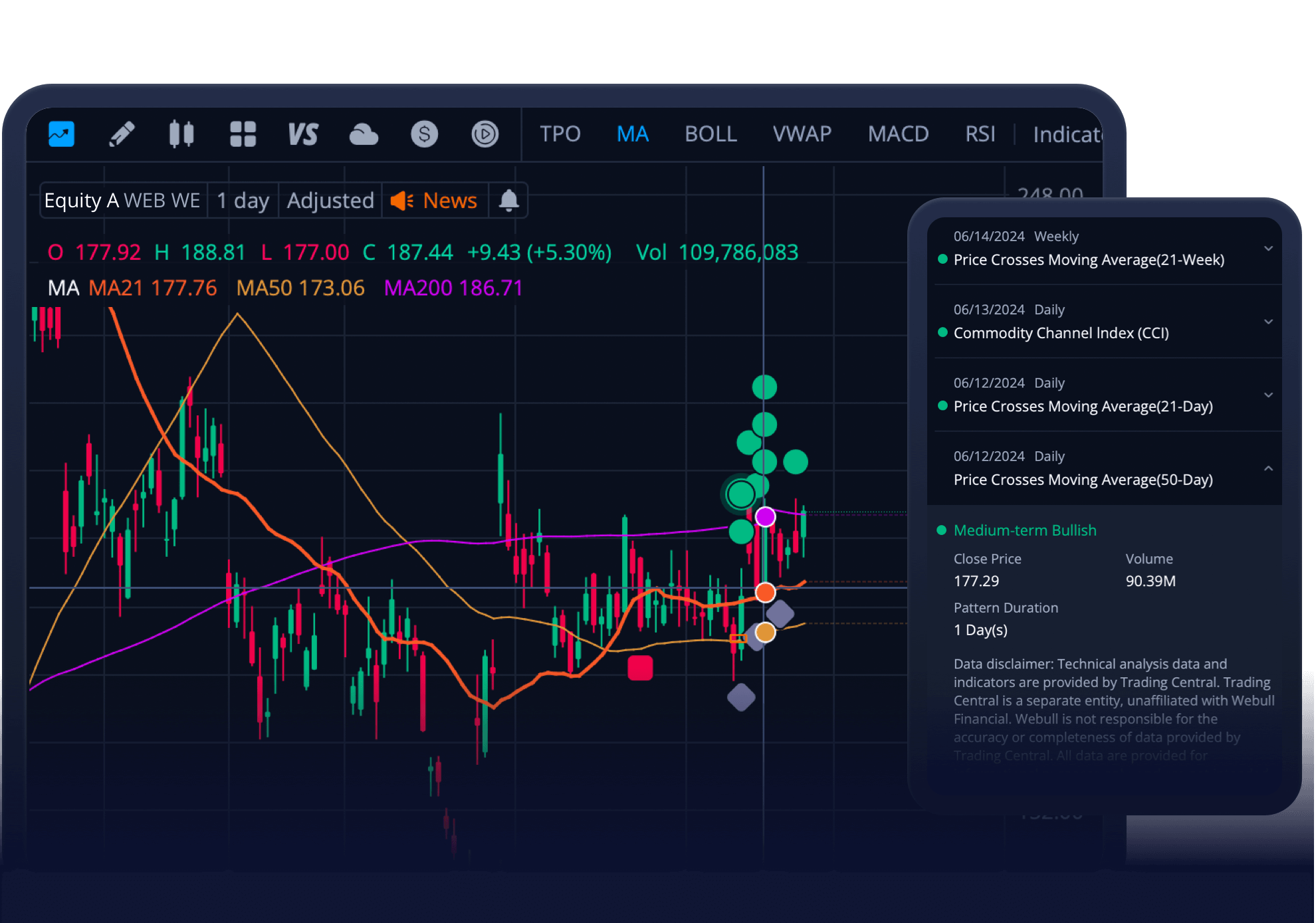
5. How does the Webull screener handle pre-market data, and should I use it?
The Webull screener primarily uses scheduled daily data and extended hours data for specific scans, but the standard screener logic is based on the last closed candle. Using pre-market data for screening is dangerous because liquidity is thin and spreads are wide, which triggers false signals. For swing trading, you should strictly use the 4:00 PM close data to build your watchlist. However, you can use the "Alert" function based on screener results to notify you if a stock hits a specific price in pre-market—this is for entry execution, not for initial discovery.
If you want to incorporate pre-market sentiment, use the screener to filter for stocks that are up 1-2% in pre-market on high volume, but only use this as a confirmation of your previous night's analysis. It is biologically flawed to make new decisions at 8:00 AM when your cortisol is spiking due to morning stress. Pre-market screeners help you gauge "gap and go" situations, but for swing trades, you want to buy the pullback on the open, not the gap up. Set your screener for "Previous Close vs. Current Price"—if the gap is too large (>5%), discard it; the reward/risk ratio is skewed against you.
Respecting the science of screening means respecting your own cognitive limits. By admitting that your brain cannot process 10,000 stocks, and by outsourcing the heavy lifting to Webull's computational logic, you are engaging in a form of intellectual humility. This is not a weakness; it is a profound biological optimization. You are aligning your workflow with the Pareto Principle—spending 20% of your effort (the screener setup) to generate 80% of your results (high-quality setups that fit your psychological profile). This turns trading from a chaotic battle into a procedural, almost meditative practice.
Ultimately, the Webull screener is a mirror for your own discipline. The filters you choose reflect your risk tolerance, your time horizon, and your understanding of market mechanics. When you rigidly adhere to a system that reduces entropy, you reduce the random noise in your life. You become a better decision-maker not just in the market, but in your daily routines—deciding what to eat, when to sleep, and how to allocate your attention. By mastering the screener, you master the art of saying "no" to the vast majority of opportunities, which is the most liberating and empowering skill a modern human can develop. The charts are vast, but your life is finite; screen wisely.


