Tooth Replacement Cost In Nairobi

There is a peculiar silence that falls over a room when someone loses a tooth. It’s not just the physical gap in a smile; it’s the quiet calculation that begins in the mind—the mental arithmetic of cost, the dread of the dentist’s chair, and the sudden, visceral awareness of our own mortality. In Nairobi, this silence is louder than the matatu horns outside. The conversation about tooth replacement is rarely about biology; it’s a conversation about economics, status, and the brutal hierarchy of modern urban living. While a century ago a missing molar might have been a mere inconvenience, today, in the gleaming malls of Westlands and the bustling clinics of Kenyatta Avenue, it has become a mark of financial capability, a silent testament to whether you can afford to look your age, or better yet, ten years younger.
Historically, the Kenyan approach to dental repair was pragmatic, often driven by traditional medicine and extraction rather than preservation. But the winds of globalization have swept through the city, bringing with them the promise of Hollywood smiles and implant technology that once seemed like science fiction. Now, the question on everyone’s lips—often held tightly closed—is not if you can replace a missing tooth, but how much of your paycheck will it devour? The answer is a dizzying spectrum, ranging from the cost of a nice dinner for a temporary bridge, to the price of a used car for a full-mouth rehabilitation. Navigating this landscape in Nairobi demands more than just courage; it demands a financial strategy.
The Price of a Smile: Anatomy of Costs and Hidden Fees
The first thing any Nairobian discovers when inquiring about tooth replacement is that the quoted price is rarely the final figure. The Nairobi dental market is a labyrinth of tiered pricing, segmented by location (Karen vs. Eastleigh), clinic prestige, and the nationality of the dentist. You aren’t just paying for the titanium screw or the ceramic crown; you are paying for the sterilized air-conditioning, the imported anesthetic, and the surgeon’s confidence. For a single dental implant—the gold standard—you are currently looking at a range of KES 70,000 to KES 180,000 per tooth, depending on whether the component is sourced from a low-cost Chinese manufacturer or a premium Swedish brand like Nobel Biocare.
Must Read
But the costs are notoriously fractal. That price you saw on the website? It usually excludes the CT scan (KES 5,000–15,000), the extraction of the failing root (KES 3,000–10,000), and the temporary crown you’ll wear while the implant fuses to your bone (KES 10,000–25,000). If you lack bone density—a common issue for those who have waited years to address the gap—you’ll need a bone graft, a procedure that can add KES 30,000 to KES 70,000 to the total. In the darker corners of the medical economy, there are "bargain" deals advertised in backstreet clinics for KES 40,000 per implant. As a dark fun fact: these often use surplus or re-sterilized components that have a notoriously high failure rate, resulting in a phenomenon known in local dental circles as "the cheap bounce"—the implant works for a year, then tragically fails, costing you double to fix it properly.
Furthermore, the psychological pricing is intense. A dentist in Gigiri will charge double for the same hardware as one in Buruburu, not because the screw is different, but because the perception of safety and luxury is priced in. It is the classic Veblen good effect applied to healthcare. You are paying to have your fears held by a specialist who drives a Range Rover. Conversely, public teaching hospitals like KNH offer reduced rates, but you face the "queue tax"—lost working days, long waits, and a less personal touch. The decision is rarely purely medical; it’s a negotiation with your own risk appetite and your bank balance.
Bridges, Partials, and the Art of Compromise
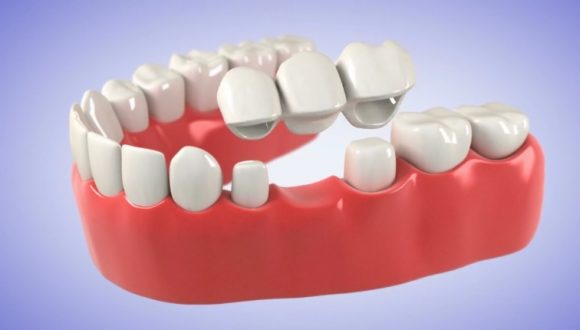
Let us step away from the surgical extreme for a moment. For many residents, the implant is an unattainable fantasy, a luxury reserved for the expatriate executives or wealthy landowning families. The pragmatic savior of the Kenyan middle class is the fixed dental bridge. This involves grinding down the healthy teeth adjacent to the gap to act as anchors. The cost? A three-unit porcelain-fused-to-metal (PFM) bridge will set you back KES 25,000 to KES 60,000. It’s cheaper, faster (two weeks versus three months), and avoids the horror of surgery. But the dark secret of the bridge is that it requires mutilating healthy tissue to support the replacement—a sort of architectural cannibalism that sacrifices the good to save the bad. Your dentist won't always emphasize that the life span of a bridge is about 10–15 years, after which you'll be debating a replacement, which is often more expensive due to the weakened anchor teeth.
Then there is the removable option: the partial denture, affectionately known as the "waiter’s palate" because of its tendency to click when speaking. These acrylic or flexible nylon dentures range from KES 8,000 to KES 35,000. They are the fastest and most affordable solution, and for many, they are the only solution. The cultural shift here is fascinating: in Nairobi’s business circles, a visible denture can be an instant social demerit. It signals age and infirmity. This has led to a booming trend in "seamless" flexible dentures that hug the gums without visible metal clasps. But clinically, they accelerate bone loss in the jaw because they rub against the gums and don't stimulate the bone structure underneath.

Consider the case of 34-year-old Daniel, a software developer from Kasarani. He lost a molar to a neglected cavity. His dentist quoted him KES 120,000 for an implant. Stunned, Daniel opted for a KES 30,000 bridge. He saved money, but two years later, he started experiencing sensitivity in the crowned anchor teeth. The dentist explained that food trapping and poor fit were causing decay under the crowns. He now faces a choice: pay KES 150,000 to redo the bridge and save the teeth, or extract all three and start over with an implant. He miscalculated the total lifecycle cost. This scenario is rampant. The takeaway? When you choose a cheap fix in Nairobi, you are effectively buying a future problem. You must treat dental work as an investment in infrastructure, not a quick shop.
The best actionable advice in this market is to demand a "microlisting"—a detailed breakdown of costs before any work begins. Inquire specifically about the laboratory fee, the material grade, and the warranty. Surprisingly, few Kenyan clinics offer a formal warranty, but many will agree to a 1-year free-adjustment guarantee if you negotiate. Furthermore, consider timing your treatment around dental tourism seasons; if you have a relative in India or Turkey, the cost of implants there (including flights) can sometimes undercut Nairobi by 30%, but you lose the aftercare—and if the implant fails, you can't fly back for a check-up on a whim. The local small print matters more than the global price tag.
Insurance, Hidden Costs, and Negotiation Tactics
Does the National Hospital Insurance Fund (NHIF) cover this? The short answer is mostly no. NHIF—now rebranded as SHA—has a basic dental cover, but it is heavily skewed towards extractions and fillings, not elective replacements. Cover for prosthetic work is often capped at absurdly low figures like KES 5,000 to KES 10,000, which vanishes instantly against a KES 50,000 bill. Private insurance is marginally better, but almost all policies classify implants as "cosmetic" or "major dental" with stringent pre-authorization requirements. The secret weapon in Nairobi, however, is the corporate dental plan. Many top-tier companies offer comprehensive outpatient cover through providers like AAR or Resolution, which can reimburse up to KES 60,000 per year for dental prosthetics. If you are changing jobs, negotiating a better dental rider is mathematically more valuable than a small salary increment.
Let us talk about haggling. In the West, medical prices are fixed; in Nairobi, they are a starting point for negotiation—especially when you pay in cash. Clinics in satellite towns like Thika or Ruaka operate on a different overhead structure. A dentist in these areas will often drop their implant price by 10% if you promise to show up on the same day of the week for all appointments or bring in a referral. Never accept the first quote. Ask for the "cash price" or the "walk-in price" without an invoice. It is also legal (and wise) to ask for a discount on the factory price of the crown; labs charge the clinic around KES 8,000 for a high-end PFM crown, but the clinic marks it up to 15,000 or more. Clarify the lab bill.
Another dark fun fact: the material of the crown matters more than the brand of the clinic. A full Zirconia crown is nearly indestructible and aesthetically stunning, but it costs KES 15,000–20,000 in materials alone. Some clinics will quote you for Zirconia and deliver a cheaper Lithium Disilicate (E-max) crown. The only way to combat this is to ask to see the empty packaging or to ask about the "layering" technique used. If the technician is creating the crown in a local lab in Industrial Area, the price is lower than if it’s milled in Germany. Ask where your crown is being made. If the clinic stalls on the answer, you are likely being overcharged. The transparent clinic doesn't hide the supply chain.

Finally, do not underestimate the cost of maintenance. The implant you buy today is not a one-time fee. Every year, you are expected to undergo a professional cleaning and bite adjustment (KES 3,000–5,000). If you have a bridge, you need to buy specialized super-floss and an oral irrigator (Waterpik) to clean underneath it, adding KES 7,000 to your home care kit. The dental industry thrives on this recurring revenue. Your "cheap" bridge will require a replacement of the glue every few years. Budget for it. Your smile is not a static possession; it is a dynamic, aging organ that requires fuel. In Nairobi, that fuel is measured in Kenyan shillings.
Your Questions, Answered: The Nairobi Dental FAQ
1. Are cheap dental implants in Nairobi safe, or am I risking my health?
This is the most common question, and the answer is layered. A cheap implant (under KES 50,000) is usually risky because the margin for error in implantology requires high-grade titanium and precise engineering. Cheaper implants are often made of weaker alloys that are more prone to fracture under the extreme pressure of chewing. Furthermore, low-cost clinics may cut corners on sterilization or use outdated surgical protocols. The risk is not just implant failure; it’s the risk of peri-implantitis—a silent infection that eats away at your jawbone. In contrast, a moderately priced implant (KES 90,000) from a reputable dentist in Nairobi using branded components (like Straumann or Zimmer) is generally safe, often carrying a success rate above 90%.
However, "safe" also depends on your surgeon. A cheap implant from an expensive clinic is better than an expensive implant from a cheap clinic. The expertise matters more than the screw. Don't be fooled by a swanky lobby; ask for the surgeon's certification, their success rate, and the number of implant cases they perform monthly. A general dentist who places two implants a month is less adept than an oral surgeon who places twenty. Ask for before-and-after photos of their own patients and look for complications in their records. If the quote seems too good to be true, they are likely skipping the trial fitting (the surgical guide) that ensures the implant goes into the bone at the correct angle, which is the difference between a functional tooth and a tilted, painful hazard.
2. What is the difference between a dental implant and a bridge in terms of longevity?
The physiological difference is immense. An implant is a titanium post that fuses with your jawbone (osseointegration). This fusion actively preserves bone density and mimics the natural root system of a tooth. With impeccable hygiene, an implant can last 25 years to a lifetime. The crown on top might need replacing after 15 years due to wear, but the root is solid. A bridge, on the other hand, is a prosthetic piece that is glued to adjacent teeth. The bridge does nothing to prevent the jawbone in the missing gap from shrinking. Over time, a phenomenon called "bone resorption" occurs, leading to a sunken appearance in the face. The bridge itself has a lifespan of 10 to 15 years, but the supporting teeth beneath the anchoring crowns are vulnerable to decay and fracture, which can shorten its life drastically.
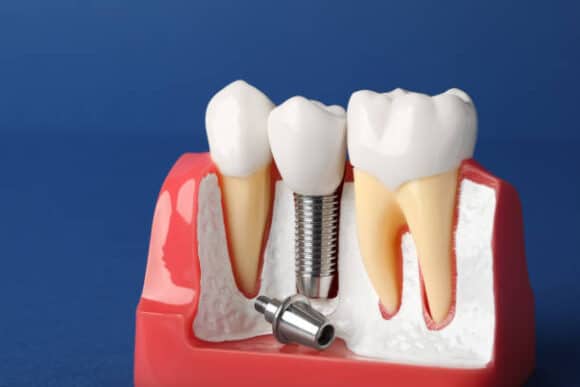
Financially, the bridge is the tortoise and the implant is the hare. The bridge is cheaper upfront (KES 25,000–60,000) but carries a "hidden cost" of biological wear. The implant is expensive upfront (KES 100,000+) but rarely needs replacement. A recent study in Nairobi showed that the 15-year cumulative cost of a bridge—including re-cementation, repairs, and eventual replacement—often exceeds the initial cost of an implant. If you are in your 30s, an implant is almost always the better long-term investment. If you are over 70 and have complex health issues, a bridge might be the pragmatic choice to avoid surgery. But the biological gold standard is the implant. It is the only solution that tricks the brain into thinking you have a real tooth, offering proprioception (the feeling of bite force) that bridges cannot replicate.
3. Do I really need a bone graft? Can I just get the implant anyway?
Without a CT scan, we are flying blind. A bone graft is necessary when the height or width of your jawbone is insufficient to safely house the implant screw. If you've been missing a tooth for over a year, you have likely lost at least 25% of the bone volume in that area. It happens stealthily, like the gradual erosion of a riverbank. Placing an implant in insufficient bone results in a loose implant, potential nerve damage (if near the mandibular nerve), or a perforation of the sinus cavity in the upper jaw. The symptoms of needing a graft are subtle: claustrophobia in your bite, or a feeling that the neighboring teeth are leaning.
Attempting to skip the graft is risky. Some dentists will use "short implants" designed for limited bone height, but these have higher failure rates under heavy molars. The safest path is to have the graft. The cost in Nairobi for a synthetic bone graft (xenograft) is KES 15,000–KES 30,000 depending on the volume. There is also a more expensive option using "PRF" (Platelet-Rich Fibrin) from your own blood, which accelerates healing—a service that costs about KES 10,000 extra but is worth it if you can afford it. Think of the graft as the foundation of a house. You wouldn't build a two-story mansion on sandy soil. Biological short-cuts in dental surgery almost always lead to catastrophic structural failure. Trust the process; your bone is the bank collateral for the implant loan you are taking from your health.
4. Is it cheaper to fly to India or Turkey for dental work than to do it in Nairobi?
The numbers are deceptive. An implant in Istanbul might cost USD 500 (KES 65,000) plus flights (USD 600 round trip) plus accommodation (USD 300) and the procedure for a single tooth. When you tally it up, you might be paying KES 150,000 total. In Nairobi, you might pay KES 130,000. But you lose services: the follow-up care, the ability to walk into the clinic and complain, and the local after-hours emergency line. With a dental implant, the final crown is fitted after the implant integrates (typically 3 months). This means you either stay in Turkey for three months (impossible for most) or you fly back twice, doubling your travel costs. The logistics are brutal.
Furthermore, malpractice recourse is practically nil. If the implant fails in Kenya, you can sue, or at the very least, kiss the clinic's reputation goodbye. If it fails after you return from India, you are stranded. Kenyan dentists will also charge you a "foreign patient re-entry premium" to work on a failed system that isn't theirs—often charging double for the repair. For complex cases like full-mouth rehabilitation, the price gap narrows to within 20%, making the local option superior for warranty and comfort. For a single crown or a simple extraction, stay home. The real cost of medical tourism is not the plane ticket; it is the loss of your safety net. The Nairobi clinic's cold-call follow-up at 8 PM on a Sunday is a luxury you only appreciate when it's missing.

5. Why do some Nairobi dentists insist on extracting the tooth when I want to save it?
This answer pierces the heart of clinical economics. There is a financial incentive to extract and replace rather than preserve. A root canal and crown will cost the patient around KES 30,000–45,000, spread over multiple sessions. The dentist makes a modest profit. An extraction (KES 5,000), a bone graft (KES 20,000), and an implant (KES 100,000) generate enormous revenue. While this may breed cynicism, there are also legitimate clinical reasons. If the tooth is fractured vertically down the root, it is unsalvageable. If there is severe periodontal disease with mobility of over 2mm, saving the tooth is an exercise in futility—the bone is already gone.
Good dentists practice "conserve" dentistry, but they are rare under the pressure of high rents in Nairobi’s CBD. Your defense is education. Ask specific questions: "What is the fracture classification?" "How much bone support remains?" If the dentist cannot answer clearly, get a second opinion. A legitimate extraction-for-implant path will include a periodontal evaluation and a 3D scan showing the extent of the damage. If the dentist recommends extraction without a CT scan and without offering a conservative option (like a large composite filling or a crown), they are likely prioritizing their invoice over your biology. Trust your gut. A dentist who attacks the problem with a drill and forceps without a diagnostic plan is a dentist who is selling you a surgery, not fixing a tooth.
At the end of the day, the missing tooth is a mirror. It reflects our fears of decay, our anxieties about aging, and our aspirations for a flawless veneer of social acceptance. In Nairobi, where the hustle is relentless, the decision to replace a tooth often feels like another transaction in the marketplace of self-improvement. We treat our mouths like balance sheets, weighing the debits of pain against the credits of confidence. Yet, biology does not care about our budgets. It operates on the slow, inevitable rules of bone density and bacterial decay. We cannot out-negotiate time.
The beauty of this city, however, is its resilience. Just as we have adapted to traffic and inflation, we adapt to dental debt. we find a way to pay for the smile, because a smile is the currency of the spirit. It is the first thing we offer a stranger, the last thing we see in the mirror. The money spent is not just for the porcelain; it is for the permission to laugh loudly at a joke in a bar in Westlands without covering your mouth. It is for the ability to eat a mutura passionately without worrying about a prosthetic slipping.
So, when you sit in that chair at the top of a glass tower overlooking the Ngong Hills, and the quote lands on your lap like a sledgehammer, remember this: you are not just buying a tooth. You are purchasing a return to wholeness, a quiet cessation of that nagging anxiety of imperfection. In the end, we all negotiate the price of our own confidence. Whether you choose the gritty pragmatism of the bridge or the surgical luxury of the implant, the only true failure is to let the gap define you. Fix it, finance it, flaunt it—but do it with your eyes wide open to the numbers, and your heart open to the human need for a complete, brilliant, and wonderfully expensive smile.