The Cost Of Building A Swimming Pool
There is a singular sound that transcends generations—the crisp, clean slap of water meeting a warm, sun-drenched body, followed by the muffled symphony of laughter and splashing. For centuries, this sound was the exclusive property of the wealthy, a whispered luxury of emperors and industrialists. To understand the true cost of building a swimming pool today, we must first wade into the murky waters of history, where the humble beginnings of our obsession with contained water begin. The story does not start with suburban backyards or Instagram-worthy infinity edges, but with the ancient bathhouses of Mohenjo-daro, where around 2600 BCE, the Great Bath was carved from brick and tar for ritual cleansing. It was never about leisure; it was about survival, spirituality, and the communal necessity of purification in a world without plumbing. The pool was not a status symbol—it was a lifeline, a man-made oasis in the relentless heat, a testament to our earliest ancestors’ desire to control the elements, not to flaunt them.
Fast forward through the millennia, and the pool’s purpose began to shift from the sacred to the sybaritic. In the Roman Empire, around 100 BCE, the natatio (a swimming basin) became a fixture in the opulent villas of senators, fed by complex aqueducts that were engineering marvels of their age. But it was the early 20th century that marked the true democratization of the pool, albeit a slow one. Private pools were still absurdly rare—in 1920s America, a pool was a concrete hole in the ground, lined with tarpaper, and filled with a garden hose over the course of two days. The initial cost was not measured in dollars but in sheer physical labor. My grandfather used to tell me of the community “swimming holes” that families dug by hand, sharing the burden of shoveling dirt for weeks just to beat the summer heat. There was a romanticism to that grit, a sense of earned satisfaction that came from owning a piece of water that you had physically bled for. That nostalgic grit is the foundation upon which the modern $100,000 installation is built, yet the spirit of that labor has been almost entirely forgotten in the face of automated robots and instant financing.
The psychological driver has always been the same: a longing for escape, for a private paradise that exists just beyond the screen door. But the vehicle for that longing has morphed so drastically that the pool on your neighbor's lawn is as alien to the turn-of-the-century bathhouse as a Tesla is to a horse-drawn carriage. The cost equation used to be simple—materials and sweat. Today, it is a sprawling, intimidating ledger that includes permits, soil stabilization, coping, decking, filtration, sanitation, lighting, and insurance. As we delve deeper, we’ll uncover the bizarre detours this obsession took—from weird chemical fads to bizarre architectural trends—that have inflated the price tag and complicated the dream, turning what was once a primal need into the most complex consumer purchase a family will make outside of a home itself.
Must Read
The Great Transformation: From Tarpaper to Titanium
The mid-century boom of the 1950s was the GREAT catalyst for the pool’s evolution. After World War II, returning soldiers brought home a new obsession with leisure and the explosion of the middle class created a surplus of income. But the transformation was not instant. The first mass-produced gunite pools—shotcrete sprayed over a steel rebar frame—were revolutionary, but they were also brutally inefficient to install. Builders would spend six to eight weeks on site, mixing concrete by hand and shaping the shell with trowels. Forgotten vintage facts from this era include the use of asbestos insulation around pipes and the prevalence of black-painted interiors, which were popular because they absorbed heat faster but turned every pool into a nightmare of algae visibility. The cost in 1955? A staggering $3,500—which, adjusted for inflation, was roughly a third of the average annual household income. For that price, you got virtually no automation; the filter was a sand-based tank the size of a washing machine that you had to backwash manually by turning a series of heavy iron levers.
The bizarre treatment of pools in the 1960s turned them into chemical battlegrounds. The industry sold chlorine as a miracle cure, but the over-chlorination of that decade led to a rash of green hair in blond swimmers and the destruction of swimsuits. The cost of water chemistry was astronomical relative to the pool itself, as homeowners purchased pounds of powdered chlorine and shocking agents that had to be broadcast across the water like feeding fish. But perhaps the most forgotten—and frankly terrifying—trend was the use of copper sulfate to control algae. While effective, it stained every blonde hair a sickly green and caused unsightly rust streaks on white plaster. The neglect of pool water in the 1970s shifted the cost burden entirely to maintenance, with families spending more on muriatic acid and pH test kits than on the actual monthly mortgage payment for the pool itself. It was a period of chemical experimentation that bordered on alchemy, with homeowners mixing concoctions in their basements that would make modern environmentalists weep.
Then came the 1980s—the era of the fiberglass shell. This was marketed as the ultimate hack: a pre-formed, one-piece pool that could be dropped into a hole in a matter of days. The initial cost was lower than gunite, but the bizarre reality was that the shells would “pop” out of the ground during high water tables, floating like a plastic boat in your backyard. Homeowners began drilling weep holes into the hulls, unknowingly compromising the structural integrity. Meanwhile, the 1990s brought the saltwater chlorinator, a device that supposedly eliminated the need for harsh chemicals. The marketing was brilliant, the reality was a compromise—the salt cells cost $400 to $800 to replace every few years, and the salt itself corroded natural stone coping and metal light fixtures, adding hidden costs that were never mentioned in the glossy brochures. This era taught us that every “revolutionary” cost-saving measure often carried a hidden maintenance burden that caught up with you a decade later.
The forgotten vintage facts about pool pricing also extend to the bizarre financing trends of the past. In the late 1990s, there was a wave of “pool parties” where builders would offer outrageous discounts if you allowed your home to be used for a weekend showcase. But the true hidden cost was the terrible installation quality—rushed concrete, misaligned skimmers, and plumbing that was never pressure-tested. Nostalgia tends to whitewash these disasters, making us believe that the old ways were cheaper and better. In reality, the old ways were cheaper in upfront dollars but disastrously expensive in long-term sanity. The evolution from those manual levers and copper sulfate cocktails to today’s automated, app-controlled systems is not just a technological leap; it is a fundamental shift in the philosophy of ownership. We no longer want to tend to the pool; we want the pool to tend to us.
Hacking the Classic Blueprint
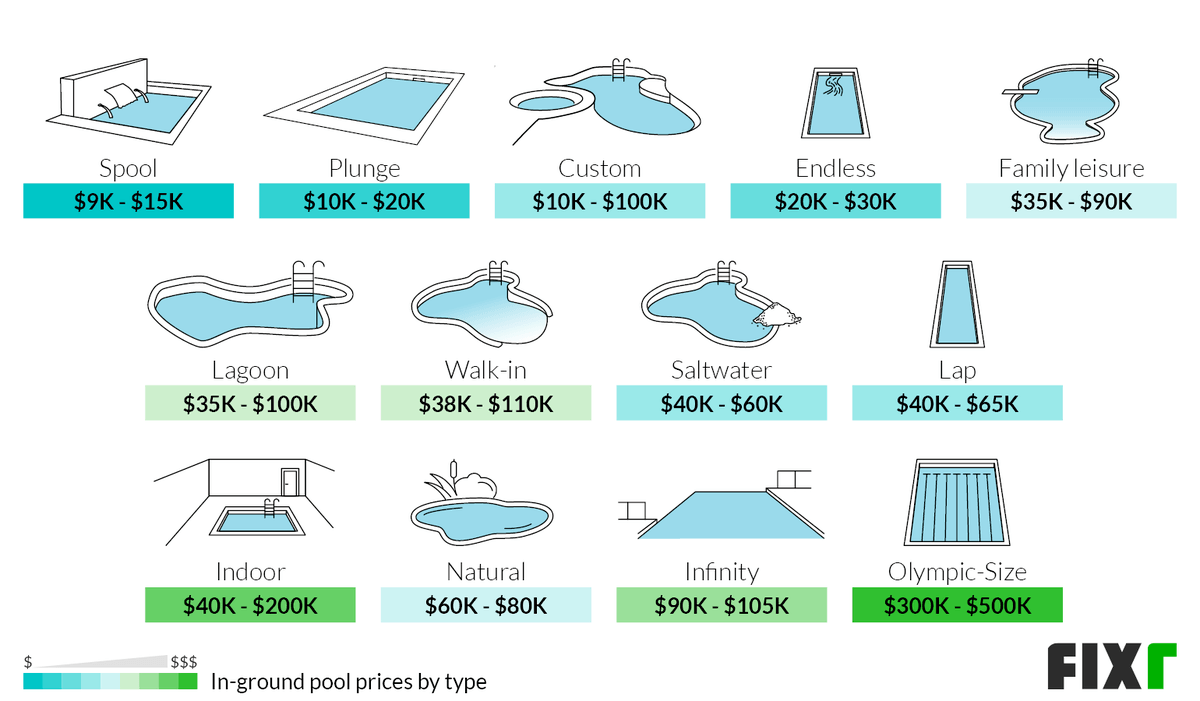
In today’s fast-paced world, the classic principles of pool ownership—the monthly chemical regimen, the weekly brushing, the seasonal opening and closing—are being ruthlessly hacked by modern technology. The most profound shift is the rise of the natural swimming pool (NSP). This is a direct rebellion against the chlorine-heavy past, harkening back to the ancient Great Bath but with modern engineering. An NSP divides the pool into a swimming zone and a regeneration zone filled with aquatic plants and gravel. The cost of building one is roughly 20% higher upfront than a traditional pool (typically $150,000 vs. $120,000), but the operational cost is nearly zero. You are buying back your weekends, eliminating the need for expensive chemicals, and effectively hacking the biological cycle to do the work for you. It is a nostalgic return to the simple idea that nature, given the right infrastructure, cleans itself—a principle our ancestors knew instinctively before we got seduced by the shiny allure of synthetic chemistry.

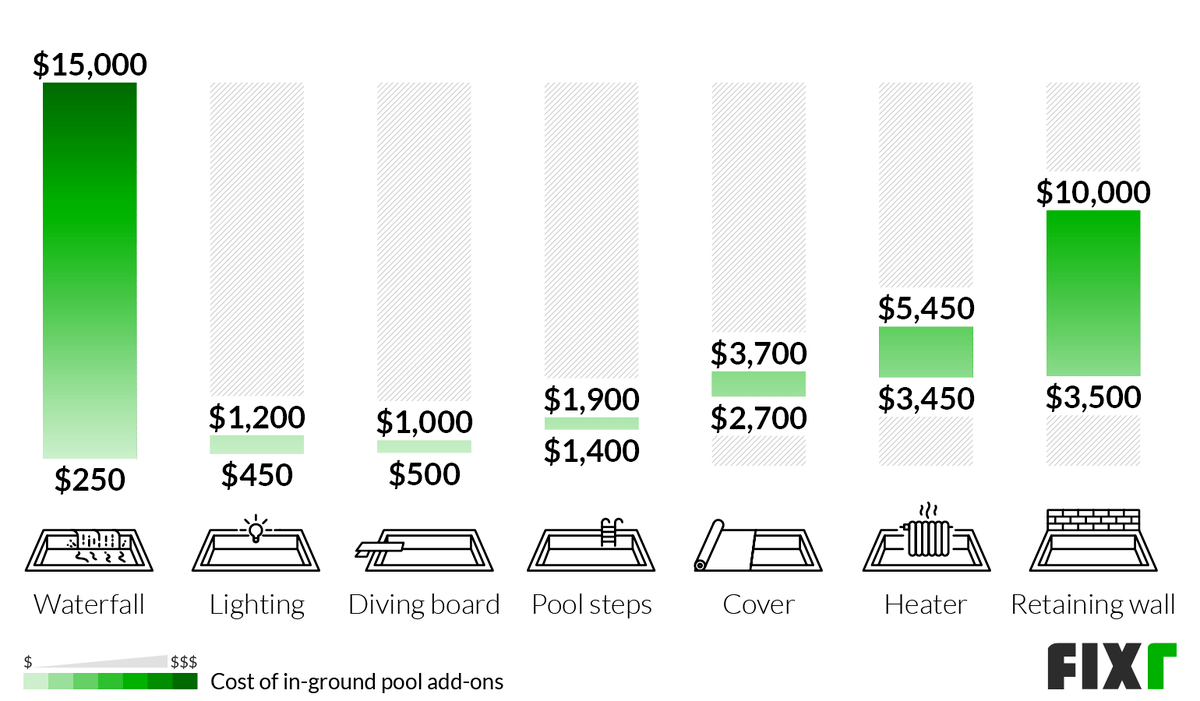
Another major hack is the smart automation ecosystem. Gone are the days of checking test strips manually. Modern probes analyze the water’s pH, ORP (oxidation-reduction potential), and temperature in real-time, relaying data to a phone app that automatically injects liquid chlorine or mineral purifiers. This is the ultimate evolution of the labor-intensive 1950s. The initial cost of these systems adds $3,000 to $5,000 to the build, but the savings in time and chemical waste are substantial. Furthermore, the introduction of variable-speed pumps—which were made mandatory by law in 2010—reduces energy consumption by up to 70% compared to the single-speed behemoths of the 1980s. A pools energy bill used to dominate the summer budget; now, with solar integration and thermal blankets that double as solar collectors, a pool can actually become a net-zero energy user. The modern hack is not about making the pool cheaper to build, but making it cheaper to live with (and kinder to the planet), proving that the future of cost lies not in the excavation, but in the intelligence of the water’s heart.
Frequently Asked Questions
Is it cheaper to build a pool in the winter or the offseason?
Historically, the pool industry was seasonal, mirroring agriculture. In the 1970s, builders would shut down from November to March, laying off crews, because the ground was too hard to excavate and the concrete would freeze. This created a massive backlog waiting for spring. Fast forward to today, and the offseason has become a bargaining chip. Building a pool between October and February can save you anywhere from 10% to 15% on the total project cost. Why? The demand is low, and builders are desperate to keep their crews employed. The myth that you cannot build in winter is largely outdated, thanks to heated concrete blankets and frost-tolerant excavation equipment. However, there is a hidden catch—material suppliers often raise prices on the first of the year, so if you sign a contract in December but install in February, you might be subject to a "price escalation" clause that eats away your savings. The best hack is to lock in a price for labor in November, but order the materials (especially the expensive fiberglass shell or specialized tile) in September, effectively freezing the cost at a summer price while paying for winter labor.
There is also a historical precedent for this cost-cutting. In ancient Rome, the wealthy would have their pools built in the fall, taking advantage of the seasonal unemployment of slave labor. In 1920s Southern California, the desert heat made water evaporation so intense that winter building was the only sane option, but the logistics were nightmarish. Today, the analytics are clear: while the base cost of the pool doesn’t change much, you are paying for the builder’s time, and in winter, their time is worth significantly less. You can also negotiate for premium upgrades at no extra cost during the off-season—things like upgraded automation controllers or extra jets—because the builder would rather include a $500 upgrade than lose the entire contract to a competitor. The nostalgia of waiting for spring is dead; the smart money moves in the mud of January.
What is the real "lifetime" cost of a pool versus a gym membership?
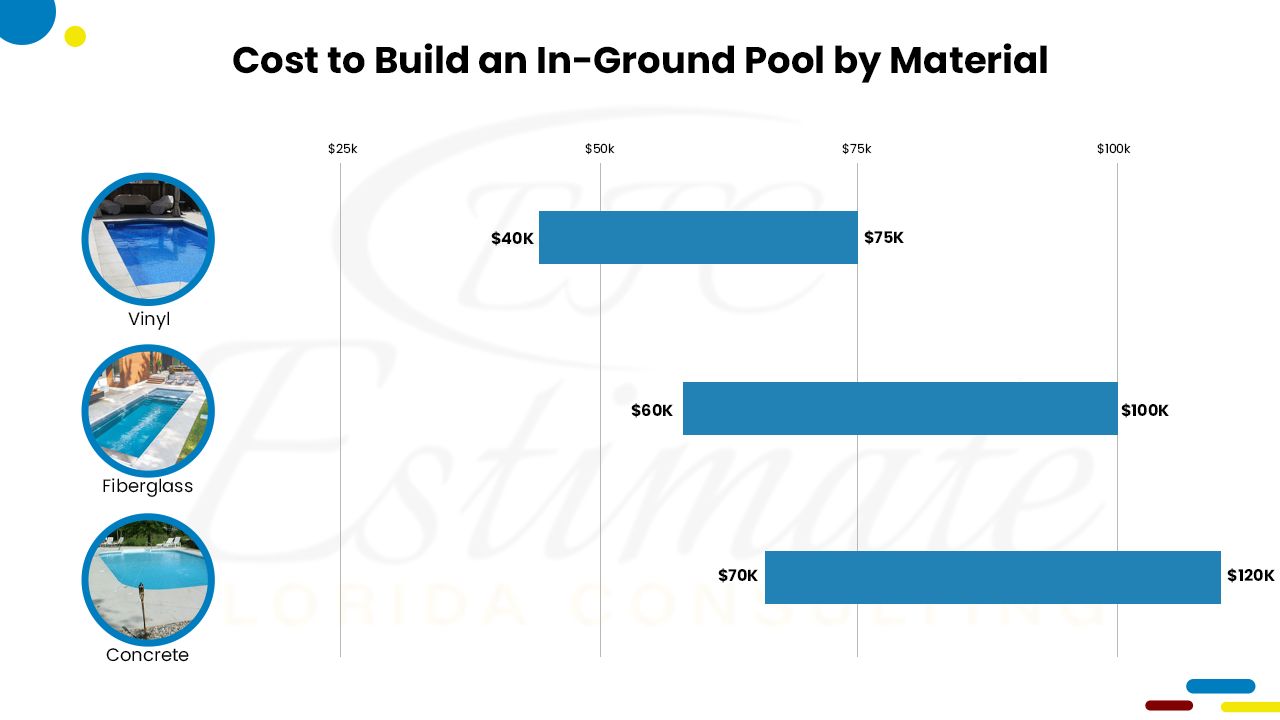
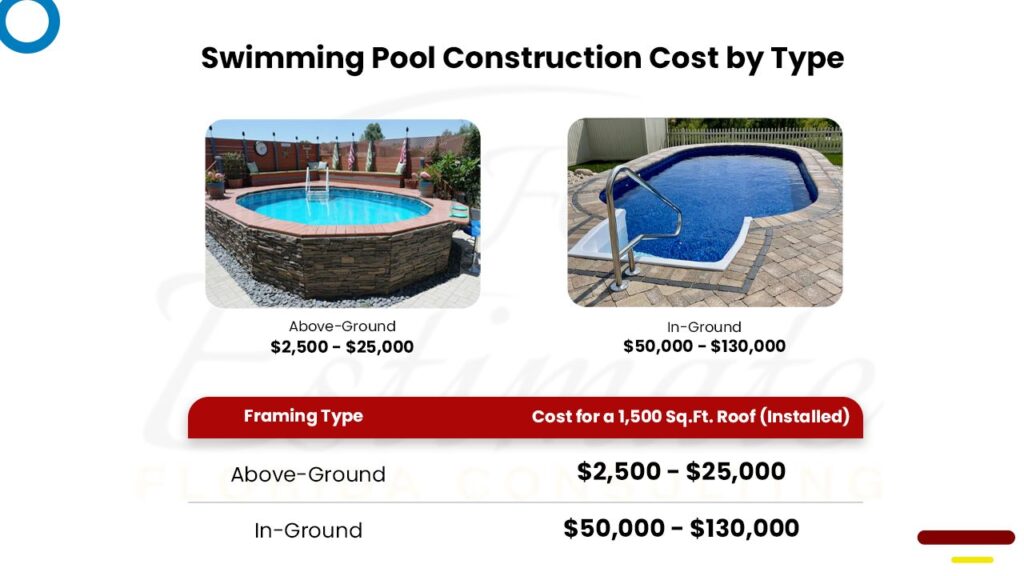
This is a question that has plagued many a budget-conscious homeowner since the 1980s fitness craze. The gym membership is seen as the fiscally responsible alternative; a pool is seen as a luxury hole in the ground. But the math is more nuanced. A standard gym membership costs around $50 per month, or $600 per year. Over a 30-year period, that is $18,000—and you never get that money back. A pool, on the other hand, costs $70,000 to $150,000 to build, plus electricity, water, and chemicals averaging $3,000 a year. Over 30 years, that is potentially $240,000 or more. However, a pool adds an estimated 7% to 15% to your home’s resale value. A $100,000 pool on a $600,000 home can add $60,000 in value. The real cost isn’t the pool—it’s the time you waste in the car driving to the gym, the guilt of the unused membership, and the psychological burden of not having a nearby escape.
The historical shift here is remarkable. In the 1950s, the pool was NOT viewed as an asset but as a liability—an insurance nightmare that lowered property values. Fast forward to the 2000s, and real estate agents began to market pools as "resort-style luxury," transforming the perception. Modern data from the National Association of Realtors suggests that a pool recoups about 56% of its build cost at resale, but only if it is properly maintained and located in a warm climate. The modern hack is to view the pool not as an expense but as a pre-paid entertainment budget. If your family spends 40 hours a month enjoying the pool, the hourly cost is minuscule compared to a theme park. The nostalgic truth is that a gym membership is a recurring charge with zero emotional return; a pool is a capital investment in your sanity and your kids’ childhoods, which is priceless in a way that all accounting ledgers fail to capture.
Will concrete or fiberglass ever be truly maintenance-free?
No. The absolute truth, stripped of marketing hype, is that a maintenance-free pool is a myth that has haunted the industry since the beginning. The 1960s promised that the new quartz-plaster finishes would never stain—they stained. The 1990s promised fiberglass would never need resurfacing—the gel coats eventually oxidize and crack, requiring a $10,000 to $15,000 refinish after 15 years. The modern promise of "mineral systems" using copper and silver ionization claims you will only need to add sanitizer once a week, which is true, but those systems require frequent cell cleanings and eventual replacement. The fundamental issue is biological: water is a living entity. It has a biological oxygen demand (BOD), and if you do not actively manage the organic load (leaves, sunscreen, sweat, skin cells), it will turn into a stagnant swamp. The bacteria and algae do not care about your budget.
However, the 2020s are ushering in the closest thing to automation yet. The integration of UV-C ultraviolet sanitation and ozone generators has drastically reduced the need for chlorine, but not eliminated it. The water still needs a residual oxidizer to handle bather waste. The future might hold silver-infused plaster that prevents bacterial colonization, or even photocatalytic coatings that use sunlight to break down contaminants on the surface. But the pipes, the pump seals, the skimmer baskets—they will always require human touch. The cost of a pool is not the build; it is the eternal stewardship. The rightful mindset is not to aim for zero maintenance, but for reduced and smarter maintenance. You are not buying an object; you are buying a contract with a living ecosystem. Once you accept that, the cost becomes a duty, not a burden, and the magic of the water remains intact.
Looking ahead twenty years, the swimming pool will not be a hole in the ground—it will be a vertical, compact bioreactor clad in glass, seamlessly integrated with the home’s architectural nervous system. We are moving toward the “smart pond”, where the water is monitored by AI that predicts chemical swings before they happen, and where the structure itself is printed from recycled polymer composites. The cost will stagnate in relative terms, but the value will shift entirely toward energy generation. Imagine a pool that serves as a thermal battery for your home’s heat pump, absorbing the sun's rays during the day and releasing that stored heat into your living room at night. The initial investment will be seen not as a luxury expense, but as a piece of infrastructural resilience, a private reservoir in an increasingly water-scarce world.
But here is my nostalgic hope: that even as the technology becomes smarter, the tactile joy of the water remains primal. The cost will never be just dollars; it will always be the displacement of space, the commitment to care, and the audacity to claim a little piece of liquid serenity for yourself. The future pool will likely be a self-cleaning, energy-neutral marvel, but it will still require you to take that deep breath before you leap. And perhaps, when you resurface, spluttering and laughing, you will feel a faint echo of your grandfather who dug his pond by hand with a shovel. The water does not care about the price you paid; it only cares that you are in it. That is the eternal, unbeatable cost—and the eternal, unbeatable reward.