Should You Buy Stocks After Hours

There was a time, not so long ago, when the closing bell of the New York Stock Exchange was not just a symbolic end to the trading day, but a hard, impenetrable wall. As a child in the late 1980s, I remember watching my father, a man of methodical habits, spread the evening newspaper across the kitchen table. The stock tables—those dense, gray columns of numbers printed in microscopic font—were his nightly ritual. He would run his finger along the line for “General Electric” or “IBM,” muttering to himself, making calculations with a mechanical pencil. The final price at 4:00 PM Eastern was the only price that mattered. If a company announced better-than-expected earnings at 4:15 PM, you had to wait, with a kind of helpless anticipation, until 9:30 the next morning to do anything about it. That overnight gap—that silent, mysterious chasm between the closing print and the opening auction—was a source of both anxiety and wonder. It was a period when fortunes were made or lost in the dark, driven by rumors, whispered tips, and the sheer anxiety of a sleepless night facing an unknown dawn. That was the humble beginning: a world where after-hours trading was a contradiction in terms, a phantom of a concept that only existed in the dreams of daydreamers and the scheming of a few privileged insiders with direct lines to specialist firms.
The necessity behind extending the trading day was always inherently human: the need for control and the eternal desire to react to the world as it happens. The traditional 9:30-to-4:00 session was a relic of the 19th century, designed around the physical limitations of ticker tape machines and floor brokers sprinting between trading posts. As telecommunications improved, the frustration grew. If you were a grandmother in California watching a company’s CEO resign on the evening news at 6:00 PM, it seemed profoundly unfair that you couldn’t sell your shares until the East Coast woke up. The market’s rigid schedule felt increasingly like a bureaucratic anachronism, a stubborn refusal to acknowledge that information, unlike physical paper, does not sleep. This tension—between a structured, finite market and the relentless, continuous flow of global information—was the crucible in which after-hours trading was eventually forged. The initial need wasn't for more rampant speculation; it was for a more honest, more immediate reflection of reality.
Then, the walls began to crack. It wasn't a revolutionary upheaval but a series of quiet, technical hacks. In 1991, the New York Stock Exchange introduced a limited after-hours session for institutional investors, a quiet privilege for the big fish. But the true democratization—the moment the huddled masses were let in—arrived with the internet and the rise of electronic communication networks (ECNs) in the late 1990s. Companies like Instinet and Island were the digital cowboys, routing trades anonymously in the dead of night. I recall the sheer novelty of the early 2000s, when brokers like Datek and Fidelity started offering extended-hours trading to retail clients. It felt illicit, like having a key to a haunted house. The volume was laughably thin, the spreads were obscenely wide, and the price volatility was terrifying. A stock that closed at $50 could suddenly bid at $52 or ask at $48 for no discernible reason. It was the Wild West, a place where only the bravest—or the most foolish—ventured. The luxury of the pre-dot-com era, where the closing price was a sacred, immutable fact, was replaced by a fluid, flickering number that kept moving long after the janitors had turned off the big board’s lights.
Must Read
The Era of the Gap and the Ghost of Liquidity
The evolution of after-hours trading from 1999 to 2015 was less a steady climb than a series of tectonic shifts, each one revealing a deeper layer of complexity. The most transformative change came with the advent of the SEC Regulation NMS in 2005, which forced the market to prioritize price over speed, leading to a fragmentation of liquidity across dozens of venues. Suddenly, the after-hours session wasn't just a single dark pool; it was a patchwork of interconnected shadows. The old “vintage” fact, long forgotten by new traders, is that early after-hours trading wasn't even continuous. For a time, you could only trade between 4:15 and 4:45 PM, a bizarre 30-minute window that closed as abruptly as it opened. This was a bizarre treatment of the market—like a store that opened for a single half-hour at dusk, forcing frantic customers to grab what they could before the lights shut off again, leaving latecomers stranded in the dark until the next dawn.
The bizarre and often dangerous treatment of this new frontier was most evident in the price discovery process. In the pre-2000s, the closing price was a consensus reached through the specialist system. After-hours, however, you were trading against a handful of “market makers” who often had very little capital at risk. One famous forgotten example from 2002 involved a small tech company that accidentally leaked its earnings report to a single analyst via a premature press release at 5:15 PM. The stock, which had closed at $15, suddenly dropped to $11 in the after-hours session on the ECNs. There was no panic on the news, no flood of sellers—just a few lucky or unlucky investors who had direct access. By the next morning, the official news hit, and the stock gapped down to $10.50 at the open. The after-hours price had been a ghost, a phantom print that had more to do with the scarcity of participants than with the true value of the company. This was the fundamental rule of the old after-hours market: the price you saw was not the price of the market, but the price of the darkness itself.

The rise of the dark pools and the high-frequency trading algorithms in the 2010s added another layer of bizarre sophistication. While retail investors were finally getting their heads around the idea of placing an order at 6:00 PM, the professionals were doing something far more sinister and complex. They were using after-hours sessions to “print” closing prices, manipulating the auction for index funds at the 4:00 PM bell. The after-hours market became a tool for positioning, not just for reacting. The volume was still low, but the data revealed a stark truth: the printer of the last trade of the day often didn't care about the stock's fundamentals; they cared about swinging a calculation for a derivative contract on a global index. As a retail trader, you were no longer in a ghost town; you were walking through a battlefield after the soldiers had left, where the landmines—the wide bid-ask spreads and the phantom liquidity—still posed a lethal threat to your capital. It was a period where the naive hope of “fairness” was cruelly replaced by the realization that the after-hours market was a different animal entirely, one that required a specialized set of skills just to survive, let alone profit.
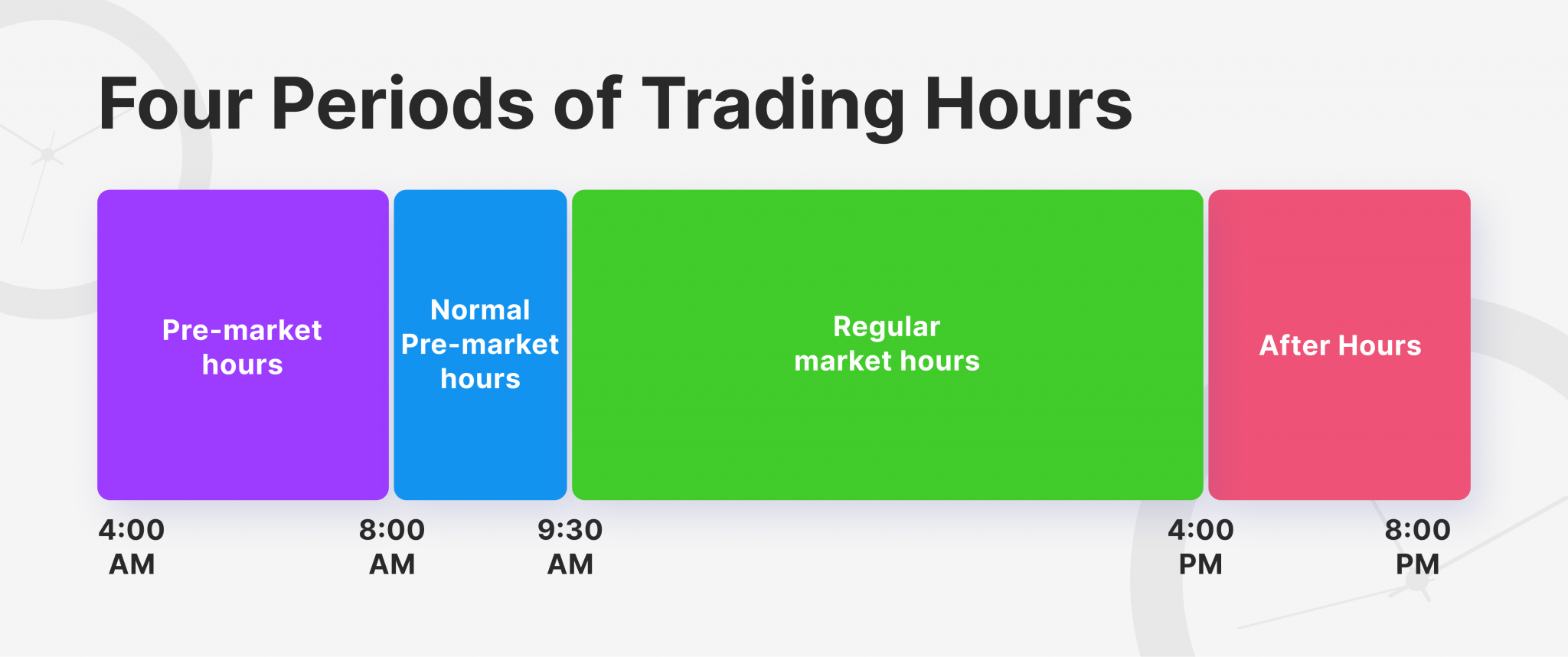
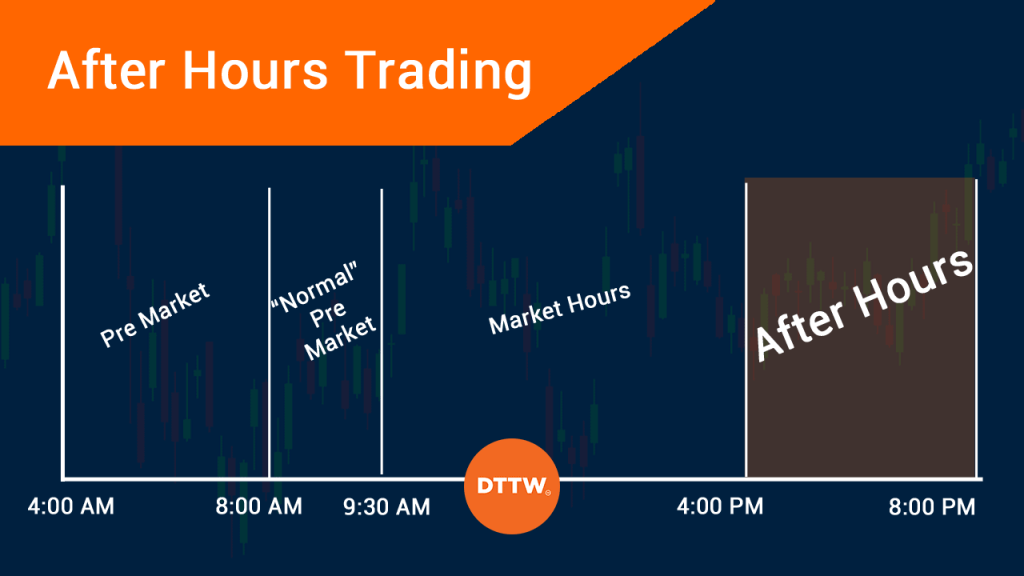
Yet, despite the dangers, the call for 24/7 access grew louder. The 24-hour news cycle, spearheaded by CNBC and later by financial twitter, made the overnight silence feel like a deficiency. The 2016 U.S. Presidential election was a pivotal moment. As returns came in late on Tuesday night, futures markets (which trade nearly 24 hours) reacted violently. Investors with a traditional stock account were stuck, watching the futures tick lower as Hillary Clinton’s chances seemed to fade, unable to sell their S&P 500 ETF positions until Wednesday morning at 9:30. The frustration was palpable, a collective scream at the screen. This sense of helplessness in the face of live, world-altering events was the final nail in the coffin of the old system. It wasn't just about earnings anymore; it was about ducking for cover during geopolitical storms. The industry finally listened, and by 2018, major retail brokers began extending their after-hours sessions to begin at 4:00 PM and run until 8:00 PM, a far more generous and practical window than the earlier 30-minute experiments. The ghost had gained a body, albeit a frail and often volatile one.
Hacking the Classics: The Modern Retail Rebel
Today, the classic principles of after-hours trading—patience, thin liquidity, and the fear of the gap—are being systematically hacked by a generation of retail traders armed with APIs and social sentiment algorithms. The modern approach is no longer about manually placing a limit order and praying; it involves using sophisticated screeners to scan for volume spikes in the 4:05 PM session, analyzing the imbalance in the closing auction, and using machine learning to predict the direction of the market-maker’s inventory. The old adage, “Never trade after hours on a Friday afternoon,” is still whispered by veterans, but it is being challenged by apps that offer fractional shares and zero commissions, making the barrier to entry nearly non-existent. The new hack is the “extended-hours earnings play,” where a trader will buy a stock before a company’s earnings release (which often comes after the bell), specifically to sell into the initial spike of volatility, capitalizing on the immediate emotional reaction rather than waiting for the official open.
Furthermore, the modernization of transparency has changed the game. The 2021 GameStop saga was a watershed moment, showing that after-hours prices could be a weapon of the masses. Social platforms like Reddit’s WallStreetBets became the new trading floor, with individuals coordinating to push stocks through the thin afternoon and evening sessions to trigger short squeezes. This is a drastic departure from the 1990s when after-hours access was a mark of institutional prestige. Today, the retail trader has more tools than the 1999 professional. The introduction of “overnight trading” by platforms like Robinhood and Interactive Brokers (allowing trading from 8:00 PM to 7:00 AM) has effectively made the market a nearly non-stop global beast. The classical idea of a “closing price” as a definitive marker of value is now viewed as an arbitrary data point, just one tick in a 143-hour trading week. The modern hack is to treat the market like a 24/7 video game, always on, always demanding attention, but with the alarming reality that the player base (liquidity) often disappears at 2:00 AM, leaving you alone in the lobby.
Frequently Asked Questions
1. Is it safer to buy stocks after hours than during regular trading?
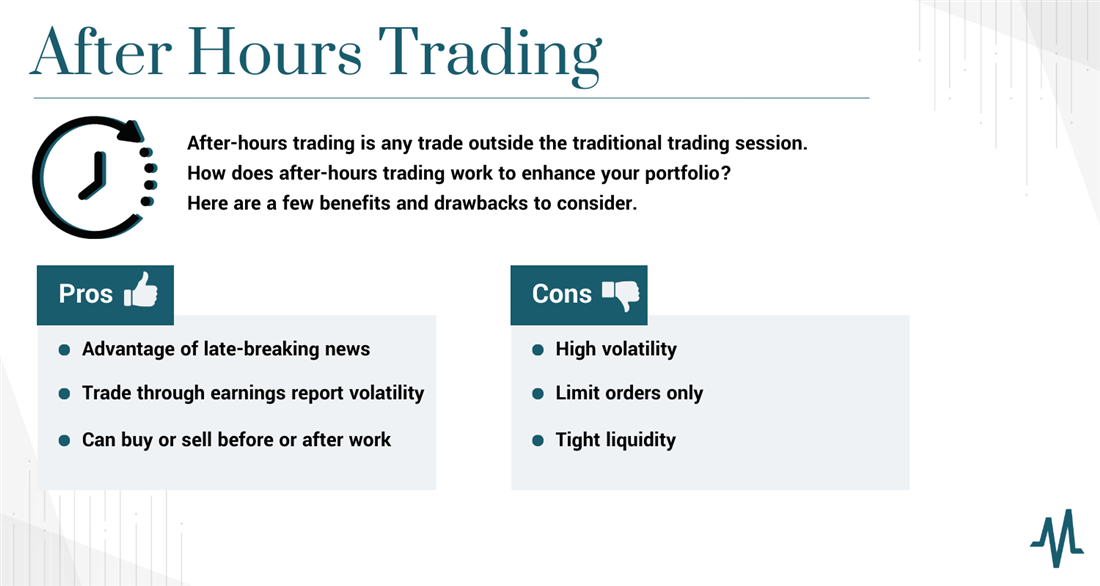
Historically, the answer was a resounding no. In the vintage days of 1999-2005, it was akin to walking through a minefield blindfolded. The lack of liquidity meant that a simple market order could execute at a price significantly different from the last close. I remember the horror stories of investors placing market orders in the early after-hours sessions and getting filled 5% away from their expectation because there was only one desperate seller who set his ask astronomically high. The safety paradox is that you have more information (you know the earnings result) but less price stability. Modern regulations and better routing have improved the spreads, but the fundamental risk remains. With the advent of extended hours until 8 PM, there is more volume, but the risk profile is still inverted. It’s safer to trade (scalp) than to invest (hold overnight), because the break in the session often leads to a logic gap.
Today, the modern myth is that 24-hour trading is safer because you can “cut your losses faster.” But this is a dangerous illusion. The safety of the regular session comes from the massive participation of institutions, market makers, and arbitrageurs who ensure that the price reflects all available information. At 3:00 AM, the market is a hollow shell. A single large order can slide the price 2-3% before the next buyer appears. The modern fact is that while the mechanics of order execution are safer (better software, no failed manual entries), the financial risk is higher due to wider spreads and thinner depth. The best practice, unchanged from the past, is to only use limit orders after hours, never market orders. This is the ultimate bridge between historical wisdom and modern necessity: always dictate the price you are willing to pay, because in the dark, the other party usually has a better flashlight than you.
2. Why do stocks move so differently after hours compared to the regular session?
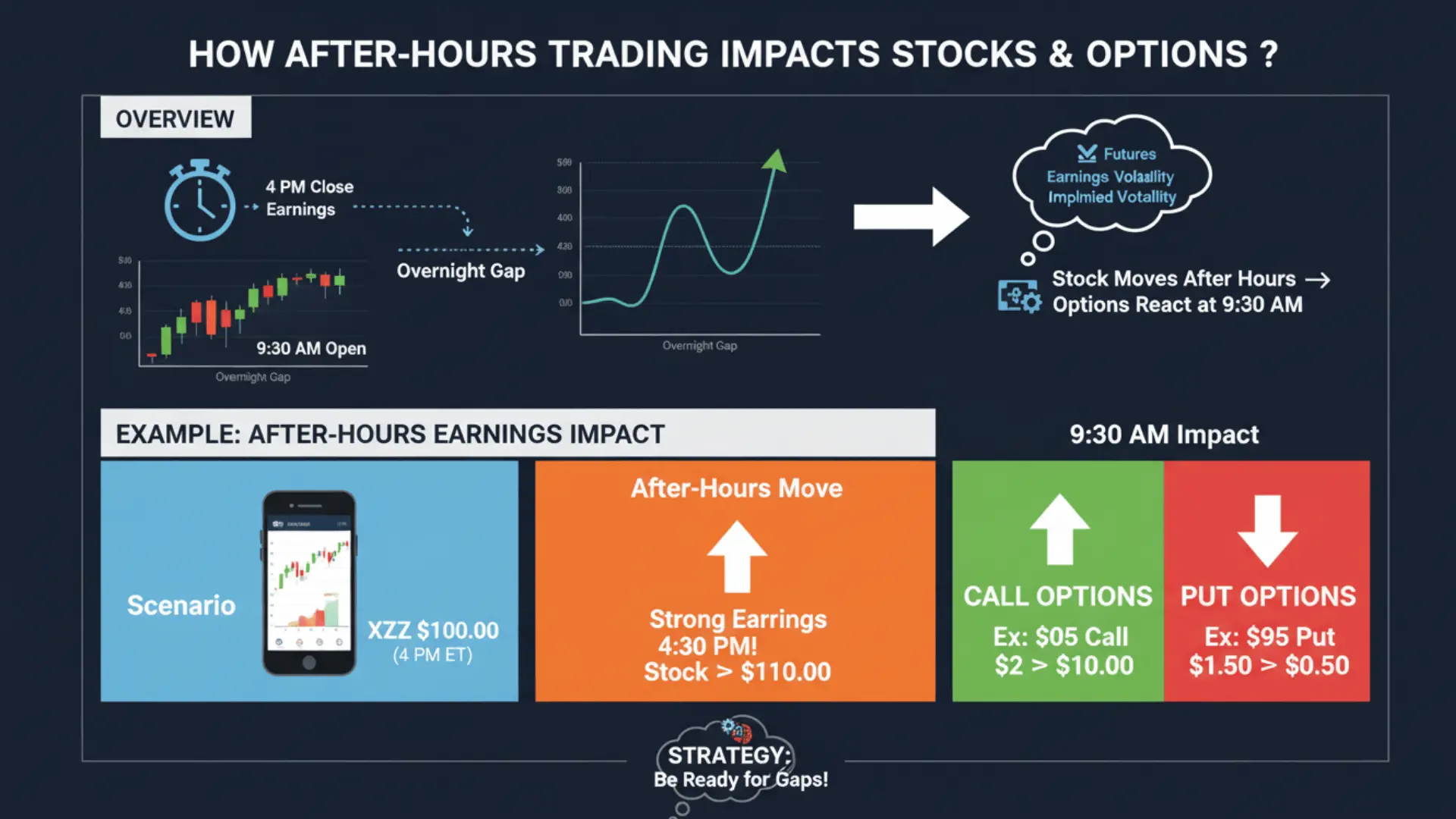
This shift in behavior is the most fascinating and misunderstood element of the extended session. In the regular session, the stock price is driven by a perpetual tug-of-war between millions of buyers and sellers, creating a smooth, continuous line. After hours, the board is mostly empty. The price movements are not driven by consensus but by uninformed noise and specific event-driven flows. The classic example is the earnings announcement. When a company beats earnings, algorithms and retail bots immediately jump in, sending the price up. But because there are so few participants, the price overshoots the theoretical value. It’s like a bowling ball hitting a single pin—it goes flying. The next morning, the market opens, hundreds of funds jump in, and the price often settles back down, correcting the emotional overshoot from the previous night. This is why you see the “gap” and the “retracement.”
Another historical reason for the difference lies in the type of trader. During the day, the market is dominated by institutional funds and pension managers executing large, scheduled block trades. Their focus is on arbitrage and relative value. After hours, the table turns to retail investors and day traders who are reacting to news headlines with a sense of urgency. This urgency translates into a lack of patience. The price moves farther and faster on less volume because the participants are in a panic mode, not a planning mode. In the 1980s, the pre-market and after-hours were so illiquid that a single 10,000-share order could move a stock 10%, a phenomenon that is still occasionally seen today in the pre-market session before 7:00 AM. The key insight is to understand that after-hours prices are not a reliable predictor of the next day’s open; they are the market’s emotional reaction to the news, and emotion is volatile. The regular session is the time for sober analysis; the after-hours is for adrenaline.
3. Will the 24/7 market eventually replace the traditional 9:30-4:00 session?
This is the existential question facing the entire financial ecosystem. The push towards 24/7 is relentless, driven by the demand from Gen Z and Millennials who grew up with instant gratification from everything else in their lives. The historical precedent, however, suggests that the traditional session will not disappear, but rather become a dominant focal point within a continuous stream. In the 1870s, before the invention of the ticker tape, there were 'calls' where stocks were auctioned at specific hours of the day. The continuous session was a revolutionary upgrade. Similarly, the regular 9:30 session acts as a massive "auction" where the pre-market price discovery accumulates and then hits a final clearing price. Even if we have seamless trading from midnight to midnight, the 9:30 AM open will always be the moment of maximum volume and highest liquidity, because that is when the world’s institutional money aligns.
Looking at the futuristic possibilities, I believe we will see a hybrid. The 2025 model will likely involve near-24-hour trading for the top 500 stocks, with weekends closed, and perhaps cryptocurrency-like perpetual trading for certain ETFs. However, the human element cannot be engineered away. The market is a reflection of human psychology, and humans need a sleep cycle. The 4:00 PM close provides a psychological release valve. Wiping out that boundary would lead to 24/7 anxiety and burnout, which the market does not want. The transition we will see is not a replacement, but a recontextualization. The regular session will become the "heartbeat" of the market, while the extended hours will act as the "breathing" between beats. The future will see more advanced algorithms providing liquidity at all hours, narrowing spreads, but the concept of a "settlement price" for the day will remain important for accounting and tax purposes. The closing auction will transform into a massive bidding war, but the after-hours will become a more orderly extension rather than the chaotic gunfight of the early 2000s. The need for a daily reset, a moment of silence, is a deeply human need that I believe will prevail, even as the market reaches for the horizon of perpetual motion.
As we look twenty years into the future, the concept of "after-hours" will likely be as quaint as the phrase "long-distance telephone call." The static boundary of the clock will dissolve entirely. I envision a world where trading is tied not to the Eastern Time Zone, but to the global circadian rhythm, with liquidity migrating around the planet like a wave—high volume in Asia’s morning, Europe’s afternoon, and America’s night. The individual investor will have a personal AI oracle—a "dopamine assistant"—that monitors the 24/7 stream and only alerts them when a truly significant deviation occurs, filtering out the noise. The risk of the past, the phantom liquidity, will be solved by a network of ultra-fast, self-learning algorithms that prowl the hours, ensuring that a buy order is always met with a fair, liquid counterparty, even at 3:00 AM on a Tuesday. The nostalgia for the "closing bell" will be a theme in historical documentaries, a ritual that resembled the ghosts of our ancestors.
However, the deeper human story will remain unchanged. We will still be chasing the same ol’ beast: the fear of missing out and the thrill of the unknown. The future won't be about when you can buy, but how wisely you can buy. The evolution from the newspaper prices of my father’s kitchen to the quantum-secured, AI-driven continuous market of 2045 is not a story of technology, but of our eternal need to feel in control of our destiny. The market will never truly sleep because we, as a species, are afraid to close our eyes on missed opportunities. The after-hours trading revolution was never about extending the hours of a market; it was about extending the hours of our ambition. And that, my friends, is a session that will never close.