Places Like Sylvan Learning Center
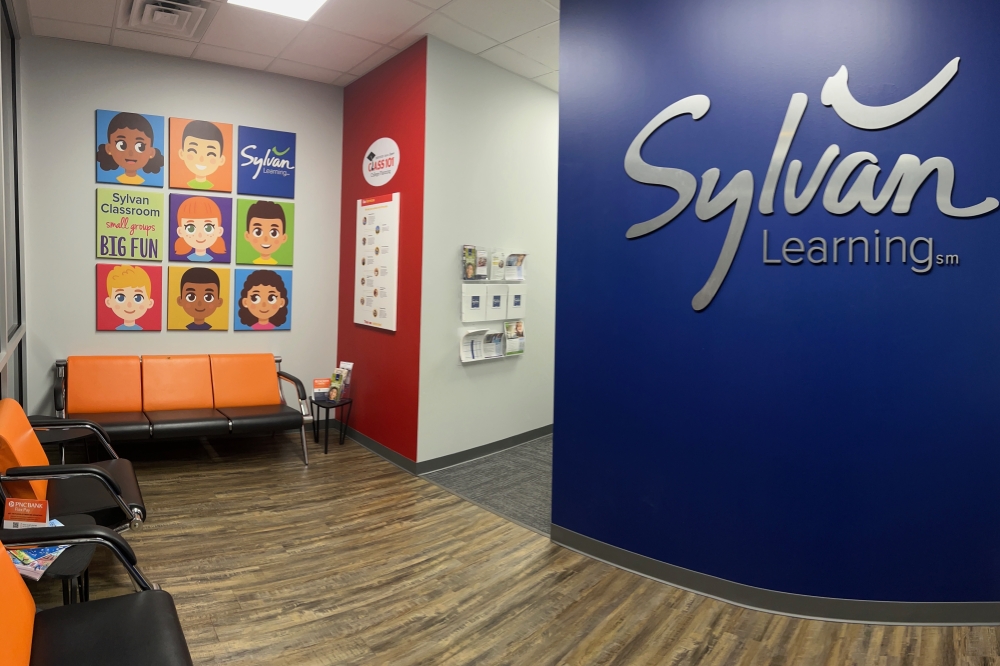
In an age where parents are bombarded with educational apps, AI tutors, and viral “genius” hacks, the brick-and-mortar learning center might feel like a relic from a pre-digital era. Yet, the quiet hum of fluorescent lights over a row of cubicles, the scratch of pencils on worksheets, and the reassuring presence of a certified teacher are not just nostalgia—they are a psychological anchor. Sylvan Learning Center, a franchise behemoth that has been around since 1979, represents more than just “tutoring”; it is a physical manifestation of our collective anxiety about falling behind. But the landscape of supplementary education has exploded, mutated, and diversified. To understand places like Sylvan is to understand a multi-billion-dollar industry built on the fragile ego of the adolescent brain and the relentless ambition of the modern parent.
The core concept of the “learning center” isn’t new; it evolved from the one-room schoolhouse and the private tutoring salons of Victorian Europe. However, the franchised, standardized model we know today was pioneered by Sylvan’s founder, W. Berry Fowler, a former teacher who realized that parents wanted measurable results, not just homework help. Today, these centers are less about remedial catch-up and more about cognitive optimization—a form of academic plastic surgery. They exist because the public school system, stretched thin and underfunded, often cannot provide the individualized attention that the human brain craves. In a culture that worships the “10,000-hour rule,” these centers offer a shortcut: a place where focus is the only currency and confusion is systematically eliminated.
The Psychology of the Cubicle: Why Structured Space Still Beats the Bedroom
Let’s be brutally honest: the modern teenager’s bedroom is not a sanctuary for learning. It is a vortex of distractions, from TikTok dopamine loops to the ambient glow of a gaming console. The brilliance of places like Sylvan—and its modern competitors like Kumon, Mathnasium, and Huntington—is not necessarily their proprietary worksheets, but their environmental engineering. These centers are deliberately stripped of visual noise. The walls are often pastel, the lighting is bright but not warm, and the layout is segmented to minimize social interaction. This is a deliberate nod to cognitive load theory. By removing the decision of what to look at, the brain frees up working memory to focus on the task at hand—solving for x or parsing a Shakespearean sonnet.
Must Read
Psychologically, the cubicle acts as a “behavioral cage.” When a student sits in a half-walled booth, they experience a phenomenon known as environmental self-transcendence; they are forced into a state of quiet introspection. Unlike home, where the TV is a background threat, the center provides a social contract. Everyone around you is working, which triggers the brain’s mirror neurons to mimic that behavior—a subtle form of peer pressure that is actually beneficial. Dark fun fact: the layout of these centers is almost identical to the classic “reading room” of a 19th-century insane asylum, minus the straightjackets, where silence was used as a therapeutic tool to reset a disordered mind.
But the cultural impact runs deeper. The rise of these centers mirrors the decline of the "latchkey kid" phenomenon. In the 1970s and 80s, kids came home, threw their backpacks down, and played outside until dark. Now, the fear of "falling behind" has created a new ritual. The learning center is not a punishment; it is a status symbol. When a parent drops their child off at Mathnasium, they are signaling to the community: I am investing in my child’s future and I refuse to accept mediocrity. This has created a secondary market of "educational shame," where parents who don't seek outside help are seen as negligent, even if their child is scoring above average. It is a neurotic, deeply human response to the ruthless meritocracy we have built.
Beyond Sylvan: The New Wild West of Academic Intervention
Let’s move beyond the beige carpets of the traditional franchises. The modern landscape of "places like Sylvan" is a testament to technological disruption. On one end, you have the brutalist logic of Kumon, which relies on relentless repetition and rote memorization. Kumon’s philosophy is almost Darwinian: it does not explain why a fraction works; it forces you to do thousands until your brain internalizes the rule. It is a boot camp, not a spa. For the student who lacks discipline, it can be torture. However, for the anxious parent, it provides a terrifyingly clear metric: if you complete 10 pages a day, you will get a better SAT score. It treats the child like a bodybuilder—muscle memory over conceptual understanding.

Then there is the tech-forward hybrid. Companies like Varsity Tutors and Prisma offer online, AI-driven platforms that claim to adapt in real-time to a student’s emotional state (detecting frustration via typing speed). But here’s the kicker: the physical centers are fighting back with a new weapon—gamification. Modern centers like Code Ninjas or Sylvan’s own STEM programs have pivoted from worksheets to robotics and coding. They now mask the learning in the guise of "play." You think you are building a robot to battle your classmate, but you are actually learning the fundamentals of gearing and algorithms. This is the Trojan Horse strategy, and it is wildly effective for the ADHD generation. The dark side? Kids are now being tracked through gamified "leaderboards," which can create a fear of failure that is even more intense than a standard test.
For the truly elite, there are the boutique micro-schools, such as The Fusion Academy or Sora Schools. These are the "country clubs" of learning centers. Here, class sizes are one-on-one, the curriculum is hyper-personalized, and the tuition rivals private university costs. The psychological pitch here is total emotional safety. These centers hire "learning coaches" who act as therapists, cheerleaders, and tutors simultaneously. The case study is the "twice-exceptional" child—gifted but also struggling with anxiety or dyslexia. These centers do not just teach; they validate the child’s identity. They are rewriting the narrative from "you are broken" to "you are wired differently, and that is a superpower." It is a beautiful, expensive illusion—but a necessary one for the psyche of the modern child.
So, what is the actionable takeaway for you, the reader? Do not just look at test scores. Evaluate the pedagogy versus the spectacle. If your child is a procrastinator, a highly structured, drill-heavy center (like Kumon) might physically rewire their habits. If your child has a creative block, a project-based center (like Code Ninjas) will ignite their intrinsic motivation. But the most vital takeaway is this: a learning center is not a babysitting service. You must remain an active participant. The best centers provide a "report card" for the parent, explaining the psychological triggers they observed. If you simply drop your child off and leave, you are outsourcing your job. The center is a scalpel, not a chainsaw; you must guide the surgery.
Navigating the Maze: Your Burning Questions, Answered
1. Is a physical learning center really better than online tutoring for my child?
It depends on the child's olfactory and environmental needs. Online tutoring offers convenience and a global pool of tutors, but it lacks the physical "presence" of a mentor. The physical center offers a territorial advantage: the brain often associates location with activity state. When you walk into a library, you become a reader; when you walk into a gym, you become an athlete. A physical center triggers the "student" state immediately. For children with severe attention deficit issues, the physical proximity of a teacher who can gently tap the desk is worth more than any algorithm. However, for a high-achieving, introverted student who is merely bored, online one-on-one sessions offer a bespoke flexibility that the rigid schedule of a center cannot match. The truth is that the social contract of “going somewhere to learn” is a powerful psychological ritual that online connection rarely replicates.
Conversely, online platforms excel in data analytics. They can pinpoint that your child is subtracting incorrectly due to a misunderstanding of place value, and they will assign micro-lessons. A physical center, unless it is very high-end, often relies on the tutor’s subjective intuition. I would argue for a hybrid. Use the physical center for the subjects your child absolutely loathes (to build a habit of facing discomfort in a safe space) and online tools for subjects they are passionate about (to accelerate interest). The physical center is for building the "muscle of focus"; the online tool is for building "speed of knowledge."
2. How do I know if my child actually needs this, or if I'm just being an anxious parent?
Look for the Shrug Signal. If your child shrugs their shoulders when you ask about homework, or if their grades have dropped by more than one letter while their effort has stayed the same, that is a genuine red flag. It signals a lack of confidence, not a lack of intelligence. If they score perfectly on tests but fail to do homework, that is a behavioral issue, not a knowledge gap; a rigid center like Sylvan will help with routine. If your child is getting 90% but you want 100%, that is your anxiety, not their deficit. A learning center cannot fix a child who is already at grade level and simply dislikes school; it will just add another layer of resentment. Additionally, watch for "cognitive fatigue"—if your child is exhausted after 30 minutes of tutoring, they have a low-load capacity, and you need a center that offers frequent breaks, not a 3-hour marathon session.
Another diagnostic: ask them to teach you the concept they are struggling with. If they cannot articulate the problem, they do not have a computational error—they have a comprehension gap. Tutoring centers are specifically designed for this. But beware of the sneaky issue of "learned helplessness." If your child constantly says "I'm just bad at math," a tutor might actually cement that belief by making math easy for them. The goal should be frustration tolerance. A good center will work at the edge of the child’s cognitive dissonance, allowing them to fail briefly before guiding them. If the center makes everything easy, they are robbing your child of the resilience needed to face setbacks in life.
3. What is the "dark" reality of the tutoring industry that franchises don't advertise?
High turnover. The vast majority of part-time tutors at these centers are college students or recent graduates working for near-minimum wage. They are not seasoned educators; they are following a script. This isn't inherently bad—they often have more energy—but the continuity of care is shattered every semester. Your child might develop a rapport with "Sarah," and then Sarah graduates, and the emotional bond is broken. More troubling is the mileage system. Many franchises push "hours" as the metric. They want you to buy a package of 50 hours because it guarantees revenue, not because your child needs it. They use diagnostic tests to exaggerate the gap between your child's level and their grade level, playing on your fear to upsell you more time.
Furthermore, the term "personalized" is often a lie. While the software may modify question sequences, the core pedagogy is often a one-size-fits-all worksheet set. The real dark fun fact is that these centers often produce students who are excellent at doing but poor at thinking. The drills teach pattern recognition, not innovation. They can ace a standardized test, but they cannot write a persuasive essay or solve a novel physics problem. The industry is focused on measurable output (test scores) because that is what parents pay for, not on intellectual curiosity. You are essentially paying for a band-aid on a systemic wound, not a cure.
4. Is there a specific age where enrolling in a learning center is most detrimental or most beneficial?
The most detrimental age is under 6. Forcing a preschooler into a structured environment to learn reading before their neural myelination is complete can lead to chronic academic anxiety and a fixed mindset. They will associate learning with pressure. The most beneficial age is between 8 and 12 (grades 3–7). This is the "critical window" where metacognition—the ability to think about your own thinking—is developing. At this age, a tutor can teach strategies (how to break down a word problem) rather than just content (what is 6x7). This is also the age where peer comparison becomes brutal; a tutoring center can build confidence before the social pressures of middle school kick in.
For high schoolers, tutoring becomes less about learning math and more about test prep. This is a different beast. It is essentially a game of stamina. Here, the center does not teach math; it teaches the test—the patterns of the SAT or ACT. This is fine if you want a score, but it is detrimental if you are using it to replace actual studying. By high school, external pressure parents apply for tutoring often results in a "rebellious low performance" where the student sabotages the tutoring to spite the parent. The key is to align the tutoring with the child’s own goals. If your teen says "I want to score 1400 on the SAT," then a center is a tool. If you say "You are going to the center because I demand it," the child will learn to fake effort.
5. How do I evaluate a center's quality beyond the glossy brochure and the free pizza night?
First, ask to sit in on a session. A quality center will welcome this with open arms; a weak center will refuse, citing "privacy policies." During the observation, watch the tutor's ratio of talking to listening. If the tutor is talking more than 60% of the time, it is a lecture, not tutoring. You want to see the tutor asking open-ended questions ("What do you think the next step is?") and waiting for the answer, even if it takes 30 seconds of awkward silence. Second, demand to see the error analysis dashboard. A good center tracks exactly which type of mistake the child made (e.g., "misreads the word 'quart' as 'quarter'"). If they just say "doing well" or "needs improvement," they are not watching closely enough.
/story1/2725058/79c9715a0d654bacd27fa7e7f70a8b729228.jpg)
Finally, check the instructor-to-student ratio in reality, not in theory. Many centers advertise a 3:1 ratio but during peak hours, they might run a 5:1 with a "floating" assistant. Additionally, ask about the turnover rate of the staff. If the staff has been there for less than a year, walk away. Also, be wary of centers that promise massive grade increases in a month. Learning is a slow, organic process; any center that promises a 40-point jump on a test in 3 weeks is preying on your desperation and probably teaching shortcuts that will fail in college. Trust the ones that talk about "habits" and "attitudes" more than they talk about "As."
Looking at the broader picture, these centers are more than just academic crutches; they are mirrors of our most primitive parental instinct—the desire to give our offspring an advantage in a world that feels hostile. We project our own office politics and career insecurities onto our children. If we feel powerless at work, we seek vicarious power through our child’s GPA. The learning center becomes a shield against the future, a way to control the uncontrollable chaos of a child’s developing brain. Yet, in our quest to fill every knowledge gap, we often miss the most essential lesson: the value of struggle is not the correct answer, but the fire it builds inside.
We must remember that the human brain is not a hard drive to be filled with data; it is a garden that requires varying amounts of sunlight and water. A tutoring center can be the fertilizer, but it cannot be the sun. The best parents view these institutions as temporary scaffolding, to be removed as soon as the child’s internal architecture is strong enough to stand alone. If you find yourself booking more hours out of guilt than necessity, step back. Enroll your child in sports, let them read comic books, or just let them be bored. The capacity to be bored is where creativity is born—something no Sylvan Learning Center can ever teach you.
Ultimately, the proliferation of these centers tells a story about the privatization of hope. We have outsourced the responsibility of teaching to corporations because we have lost faith in our own abilities to guide our children. The modern parent is exhausted, working longer hours, and feeling inadequate. These centers offer a transaction—money for measurable success. But the unspoken contract is deeper: we are buying time and peace of mind. If a place like Sylvan, with its cheerful posters and systematic drills, can make the dinner table conversation less tense and the child’s belief in themselves less fragile, then perhaps it has served its purpose—even if its methods are mechanical. The mind is a dark, complex forest; sometimes, we need a well-marked trail to navigate it, even if that trail feels a little too manicured for our liking.