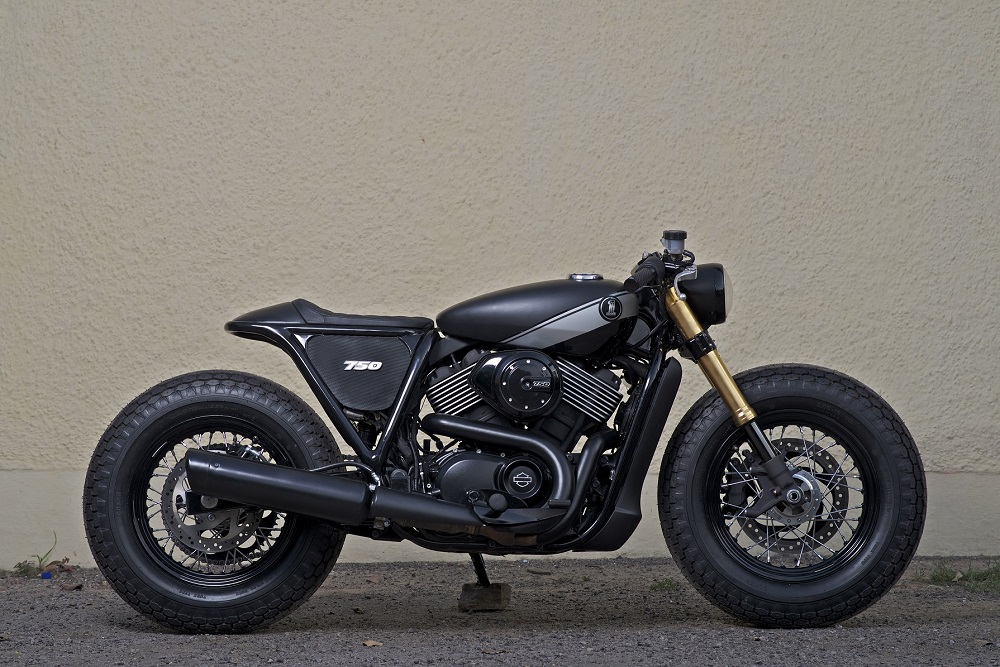
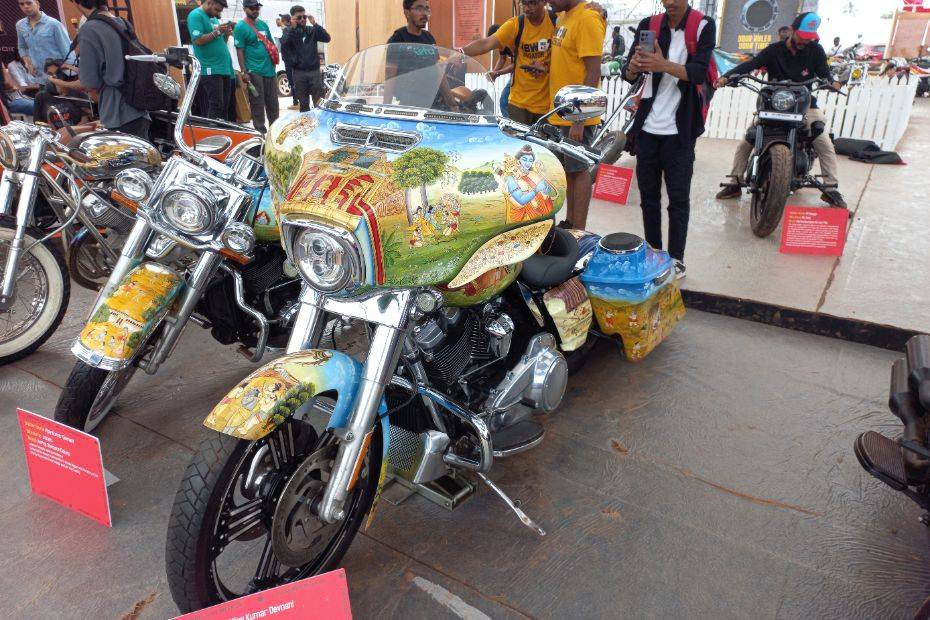
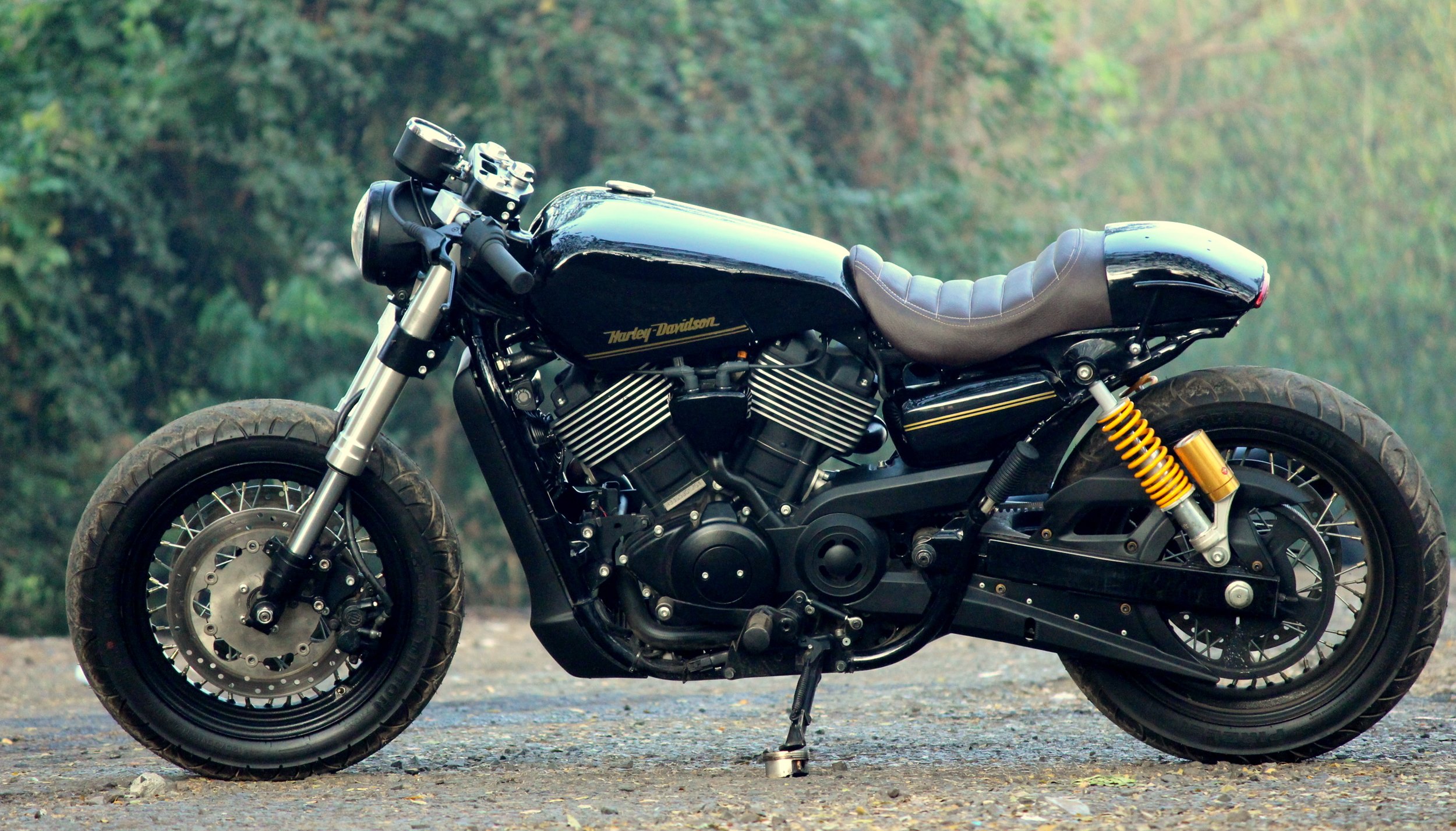
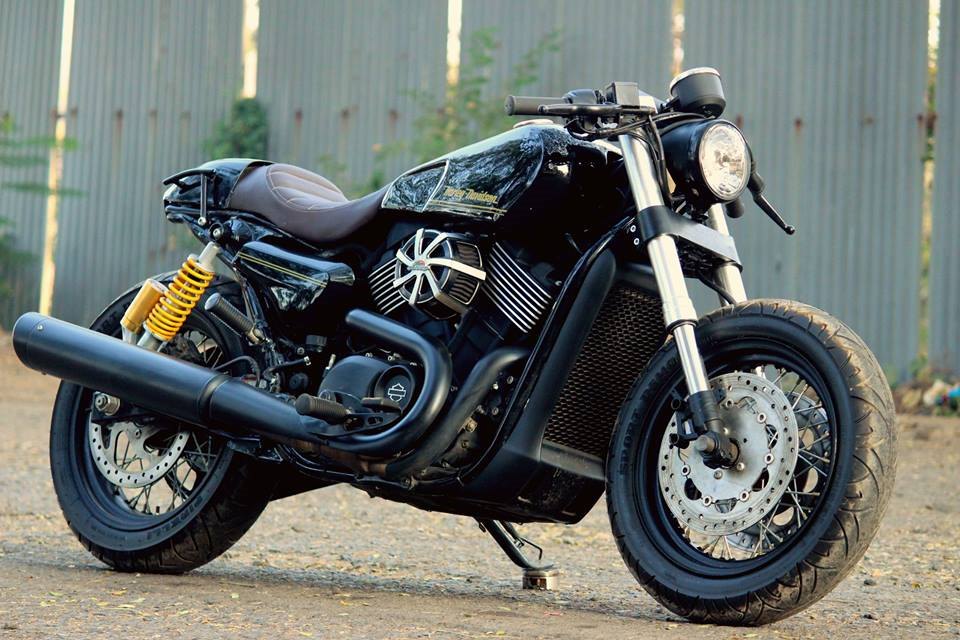
Modified Harley Davidson In India

The first time I heard a modified Harley-Davidson thunder down a Mumbai flyover, it wasn't just noise—it was a seismic shift in the cultural bedrock of Indian motorcycling. It was the late 1990s, a time when the Indian roadscape was dominated by the putter of 100cc commuters and the two-stroke whine of Rajdoots. The Harley-Davidson, in those days, was a mythical creature, whispered about in the smoky corners of old Pune automobile garages. Owners were not riders; they were custodians of a relic, often ex-Army officers or wealthy industrialists who had imported their machines through a labyrinthine web of permits known as "the Bombay route." The initial necessity behind modification was not aesthetics but survival—these air-cooled behemoths, built for wide American interstates, were choking on Indian dust, monsoon mud, and the brutal stop-and-go of city traffic. To make them run at all, mechanics had to improvise, swapping out brittle wiring for locally sourced copper and hand-beating aluminum manifolds to fit carburetors that could handle the altitude of the Western Ghats. This was the genesis: modification as a desperate act of love, a mechanical transplant to keep a dinosaur alive in a jungle it was never meant to inhabit.
Back then, owning a Harley in India was a lonely vigil. There were no official dealerships, no service manuals in English, and certainly no community. The few modified machines that existed were a patchwork of incongruous parts—a chopped rear fender from an old Royal Enfield, a headlight scavenged from a scrapped Ambassador car, and handlebars bent over a kerosene flame to achieve the right "ape-hanger" lean. I remember a particular 1959 Panhead in Delhi, owned by a Sikh gentleman who had converted its primary chaincase to a belt drive using a piece of industrial conveyor belt from a flour mill. It was pure, unadulterated hacks; the sort of ingenuity born of absolute scarcity. The initial "necessity" was not speed or style, but simply the ability to turn the throttle without the engine seizing. These men were alchemists, working in unventilated sheds with rusty tools, their hands permanently stained with oil, treating the motorcycle not as a machine but as a living entity that required ritualistic sacrifice. The sound, however, was unmistakable—a V-twin lope that vibrated through the bone, a sound that told onlookers that something foreign and magnificent had landed on Indian soil.
As the new millennium dawned, the narrative began to shift. The liberalization of the Indian economy had opened floodgates, and with the arrival of the official Harley-Davidson dealership in 2009, the landscape irrevocably changed. No longer a stolen whisper, the modified Harley became a status symbol, a canvas for a new generation of wealthy urbanites who had never turned a wrench. The humble garage alchemist was replaced by specialized customs shops that imported chrome from Milwaukee and paint from Germany. Yet, even as the industry professionalized, the core DNA of the Indian modification ethos remained—a deep respect for the "thump" and a peculiar compulsion to make the bike more ornate, more loud, and more audaciously visible than anything made in America. The initial necessity of mechanical survival had morphed into a necessity of identity, a way for the newly affluent Indian male to announce his arrival in a globalized world that still saw him as an exotic other. The bike became a metallic ego, and its modification, a loud, vibratory proclamation of arrival.
Must Read
The Decades of Chrome and Chaos: From Bazaar Bolts to Bolt-On Kits
The transformations that occurred between the 1980s and the 2010s were nothing short of bizarre, a fascinating collision between mid-century American industrial design and South Asian maximalist aesthetics. In the 1980s, the most coveted modification was the "Rajdoot Piston Conversion"—a disastrous but popular hack where mechanics would bore out the cylinder to accept a larger, heavier piston from an old Bajaj Chetak scooter. This was done not for power, but for a deeper, throatier exhaust note that the owner believed sounded "more American." The result was usually catastrophic—the engine would overheat within twenty minutes—but the owner would proudly display the smoke billowing from the cylinder head as proof of its "raw power." Vintage facts from this forgotten era reveal that many modified Harleys were actually painted with enamel house paint, often in shocking shades of lime green or silver, because automotive paint was a rare imported luxury. The "paint" was applied with a brush, leaving streaks that mirrored the monsoon rain running down a windowpane.
The 1990s introduced the "Bombay Dyer" modification, named after a famous textile merchant who insisted on covering every inch of his motorcycle's metalwork in intricate, hand-tooled leather. This wasn't a functional modification; it was an exercise in absurdity. The leather would trap heat, cause rust, and eventually destroy the frame, but the visual impact was staggering. It was a functional sculpture, turning a motorcycle into a parlor piece. Meanwhile, into the late 2000s, the influx of internet forums and imported magazines led to a bizarre obsession with "stretched" swingarms. Indian fabricators, unable to source proper kits, would cut and weld two swingarms together, extending the wheelbase by nearly a foot. This created a truly dangerous motorcycle, prone to high-speed wobble, but it looked absolutely radical in photos. The forgotten tragedy of this decade was the "monsoon pan" phenomenon—a makeshift aluminum pan bolted under the carburetor to catch overflow gas, which often caught fire at traffic lights. Rather than fixing the carburetor, owners would routinely carry small fire extinguishers—a macabre but practical accessory that became a status symbol of its own.
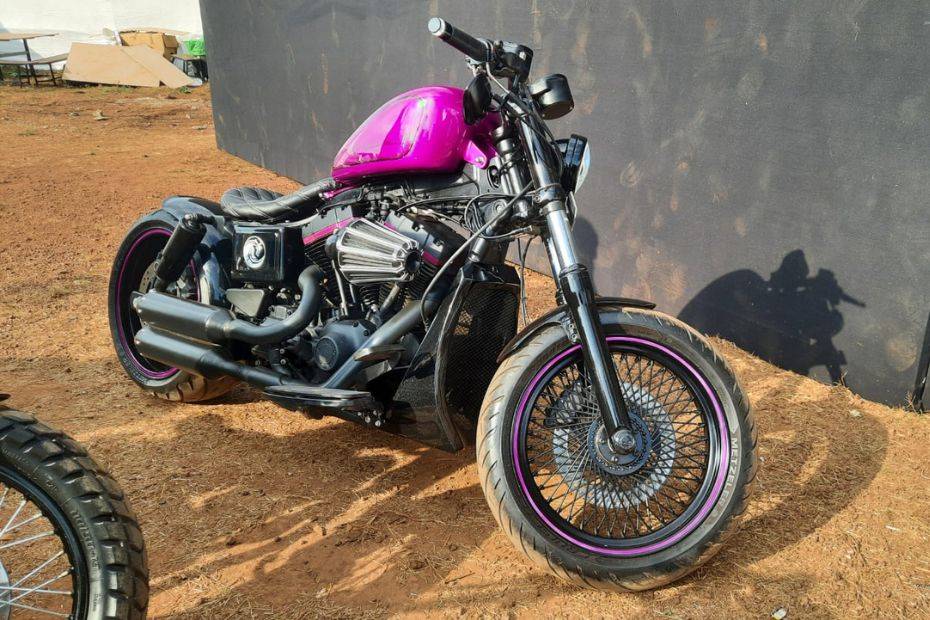
The push towards "period-correct" restoration was almost entirely absent in the subcontinent until the late 2010s. Instead, the previous decades treated the Harley as a blank slate for cheap, aggressive customization. I recall a story from the early 2000s in Kolkata, where a rider fitted a small diesel generator engine to his Sidecar rig because petrol prices had skyrocketed. The bike ran, but at a top speed of 20 mph, and the exhaust emitted a thick, black diesel cloud. It was total sacrilege to the purist, but to the locals, it was brilliance—a Harley that could run on fuel stolen from a tractor. This era was not about precision; it was about brute-force adaptation. Welding was done with a stick welder, leaving ugly, spattered beads of metal that were later painted over with thick rust-preventive coats. The mechanical beauty was in the ugly, pragmatic survival. They were Frankenstein's monsters, but each one was a unique testament to the will of its owner to ride a piece of America, regardless of the cost to their own safety or the machine's longevity.
The final transformation of this era arrived with the rise of the "Custom Garage" in cities like Gurgaon and Bangalore. These garages brought in CNC machines, powder coating ovens, and laser-cut templates, completely eradicating the handmade ethos of the previous three decades. Yet, the bizarre treatment persisted. The "Dubai Chrome" phase saw entire Harley frames wrapped in plating so thick that the bolt holes had to be drilled out with plasma cutters, rendering the motorcycle virtually unridable due to weight. Riders would push these bikes into shows on trailers, only to start them for a photo and shut them off again. The irony was that the more professional the customization became, the less functional the motorcycle was. The soul of the Indian modifier, once rooted in the necessity of riding, was being diluted by the vanity of display. It was a strange, paradoxical era—the machine had never looked shinier, yet the riding experience had never felt more distant from the quintessential open-road freedom that Harley-Davidson advertised.
The Algorithm of the Thump: Modernizing the Classic
Today, the classic principles of Harley modification in India are being hacked with a computational, data-driven precision that would horrify the garage welders of the 1970s. The modern modifier uses Engine Control Unit (ECU) tuning software, dyno graphs, and 3D-printed intake manifolds to achieve the same old goals—a louder, cooler, faster V-twin—but with mathematical certainty. The DIY ethos has evolved into a "plug-and-play" ecosystem. A rider in Pune can now order a complete stage-four kit from a US website, receive it in Mumbai in four days via express courier, and have a trained technician install it using torque wrenches and factory service protocols. The necessity has shifted from mechanical survival to data optimization: how to extract maximum torque from a 1,868cc engine while keeping emissions under EU-IV norms for Indian city use. This is the hack of the century—using telematics and GPS data to adjust fuel maps in real-time for the humid coastal highways of Kerala versus the high-altitude passes of Ladakh.

But the most profound modernization is the "electrical resurrection." Many of these modern hack jobs involve integrating smartphone-controlled ignition systems, GPS tracking, and Bluetooth audio units into the ancient frame geometry. The classic Harley silhouette is retained, but its guts are now a network of microprocessors. Indian custom workshops are now specializing in "resto-mods" that combine the 1950s bobber look with a modern, liquid-cooled Milwaukee-Eight engine wrapped in a hand-fabricated aluminum skin. This is not hacking in the crude sense; it is a sophisticated, analytical layering of the old and the new. They are solving the age-old problem of the Harley's poor braking dynamics by retrofitting dual-disc ABS braking systems from Japanese sports bikes, a task that requires custom milling of the forks. The modern modifier is a ghost in the machine, using the past for aesthetics and the present for application, creating a motorcycle that is both nostalgic and ruthlessly efficient.
Frequently Asked Questions
Is it legal to modify a Harley-Davidson in India?
Legally, India's motor vehicle laws are strict. Under the Central Motor Vehicle Rules, any modification that changes the engine displacement, chassis number, or braking system requires approval from the Regional Transport Office (RTO). In the historical context, this law was largely ignored—garage owners in the 1990s would erase the original chassis numbers and stamp new ones, effectively creating a "new" vehicle that bypassed import duties. This led to a bizarre black market of "birth certificates" for motorcycles. Today, the situation is more nuanced. Cosmetic changes like paint, mirrors, and exhausts are technically allowed if they don't alter the "dimensions," but in practice, a loud exhaust is an easy ticket. A comprehensive modification, such as lowering the suspension or installing a bigger bore kit, requires a certified test from a government-approved laboratory, a process so time-consuming that most riders simply bribe officials. The myth that "all modifications are illegal" is false; the modern fact is that they are all untested and exist in a gray area where the RTO has discretionary power, often leading to absurd situations where a heavily modified bike is registered as "stock" on paper.
Historically, this legality issue created a culture of secrecy. In the 1980s, modified Harleys were often hidden in private compounds, only brought out for late-night rides to avoid police scrutiny. The fear was not of confiscation but of the "originality test"—a bureaucratic procedure where the RTO would strip the bike to its frame to verify the numbers, a process that would destroy years of custom work. Today, with the advent of virtual verification via mobile apps, the process is less invasive, but the anxiety remains. The modern hack around this is to keep the original engine and frame as "display pieces" and build a entirely separate "track-spec" bike for private circuits. The law, however, hasn't adapted fast enough, meaning that the vibrant modification scene in India operates on a mix of legal avoidance and strategic charm, often relying on the officer's appreciation of the craftsmanship to avoid impoundment.
What is the most historically significant Harley modification in Indian culture?
The most significant, without a doubt, is the "Mumbai Mule" of the late 1960s. This modification was born from the Indo-Chinese war sanctions that banned Western parts imports. A mechanic named Rustom "Rusty" Poonawalla in Bombay devised a system to double the displacement of a 74-cubic-inch Knucklehead by using two stock cylinders and heads, mated to a custom-fabricated crankcase that was welded in his backyard. The result was a monstrous, 120-cubic-inch engine that was incredibly unreliable but absolutely legendary for its power output. This wasn't about aesthetics; it was about breaking a national embargo with pure skill. This modification became a cultural touchstone because it proved that Indian mechanical talent could out-engineer a trade ban. It was the ultimate underdog story, a motorcycle that ran on sheer spite and domestic brass fittings.
In the modern context, that significance has transformed. The historical "Mumbai Mule" is now a museum piece in a private collection in Hyderabad, but its principle—the audacity to defy limitations—lives on in the "Spec-Swap" trend of the 2020s. Modern Indian modifiers look back to Rusty's work as the foundational philosophy: using local resources to solve global problems. The current significant modification is the "Himalayan Tourer"—a completely standard Harley Road Glide that was height-sensitized for the high-altitude air of Ladakh, using variable pressure sensors and a custom exhaust valve to maintain fuel-air mixture. While Rusty's work was a brute-force mechanical hack, the modern one is a software-and-sensor hack. Both were pinnacles of their time, but the historical one is more culturally significant because it was a lone man against a hostile state, whereas the modern one is a team of engineers against a topographic challenge.
Why do Indian Harley owners prefer loud exhausts over performance?
The historical myth that loud pipes save lives is a Western import; in India, the preference for loud exhausts was born from a very different, deeply social necessity. In a country where the road is a chaotic symphony of horns, flashing lights, and cattle bells, a Harley’s stock exhaust is simply too subtle to make its presence known. In the 1980s, a rider on a highway would be rear-ended by a swerving truck because the driver literally could not hear the motorcycle approaching. Thus, the modification to straight pipes or open drag pipes was a survival mechanism—a way to shout at traffic. The necessity was not speed, but acoustic projection. This historical truth explains why even today, Indian Harley owners will defend their deafening exhausts with a conviction that borders on religious zeal; they are not being obnoxious, they are being cautious.

The modern fact, however, is that performance gains from loud exhausts are minimal—often less than 2-3 horsepower—unless accompanied by a full fuel map change. Yet, the Indian psyche still prioritizes the "shock and awe" factor. The modern rider looks at a decibel meter as a scoreboard. This is a cultural holdover from the decibel-based "sound-off" competitions held in Delhi in the 1990s, where modified Harleys were judged purely on the loudness of their idle, not their acceleration. This has led to the bizarre trend of "internal baffle removal," where riders pay to make the bike louder while actually losing mid-range torque. The analytical reason for this is the "visual-audio ego"—in India, a motorcycle is a proclamation of wealth, and a loud exhaust is the cheapest way to prove to every pedestrian that you own a Harley. It is a sonic modification, not a mechanical one, and it will likely persist until electric Harley models force silent acceleration upon this deeply nostalgic, noise-loving culture.
Looking ahead twenty years, the Indian modified Harley will be a paradox of silence and fury. The phasing out of internal combustion engines in major metro cities by the mid-2040s will push the remaining, beloved V-twin conversions into a state of "sanctuary automotive"—machines ridden only in designated heritage zones and private highways in the countryside, much like thoroughbred horses in a digital age. The modification scene will shift towards electrification, not of the whole bike, but in "hybrid assist" kits that bolt onto the existing engine to provide mid-range torque on city streets while allowing a zero-emissions mode for the last mile. The new passionate mechanic will be a coder, flashing custom firmware to battery management systems to mimic the distinctive, erratic firing order of a V-twin, using manipulating electromagnets to create that same deep, guttural "potato-potato" beat without a single spark plug firing.
This next generation of riders will view the Harley as a historical artifact, much like antique naval ships. The modification will be a form of time-keeping, preserving a ritual that is one hundred and twenty years old but has now passed its practical prime. In the next twenty years, we will see the rise of "analog revivalists" who, in a Saturn-age of digital efficiency, will seek out the few remaining internal combustion specialists to build pre-2035 machines that run on synthetic fuels grown from algae. The Indian bond with the modified Harley will not fade; it will ossify into a beautiful museum-quality obsession. The journey from the desperate, leaking, hand-built survivors of the 1960s to the sensor-laden, algorithm-optimized beasts of the 2040s is a profound narrative of a country's own industrial evolution—from scarcity to surplus, from hacking to engineering, from noise to a nostalgia that refuses to be silent, even as the world around it goes quiet.