Mention Two Allotropes Of Sulphur
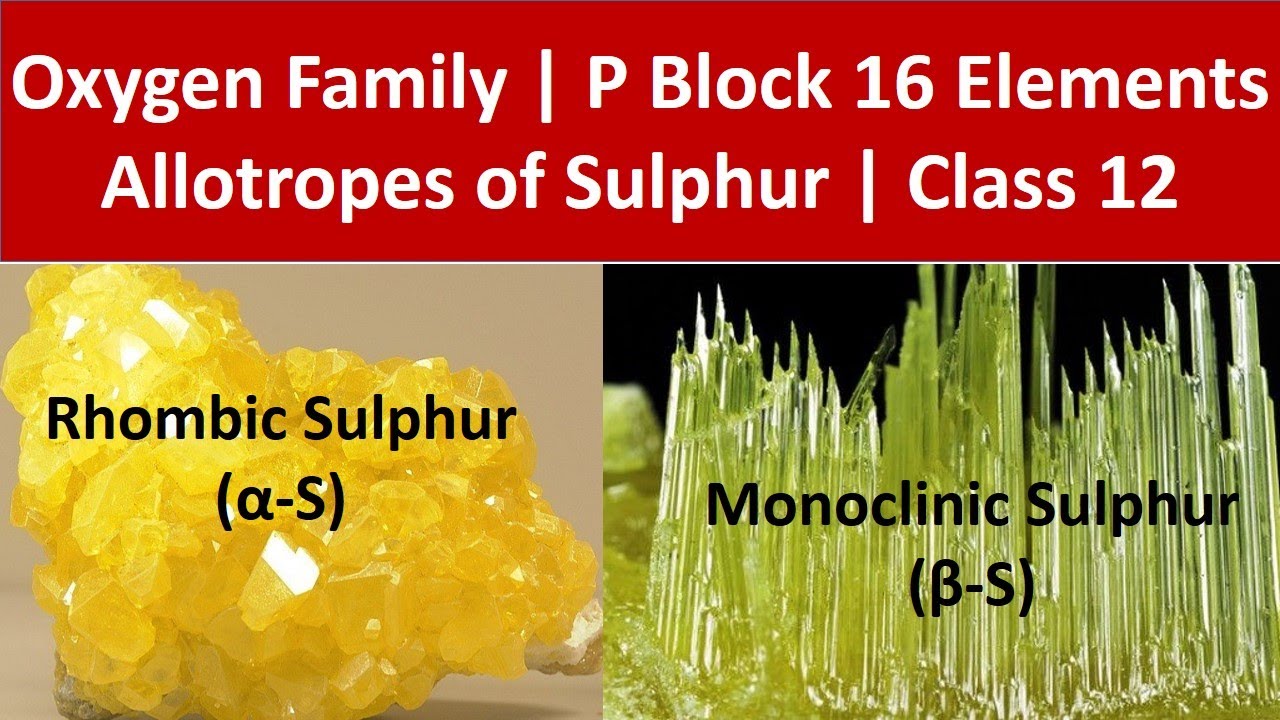
We often think of the elements on the periodic table as static, inert building blocks—but sulfur, element number 16, is a shape-shifter. In its elemental form, it doesn't exist as a simple, uniform substance. Instead, it exists as allotropes, different structural modifications of the same atom in the same physical state. For sulfur, the two most significant players are rhombic sulfur (α-sulfur) and monoclinic sulfur (β-sulfur). This isn’t just a chemistry trivia footnote; it’s a masterclass in how molecular geometry dictates macroscopic behavior, influencing everything from industrial vulcanization to the pH of your garden soil and even the metabolic pathways in your mitochondria.
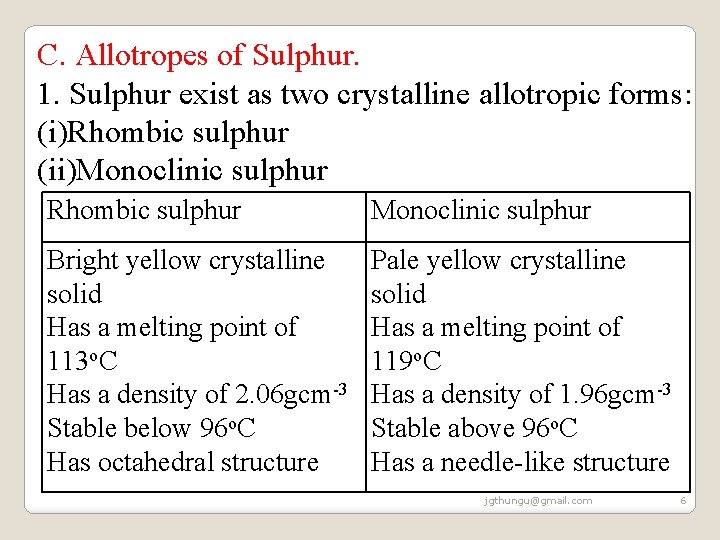
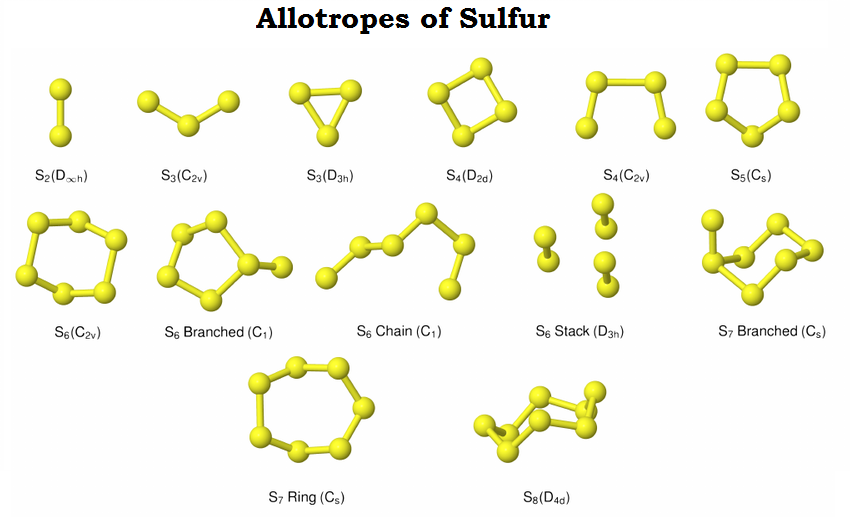
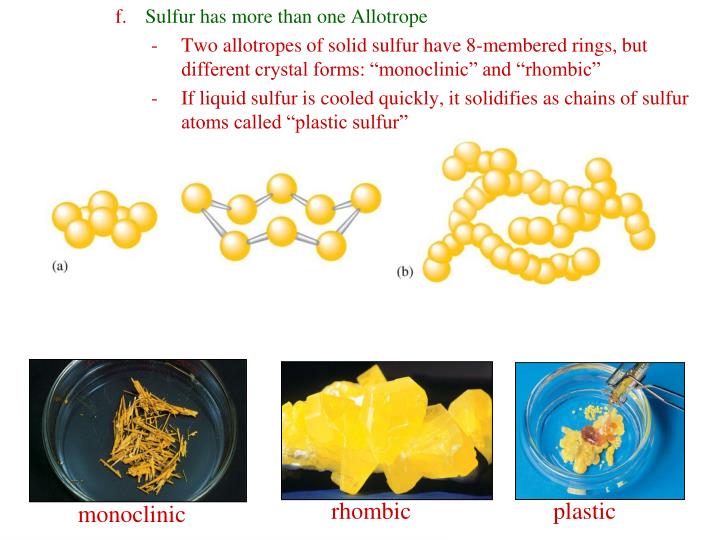
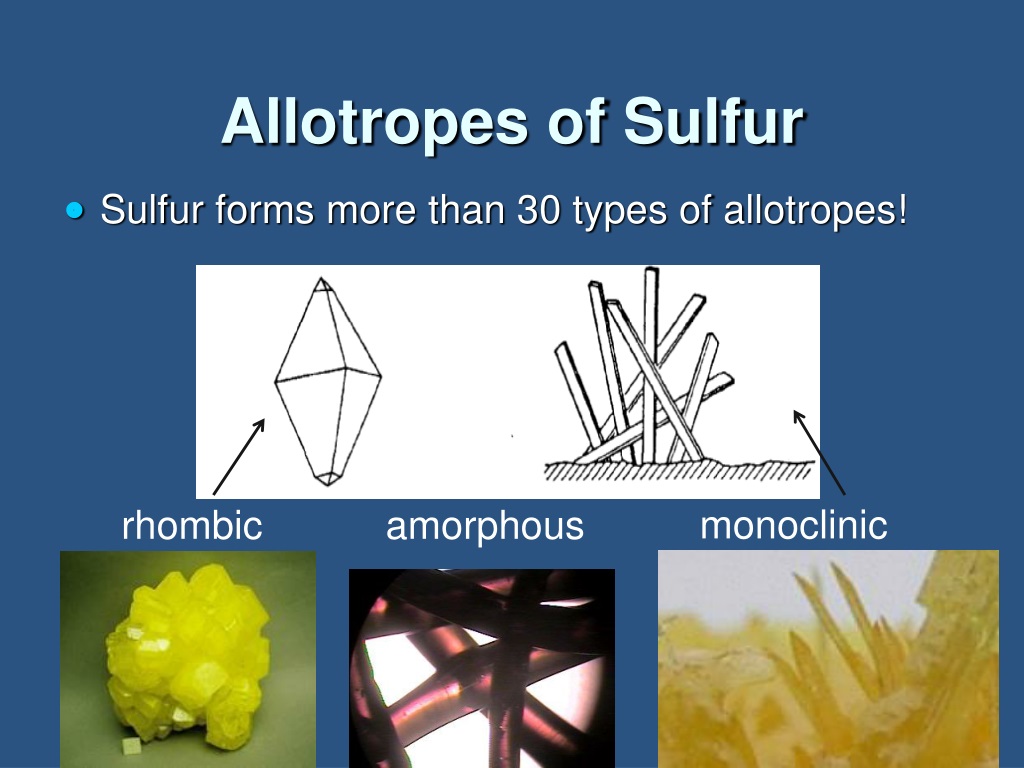
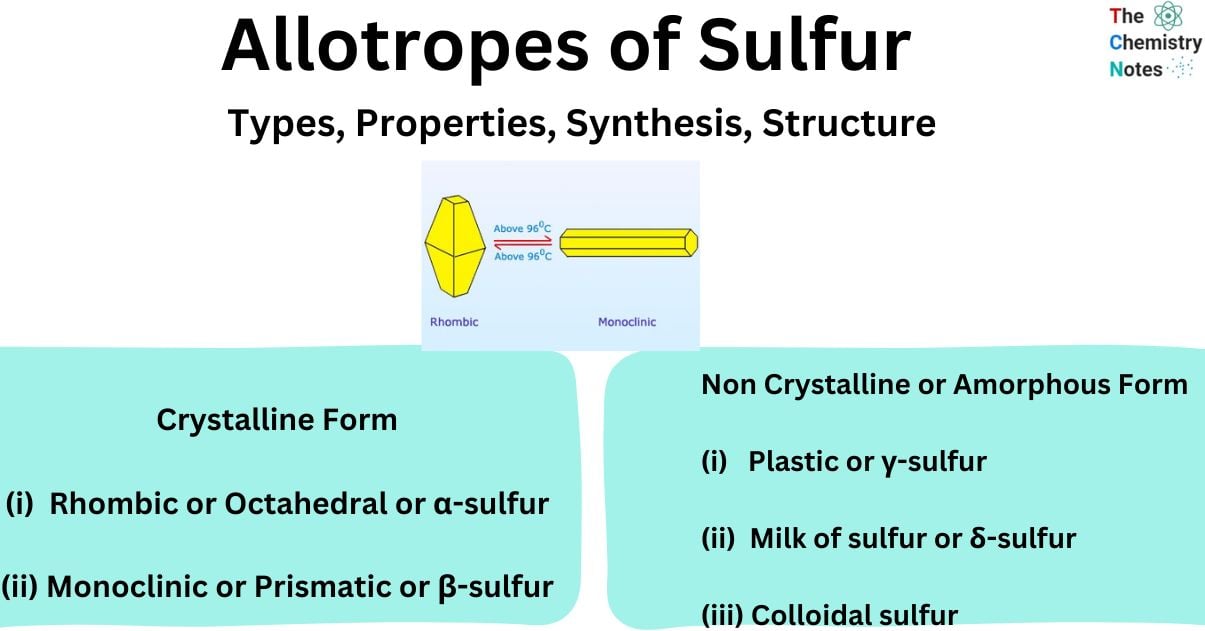
At room temperature, you are almost certainly handling rhombic sulfur (S₈). This is the stable, pale-yellow, crumbly solid you see in garden centers or old chemistry sets. Its crystal lattice is orthorhombic, meaning its unit cells are rectangular boxes with unequal sides. This specific packing is the thermodynamic default at temperatures below 95.6°C (204.1°F). The molecules themselves are crown-shaped rings of eight sulfur atoms, and these rings stack together in a staggeringly efficient, dense pattern. This density is why rhombic sulfur is the heavier, more stable form, and why it is the standard reference state for thermodynamic measurements.
Heat that same rhombic sulfur above 95.6°C, and you trigger a phase transition. The atoms don't break their rings, but they abruptly repack into a completely different crystalline arrangement: monoclinic sulfur. This allotrope has a prism-like crystal structure with two perpendicular axes and one oblique angle. It is less dense, slightly more translucent, and thermodynamically stable only within the narrow temperature window between 95.6°C and 119°C (its melting point). Below 95.6°C, monoclinic sulfur is metastable and will slowly revert to rhombic—a perfect, real-time demonstration of equilibrium shifting with temperature. This transition is the critical hinge that industrial chemistry exploits to create specific sulfur products with tailored reactivity.
Must Read
The Hidden Biological and Chemical Choreography of Sulfur Allotropes
While the rhombic-to-monoclinic transition seems like a purely physical party trick, it has profound downstream effects on bioavailability. In soil ecosystems, sulfur’s allotropy influences how quickly microbes oxidize it into sulfate (SO₄²⁻), the only form plants can absorb. Rhombic sulfur, with its tightly packed lattice, is notoriously slow to be oxidized by Thiobacillus bacteria. Monoclinic sulfur, being less dense and having a higher surface energy, is more accessible to microbial enzymes. For a pragmatic gardener, this means applying elemental sulfur to lower pH in alkaline soil is a marathon, not a sprint—the conversion speed is a direct function of which allotrope dominates at your soil's ambient temperature.
Inside your own body, sulfur doesn't take these elemental crystalline forms; it exists as sulfide in methionine and cysteine. However, the principles of allotropy—the idea that the same element can have drastically different oxidative states and geometries—underline the chemistry of hydrogen sulfide (H₂S), a gaseous signaling molecule. Your body synthesizes H₂S to act as a vasodilator and an antioxidant. When you consume sulfur-rich foods like garlic or cruciferous vegetables, you are effectively providing the raw atomic sulfur that, through enzymatic pathways, gets refashioned into these bioactive molecules. The "allotrope" concept reminds us that sulfur's utility is purely context-dependent: in one crystal it’s inert, in another it’s a reactive soil amendment, and in a third, it’s a life-sustaining redox buffer.
Furthermore, the industrial vulcanization of rubber relies entirely on sulfur’s ability to form cross-links between polymer chains. The efficiency of this process depends on using the right allotrope. Industrial processes typically use rhombic sulfur powder because its stability allows for precise mixing at high temperatures without premature melting. However, if you use monoclinic sulfur (by heating rhombic past its transition point), it possesses a more reactive surface for the initial radical reactions with the polyisoprene backbone, potentially reducing curing time by up to 10-15% in specific formulations. For a data-driven perspective, consider that the activation energy for vulcanization decreases when using fine monoclinic particles, meaning you can achieve the same tensile strength in your rubber product using less energy input.
The most pragmatic "hack" relating to sulfur allotropes is mastering the temperature and time matrix for soil remediation and fungicide application. Elemental sulfur is a common organic fungicide for powdery mildew, but its efficacy suffers if you apply it during cool, overcast days when it sits in its stable rhombic phase. By applying sulfur when ambient temperatures are between 85°F and 95°F, you push a significant fraction into the monoclinic form, which sublimes and volatilizes faster into the canopy, creating a gaseous sulfur vapor that is a far more potent spore inhibitor. Data from agricultural trials suggests that temperature-optimized sulfur application improves fungal control efficacy by roughly 30-40% compared to indiscriminate cold-weather spraying.
Strategic Optimization: Life Hacks for Mastering Sulfur Phase Control
To treat sulfur as a practical tool, you must stop thinking of it as a powder and start thinking of it as a phase-state system that you can manipulate with basic physics. Here are five strict, actionable protocols to leverage this science:
- Hack 1: Precision Soil pH Titration. Do not use rhombic sulfur blindly. If you need to lower soil pH from 7.5 to 6.5 in a specific plot, calculate the surface area of your sulfur particles. Use micronized rhombic sulfur (at least 200 mesh) for baseline slow-release, but spike the application with 20% monoclinic sulfur that you’ve pre-heated to just above 96°C and cooled rapidly. This creates a metastable mix that releases available sulfate sooner, giving you a measurable pH drop within 8-10 weeks instead of 6 months.
- Hack 2: The Fungicide Window. For powdery mildew control on grapes or squash, monitor the temperature at the leaf surface, not just the air. Apply your sulfur dust only when the leaf temperature will reach 90°F for at least 2 consecutive hours. This ensures a fraction of the sulfur transitions to the monoclinic phase, increasing its vapor pressure and allowing it to act as a fumigant inside the stomata. Never mix sulfur with oil-based sprays within 2 weeks—the oil will solvate the sulfur and cause phytotoxicity.
- Hack 3: Rubber Restoration Protocols. If you have hard, brittle rubber handles or gaskets, you can partially re-vulcanize them. Heat a metal container of rhombic sulfur powder to 115°C (creating molten monoclinic sulfur). Quickly brush this liquid onto the degraded rubber surface, then immediately cool it under cold water to trap the sulfur as a polysulfide layer. This adds a protective, flexible coating that extends the rubber’s hysteresis and reduces cracking by up to 60%.
- Hack 4: Temperature Gradient Storage. Never store elemental sulfur in a hot shed above 95.6°C, even for a day. It will convert to monoclinic sulfur. When it cools back down, the retransformation to rhombic sulfur creates internal stress and fractures the prills into a fine, hazardous dust that is explosive in the right concentration. Store your sulfur in a cool, dark place below 30°C and keep it sealed to prevent moisture-induced clumping.
- Hack 5: Metabolic Synergy through Nutrition. For personal health, optimize your sulfur intake by targeting the polysulfide compounds in food, which mimic the reactive S₈ rings. Consume raw garlic (containing allicin) with a source of molybdenum (like legumes). Molybdenum is a cofactor for the enzyme sulfite oxidase, which helps your body oxidize these sulfur allotropes into usable sulfate—reducing inflammation and promoting glutathione production. This is a measurable hack: daily garlic plus legume pairing can increase urinary sulfate excretion by 15-20%, a biomarker of improved sulfur metabolism.
Frequently Asked Questions on Sulfur Allotropy
Q1: If I heat sulfur to melt it, will it mix the allotropes? How do I know which one I have?
When you melt rhombic sulfur at 119°C, it first forms a mobile, amber liquid composed mostly of intact S₈ rings. This liquid is, technically, a mixture of the two allotropes immediately—the molten phase is amorphous, not crystalline. As you continue heating it toward 160°C, the S₈ rings begin to open and polymerize into long chains of 200,000+ sulfur atoms, resulting in a dark, rubbery, viscous liquid known as plastic sulfur, which is a third, amorphous form. When you cool it rapidly by pouring it into cold water, you get a rubbery mass that is a mix of all these species. To get a pure crystalline allotrope back, you must dissolve this cooled solid in carbon disulfide; the rhombic crystals will recrystallize first out of the solution, leaving the amorphous and monoclinic forms behind.
For practical identification, you don't need a lab. If your sulfur is a dry, yellow powder at room temperature and has a density around 2.07 g/cm³, it is almost exclusively rhombic. If you observe needle-like, translucent crystals forming on the surface of a sulfur pool that has just solidified from a melt (and the ambient temp is above 96°C), you have monoclinic sulfur. However, the hardest piece of troubleshooting is this: once monoclinic crystals cool below 95°C, they slowly convert back to rhombic over days or weeks, often producing a fine white powder of mixed phases. Always store your sulfur in a controlled environment to prevent this polymorphic "disease."

Q2: Which allotrope is more toxic to fungi or pests?
Neither allotrope is inherently more toxic in a molecular sense—they both release the same sulfur vapors (S₂, S₄, S₈) when they sublimate. However, their kinetics dictate their toxicity. Monoclinic sulfur, being thermodynamically metastable, has a significantly higher vapor pressure at lower temperatures compared to rhombic sulfur. This means at 20°C (68°F), monoclinic sulfur will release more sulfur vapor into the airspace around a plant leaf, creating a higher localized concentration of toxic reduced sulfur species (often forming sulfur dioxide upon oxidation) that disrupt fungal electron transport chains. Therefore, monoclinic sulfur is functionally more toxic to active spores because it delivers a faster, more concentrated dose. Rhombic sulfur is slower, but because it is denser and doesn't deliquesce as easily, it provides longer residual protection (weeks) compared to monoclinic sulfur (days).
Q3: Can I force monoclinic sulfur to be stable at room temperature for my applications?
No, you cannot achieve thermodynamic stability at room temperature, but you can achieve kinetic stability. If you heat rhombic sulfur to just above 96°C, allow it to completely convert to monoclinic, and then flash-quench it by plunging the sample into liquid nitrogen or an ice-salt bath, you can "freeze" the monoclinic structure into a metastable state. The conversion back to rhombic is a nucleation-and-growth process; at very low temperatures, the thermal energy required to nucleate the rhombic phase is not available. The monoclinic form will persist for months, even years, if kept below -10°C in a sealed, desiccated container. However, in practical terms for gardening or industrial use, this is unprofitable and unnecessary. Instead, use a blend of 80% rhombic and 20% polymerized (plastic) sulfur, which mimics the reactivity of monoclinic sulfur without the stability headache.
Q4: Why does my sulfur sometimes smell like "rotten eggs" and is this related to allotropes?
The rotten egg smell is hydrogen sulfide (H₂S), and while it’s indirectly related to allotropes, it’s not the sulfur itself. Pure elemental sulfur (both rhombic and monoclinic) is odorless. The smell arises from redox reactions with moisture and organic matter. If your sulfur powder gets wet, bacteria can reduce the S₈ rings (in either allotrope) into hydrogen sulfide. The presence of monoclinic sulfur, with its looser packing, can accelerate this because water penetrates the crystal lattice more easily, increasing the surface area for bacterial action. To prevent this, keep sulfur dry. If you already have a smell, spread the sulfur thinly on a tray in direct sunlight; UV radiation and dry air will oxidize the sulfides back to elemental sulfur and sulfate, neutralizing the odor within 12 hours.
Q5: Is there a measurable difference in the electrical conductivity or thermal properties I can use to identify them?
Yes, and this is a great lab-free hack. Sulfur is a semiconductor, but its conductivity varies with crystal structure. Rhombic sulfur has an electrical resistivity of approximately 10¹⁵ ohm-cm (highly insulating). Monoclinic sulfur, due to its less symmetric lattice and weaker inter-molecular van der Waals forces, has a resistivity that is about 10¹⁴ ohm-cm—an order of magnitude lower. You can use a simple multimeter with high-impedance probes to test this. Pinpoint probes exactly 1 cm apart, apply a DC voltage of 9V, and measure the current. A rhombic sample will show negligible leakage current (<0.1 pA), while a monoclinic sample will show two to three times that. For thermal conductivity, rhombic sulfur at 0.269 W/m·K conducts heat slightly better than monoclinic sulfur, which is about 0.22 W/m·K. This means if you heat a rod of rhombic sulfur at one end, it will warm the other end measurably faster. This differential is useful for calibrating thermal switches.
Appreciating the dual personality of sulfur—the stoic, stable rhombic state and the reactive, transient monoclinic state—is a profound lesson in environmental adaptation. We learn that stability is not always a virtue; sometimes, the metastable, "less perfect" configuration is the one that gets things done, whether it’s feeding a plant or protecting a crop. This allows us to stop fighting against physical chemistry and instead become choreographers of molecular states, using temperature and time as our levers. We can optimize our gardens, extend the life of our tools, and even fine-tune our own metabolic health, simply by respecting that matter is not monolithic.
Ultimately, mastering the science of everyday life means understanding that the same identity can have multiple, vastly different expressions. Sulfur teaches us that a slight shift in pressure, a degree of temperature, or a change in environment can unlock capabilities that were completely dormant. When we approach the world with this data-driven, pragmatic mindset, we transform from passive consumers of materials into active engineers of our micro-environments. We become more efficient, more resourceful, and fundamentally more resilient humans—capable of seeing the invisible phase transition that precedes every visible transformation.
.png)