Liberty University Military Benefits
Before the age of online portals, digital counseling, and one-click benefit verifications, there was a quieter, more personal ritual. It was the late 1970s, and a young serviceman, fresh off a deployment, would walk into the administrative offices of a small Christian college nestled in the Blue Ridge Mountains of Virginia. He wasn’t looking for a grand academic palace; he was looking for a handshake. Liberty Baptist College, as it was then known, was a scrappy, ambitious institution founded by the late Dr. Jerry Falwell Sr. in 1971. The military benefits program back then wasn’t a glossy brochure; it was a conversation over a Form DD-214, a promise whispered over a cluttered desk, and a tuition deferment written on a slip of paper. The initial human necessity was profound: a soldier returning from Vietnam or a Cold War radar operator wanted a moral, affordable education without the bureaucratic maze of the federal government. They wanted a place that understood sacrifice before it understood transfer credits. That humble beginning, built on handwritten ledgers and a chaplain’s referral, laid the bedrock for what would become one of the most comprehensive military support ecosystems in American higher education.
Back then, the "GI Bill" was a simpler beast, but the paperwork was immense. The school’s veterans’ office, if you could call it that, was often a single work-study student with a Rolodex of VA phone numbers. The benefit was transactional: the government paid a set tuition amount, and the student simply showed up to class. There was no housing stipend geared toward off-campus apartments, no dedicated online platform for course loads, and no nuanced counseling for PTSD or transition anxiety. The veterans who came in the 1980s were part of a generation that didn’t ask for handouts; they asked for a desk and a schedule. They wore their uniforms on Fridays for ROTC drills, blending a military bearing with the school’s budding evangelical identity. It was a time when the biggest complaint was the lack of a microwave in the student union, not the lack of a mobile app. Yet, the emotional anchor of those early years was the school’s insistence on "championing the cause of Christ" while simultaneously acknowledging the secular sacrifice of military service. This dual commitment created a unique gravitational pull for active-duty families, who found a rare cultural synergy between conservative faith and military hierarchy.
The transformation from those retro days to the modern era is a story of technological leaps and legislative sea changes. The post-9/11 GI Bill, enacted in 2008, was the first seismic shift. No longer was the benefit a simple reimbursement; it became a robust package covering full tuition, housing, and books. Liberty University, by then a sprawling online giant, was uniquely positioned to capitalize on this. The brick-and-mortar campus in Lynchburg was joined by a digital twin that reached troops in Kabul, aboard the USS Nimitz, and in barracks in Germany. The old, intimate handshake was replaced by the Yellow Ribbon Program, a federal matching scheme where Liberty agreed to fund the gap between the VA’s cap and the prestigious private tuition rates. This was a daring, forward-thinking move. In the 2010s, Liberty became a behemoth, enrolling over 94,000 students, with a significant plurality being military-affiliated. Forgotten vintage facts abound: did you know that in the 1990s, military students had to mail in their assignments on floppy disks? Or that the school’s early "distance learning" was literally VHS tapes of lectures played on a portable TV in a deployment tent? The bizarre treatment of the past was that military benefits were largely an afterthought, a compliance checkbox, not a strategic pillar. Today, that pillar is made of steel and fiber optics, but the ghost of those old, paper-thin syllabi still haunts the archives.
Must Read
The Paradigm Shift: From Paper Cuts to Predictive Analytics
The modern hacking of classic military benefit principles is arguably the most exciting phase in Liberty’s evolution. The old rule was: "apply, wait, and pray." The new rule is instant verification through the Department of Defense’s MOU (Memorandum of Understanding) and automated scraping of the VA’s Once system. But the deeper modernization is in the pedagogy itself. Military students today are not simply passive recipients of the GI Bill; they are "co-pilots" of their own academic destinies. Liberty has introduced prior learning assessments that convert military occupational specialties (MOS) into college credits, meaning a combat medic can skip introductory biology based on battlefield experience. This is a revolutionary hack: it validates the soldier’s past rather than forcing them to relearn it. Furthermore, the university has launched micro-badging for military spouses, recognizing that the "benefit" historically focused only on the service member, leaving the family behind. Now, spouses can access career-accelerated certificates in cybersecurity or project management, funded by the new MyCAA (Military Spouse Career Advancement Accounts) integrations and Liberty’s own scholarship dollars.
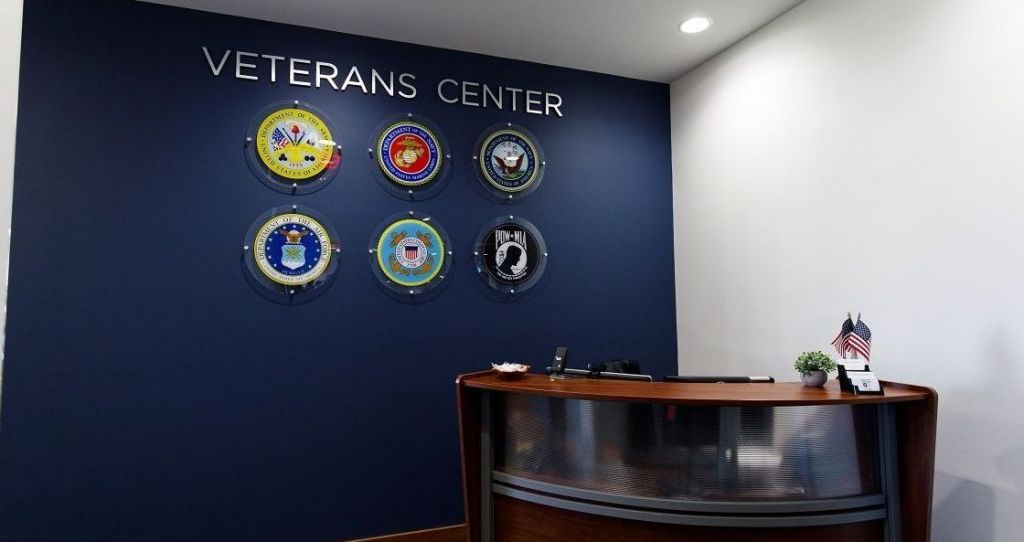
Another bizarre legacy being hacked is the "residency requirement." In the 1990s, you had to physically sit in a classroom to count as a full-time student for housing allowance purposes. This was a nightmare for a deployed sailor. Liberty’s modern solution is a sophisticated hybrid model: the 8-week sub-term. This compressed schedule allows a servicemember to front-load coursework during lulls in deployment and pause entirely during high-operational tempo weeks, all while maintaining full-time VA enrollment status. It’s a legal, loophole-adjacent modernization that serves the human need for flexibility over the bureaucratic need for a rigid semester calendar. The digital veteran’s center, complete with live chat and dedicated academic advisors who are themselves veterans, ensures that the emotional burden of "calling the VA" is handled by professionals. The old, confusing phone tree of the 1980s is now a sleek, mobile-first interface, yet the underlying principle remains: a promise that service to country will not be penalized by a lagging educational bureaucracy.
Legacy Systems, Modern Velocity
What is fascinating is how the classic principles of tuition assistance (TA) are being fused with cutting-edge financial technology. Active-duty soldiers, struggling with the old "first pay, then submit the form" process, now benefit from Liberty’s direct billing to the military’s TA portals. The university also offers a zero-interest book advance, which was unheard of in the 1980s when a soldier had to wait weeks for a reimbursement check. Moreover, Liberty has entered the realm of career integrated learning, where military benefits are not just used for your bachelor’s degree but for vocational pivots. For example, a retiring non-commissioned officer can use their remaining GI Bill benefits to complete a degree in aviation management while simultaneously earning a private pilot’s license through a partner entity. This "stackable benefits" approach is a far cry from the singular, monolithic degree pursuit of the past. It acknowledges the modern economic reality that a single credential may not be enough for a multi-decade career, and it ruthlessly automates the benefit disbursement so that the soldier can focus on study, not on human resources paperwork.
The culture around military benefits at Liberty has also modernized its rhetoric. In the past, the conversation was often about "rehabilitation" or "transitioning to civilian life," which carried a subtle stigma. Now, the language is about transferable lethality and leadership currency. Veterans are not seen as damaged goods; they are seen as executives-in-training. The school’s massive online platform even uses AI-driven chatbots to answer nuanced GI Bill eligibility questions in real-time, 24/7, across multiple time zones. This predictive analytics engine can flag a student who is at risk of losing their housing stipend due to a dropped course, allowing a counselor to intervene before the financial damage is done. It is a safety net that did not exist in the analog age, but it is built on the same moral imperative: don’t let the warrior starve while he studies.
Frequently Asked Questions: Bridging the Vintage and the Virtual
1. How have Liberty’s military benefits evolved from the "paper-based" era to the digital age, specifically regarding the Yellow Ribbon Program?
In the late 2000s, the Yellow Ribbon Program was a brand-new, clunky mechanism. The Department of Veteran Affairs had just decided to partner with private universities to cover tuition gaps, but the logistics were a nightmare. Liberty, historically a low-cost school, initially did not need the program because its tuition was below the VA’s public cap. However, as the school increased its tuition for its prestigious graduate programs, particularly in law and business, it opted into the Yellow Ribbon. The vintage myth was that "Liberty is cheap, so you don’t need to worry." The modern fact is that Liberty now offers unlimited Yellow Ribbon slots for qualified veterans, meaning the VA matches Liberty’s contribution dollar-for-dollar to cover 100% of tuition and fees. In the 2010s, this was done through a manual reconciliation of spreadsheets sent via encrypted email. Today, it is automatic, integrated into the student’s financial account within seconds of VA enrollment certification. The evolution is from a reactive reimbursement to a proactive, automated zero-out-of-pocket guarantee for the veteran.
2. What specific support exists for active-duty military members who are currently deployed in combat zones versus those studying on the residential campus?
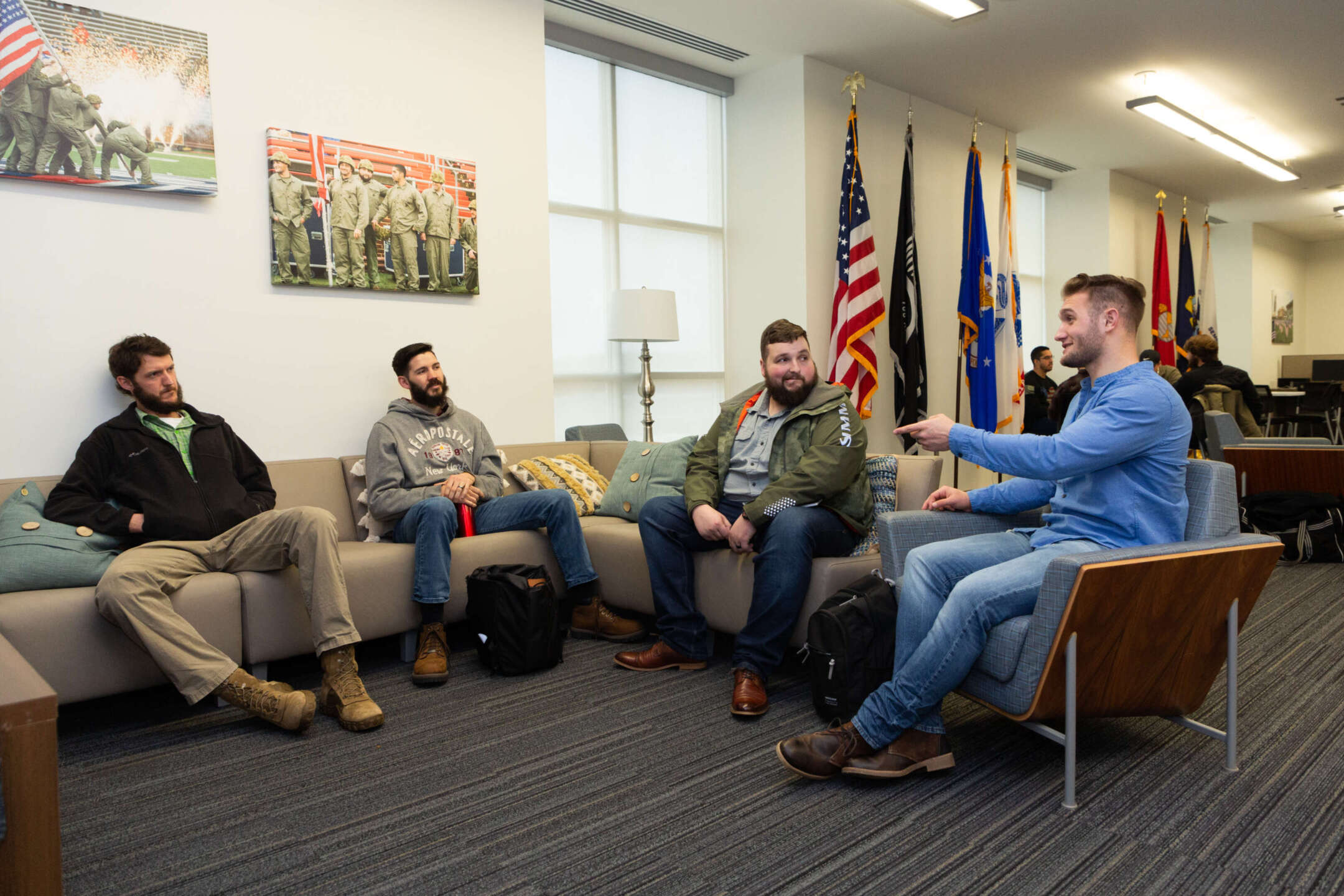
Historically, the only option for a deployed soldier was to withdraw or take an incomplete, losing their housing allowance. That was the harsh truth of the 1990s. Today, Liberty has a robust "Deployment Protocol." If a student is suddenly deployed, they are automatically switched to a "drop without academic penalty" status, but critically, the military benefits are preserved. The modern twist is the Course Extension Lease, a unique policy that freezes the student’s progress for up to 12 months, allowing them to return to the same exact point in the curriculum without reapplying to the military benefits office. For those in combat zones, Liberty provides offline access modules for the online platform, downloadable via military secure networks, allowing them to complete assignments on encrypted laptops without an internet connection. Residential students, on the other hand, have access to the LaHaye Student Center’s dedicated military lounge, a space with free printing, a private study room, and a veteran peer-mentor. This duality is a far cry from the "you’re on your own" attitude of prior decades.

3. Does Liberty University’s military benefit policy cover dependents and spouses differently than the federal law requires, and what are the historical roots of this?
Federal law, specifically the Post-9/11 GI Bill, allows transfer of benefits to dependents, but often with strict time-in-service limits. Liberty has always championed a "family unit" philosophy, traced back to its 1980s evangelical founding, which viewed military service as a family calling. However, the historical treatment of dependents was poor; they were often treated as "tag-alongs" without financial aid. The modernization has been aggressive. Liberty offers an exclusive "Military Dependent Grant" that covers up to 50% of tuition for spouses and children who are not eligible for federal transfers. This is funded by the university’s own endowment, a direct deviation from federal regulations. Furthermore, the university has established a Warrior’s Legacy Scholarship for children of fallen or disabled veterans, which stacks on top of federal survivor benefits. The bizarre historical fact is that this did not exist at all until 2012, when a group of alumni veterans lobbied the administration for a more compassionate approach. Today, the policy not only meets federal minimums but exceeds them, reflecting a shift from compliance to advocacy.
The Next Two Decades: The Symbiotic Future of Service and Scholarship
Looking forward twenty years, the landscape of military benefits at Liberty will be transformed by two converging forces: the decentralization of the battlefield and the silicon-based evolution of the GI Bill. With the rise of space force and cyber command, deployments will no longer be "six months in a desert" but "five-year virtual tours in a server farm." Liberty is already pioneering immersive virtual reality (VR) classrooms for cybersecurity students, but the next step is integrating those environments with real-time military simulations. Imagine a soldier on a rotating shift at a NORAD facility logging into Liberty’s platform not for a discussion board, but for a live, VR-based crisis management exercise with professors and fellow veterans from six continents. The military benefit will no longer be a pay-per-credit-hour system; it will likely become a subsidized "lifelong learning account", where the VA deposits a lump sum of digital currency that the student draws down across multiple micro-credentials, industry certifications, and even executive education modules over a 30-year career. Liberty is already building the infrastructure for this "benefit portfolio" approach, treating each veteran not as a one-time student but as a lifetime member of a warrior-scholar guild.
The most profound shift will be in the human element. The nostalgia for the old handshake and the coffee-stained form will remain, but the mechanism will be emotionally intelligent. Advancements in AI will allow Liberty’s counselors to detect a veteran’s academic struggles before the grades drop, perhaps even flagging early signs of cognitive fatigue that mirror traumatic brain injury. The university will likely partner with the VA on a pilot program where the tuition disbursement is coupled with mental health telehealth check-ins, ensuring that the benefit includes not just the brain but the soul. The 2020s laid the groundwork for zero out-of-pocket tuition. The 2040s will likely see a zero-barrier model, where the military ID itself is the admission ticket, and the administrative burden is invisible. As we look back at the evolution from the manual typewriter in the 1970s to the quantum encryption of the future, one thing remains constant: Liberty’s foundational premise that a person who bears the burden of war deserves every intellectual tool to build a legacy of peace. The form has changed, the speed has increased, but the promise, like the loyalty of the veterans it serves, remains unbroken.