
Lee Memphis King Suspicious Minds

There are songs that drift through the culture like ambient noise, and then there are songs that seem to have been carved into the very bedrock of our collective memory. Elvis Presley’s 1969 rendition of “Suspicious Minds” is the latter—a towering monument of pop production, heartbreak, and raw, aching vulnerability. But what happens when that monument is re-examined, not by a tribute act chasing a jumpsuit and a sneer, but by a performer who dissects the song’s DNA to find the anxiety and triumph buried inside? That is precisely the terrain navigated by Lee Memphis King, a European entertainer whose dedication to the King of Rock and Roll has morphed into something far more nuanced than simple mimicry. For over two decades, Lee Memphis King has been breathing new life into the Presley canon, and his interpretation of “Suspicious Minds” stands as a masterclass in understanding the weight of legacy.
To appreciate Lee Memphis King’s approach, one must first strip away the rhinestones and look at the song’s odd anatomy. Written by Mark James in 1968, “Suspicious Minds” was initially a moderate hit for the writer himself, but it was Presley who transformed it into a global phenomenon from his legendary American Sound Studio sessions in Memphis. The track was a strange beast—a fusion of country soul, pop strings, and a relentless, driving rhythm that felt almost claustrophobic in its intensity. Lee Memphis King, whose stage name deliberately roots him to that geographic and spiritual home of rock 'n' roll, understands that this song isn't just about a guy with a broken heart; it's about the circus of fame, the paranoia of the spotlight, and the desperate struggle to hold onto love when every single eye is watching. In his live shows, King doesn’t just sing the notes; he amplifies the psychological tension that bubbles just beneath the surface of the track, making it feel startlingly relevant in an era of digital surveillance and public relationships.
The Psychology of the King’s Crown: Why This Song Haunts Us
There is a dark, delicious irony in the history of “Suspicious Minds.” It was Elvis’s first number-one single in the U.S. since 1962, breaking a seven-year drought that had critics whispering he was washed up. Yet, the song’s subject matter—mutual distrust and the inability to escape a toxic pattern—mirrored his own crumbling marriage to Priscilla with eerie precision. Lee Memphis King leans heavily into this biographical shadow. When he performs the track, he doesn’t portray the triumphant superstar; he portrays a man trapped in a glass house, throwing stones. This psychological depth is what separates a true interpreter from a karaoke singer. King’s stagecraft involves a subtle shift in his eyes during the final, triumphant key change—a moment that should feel like victory but instead reads as a momentary reprieve before the cycle repeats. It’s a terrifyingly astute reading of the human condition, suggesting that even the most successful among us are often prisoners of our own insecurities.
Must Read
Furthermore, the production of the original track is a lesson in tension. The famous "fade-out/fade-in" at the end—where the song drops to almost silence before surging back with renewed vigor—was initially a technical accident that became a stylistic hallmark. Lee Memphis King has often cited this specific element as the "hook" that keeps the audience in a trance. He understands that the silence is not empty; it is pregnant with anxiety. In his concerts, he stretches that silence out just a fraction longer than the original, forcing the audience to lean in, to feel the discomfort. This is a bold move for a tribute artist, whose job is typically to provide comfort and nostalgia. But King operates in a space of hyper-reality; he doesn't give you Elvis, he gives you the essence of Elvis—the sweat, the fear, the overwhelming charisma—all filtered through a modern theatrical lens. It’s a psychological magic trick, making you question whether you’re watching a tribute or a séance.
Culturally, the song has become shorthand for romantic instability. It’s the anthem for the couple that can’t stop fighting but can’t stop loving. Lee Memphis King has taken this trope and globalized it. Performing across Europe and Asia, he has found that the song’s theme translates perfectly across language barriers. In Japan, the song is treated with a reverence usually reserved for classical music. In Scandinavia, audiences are drawn to its melancholic structure. King adapts his performance to these cultural contexts, emphasizing the physicality of the song in Latin countries and the vocal purity in Northern Europe. This chameleon-like ability ensures that the track never becomes a museum piece. It remains a living, breathing document of human frailty, and King is its most dedicated archivist, dusting it off every night to reveal its continued relevance to a world obsessed with loyalty and betrayal.
Stepping into the Blue Suede Shoes: A Practical Guide to the Performance
You cannot simply decide to perform "Suspicious Minds" and expect it to land. It requires a specific physical and vocal discipline. For the aspiring performer—or the curious fan—Lee Memphis King suggests a rigorous deconstruction of the song rather than a full-throttle imitation. Firstly, vocally, you must approach the verses with a conversational, almost breathy restraint. The power of the song lies in its dynamics; if you scream from the first verse, the final chorus loses its impact. King spends the first verse almost talking to the audience, building a narrative of distrust. The second verse introduces a slight grit in the voice, a signal that the protagonist is becoming agitated. Only in the bridge ("So if an old friend I know...") do you allow the voice to crack with pleading. This is not a song about volume; it is a song about emotional velocity. Practicing the microphone technique is also crucial—pulling away on the loud notes to prevent clipping, and stepping close to swallow the microphone during the intimate "we're caught in a trap" moments.

Secondly, the physicality of the performance is paramount. Lee Memphis King does not stand still. However, his movement is not the karate-chopping, cape-swirling extravaganza of the '70s. Instead, he uses a coiled-up energy. The legs are shoulder-width apart, knees slightly bent, as if ready to lunge. During the opening guitar riff, a single finger taps against the thigh, counting the time. When the chorus hits, the left hand comes up in a controlled, almost pleading gesture—not a command, but a request. The eyes are the most crucial instrument. They must dart around the room, scanning for the "suspicious" faces in the crowd, before landing on a specific spot to deliver the final, desperate "We can go on together." This is a performance of paranoia, and the body must reflect that constant, nervous vigilance. King recommends practicing in front of a mirror, not to check your hair, but to check your micro-expressions. Is your smile betraying genuine joy? It shouldn't be. This is a song of painful hope, not happiness.
Thirdly, let’s talk about the band dynamics. Lee Memphis King insists that the singer is the director, not the star. The rhythm section must play "in the pocket" but with a slight push on the snare drum. The bassline is the heartbeat—it cannot be flashy. The guitar riff, that iconic opening, must ring out cleanly but with a slight echo, creating a sense of space and loneliness. King advises communicating with your band by using hand signals during the fade-out section. He typically points to the drummer to lower the dynamics, then raises his index finger to signal the swell back in. This is a delicate dance of control. In a live setting, the fade-out is a moment where the audience holds its breath. If the band comes back too early, the magic breaks. if it comes back too late, the tension becomes awkward. King has perfected the timing, often holding the silence for 3.5 seconds—just long enough to hear the audience’s collective intake of air before the sonic avalanche returns.
Finally, there is the contextual framing. Lee Memphis King suggests that your performance needs a narrative arc. Who are you? Are you Elvis in 1969, on the verge of a comeback? Are you a modern man with a phone full of toxic text messages? The best rendition of this song, in King’s opinion, presents a universal archetype: "The One Who Is Losing." He encourages performers to insert a personal moment of stillness before the song starts. For him, it is a five-second look at the stage floor, acknowledging the weight of the performance. He also advises against looking at the audience during the second verse; instead, look over their heads, as if seeing a ghost—the ghost of the relationship, the ghost of Presley himself, or the ghost of your own past mistakes. This adds a cinematic depth to the performance that elevates it from a dance number to a dramatic monologue set to music.
Frequently Asked Questions: The Inner Workings of the Tribute
1. Is Lee Memphis King actually trying to be Elvis, or is it a commentary on Elvis?
This is the most nuanced question, and the answer changes depending on the night. In an interview context, Lee Memphis King has spoken about the "second skin" nature of his work. He is not attempting to fool anyone into believing he is the actual, resurrected Elvis Presley. That would be gimmickry. Instead, he is performing a role—imbuing the physical and vocal characteristics of Presley with the emotional truth of the songs. He calls it "method acting in the key of Rock and Roll." When he sings "Suspicious Minds," he utilizes the known Elvis vocal tics—the hiccups, the soft-spoken verses—but he applies them to a modern reading of the lyrics. This creates a Brechtian distance; you know you are watching a performance, but you are simultaneously swept up in the reality of the emotion. He is less a tribute act and more of a theatrical vessel, channeling the mythological aspects of the King to explore universal themes of fame, fear, and heartbreak.

The practical implication of this is seen in his setlist. He doesn't just play the greatest hits. He curates deep cuts and rarities, often rearranging them to highlight alternative meanings. For "Suspicious Minds," he might slow the introduction to a crawl, emphasizing the "trap" mentioned in the lyrics. He uses the iconography of Elvis—the jumpsuit, the cape—but he often tears down those symbols during the performance, unzipping the jacket slightly, loosening the collar, exposing the sweat and labor that goes into maintaining such a massive cultural facade. This is not an act of disrespect; it is an act of humanization. He is saying, "Look, this was a human being who felt this way." By doing so, he allows the audience to project their own lives onto the spectacle, making the performance deeply intimate despite its grand scale.
2. Why is the "fade-out/fade-in" section considered the most difficult part to execute live?
The technical challenge is immense, but the psychological challenge is greater. The original studio recording used a manual fade and raise of the faders on the mixing board. Live, you cannot just turn a knob to lower the entire band's volume while maintaining the rhythm. It requires the drummer to physically play softer, the bass player to pull back, and the singer to drop from a powerful belt to a whisper—all while keeping the tempo absolutely rigid. Lee Memphis King explains that many tribute artists cheat by using a backing track for this section, which immediately kills the spontaneity. He refuses; he insists the band performs it live. The hardest part is the silence itself. In a room of 2,000 people, the sudden drop in volume creates a vacuum that the audience feels obligated to fill with applause or chatter. The performer must have the charisma to command that silence, holding the audience in suspense with nothing but intense eye contact and a raised hand.
Moreover, the transition back in is a fine line between euphoria and chaos. If the band surges back too loudly, it destroys the dynamic arc. If they come back softly, it feels anticlimactic. King uses a specific visual cue: he stops moving completely during the silence, then taps his chest with his right hand twice before the band crashes back in. This physical cue becomes a fragile anchor for the musicians and the audience. It transforms the song from a linear narrative into a loop of resurgent desperation. It is also a nail-biting test of nerves because in that silence, you are completely exposed. There is no music to hide behind. King notes that when it works, it is the closest thing to magic he has ever felt on stage—a communion between the performer, the band, and the crowd, all breathing together in the dark.
3. How much of Lee Memphis King's performance is improvisation versus strict replication?
The answer lies in the philosophy of "structured freedom." The vocal phrasing and the main stage movements are heavily choreographed to match the original Presley cadence. For instance, the run on "We can go on together" is usually sung identically to the '69 record, as it is the hook that audiences expect and need to hear. However, the emotional outpourings in between are completely improvised. King might change the length of a sustain, add a sudden growl, or drop to his knees during the second chorus. This depends on the energy of the crowd and his own emotional state. He operates on a "spine" of known elements but allows the "flesh" of the performance to react to the environment. This is a crucial distinction for purists who think a tribute act is just a photocopy machine. They are not; they are interpreters who use the original as a script for a new performance every night.
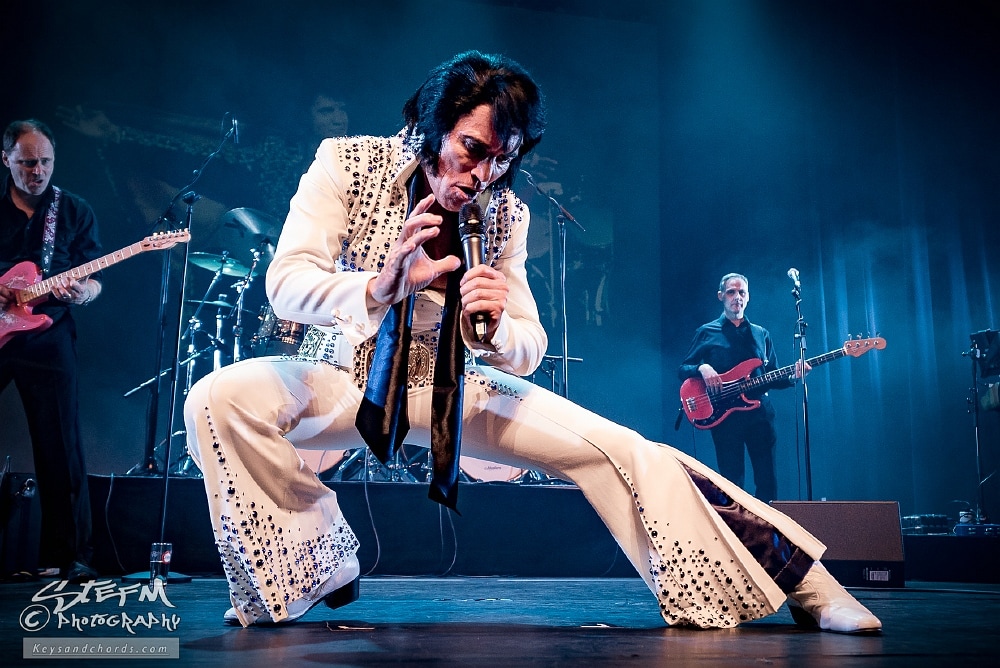
Case in point: during his residency in Las Vegas, the air conditioning malfunctioned one summer night, making the stage incredibly hot and sticky. Rather than fight it, King used the sweat dripping into his eyes as a prop. He blinked heavily, wiped his brow with the back of his sequined sleeve—a move Presley rarely did—and sobbed the lyrics with a level of anguish that rivaled the original. He later said he couldn't have reproduced that performance if he tried. This is the hallmark of a serious artist: the ability to incorporate accidents into the art. He also improvises with the audience interaction, pulling a specific person's gaze to sing to during the fade-out section, making them complicit in the performance. This keeps the show fresh for him and creates a unique, one-night-only experience for the audience that a simple CD recording can never replicate.
4. What advice would he give to musicians about avoiding "nostalgia paralysis" in covering classic songs?
Lee Memphis King is brutally honest about this pitfall. He calls it the "shrine syndrome," where performers treat the original song as untouchable holy ground, resulting in a lifeless, reverent cover that has no pulse. His advice is to find the negative space. Don't just listen to the vocals; listen to what the music is not saying. For "Suspicious Minds," the space between the guitar riff and the bass line is huge. He suggests you fill that space with your own interpretation, perhaps with a synth pad or a different percussive texture. Nostalgia should be a flavor, not the whole meal. He advises musicians to change the key, if possible, to force the vocal cords into a new position so you cannot imitate the original sound. For example, singing it a half-step lower forces you to approach the bridge in a chest voice, which sounds more grounded and less desperate—offering a new emotional angle.
Furthermore, he urges a deep lyrical analysis. "Suspicious Minds" is not about Elvis; it's about the singer. If you are a 22-year-old musician covering this, think about a time when a friend betrayed you on social media, or when you snooped through a partner's phone. Apply that modern anxiety to the lyrics. King suggests that you rewrite the lyrics in your head in your own vernacular—turn "We're caught in a trap" into "I can't unwind the paranoia"—and then find the emotional equivalent in your vocal delivery. This breaks the spell of the past and grounds the song in your present reality. By doing this, you aren't covering Elvis; you are using his song as a template for your own confession. This is the difference between a museum guide and a living painter—one points to the dead art, and the other creates new life from old bones.
5. Is the Lee Memphis King version a "better" version than the original?
This is a loaded question, and King himself would be the first to laugh and say, "Absolutely not." To claim superiority over an original hit that is recognized as one of the greatest recordings of the 20th century is pure hubris. However, he makes a compelling argument for the theatrical superiority of the performance. The original Presley record is a pristine, polished artifact—a perfect piece of studio magic. But King's live version is an event. The original is the blueprint; the live performance is the building. They serve different purposes. You listen to the original to hear the perfect fusion of producer Chips Moman's vision and Presley's power. You go to see Lee Memphis King to experience the agonizing delivery in a room where the bass physically shakes your ribcage. The original is the story; the performance is the physical experience of living through that story.
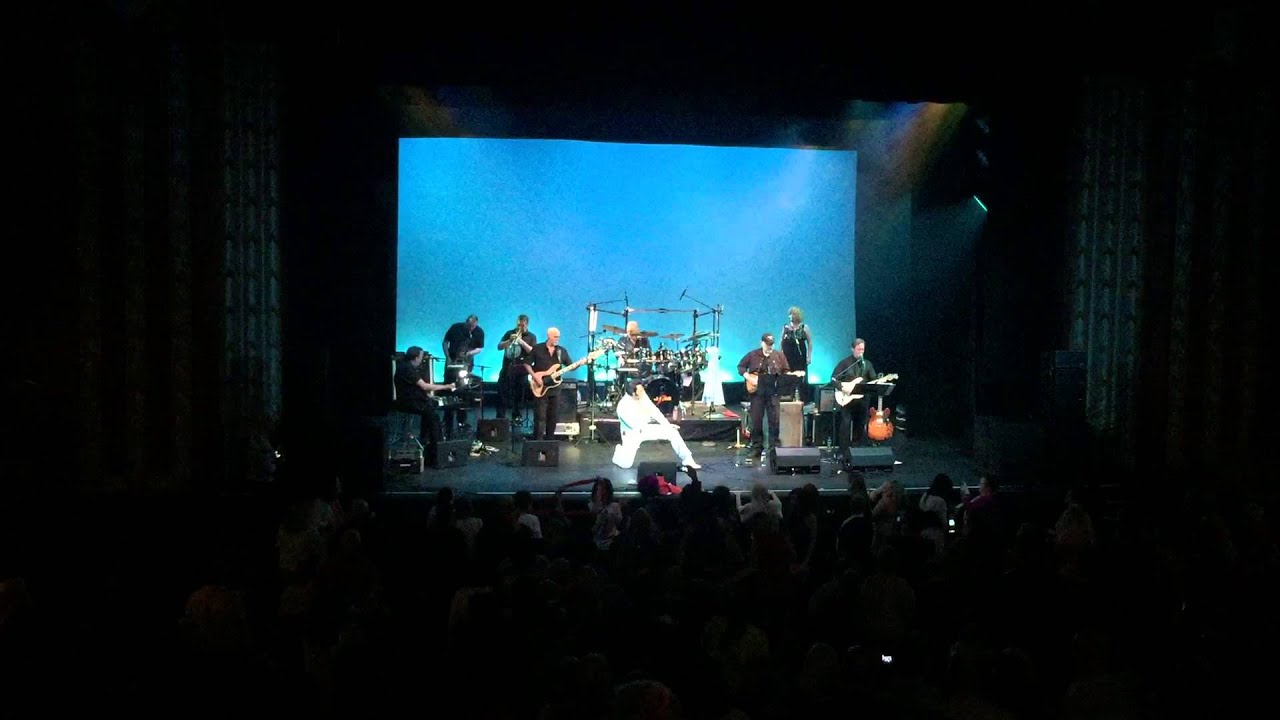
Ultimately, the question is about intent. The original was a comeback bid, a commercial attempt to reclaim the charts. King's version is a nightly sacrifice, a deep dive into the character's psyche. If you are comparing vocal purity, Elvis wins—he had the God-given gift. If you are comparing emotional exploration and the ability to make the song connect to a modern audience drowning in digital suspicion, King's rendition holds its own. He introduces a vulnerability that Presley, locked in his superstar persona, rarely showed on record. King can look fragile, can let the voice crack in a way the polished record doesn't. So, it is not about better or worse. It is about apples and oranges of emotional delivery. One is the icon, the other is the interpreter who shows you the warts and all the beauty.
Reflecting on Lee Memphis King's obsession with "Suspicious Minds," we are forced to confront our own relationships with trust. The song taps into a primal, listless anxiety that we all recognize—the feeling of walking on eggshells, of second-guessing every gesture from a partner, friend, or boss. In the modern digital age, this song has taken on a new, sinister resonance. We are more connected than ever, yet "suspicious minds" are everywhere. We watch for double-taps on Instagram, we read tone into text messages, and we meticulously check our partner's location. The song creates a sonic space where that paranoia is validated, not as a moral failing, but as a natural human condition under pressure. When King sings "We can't go on together with suspicious minds," he is not just singing about a failing marriage; he is singing about our fragmented, wary society.
In a world that demands constant positivity and polished online personas, there is a subversive comfort in wallowing in this beautiful, melancholic hopelessness. The song allows a catharsis that is rare in mainstream culture—the permission to admit that we are not okay, that we are scared of losing something, and that we are trapped in our own heads. Lee Memphis King, by dedicating his life to this song, provides a ritualistic space for this admission. It’s a reminder that human nature has not changed since the late '60s. We still crave connection, we still fear betrayal, and we still need anthems to help us dance through the wreckage. The gold lame suit is just a costume; the broken heart is the real uniform.
Ultimately, the connection to our daily lives is the pursuit of authenticity. Watching a master interpreter like Lee Memphis King wrestle with this material teaches us something vital: that engaging with our history, our music, and our icons does not have to be a static act of preservation. It can be a dynamic, even painful, act of digestion. We are meant to chew on the past, swallow it, and let it fuel our present. Lee Memphis King does not keep "Suspicious Minds" locked in a glass case; he takes it out, lets it sweat, lets it bleed, and lets it scream. This is a practical lesson for all of us. Whatever we are passionate about—our jobs, our relationships, or our creative hobbies—we thrive not by simple repetition, but by infusing the old with a new, urgent context. In doing so, we honor the past while remaining dangerously relevant to the present.


