
Kualoa Ranch Horseback Riding Tour
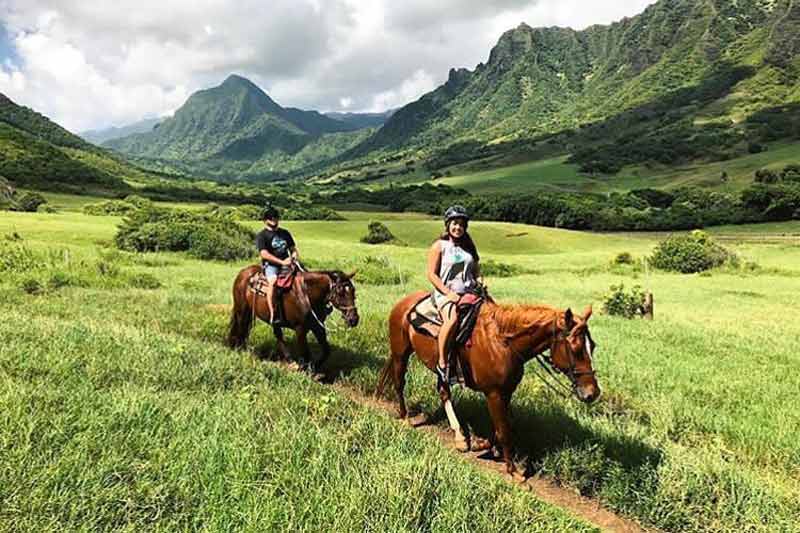
There is a peculiar quiet that descends upon the modern mind when it is confronted with immensity. We spend our days negotiating with the finite—deadlines, notifications, the cluttered landscape of our to-do lists—so when we are suddenly placed against a backdrop of volcanic pinnacles and sweeping valleys that have existed for millennia, our internal processor stutters. This is not merely a scenic distraction; it is a profound psychological recalibration. The Kualoa Ranch Horseback Riding Tour, nestled on Oʻahu's windward coast, is not just a ride through a movie set. It is a somatic therapy session, a moving meditation where the rhythm of hooves on red dirt syncs with your breath, forcing a return to the present that no app can simulate.
In our digitally saturated lives, we suffer from what psychologists call "attentional fatigue"—the exhaustion of our directed focus. The brain’s prefrontal cortex, responsible for decision-making and impulse control, is constantly overworked. When we arrive at Kualoa, the brain is initially confused; there are no pings, no algorithms, only the smell of rain-soaked earth and the low, reassuring nicker of a horse. The tour forces a cognitive shift from "doing" to "being." It taps into a biophilic need for connection, a primal recall that we are not merely observers of nature, but participants in it. The Horseback Riding Tour becomes a vessel for this reconnection, offering a physical anchor in a world that has become emotionally unmoored.
The Emotional Geography of the Saddle
There is a hidden vulnerability that surfaces when you mount a 1,200-pound animal. For many, the first few minutes are a cocktail of adrenaline and self-doubt. This is the ego confronting its own insignificance. The horse, finely attuned to human micro-expressions, feels your hesitation. This is where the tour’s first psychological hurdle appears: the fear of relinquishing control. We are a culture obsessed with mastery, but the horse demands cooperation, not dominance. When you finally relax your grip, loosen your white-knuckled hold on the reins, you are metaphorically loosening your grip on the anxieties you carried with you.
Must Read
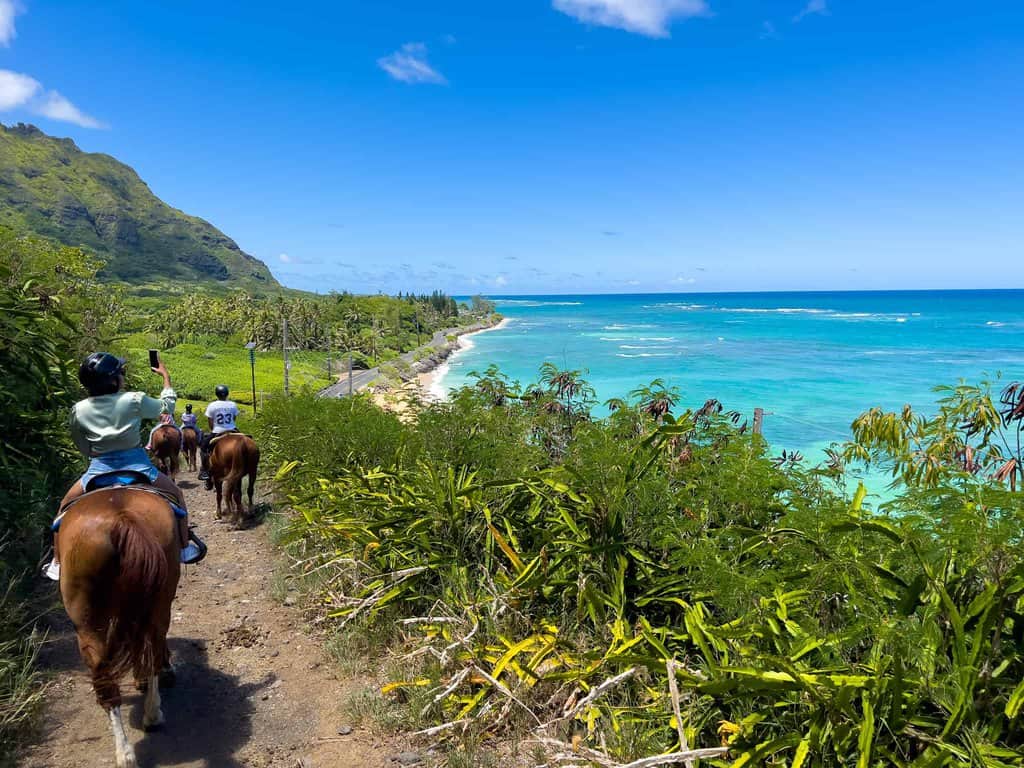
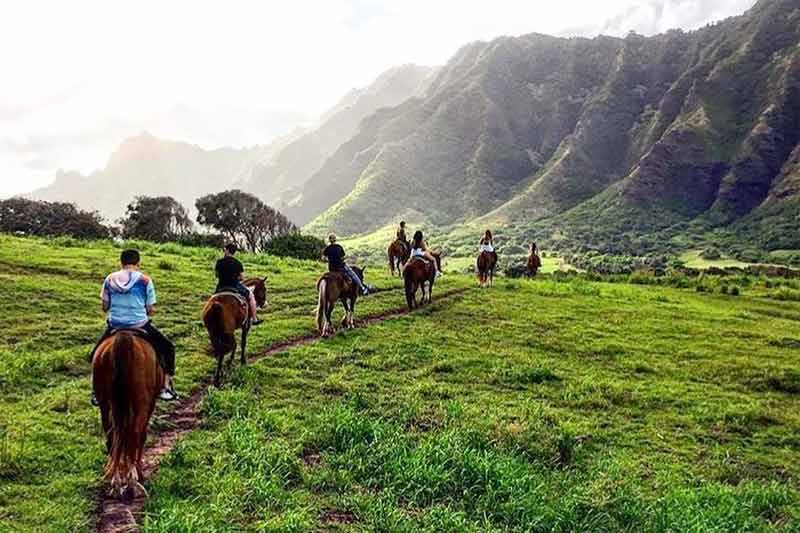
The cognitive bias at play here is known as the "negativity bias"—our tendency to scan for threats. On the trail, winding through the lush valleys of Kaʻaʻawa, the brain is tempted to anticipate a stumble or a startle. Yet, the repetitive gait of the horse induces a rhythmic, almost hypnotic state. This is a form of bilateral stimulation, similar to EMDR therapy, where the cross-body movement of the ride helps integrate emotional experiences. Riders often report a sudden, surprising welling of tears as they look at the sheer green walls of the pali (cliffs). It is the release of stored tension, a somatic unclenching.
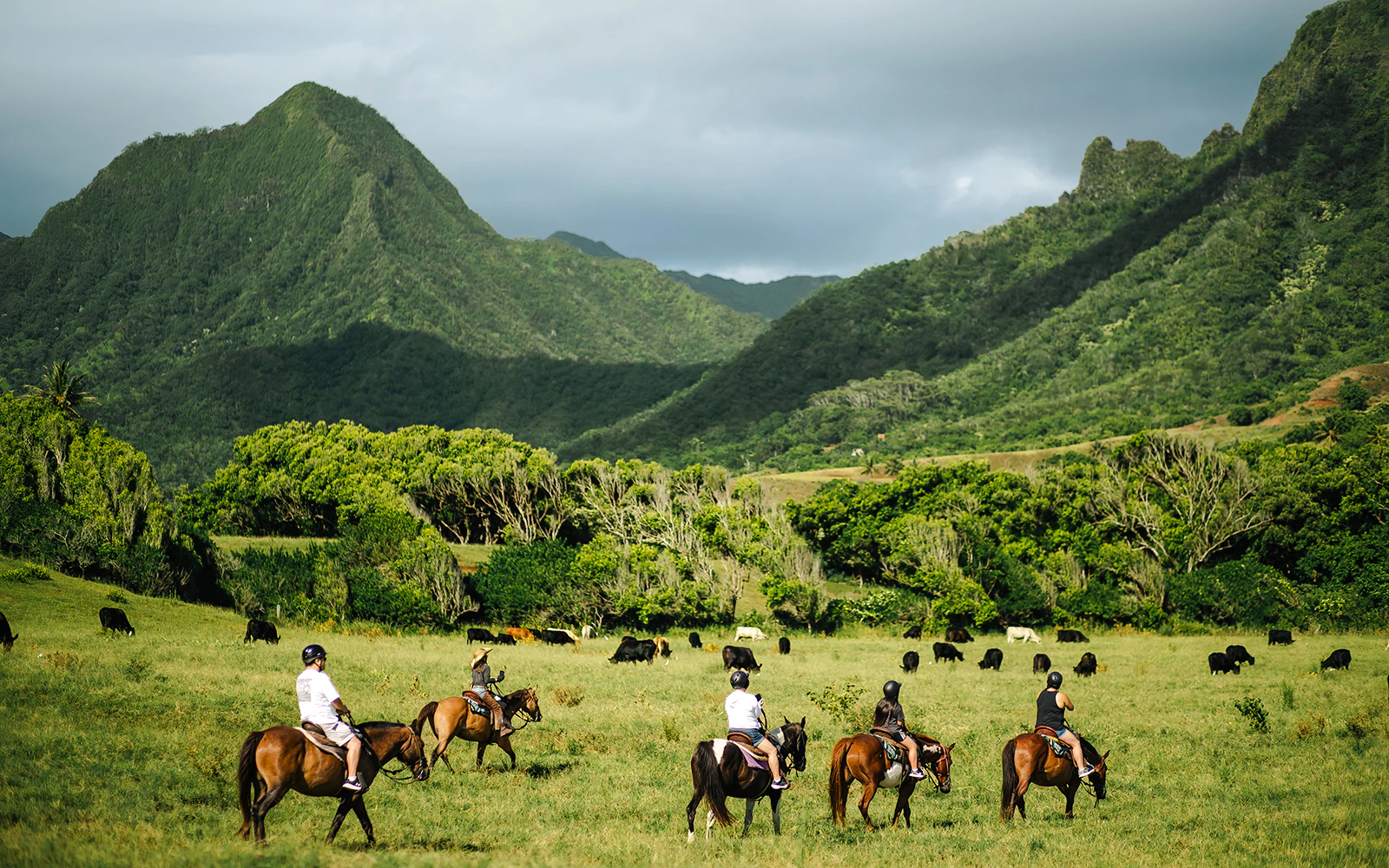
Traveling past ancient Hawaiian fishponds and through the famous Moliʻi set, the tour also triggers a deep sense of narrative displacement. You realize that the problems occupying your mind are subplots in a script you wrote, not the main feature of existence. The ancient Hawaiians who traversed these paths did so with a profound sense of kuleana (responsibility) and connection. Standing here, you find yourself grappling with existential smallness, not as a form of diminishment, but as a liberating relief. The pressure to be exceptional evaporates when you are surrounded by terrain that asks nothing of you but your presence.
Furthermore, the social dynamic of a group ride offers a unique mirror. Watching strangers grimace and then smile, sharing a collective gasp at a panoramic view, rekindles a sense of shared humanity. We are often isolated in our suffering, believing our stress is unique. But on the trail, a nervous laugh from a fellow rider validates your own emotion. This co-regulation—a biological process where our nervous systems sync with others—is a quiet anecdote to the loneliness epidemic. The tour becomes a communal journey, not just a private escape.

Riding Toward Resilience: A Mindful Protocol
To truly extract the therapeutic gold from this experience, one must adopt a specific mental posture before the ride even begins. I recommend a "Sensory Detox" during the drive to the ranch. Silence your phone completely—no music, no podcasts. Let the visual transition from urban Honolulu to the windward coast be a gradual dimming of your internal noise. When you arrive, resist the urge to immediately photograph. Instead, stand at the entrance gate, look at the green expanse, and take three deep, diaphragmatic breaths. Anchor yourself to the physicality of the place; feel the heat of the sun or the cool mist on your skin. This pre-ride ritual primes the nervous system for receptivity.
During the ride, I encourage you to practice "Brutal Presence." When the guide offers historical facts, listen, but let them pass like clouds. Focus instead on the texture of the moment. Notice the creak of the saddle leather, the specific scent of the horse (which is earthy and calming, proven to reduce cortisol levels), and the movement of your own pelvis in sync with the animal. When you catch your mind drifting back to a work email, gently label it "thinking" and return your attention to the ears of the horse in front of you. This is a form of focused attention meditation, and thirty minutes of this is arguably more restful than three hours of fitful sleep.
A powerful mindset shift is to visualize the trail as a metaphor for your own life’s challenges. When you approach a muddy incline, do not brace; lean forward, trust the horse, and shorten your stirrups. In psychology, this is called "active coping"—taking concrete steps to manage stress rather than avoiding it. When you reach the summit of the Secret Island overlook, take a mental snapshot, not just with your phone, but by closing your eyes and burning the image into your memory. This practice of 'memory embedding' enhances gratitude and creates a neural pathway you can visit later when you are feeling overwhelmed back home.
After the tour, resist the urge to rush off. Sit on the ranch’s open lawn and drink a glass of water slowly, observing the sky. Journaling is a potent follow-up. Write down three things your body felt, not your mind thought. Were your shoulders tight? Did your jaw unclench? This physiological data is the true result of the ride. Finally, take the lanyard or the dirt on your boots home as a talisman. The goal is not to remain in Hawaiʻi physically, but to internalize that your baseline state of being is not anxiety; it is peace. The tour provides the blueprint for that inner landscape, you just have to remember to re-trace it.
Frequently Asked Questions on the Inner Journey
I am terrified of horses. Will this tour benefit me psychologically, or just traumatize me?
Your fear is a protective mechanism, and it deserves respect. However, this tour offers a unique opportunity for "graded exposure," a well-established cognitive-behavioral technique. You begin by being near the horse, then touching it, then mounting with assistance. The guides are remarkably empathetic; they sense your hesitation and assign you a "bomb-proof" horse known as a "mentor" animal. This does not eliminate the fear, but it challenges your cognitive bias that all horses are unpredictable.
Psychologically, facing this fear on the trail can be transformative. The adrenaline you feel is indistinguishable from excitement; the brain just labels it based on context. As you complete the circuit, your brain generates a "corrective emotional experience." It rewrites the story from "I am in danger" to "I am capable, even when uncomfortable." The sense of accomplishment is profound, far outweighing the physical safety of staying on the bus. Often, the riders who are most terrified leave with the most significant emotional growth, having proven to themselves that they can trust something larger than their panic.
Why do I cry or feel deeply emotional during the ride, even if I’m not sad?
This is an incredibly common, yet rarely discussed, physiological response. The combination of rhythmic movement, expansive natural beauty, and the cessation of constant cognitive load triggers the parasympathetic nervous system. This is your "rest and digest" mode. When this system engages, your body feels safe enough to release stored stress hormones. The tears are not sadness; they are a flushing out of adrenaline and cortisol that has been marinating in your tissues.
Furthermore, the "awe" experience is a scientifically documented emotion. When we witness something vast and beautiful that challenges our understanding of scale, our brain downshifts. It reduces activity in the default mode network (the part of the brain responsible for self-referential thoughts, like worrying about ourselves). This produces a feeling of ego transcendence. You feel small, but in a comforting way, connected to something larger. The tears are your ego grieving its own over-importance, and thanking you for finally giving it a break.
How can I maintain this feeling of peace after I return to my stressful life?
The critical mistake is viewing the tour as a "peak experience" that exists outside your normal reality. Instead, view it as a calibration tool. You must create an "Anchoring Ritual" at home. Choose a specific sensory cue from the ride—it might be the smell of leather, the sound of wind chimes you recall, or the feeling of a deep breath. When you face a stressful situation, evoke that anchor. Close your eyes, breathe deeply, and physically recreate the relaxed posture you had in the saddle—shoulders back, hips open.
Additionally, introduce "Micro-Rides" into your routine. Take a walk in your local park, but shift your gait to be slower and more deliberate, as if you were following a horse. Practice "Moliʻi Moments" where you allow yourself to stare at a tree or the sky for two minutes without any screen. The goal is to prove to your nervous system that you do not need to be in Hawaiʻi to access the feeling of ease. You are not trying to escape your life; you are trying to bring the healing aspects of the ride into your daily existence. The tour taught your body what peace feels like; now you must teach your mind to remember.
Is the physical discomfort of riding (soreness) bad for my mental health?
Post-ride soreness is a fascinating psychological teacher. We often shy away from physical discomfort, equating it with harm. But the soreness from horseback riding is a "gainful" discomfort. It is the signature of having used your body in a primal way. Mentally, interpreting this soreness as a badge of honor rather than a sign of weakness reframes your relationship with effort. It creates a mind-body connection that is often severed in sedentary, office-based work.
This somatic feedback tells your brain, "You are alive. You moved. You endured." This builds self-efficacy. The pain is proof of presence. When you feel the ache in your thighs the next day, instead of groaning, acknowledge it with a smile. It is a reminder that you engaged with the world physically. This contrasts sharply with the phantom exhaustion of screen time, which leaves you drained but without tangible proof of exertion. The soreness grounds you in the physical reality of your body, which is the only place where true peace resides.
How does the Hawaiian cultural context amplify the mental health benefits?
Hawaiian culture is steeped in the concept of pono (balance/righteousness) and ʻāina (that which feeds). The guides at Kualoa Ranch do not just provide historical trivia; they share a philosophy of stewardship and connection. Integrating this cultural wisdom is vital for the psychological impact. Learning about kuleana teaches you that your role in the world is not just to consume but to care for. This shift in perspective is powerful against existential dread; it gives you a sense of purpose that is larger than personal achievement.
Hearing oli (chants) and stories of the land connects you to a lineage of human experience that is resilient and adaptive. This provides a sense of continuity. In modern life, we feel disconnected and ephemeral. The cultural narrative of Kualoa offers a sense of permanence and legacy. It encourages a mindset of gratitude over entitlement. This hoʻomana (spiritual empowerment) is not religious, but deeply psychological. It validates that your emotional well-being is connected to the health of the land and your community, a profound antidote to isolation and anxiety. The tour, therefore, becomes a lesson in ecological self—realizing that you are the environment, and when you care for it, you care for yourself.
Mastering the psychological art of this tour teaches you that true wellness is not found in retreat, but in engagement. The horse, the valley, and the wind do not ask you to escape your life; they ask you to bring your full self into it. You leave Kualoa with a mind that is quieter, but a spirit that is louder. The chaos of the office will still be there, but your relationship to it has changed. You have learned to hold the reins of your own attention with a gentler, more confident grasp.
Ultimately, this tour is a mirror reflecting the equilibrium you already possess but have forgotten. It demonstrates that peace is not a destination you fly to, but a frequency you can tune into. The Hawaiian sky, the rhythm of the horse, the earth beneath you—they become a tuning fork. When you return home, you carry that specific vibration in your chest. You become more patient, more present, and more aware of the beauty in the mundane. This is the true takeaway—not just a scenic ride, but a deeper understanding that your mind is the most beautiful landscape you can ever hope to explore.


