Is Verizon Fios Available Near Me
The question “Is Verizon Fios available near me?” might seem like a mundane utility query, but it is, in fact, a modern-day oracle. It determines whether your Netflix will buffer during a climactic dragon battle, whether your work-from-home video calls will make you look like a glitching hologram from a low-budget sci-fi film, and whether your smart home devices will obey your voice commands with the deference of a butler or the sluggishness of a hungover intern. This single question is a gateway to understanding the invisible architecture that underpins our digital lives—a cartography of fiber-optic cables buried beneath our streets, weaving through conduit and concrete like the neural pathways of a sleeping giant.
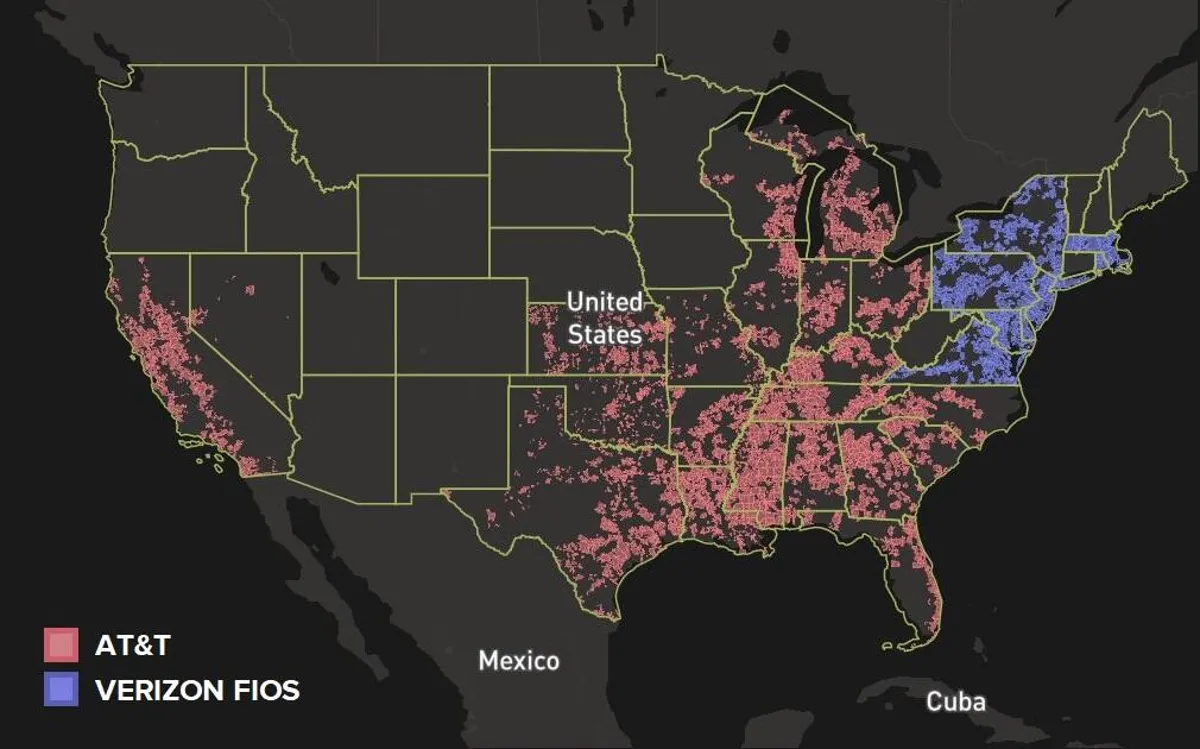
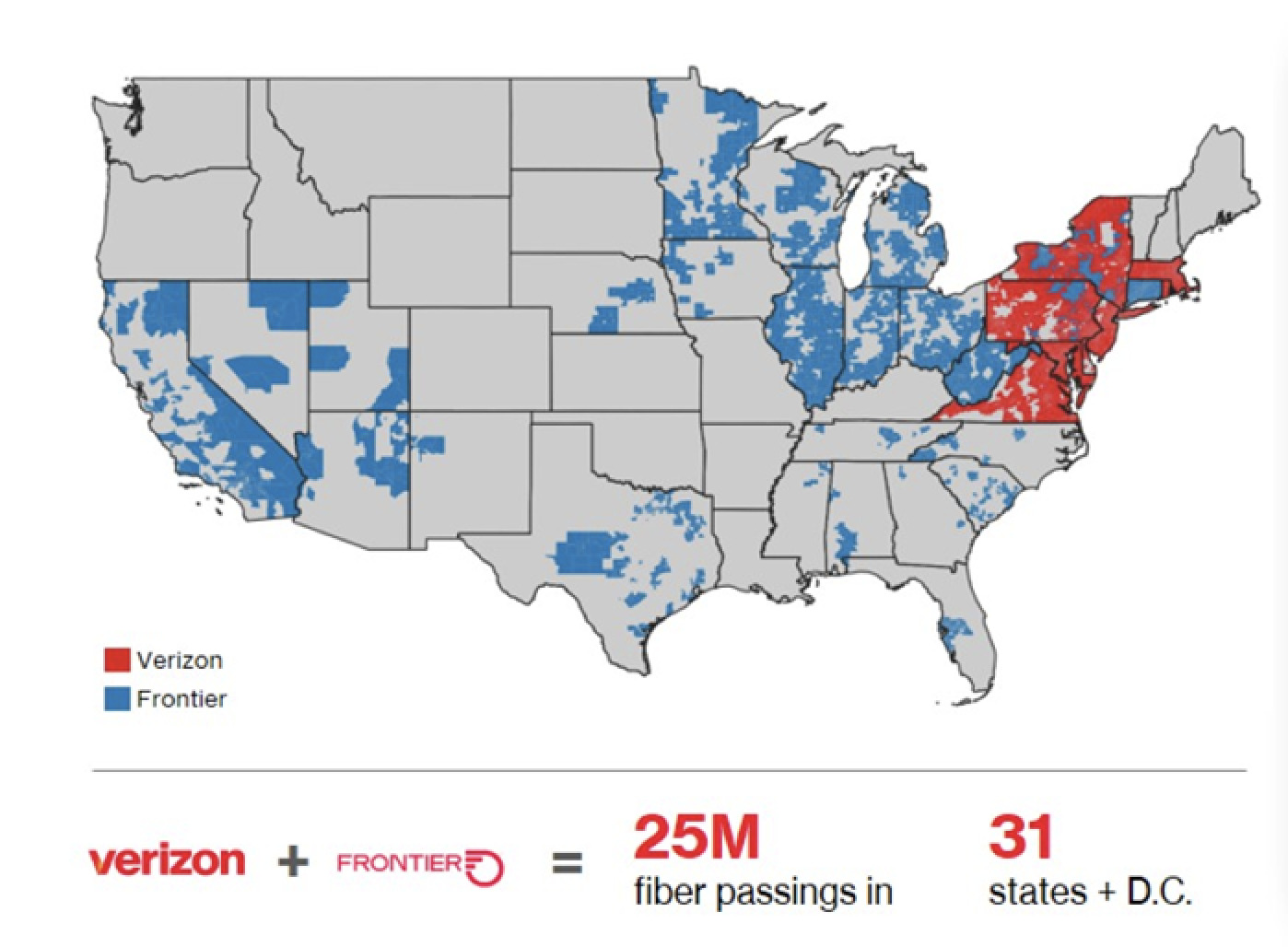
Verizon Fios, which debuted in 2005 in the suburbs of Dallas, Texas, was a revolutionary gamble. At a time when most Americans were tethered to copper telephone lines and clunky DSL, Verizon bet billions on a future where data would travel at the speed of light through strands of glass thinner than a human hair. The name itself, a portmanteau of “fiber” and “optic,” became synonymous with reliability. But here’s the dark secret: despite its market dominance in the Northeast and mid-Atlantic, Fios remains a patchwork quilt of coverage, a digital archipelago where some blocks enjoy gigabit speeds while a street over, residents are consigned to the digital dark ages of cable or satellite. This uneven distribution isn’t random; it’s a fascinating, often frustrating, tale of economic incentives, bureaucratic red tape, and the stubborn physics of laying physical infrastructure.
The Cartography of Connectivity: Why Your Street Matters More Than Your City
Understanding Fios availability is less about geography and more about micro-geography. Verizon doesn’t roll out fiber to a whole city like a blanket; it expands in targeted, profitable blobs. Think of it as the biological growth of a fungus—spreading from a central spore, following the richest nutrient trail. In this case, the nutrients are population density, average household income, and the ease of obtaining construction permits. A single cul-de-sac with six high-income households can be a higher priority than a sprawling suburban development of moderate-income renters. This is why two neighbors can have wildly different answers to the same question, separated only by a wooden fence that represents an invisible economic border.
Must Read
Psychologically, this creates a phenomenon known as “availability bias,” but inverted. When you hear that a friend across town has Fios, you assume it's ubiquitous. When you type your address into the availability checker and see the dreaded “Not Available,” it triggers a primal sense of scarcity. We are wired to desire what we cannot have, and in the digital age, that translates to a profound sense of FOMO (Fear of Missing Out) on speeds that could download a full-length movie in under two minutes. The cultural impact is tangible: dinner party conversations shift from dining recommendations to bitter debates about latency and ping times. It becomes a status symbol, a new form of digital class distinction where the “haves” stream 8K nature documentaries, and the “have-nots” argue about the nuances of 720p pixelation.
There’s also a darker, more sinister side to this cartography. In the early 2010s, Verizon faced accusations of “digital redlining,” where neighborhoods with predominantly minority or lower-income populations were systematically bypassed for fiber upgrades, even if they were geographically adjacent to wealthier areas. While Verizon has denied these claims, the legacy of that selective expansion is baked into the current map. The takeaway is that the availability map isn't just a technical document; it's a socioeconomic ledger, a physical manifestation of corporate prioritization. When you finally see that glowing green checkmark indicating “Fios Available,” you are not just seeing a utility; you are seeing the culmination of a business model that has deemed your location financially worthy of millions of dollars in infrastructure investment.
Scenarios, Case Studies, and the Art of the Workaround
Scenario 1: The Urbanite in a Brownstone. You live in Brooklyn, New York. The Fios map says your building is “Serviceable.” You order, and the installer arrives. He looks at your building’s internal wiring and sighs. In old buildings, the conduit (the pipe that carries the fiber) might be blocked by decades of debris, or the landlord has refused to sign the access agreement. Your street might have fiber, but your building is the weak link. The actionable insight here is to not give up at the front desk. Contact your landlord, offer to pay for a conduit clearing, or ask about Verizon’s “Fios Digital Voice” package, which sometimes forces building access due to legacy regulations. Persistence is key; the infrastructure is there, you just need to fight the final 100 feet of physical resistance.
Scenario 2: The Suburbanite in an HOA Community. You live in a planned community in New Jersey. The HOA (Homeowners Association) signed an exclusive contract with Comcast in 1998, effectively locking out any competing provider. However, in 2023, the FCC ruled that exclusive wiring agreements are illegal. You can actually threaten legal action. The practical step is to gather your neighbors, present this ruling to the HOA board, and demand they terminate the Comcast clause. If a critical mass of homeowners signs a petition, Verizon’s sales team will often expedite a line extension. They don’t like fighting for scraps, but a community of 500 homes is a lucrative prize they will chase. The lesson is that your availability is often a matter of policy, not physics.
Scenario 3: The Rural Acupuncturist. You live in a rural area of Maryland, 20 miles from a major highway. The Fios map shows a dead zone. You are the last house on a dirt road. Here, the brutal reality is that Verizon has no economic incentive to run a mile of cable for one customer. The actionable takeaway is to look for community broadband initiatives. Many local municipalities are now building their own fiber networks and leasing them to internet providers. Check if your county has a Fiber-to-the-Home grant program. Alternatively, consider 5G Home Internet as a viable stopgap; it’s not Fios, but modern 5G can offer comparable speeds for most daily tasks, albeit with higher latency and potential weather-related degradation. It’s a pragmatic compromise, not a love match.
Finally, let’s talk about the “non-answer.” The Verizon Fios availability checker is notoriously clunky. If it says “Fios Available,” but you live in a new development, the date for installation might be six months out. If it says “Not Available,” it doesn't always mean 'no'. It might mean “we haven’t updated our records for this street.” Your best weapon is the phone call. Get a human on the line. Ask for the “Advanced Network Services” department. Inquire about “pending build-outs” or “limited availability agreements.” The state of your fiber is a fluid conversation, not a fixed binary. You are negotiating for a resource, and sometimes, the first “no” is just a scripted response for a customer who doesn't push back.
The Fios FAQ: Dissecting the Fiber Anomaly
1. Why is Verizon Fios available on the street behind my house, but not on my street?
This is the ultimate frustration, and it’s a tale of two different installation projects. Verizon often upgrades neighborhoods via “node” expansions. A node serves a specific geographic area, usually a few blocks. If your street is on the very edge of that node’s radius, and the signal degrades beyond acceptable levels at that distance, they won’t extend it. Additionally, the original construction crews often follow a path of least resistance. If your street has a major sewer line or a concrete median that’s expensive to cut, they’ll just skip it. The fiber might run near you, but bringing it across the street might require a separate permit from the city for a “bore,” a drilling technique that is costly.

Secondly, the economics of the 2005 build dynasty are relevant. Verizon initially funded Fios to combat cable TV’s monopolies. They built where they could win market share quickly. If your street was heavily saturated with DirecTV customers, they might have prioritized a street with more cable TV subscribers who were “poachable.” The availability map is a fossil record of competitive strategy, not a representation of technical capability. It’s the specter of missed sales opportunities haunting your home’s digital future. The best you can do is register your interest, as Verizon does use this data for future expansion, but be prepared to wait years.
2. Does Verizon Fios offer better latency (ping) than cable, and why does it matter beyond gaming?
Yes, dramatically. Latency, measured in milliseconds, is the time it takes for a data packet to travel to a server and back. Fios typically offers pings of 5-15ms, while cable (DOCSIS) often sits at 20-30ms. While gamers obsess over this, the psychological and practical impact is more profound. High latency causes “jitter” and delays in real-time collaboration. In a Zoom meeting, with Fios, your hand gestures and voice are transmitted with near-zero delay, making you appear more present, engaged, and articulate. On cable, you might speak and hear that strange digital delay, which subconsciously erodes trust and makes you seem less intelligent in negotiations.
Beyond the office, latency affects cloud computing. When you use Google Docs or Microsoft 365, every keystroke is sent to a server. With low latency, it feels like a local application. With high latency, your typing feels “mushy,” and your brain becomes subconsciously frustrated. This micro-friction has been shown to decrease productivity by up to 5% in some studies. So, while the media focuses on download speeds for streaming, the real “killer app” of Fios is its symmetrical and low-latency connection, which makes your digital presence feel more human. It’s not just fast; it’s responsive, and that creates a sense of effortless control.
3. Is it true that Verizon Fios doesn't have data caps, and what’s the hidden catch?
Legally, yes, Verizon Fios does not impose data caps on its internet plans. This is a massive relief in an era where Comcast and other ISPs are implementing 1.2TB caps that can lead to overage fees. However, the “catch” is not in the data, but in the pricing structure. Verizon has been known to use “teaser” rates that expire after 12 months, and they have a program called “Mobile + Home” that requires bundling, which can lock you in. The real hidden catch is the equipment fee. You can use your own router, but if you don’t, you pay a monthly rental fee. Furthermore, Verizon has been slowly grandfathering out older, cheaper plans, pushing customers onto newer, slightly more expensive tiers.
The darker psychological aspect is that a lack of caps encourages heavier usage, which in turn makes it harder to cancel the service later. You build your entire smart home ecosystem around that fat, uncapped pipe. You have 20 smart cameras streaming 24/7, a Plex server hosting your ripped Blu-rays, and a cloud backup system that syncs 5TB of photos. Once you sink that deeper into the Fios ecosystem, switching to a capped service becomes terrifying. Verizon knows this. They are betting on your data dependency to ensure your auto-pay remains untouched. The absence of a cap is a golden cage, comfortable enough that you never question the golden bars.
4. What exactly is the difference between FiOS 300, 500, and 1 Gig plans for a typical household?
For most daily tasks, the difference is negligible. Streaming a 4K movie on Netflix uses about 25 Mbps. Gaming uses about 5 Mbps. Even with 20 active devices, you rarely exceed 200 Mbps of concurrent bandwidth. So why does Verizon offer 1 Gig? It’s about burst performance and future-proofing. With gigabit, you can download a massive game update (100GB) in under 15 minutes, whereas on 300 Mbps, it takes nearly 45 minutes. But the practical, invisible benefit is in uploading. If you work with video files, backup photos, or run a home server, the 1 Gig plan provides symmetrical 1 Gig upload speeds, making cloud computing feel like a local hard drive.
Culturally, these plan tiers are a classic Veblen good, a status symbol. People buy 1 Gig because they want the idea of ultimate speed, not the reality. It’s like buying a sports car for the city. The psychological satisfaction derived from seeing “1000 Mbps” on a speed test is a dopamine hit that validates your technical superiority. For most families, the 300 Mbps plan is perfectly adequate and saves you $50 a month. However, if you have multiple simultaneous 4K streams, heavy cloud gaming (where latency matters more than speed), and a houseful of teenagers, the 500 Mbps is the sweet spot. The 1 Gig is for the enthusiast and the person who hates the thought of any potential bottleneck.
5. Can I get Verizon Fios if my current provider is, say, Astound or Spectrum?
Yes, and this is where the magic of overbuilding comes in. In areas where Fios is available, you are legally entitled to choose your provider. However, the installation process can be a bureaucratic minefield. You’re not just paying for a new service; you’re paying for the disconnection and removal of the old one. In many municipalities, there is a “No Dig” permission process. The old provider’s cable is buried, and the new one (Fios) is also buried. The city requires a “marking” process to avoid cutting existing lines. The process can take two to four weeks, which feels like an eternity in the digital age.
The real issue is billing. Many cable companies use broad “contract buyout” tactics to keep you. They will offer you a retention discount that undercuts Fios. You have to be emotionally prepared to reject a good deal for a better one. The switch itself is often a mixed bag. You might have a period of 48 hours with no internet at all while the technicians coordinate. This forces a digital detox, a terrifying prospect for many. But the endgame is worth it. Once the ONT (the Fios box) is installed, you are free from the copper cage. The switch is a liberation act, severing a decades-old tether to a company you likely despise, and replacing it with a new, shinier master.
Ultimately, the search for Fios availability is a microcosm of modern life. It’s a quest for control in a chaotic environment, a fight against invisible walls built by corporate ledgers. We obsess over the physical infrastructure because it feels like the last tangible thing we can control in a world made of ephemeral clouds and digital streams. The cable in the ground is a metaphor for our desire to be connected, to be relevant, and to be fast enough to keep up with the relentless pace of the online world. The fact that a query about a fiber optic cable can trigger such deep-seated anxiety about class, access, and digital equity speaks volumes about how deeply the internet has intertwined with our identity.
We are creatures of habit, and the habit of fast internet is hard to break. When we have it, we forget the struggle. When we don't, it dominates our thoughts like a chronic toothache. This is human nature—we assign deep emotional significance to the tools that enable our expression. The internet is our modern agora, our library, our theater, and our office. To be denied access to the best version of that space feels like a personal rejection. So, when you punch your address into that checker, you are not just looking for a service. You are looking for validation that you matter enough to be included in the digital elite.
So, keep checking. Keep fighting. If Fios isn’t available near you today, it might be next year. The fiber is expanding, slowly, but steadily, like a slow-motion glacier carving a path through the granite of legacy infrastructure. But even if you never get it, the search itself is a lesson—a reminder that our world is not just made of atoms, but of choices made by unseen engineers. Your availability is a reflection of their priorities, and your desire to upgrade is a reflection of your ambition. Whether you are streaming in glorious 4K or fighting pixelation, the question remains, and the connection—or lack thereof—defines a part of who we are in the digital age.