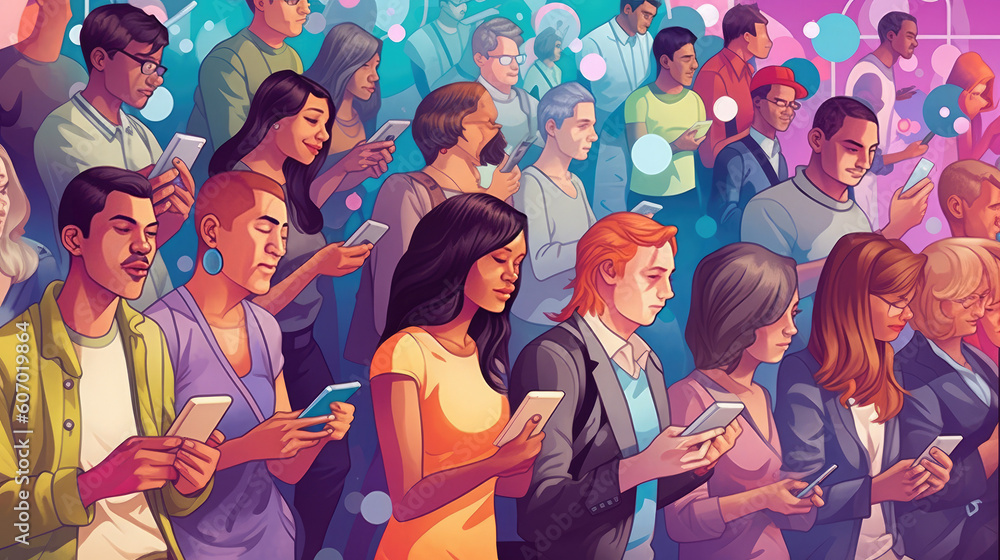
Influence Of The Media On Society
Before the glow of screens ever seeped into our living rooms, there was the crackle of the wireless. In the early 1920s, the radio was not a background hum but a hearth of the mind, a magical box that pulled the world’s voice through the static of the evening air. Families would gather, not to watch, but to listen — to the scrape of a chair in a London studio, to the roar of a distant crowd at a championship fight. This was the humble beginning, a visceral need to bridge the crushing isolation of the modern world. Our ancestors craved a shared rhythm, a collective heartbeat that could synchronize a nation’s hopes and fears within the same hour. The media, in its infancy, was less about information and more about presence; it was a strange, invisible priest performing a daily ritual of communal connection, telling us who we were by telling us what mattered. The initial necessity was not for data, but for the comforting illusion that no one, no matter how alone on a prairie farm, had to face the dusk without a human voice to guide them. As the radio waves settled into our bones, a new, more dazzling ghost emerged from the laboratories of the 1930s. Television, with its grainy, flickering monochrome, promised to show us the face behind the voice. But we were naïve, and our innocence was our vulnerability. The novelty of the moving image was so hypnotic that we mistook the photograph for the truth. We accepted the evening newscaster’s somber tone as the final word on the day’s affairs, never questioning who chose the stories or why the camera lingered on a particular tragedy. The media transitioned from a companion to an architect, silently designing the very scaffold of our social reality. The photograph of a starving child, the grainy footage of a war’s front line — these images bypassed our rational defenses and planted seeds of belief that would bloom into ideologies. We were fascinated, not by the manipulation, but by the sheer miracle of seeing beyond our own horizons, a hunger for the spectacle that would define our relationship with the screen for a century. But let us not romanticize the past too much; the golden age of media was also its gilded cage. In the 1950s and 1960s, the industry settled into a strange, self-congratulatory rhythm of consensus. Three television networks controlled the national narrative, and they did so with a paternalistic, almost smug, authority. To be on television was to be validated; to be ignored by it was to cease to exist. This was the era of the "mass audience," a vast, undifferentiated sea of viewers who were expected to sit quietly and absorb the same sitcoms, the same advertisements, and the same sanitized version of politics. The bizarre truth is that we enjoyed this stricture. We took comfort in the predictable schedule, in the shared watercooler moments of Monday morning. The media acted as a strict librarian of culture, deciding which books were worthy, which songs could be sung, and which voices were too radical for the living room. It was a dictatorship of taste, but it was a polite dictatorship, one that promised stability in a world still trembling from the Cold War’s shadow.
The Ghost in the Machine: From Passive Viewers to Active Broadcasters
Then came the great fracture, the slow, agonizing dismantling of the single pulpit. The 1980s brought the remote control, a device that turned the viewer from a docile subject into a restless channel-surfing monarch. Our attention span, once an endurance marathon, began to shrink into a series of skittish sprints. Cable television shattered the kingdom of the big three, offering a thousand niche voices for every mood, hobby, and political inclination. It was the beginning of the end for a shared reality. We stopped watching the same thing, and slowly, we stopped knowing the same things. The forgotten vintage fact is that this was intensely debated in the press of the time; critics mourned the loss of the "watercooler," while futurists cheered the dawn of choice. But the true game-changer, the one that rewired our very cognition, was the arrival of the internet in the 1990s. No longer satisfied with being the audience, we were handed the microphone. The blog, the forum, and the chat room allowed ordinary people to shout back at the screen, to fact-check the newscaster in real-time, and to form digital tribes that transcended geography. The media stopped being a lecture and became a chaotic, thrilling, and often vicious conversation. The 2000s and 2010s accelerated this evolution into a feedback loop of unprecedented speed. Social media algorithms, initially designed to connect college friends, were inadvertently given the keys to the global psyche. They learned that outrage generated more clicks than joy, that fear held attention longer than peace. The bizarre evolution here was the rise of the "influencer," a creature that blurred the line between celebrity, journalist, and friend. We began to trust a teenager with a ring light more than a veteran correspondent with a Pulitzer Prize. The metrics of truth shifted from verification to viral potential; a post’s validity was measured by its likes, not its evidence. Looking back, we see a decade of profound cognitive dissonance, where we simultaneously celebrated the democratization of information while drowning in a flood of misinformation. The old media priest had been overthrown, but in his place stood a thousand chaotic prophets, each one yelling a different version of reality into the void.Hacking the Classic Playbook: Modern Alchemy
Today, we find ourselves in a strange, translucent hall of mirrors where the old rules are being hacked with surgical precision. The classic principle of the 1950s — "the medium is the message" — has been subverted by the algorithm. The medium is no longer a channel, but a curator that studies your every micro-expression and mouse movement. Modern media no longer broadcasts to the masses; it targets the individual with bespoke realities. The hack is in the micro-narrative: a politician no longer needs a full speech; they need a six-second clip that can be memed. An activist does not need a newspaper column; they need a TikTok dance that subtly encodes a political statement. We are seeing a return to tribal storytelling, but the campfire is now a smartphone, and the stories are optimized for maximum emotional download. The modernizer's trick is to exploit the nostalgia of authenticity — we crave the old, slow, honest media, so brands and creators manufacture that warmth with grainy filters and unpolished, "behind-the-scenes" content that is, ironically, meticulously staged for maximum authenticity. Furthermore, the modern hack is the weaponization of passivity. We no longer seek out news; it seeks us, sliding into our notifications with the urgency of a plague doctor. The classic principle of editorial gatekeeping has been replaced by the "engagement graph," which prioritizes the uncomfortable over the important. To survive this, we see a rising trend of "media detox" and "slow journalism," a desperate counter-movement that tries to reinstate the deliberate pace of the 1930s radio broadcast. But the most insidious hack is the "synthetic consensus," where AI-generated voices and deepfakes mimic the authority of the old anchors, making it possible to manufacture a historical record that never happened. We are no longer questioning whether the media is biased; we are questioning whether it is real at all. This is the ghost in the machine, and its shadow is growing longer.Three Modern Mysteries: Bridging Yesterday’s Myths with Tomorrow’s Facts
1. Does the Media Mirror Society, or Does Society Mirror the Media?
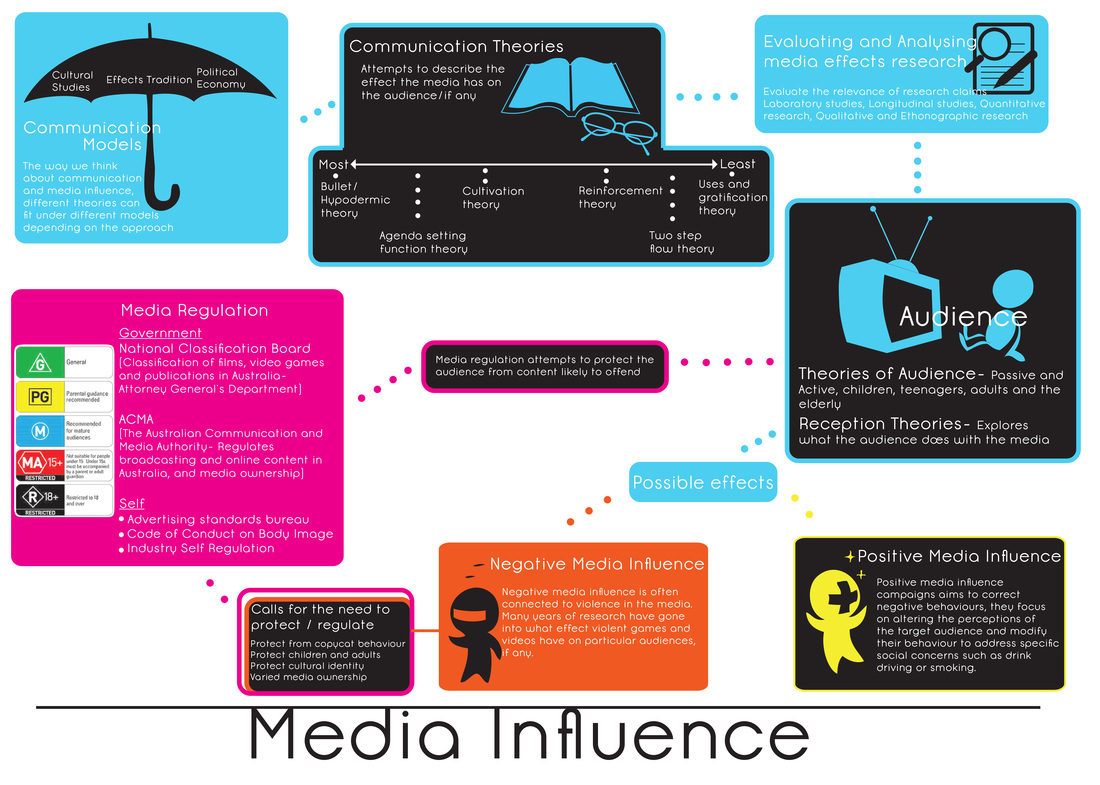
This is the oldest question in the trade. In the 1960s, the myth of the "magic bullet" theory suggested that media messages were injected directly into a passive audience, who would then act upon them like automata. This was the fear that gripped parents when Elvis Presley gyrated on the Ed Sullivan Show; they believed the TV would corrupt their children’s morals directly. The painful truth is that this theory was never fully accurate. In reality, the relationship is a feedback loop of "uses and gratifications." We bring our own biases, fears, and desires to the screen, and we select the media that reinforces them. A conservative viewer in 1994 and a liberal viewer in 1994 could watch the same presidential address and leave with entirely different takeaways, each believing the media had sided with the other.
In the modern era, this loop has tightened to the point of a vortex. The algorithm does not create our beliefs; it merely reflects them back to us with unnerving accuracy, locking us into an echo chamber. The media today does not mirror society; it mirrors your personalized version of society. The historical myth of the omnipotent media has been replaced by the modern fact of the confirmation-bias machine. We are no longer passive receivers, but active co-creators of our own media reality. Ask yourself: are you seeing the world, or are you seeing a reflection of your own search history, polished and presented by a server that knows your fears better than your spouse does? The mirror has become a funhouse, and we are all holding the handle.
2. Are We More Connected or More Alone Than in the Radio Age?
This is a heart-breaking juxtaposition. In 1933, Franklin D. Roosevelt’s "Fireside Chats" drew millions of Americans to their radios, creating a profound sense of collective solidarity during the Great Depression. People felt a bond with the President and with their neighbors who were listening simultaneously. It was a shared, singular experience. The physical house was silent, but the psychological nation was loud and unified. The myth is that media has always been a social glue. Fast forward to today, and we have a paradox. We have access to billions of people, but loneliness is at epidemic levels. A study from the 2021 had young adults reporting higher levels of social isolation than their grandparents, despite having ten times the number of "friends" online.
The modern fact is that our connection is asynchronous and performative. We are not sharing a moment; we are curating an image of a moment for an imagined audience. The radio forced you to listen to the same sound in the same time. Social media allows you to scroll through disparate realities at your own pace, interrupting conversations with memes and reacting to a friend’s tragedy with a "like" button. The connection is thinner, but wider. The nostalgic pull we feel for the 1930s is not for the technology, but for the simultaneity of the human experience, a feeling that is shattered by the endless scroll. We are connected by wires but disconnected by the noise, whereas our ancestors were connected by the very silence that surrounded the shared voice.
3. Can Algorithms Be Trusted to Determine What Is True?
In the old newsroom of the 1970s, the "gatekeeper" was a human editor with a gut feeling and a code of ethics. They were flawed, biased, and often prejudiced, but they were accountable. If they published a false story, their reputation was damaged, and they could be fired. The myth was that human judgment, while imperfect, was at least capable of shame. Today, the gatekeeper is a proprietary algorithm, a mathematical formula optimized for advertising revenue, not for truth. The algorithm does not care about your soul; it cares about your time on site. It will happily show you a conspiracy theory if it keeps you scrolling past ads. This is the fundamental hack: we replaced human fallibility with machine indifference.
Must Read
The modern fact is that "truth" has become a metric of engagement, not a matter of verification. An emotionally charged, false headline will outrank a boring, true one. We have outsourced our critical thinking to a black box that we don't understand and cannot audit. Historically, we trusted the media because we could identify the people behind it. Now, we are asked to trust a system that is designed to exploit our psychological vulnerabilities. The fallibility of the old editor was a feature, not a bug — because it meant there was a human conscience in the loop. The algorithm has no conscience, only a profit motive. As we barrel forward, the critical question is not whether AI can generate content, but whether we can build a system that values truth over stickiness, without reverting to the stifling paternalism of the past.
The Next Twenty Years: The Sentient Storyteller
Looking ahead to 2045, we must confront a future where the media is no longer a tool we use, but an environment we inhabit. The next two decades will not be about screens, but about immersive computation. We will put on lightweight glasses that overlay a digital narrative onto the physical world, turning a walk through a city into a personalized documentary. The story will not be separate from the reality; it will be the reality we see. This presents a terrifying pathway where every street corner can be augmented with propaganda or poetry, depending on the agency that controls the feed. The boundary between the objective world and the curated narrative will dissolve, making the concept of "truth" even more slippery. Humanity’s greatest battle in the next generation will not be over resources or territory, but over the control of the lens through which the world is perceived. Yet, this same future carries a profound, nostalgic hope. We are already witnessing a renaissance of "slow" media, a yearning for the tactile, the real, and the unmediated. As the digital realm becomes more sophisticated, the physical world will become more precious. We will see a generation that rejects the constant feed, seeking out "dead zones" and analog retreats, not out of Luddite fear, but out of a spiritual necessity. The media of the future may finally learn to be quiet. It might create spaces for silence, for deep reading, and for asynchronous reflection, just as the internet’s First Wave promised before the ads came. The next 20 years will determine whether we become passive inhabitants of a fabricated story, or whether we can reclaim our agency, using the incredible power of AI to tell our own stories, reviving the ancient human need for a shared hearth — only this time, the hearth will be a decentralized garden of voices, rather than a single, glowing box in the corner of the room. The choice, as always, belongs to the listener.


![Exploring The Vast Impact Of Social Media [2024 Exquisite Analysis]](https://www.knowskit.com/wp-content/uploads/2024/01/global-connectivity-through-social-media.png)