
How To Refill Ink In Brother Printer
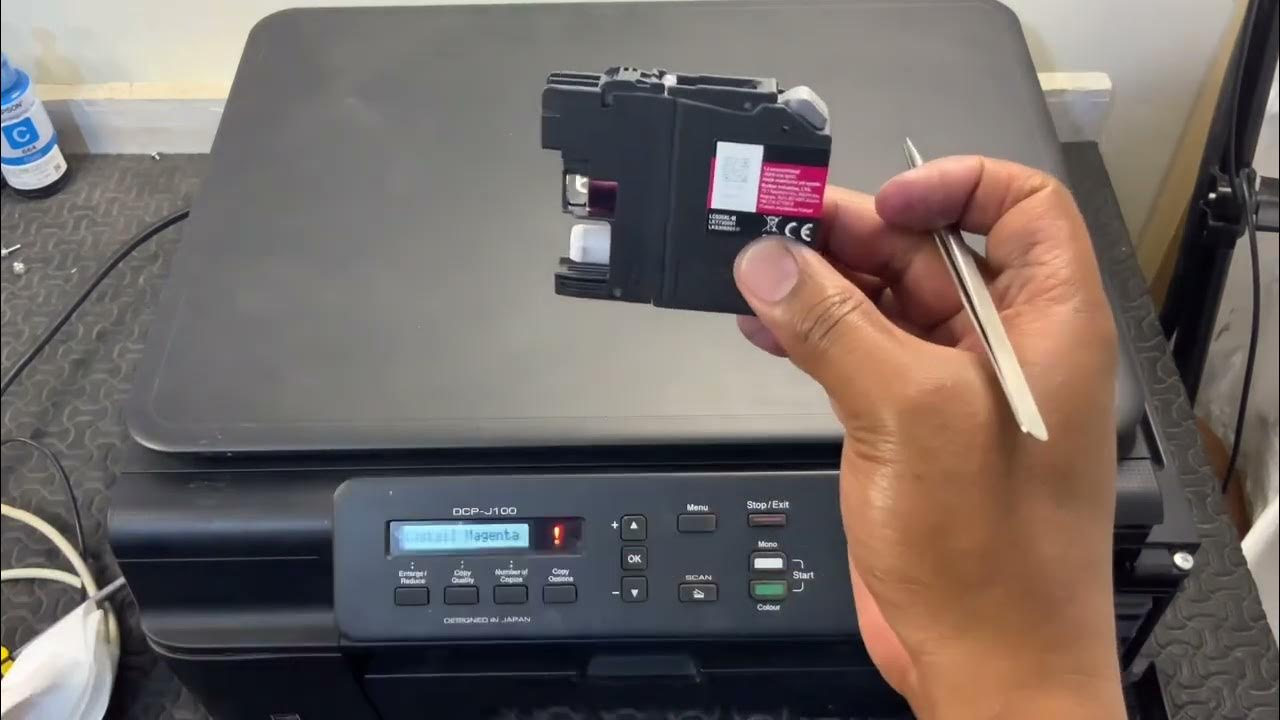
There is a particular kind of modern anxiety that comes from the blinking amber light on a Brother printer, the one that signals a cartridge has reached its cognitive end. It is a moment of reckoning, a digital ultimatum that forces you to confront the economics of convenience. For decades, we have been conditioned to treat the printer cartridge as a sacred, sealed black box—a piece of consumer hardware with a preordained lifespan and a price tag that feels like a ransom note. Yet, the ritual of refilling, a practice as old as the fountain pen itself, is experiencing a quiet renaissance. It is no longer just a frugal act; it is a statement against planned obsolescence, a small rebellion waged in the quiet sanctum of your home office, reclaiming agency from a system designed to make you consume rather than maintain.
The history of ink is, surprisingly, a history of power. From the iron gall ink used to draft the Magna Carta to the oil-based concoctions that fueled the Gutenberg press, the ability to mark paper was a form of political and intellectual leverage. Fast forward to the 1980s, and Brother, alongside other tech giants, democratized textual creation but simultaneously weaponized the consumable. The modern inkjet cartridge is a marvel of micro-engineering, holding a piezoelectric printhead that vibrates at ultrasonic frequencies to eject microscopic droplets. Refilling it, therefore, feels like defusing a bomb—which is precisely why most people don't. But beneath the plastic casing and the ominous "Low Ink" warning that often lies (it’s actually measuring page counts, not fluid levels), lies a simple truth: you can, in fact, play alchemist, and the gold you create is merely the money you don’t give to the corporation.
The Psychology of the Empty Cartridge
Let’s talk about the existential dread of the "end of life" message. Printer manufacturers have perfected the art of the "digital nudge," a behavioral economics tactic designed to push you toward a purchase. Studies have shown that the "low ink" warning is often a statistical guess rather than a physical measurement. In many Brother models, the printer estimates ink usage based on the number of cleanings and pages printed, not an actual sensor reading the fluid level. This means you might be discarding a cartridge that still holds up to 20% of its liquid gold. The psychological impact is profound; we are taught to trust the machine over our own eyes, even when the output is still crisp and dark. Refilling is an act of defiance against this manufactured ignorance.
Must Read
Culturally, we have entered the era of the "repair revolution." With the rise of Right to Repair legislation and platforms like iFixit, the consumer is waking up to the fact that many "disposable" items are actually serviceable. The Brother printer, ironically, is one of the most hacker-friendly devices on the market. Unlike some competitors that use microchips to lock out third-party inks, Brother’s chips are notoriously easy to reset using a simple tool or a strip of adhesive tape. This has turned the practice of refilling into a subculture. On forums like Reddit’s r/printers, users share "war stories" of clogged nozzles and triumphant flushes, treating the refill process with the same reverence as a sommelier decanting a vintage Bordeaux. The cartridge is no longer trash; it is a vessel for resurrection.
Furthermore, the environmental angle cannot be ignored. The carbon footprint of a single ink cartridge is roughly 4.8 kilograms of CO2 before it even prints a single page. Millions of empty cartridges end up in landfills each year, taking over 450 years to decompose—longer than the Roman Empire lasted. When you refill, you are not just saving money; you are performing a micro-act of ecological stewardship. The dark fun fact here is that the ink itself is often more valuable, ounce for ounce, than human blood. At over $5,000 per gallon for branded ink, you are handling liquid that could rival rare perfumes. This knowledge transforms a mundane chore into a high-stakes operation, where a single spill is a financial and aesthetic tragedy.
The Anatomy of a Successful Refill
Before you channel your inner chemist, you must accept a fundamental truth: not all refills are created equal. The process has a learning curve, and your first attempt might resemble a scene from a slasher film—specifically, the part where the victim is covered in a viscous, dark substance. However, with the right preparation, you can achieve a level of cleanliness that would make a surgeon proud. The first step is identifying your cartridge model, usually an LC series (like LC103, LC203, or LC401). The second step is sourcing a quality ink kit. Do not, under any circumstances, buy the $5 bottom-shelf kit from a random online marketplace; you are essentially injecting cheap wine into a vintage decanter. Look for kits with high-viscosity ink specifically formulated for Brother’s thermal printhead technology.

Let’s walk through a scenario. You have a Brother MFC-J485DW, and the black ink is fading. You acquire a refill kit containing a syringe, a needle, and a bottle of black ink. The key is to locate the fill hole. On many Brother cartridges, this is hidden beneath a small plastic ball or a sticker on the top of the unit, clearly marked. You pierce the hole, insert the needle, and slowly inject the ink. The cardinal rule: do not overfill. Ink needs air space to expand and move. Overfilling causes leaks that can wreck the internal foam and ruin your paper tray. You should stop injecting when you see the foam start to saturate but before you see a puddle forming on the surface. This is a Zen-like balance of patience and pressure.
After filling, you must execute the "reset ritual." Brother cartridges often use a chip to store ink level data. If you don't reset this, your printer will still scream "Empty" even though the tank is full, creating a cognitive dissonance that can be maddening. Some cartridges come with a resetter tool that you press against the chip pads. Alternatively, you can cover the contact pins with clear tape, tricking the printer into reading a "new" cartridge. This is the dark magic of the process—a simple electrical hack that bypasses the manufacturer’s surveillance. Once the chip is reset, you run the printer’s "clean cycle" function. This flushes the nozzles and pulls the fresh ink through. The first test print may be streaky; do not panic. This is normal. Run the nozzle check twice, and if it persists, you may need to manually clean the printhead with a lint-free cloth and a drop of isopropyl alcohol.
For those who are particularly ambitious, consider the Continuous Ink Supply System (CISS). This is the Formula 1 racing of the printing world. Instead of refilling a cartridge, you install external tanks that feed ink through tubes directly into the printhead. This reduces the cost per page to fractions of a cent and eliminates the refill frequency entirely. It’s a bigger upfront investment, but for a small business or a paper-hungry household, it is the ultimate power move. However, remember that with great power comes great responsibility. A CISS system requires daily usage to prevent clogging. If you leave it dormant for two weeks, you may return to a hardened wax-like substance in the tubes, requiring a full teardown. The choice, then, is between the convenience of the syringe (fast, dirty, quick) and the wisdom of the tank (bulky, efficient, permanent).
Frequently Asked Questions (The Modern Alchemist’s Guide)
1. Is it safe to refill a Brother ink cartridge, or will it damage the printer?
This is the primary fear, and it is largely unfounded—provided you exercise basic intelligence. The printer itself does not know how the ink got into the cartridge; it only reads the electrical resistance of the chip and the fluid pressure. The danger lies not in the act of refilling, but in using poor-quality ink. Low-grade ink can have a different viscosity or pH level, which can cause the microscopic nozzles in the printhead to clog or corrode. Brother printheads are generally robust, but they are not indestructible. If you use a reputable brand of refill ink (like InkOwl, LD Products, or a high-end generic), the risk is comparable to using OEM cartridges. The most common issue is minor clogging, which is usually resolved by running the cleaning cycle. You are far more likely to damage the printer by trying to remove the printhead or by poking the nozzles with sharp objects than by simply injecting liquid into the reservoir.

Moreover, the "safety" argument is often a marketing ploy. Manufacturers claim they will void your warranty, but in many jurisdictions, this is illegal under the Magnuson-Moss Warranty Act (in the US), which states that they cannot force you to use only their brand of supplies. The physical act of refilling is safe if you ground yourself to avoid static discharge and keep the area clean. The only truly dangerous part is spilling ink—it is permanent. So, while the printer won't explode, your carpet might. Treat the operation with the solemnity of a nuclear fuel rod transfer, and you will be fine.
2. How many times can I refill a single Brother cartridge?
The lifespan of a cartridge is determined by two things: the integrity of the internal sponge and the condition of the printhead. For Brother cartridges, the sponge is the weak point. Some third-party manufacturers have designed cartridges with high-density foam that can survive up to 8 to 10 refills. However, the stock Brother cartridge sponge is designed to break down after about 3 to 5 refills. After that, the foam begins to disintegrate, releasing particles into the ink that can clog the nozzles. You will notice this failure as horizontal white lines on your prints that persist even after multiple cleaning cycles.
Another factor is the chip. While you can reset the chip, the physical contact pads wear down with each puncture and reset. If the pads lose their metallic luster, you might get a "Cartridge Not Detected" error, rendering the cartridge dead regardless of fluid volume. My recommendation is to keep a "refill log." Mark a tally on the side of the cartridge each time you fill it. Once you hit the fifth refill, start preparing for retirement. And when you do dispose of it, do not throw it in the trash—recycle it at a local electronics store. The cartridge is a resilient warrior, but even warriors need to be put out to pasture eventually.
3. Why does my Brother printer still say "Low Ink" after I have refilled it and reset the chip?
This is the digital equivalent of a ghost story. You’ve filled the tank, you’ve taped the chip, and yet the red light still blinks like a malevolent eye. The culprit is usually a communication delay. In newer Brother models, the printer uses a "visual memory" system that tracks the ink levels even if you reset the chip. It does this by counting the number of droplets ejected since the last official cartridge install. To clear this, you must perform a "hard reset." Unplug the printer from the power outlet, wait 60 seconds, then plug it back in. This clears the volatile memory. The printer will re-initialize and, in many cases, re-read the chip as a new cartridge.

If that fails, you might have taped the wrong contacts. When you apply tape to the chip, you are trying to cover the "kill" pins that signal the printer to display a low level. However, if you cover the ground pin, the printer won't detect the cartridge at all. You may need to experiment with which pins to cover. A good rule of thumb is to cover the contact pads that are closest to the side of the cartridge that faces the inside of the printer. Alternatively, you might need to adjust your resetter tool. Some tools are model-specific, and using a generic one might not fully clear the data. In this case, the printer thinks you have a full tank of third-party ink but a broken chip, so it defaults to "empty." Patience is key—wait 30 minutes after a hard reset before trying again.
4. Can I mix brand-name Brother ink with third-party refill ink in the same cartridge?
Technically, you can, but it is the equivalent of mixing a fine Bordeaux with a cheap boxed wine—the results will be drinkable, but the bouquet is ruined. The chemical formulations of OEM ink and aftermarket ink are often quite different. Brother’s ink is oil-based and uses a specific dye or pigment dispersion recipe. Third-party inks are usually water-based. These two fluids do not mix well. When you inject the new ink into the sponge that still contains residual OEM ink, you are creating a chemical cocktail that can lead to coagulation—literally, the formation of dark, gooey sludge.
The consequence is a high likelihood of immediate printhead clogging. The mixture can change the surface tension of the ink, affecting how the droplets form and eject. You might experience color banding or a "shrunken text" effect where the letters look blurry. The best practice is to wait until the cartridge is completely empty—not just "Low Ink"—but truly producing blank pages. You can also do a "sponge purge" by injecting a small amount of distilled water into the cartridge and letting it sit for an hour to dissolve the old residue, then washing it out before adding the new ink. It is a laborious process, but if you must switch brands, do it from a truly empty cartridge.
5. Is it cheaper to refill or to buy a new generic cartridge?
A quick cost-benefit analysis reveals a fascinating paradox. A single name-brand Brother cartridge might cost $25. A refill kit with enough ink for four refills costs about $15. That brings the price down to $3.75 per fill—a massive saving. However, a generic, brand-new cartridge from a discount seller often costs around $10. So, the question becomes: is your labor worth $6.25 per cartridge? For a home user who prints sporadically, the answer is likely no. Buying a generic cartridge is easier, cleaner, and comes with a warranty. For a high-volume office that burns through a cartridge every two weeks, the math changes. Refilling becomes a strategic emergency plan, not a primary source.

But the calculation is not just monetary. There is an environmental cost. Generic cartridges are often made of recycled plastic, but they still require shipping and manufacturing energy. Refilling uses zero new packaging and redistributes existing material. Also, there is a hidden cost: time. The first time you refill, you will spend 45 minutes fumbling with syringes. The fifth time, you’ll do it in 10 minutes. So, the decision is a reflection of your values. If you value convenience and predictability, buy generic. If you value sustainability and the quiet satisfaction of a job well done, refill. The actual financial delta is negligible in the long run; the emotional return is what matters.
In the grand tapestry of daily life, the humble printer ink cartridge is a symbol of our relationship with technology. It sits at the intersection of necessity and nuisance, a reminder that the digital world still requires physical interactions. Refilling is more than just a chore; it is a meditation on patience and resourcefulness. When you successfully refill a cartridge and hear that satisfying click as it seats back into the tray, you have overcome a small, manufactured obstacle. You have defeated the algorithms designed to make you spend. It connects you to a lineage of tinkerers and fixers, from the watchmakers of Switzerland to the backyard mechanics of the American Midwest—people who believe that things should work until they are physically worn out, not until a timer tells them to stop.
This practice also taps into a primal human instinct: the desire to beat the system. There is a delicious irony in watching the printer report 100% ink after you’ve just injected $4 worth of liquid from a bottle that looks like it belongs in a craft store. It is a tiny victory against the corporate giants, a hack that you can hold in your hands. It reminds us that complexity is often a facade, and that with a little bit of knowledge, the arcane becomes mundane. The next time a warning light blinks, you have a choice: surrender to the consumption cycle, or grab a syringe and stare into the abyss of the inkwell, and wink.
Ultimately, refilling your Brother printer is a lesson in maintenance—not just of the machine, but of your own life. It teaches you to look beyond the immediate error message and see the underlying potential. The cartridge is not empty; it is simply waiting. The paper jam is not a catastrophe; it is a puzzle. In a world of disposable coffee cups and fast fashion, the act of refilling is an act of resistance. It forces you to slow down, to pay attention, to get a little ink on your fingers. And in that mess, you find a connection to the physical world that the screen can never provide. It is a small, messy, and deeply satisfying ritual that keeps the ghosts of industry alive, one droplet at a time.


