
How To Make Waterline Eyeliner Stay
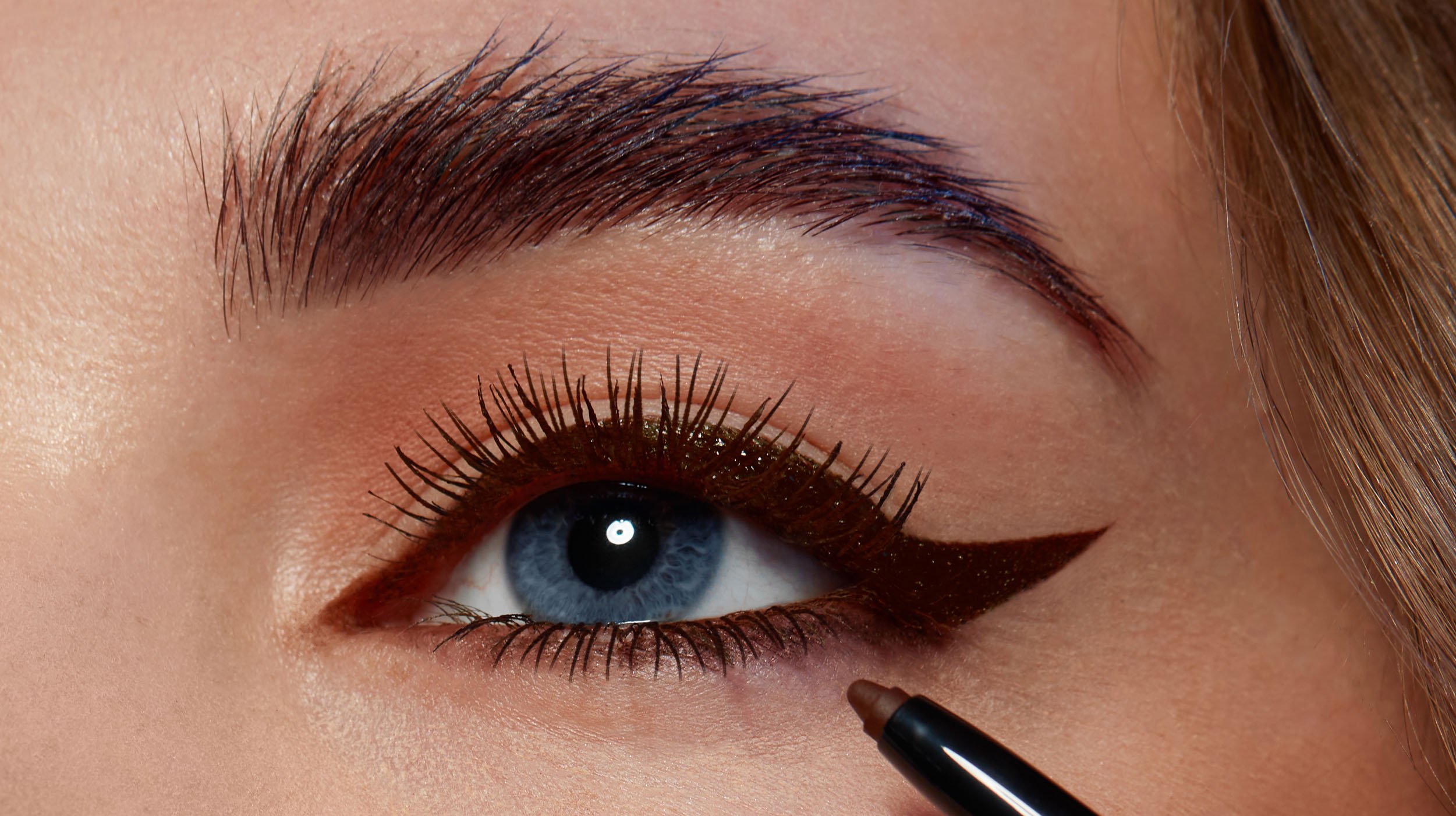
Let’s be real: the waterline is the final boss of makeup. It’s the treacherous strip of real estate where your #CleanGirl aesthetic goes to die, the place where the most expensive, TikTok-viral eyeliners transform into a smudged, raccoon-esque disaster before you’ve even finished your first oat milk latte. We’ve all been there—that moment of horror when you catch your reflection in a car window at 2 PM and realize you look less like a sultry siren and more like a jet-lagged panda who lost a fight with a printer cartridge. This isn’t just a cosmetic inconvenience; it’s a cultural crisis. The beauty internet has been collectively screaming about it for years, cycling through dubious hacks involving hairspray, eyeshadow “baking,” and outright sorcery.
But why is this suddenly the conversation again? Because the algorithmic gods have decided that "under-eye eyeliner" is the new "clean girl aesthetic" villain. We’ve swung from full-on Euphoria glitter bombs to a hyper-minimal, barely-there “my eyes but better” look, which ironically makes the waterline more critical than ever. If you fail, you aren’t just ruining your makeup; you’re failing at the entire quiet-luxury vibe. It’s no longer about having a bold wing—it’s about having an invisible shield of pigment that survives a crying session at a Finneas concert. The stakes have never been higher, and the blind panic in the comment sections of beauty gurus is palpable. We are collectively begging for a scientific miracle in a 0.5mm trench.
So, before you rage-quit and resort to wearing sunglasses indoors for the rest of your life, take a breath. This isn’t about buying a $200 luxury pencil that promises the moon and delivers a smudge. This is about understanding the enemy (your own oily tear ducts), mastering the tactical prep, and embracing the weirdly specific rituals that the internet has unearthed. Buckle up, because we’re diving into the gritty, greasy, and occasionally genius world of waterline longevity—where science, desperation, and a dash of old-school theater makeup collide.
Must Read
The Strange, Toxic Subculture of Eye Gunk
Let’s talk about the bizarre ecosystem that has formed around this struggle. There is a specific, highly niche corner of TikTok—often dubbed #WaterlineTok—where users perform what can only be described as ritualistic sacrifices to the makeup gods. You have the “tightlining purists” who despise using anything but a gel pot and a brush thinner than a human hair, citing that any other method is “for amateurs.” They argue with the “pencil maximalists” who believe that layering a kajal stick so thick it looks like you’ve dipped your lashes in tar is the only way to ensure survival. It’s a toxic, gate-keeping war where the only common ground is the shared trauma of looking in the mirror after a long day and seeing your liner has migrated to your cheekbones.
Then there’s the sociological shift. In the era of Zoom calls and infinite video meetings, your eyes are your primary communicator. We’ve become hyper-aware of our own ocular micro-expressions. The waterline isn't just makeup; it's a psychological safety net. If we don't have that definition, we feel invisible, tired, or—heaven forbid—basic. This pressure has spawned a cottage industry of “fixers”: setting sprays used as eye drops (please don’t), special “waterline primers” that are just repackaged vaseline, and even vibrating applicators that claim to “melt” the pigment into your skin. It’s a fascinating, often delusional, subculture of people who are convinced that with the right quantum physics, they can defeat the biological reality of mucous membranes. The desperation is real, the products are often nonsense, and the discourse is gloriously unhinged.

Operation: Fortify the Trench—A Pragmatic Survival Guide
Alright, enough doom-scrolling. Time for the battlefield manual. The first and most crucial step is to divorce yourself from the idea that you’ll find a “one-and-done” pencil. It doesn’t exist. The waterline is a wet, slippery, constantly moving surface. To win, you must employ a multi-layered defense strategy. This starts with your finger. Yes, that greasy index finger that just touched your fries is your enemy. Before you even think about pigment, grab a blotting paper or a clean tissue, gently pull down your lower lid, and vigorously blot that inner rim. You are trying to create a desert. A bone-dry canvas is the only canvas that will accept paint. If your eyes water excessively (a condition known as epiphora, which is just a fancy word for "my eyes won't stop leaking"), consider an over-the-counter antihistamine eye drop before makeup, not after. Give it ten minutes to absorb.
Next, exfoliate—but gently. You don't need a physical scrub there, but I swear by this hack: take a clean, dry spoolie and lightly brush along the lash line to remove any dead skin cells or crusty residue from last night's skincare. This gives the liner something to grip onto, like velcro for your pigment. Now, for the product selection. Ignore anything labeled "kohl." Kohl is a pigment-heavy, wax-light formula designed for smoky, smudgy looks—it will run the moment you smile. You want a “gel” or “long-wear” pencil that specifically lists “waterproof” on the label. But here’s the twist: test the product on your hand first. Swipe it, let it dry for 30 seconds, and then run it under the tap. If it bleeds, throw it in the bin. The best military-grade options often come from Asian beauty brands (like Clio or Heroine Make), because they formulate for humidity and emotional stress as a default.
Here is where we get tactical. Do not—I repeat, DO NOT—apply the liner directly to a bare lid. Instead, prime the area with a thin layer of matte, translucent powder. Take a precise brush, dip it into a skin-toned matte eyeshadow, and press it onto the waterline. This absorbs the moisture that your eye produces. Then, apply your liner. Now, the most effective technique for longevity is tightlining. Instead of trying to color the entire waterline pink strip, focus on the base of your lashes, drawing tiny dots between them. By filling in the gaps, you create the illusion of a thicker lash line without relying on a thick stripe of product that will inevitably break down.

But the real game-changer is the "layering and locking" method. After you’ve applied your initial swipe of eyeliner, wait 30 seconds for it to set. Then, take a small, flat brush (like an angled liner brush) and press a matching dark eyeshadow over the line. This acts as a sealant. The powder sets the cream, creating a matte, bulletproof finish. Finally, don't smile. Okay, you can smile, but that next few minutes are critical. If you immediately open your eyes wide or rub them, you’re done for. Blink gently, look slightly upward, and let the formula set for at least three minutes before you resume your chaotic life. And for the love of all that is holy, if you are going to an event where you know you'll cry, just accept the fate and apply a second layer. Embrace the panda. It’s part of the lore.
Frequently Asked Questions (Or, The Stuff You Google At 3 AM)
Is there a specific brand that actually works, or is it all hype?
Look, the beauty industry is a cesspool of paid promotions and inflated reality, but there are a few "tried and true" unicorns that have survived the relentless cycle of internet discourse. The Urban Decay 24/7 Glide-On Pencil in shades like "Perversion" is a cult classic for a reason—it has a high wax-to-oil ratio that grabs onto the skin and doesn't let go. It’s not cheap, but it rarely smudges. Another heavy hitter is the Make Up For Ever Aqua Resist line. It's essentially industrial-grade paint. However, the absolute undisputed king for oily waterlines (and I will die on this hill) is the Clio Gelpresso Waterproof Pencil from South Korea. It has an incredibly creamy texture that dries down, and it survives chlorine. The caveat? It requires more effort to remove, which brings us to our next point—the removal process is half the battle.
What most people don't realize is that the "smudging" issue is often a problem from the night before. If you don't remove your liner properly with a dedicated eye makeup remover (I swear by biphasic oil-based removers like Lancôme Bi-Facil), you leave behind a microscopic film of oil and old pigment. The next morning when you try to apply fresh liner, it mixes with that residue, creating a slippery slope. Your previous failure becomes your current failure. If you’re using a pencil that works for one person but not you, check your prep. Are you using a heavy eye cream? Are you applying sunscreen right up to the lash line? That mixture will melt anything. The best product is the one that works with your physiology, and sometimes that requires trial and error that costs more than a drugstore haul. But yes, there is a difference between a $9 pencil and a $30 one. It’s not hype; it’s chemistry.
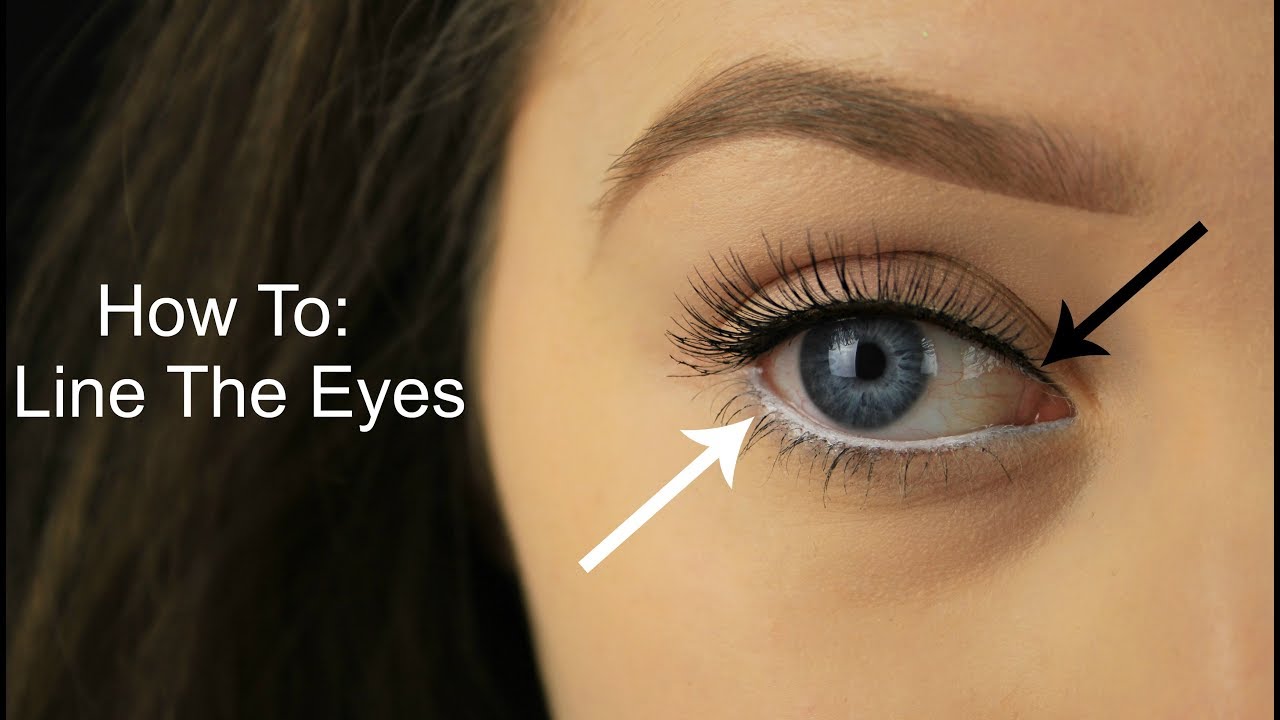
How do I keep it from smudging if I have hooded eyes or watery eyes?
First, accept your biology. Hooded eyes and watery eyes are not flaws; they are features that require specialized engineering. For watery eyes, the issue is often that you’re allergic to the preservatives in your eye drops or your mascara. If your eyes water regardless of the weather, it might be a micro-allergy. Try switching to a hypoallergenic mascara. For hooded eyes, the problem is that your lid skin folds down and physically wipes the pigment away. You need a liner with a “dry” finish—not a glossy one. Glossy formulas are emollient and will slip. Also, for hooded eyes specifically, I recommend skipping the entire lower waterline and instead doing a tightline at the top. If you absolutely need the lower definition, apply the liner only to the outer third of the waterline, not the entire thing. This creates a shadow effect without concentrating on the area where your tear duct is.
There is also the “unconventional” hack: using a thin layer of lash glue. Yes, the same glue you use for falsies. Apply a whisper-thin layer of the latex-based glue to the waterline, let it dry completely, and then draw on top. It creates a polymer shield that locks the pigment in. It sounds terrifying, and yes, there is a risk of pulling out your lashes when you remove it, but for a special event, it works. The key is to use a brush to swipe it on and wait until it turns clear. For daily use, a simpler trick is to look down while applying your lower liner, not straight ahead. This allows the product to get right under the lashes, minimizing transfer to the skin below the waterline. And finally, never curl your lashes after applying the liner—that mechanical motion will smudge everything instantly.
Is setting spray actually safe to use on the eyes?
This is the great debate. There are two schools of thought here. The first says: "I’ve been doing it for years, I'm fine, don't be a baby." The second says: "It’s alcohol and acrylates, and you’re going to annihilate your corneal epithelium." The truth is nuanced. Most setting sprays contain denatured alcohol, which is a drying agent. Spraying this directly onto a mucous membrane will cause immediate stinging, potential micro-tears, and it will actually stimulate your eyes to produce more water to compensate for the dryness. This is called a "rebound effect," and it is the exact opposite of what you want. However, there are clean, alcohol-free setting sprays (like those from Tower 28 or Milk Makeup) that contain glycerin and aloe. If you spray that into the air and fan it over your closed eyes, it can help a tiny bit, but it certainly won't hurt.

My professional opinion? Don't spray your eyes. It's not worth the risk of a chemical burn for 3 extra hours of wear. Instead, use the powder-lock method mentioned earlier. However, if you want the effect of a setting spray, you can do this: spray your mascara wand with a waterproof setting spray, wait for it to be slightly damp (not dripping), and use that to gently tap your lash line. This applies micro-shield polymers precisely where you need them without flooding your tear ducts with aerosol. Also, a cooler tip from the drag community: use a matte liquid lipstick as your eyeliner. Those are formulated for high-wear, non-transfer situations. It sounds odd, but lip products have some of the strongest film-formers in the industry. Just don’t use it if you have super sensitive skin, and always patch test first.
So, is the waterline war a passing fad? I’d argue it’s not just a fad—it’s a permanent rite of passage. In a world where we are constantly on camera, the need to control our "digital climate" will only intensify. The waterline is the last frontier of personal grooming; it’s the micro-test of our ability to control chaos. We will see new polymers and breakthrough "flexible film" technologies in the next few years, but the fundamental challenge of fighting anatomy with aesthetics will remain. It’s a gorgeous, infuriating paradox.
A decade from now, we’ll probably look back at our waterline-centric routines with the same amusement we view 2016's contouring—as a time of glorious excess and unreasonable effort. But for now, I’m proud to be a soldier in this trench. Every time I see a flawless, smudge-free lower lash line on a crowded subway car, I feel a surge of sisterhood. We are survivors. We are adaptable. And when the rain hits your face or the tears of laughter flow, you know that you’re not just wearing eyeliner—you’re wearing armor. Keep fighting the good fight, and keep a pack of eyeshadow wipes in your bag for when you lose. Because you will lose. But that’s okay—you can always reapply.


