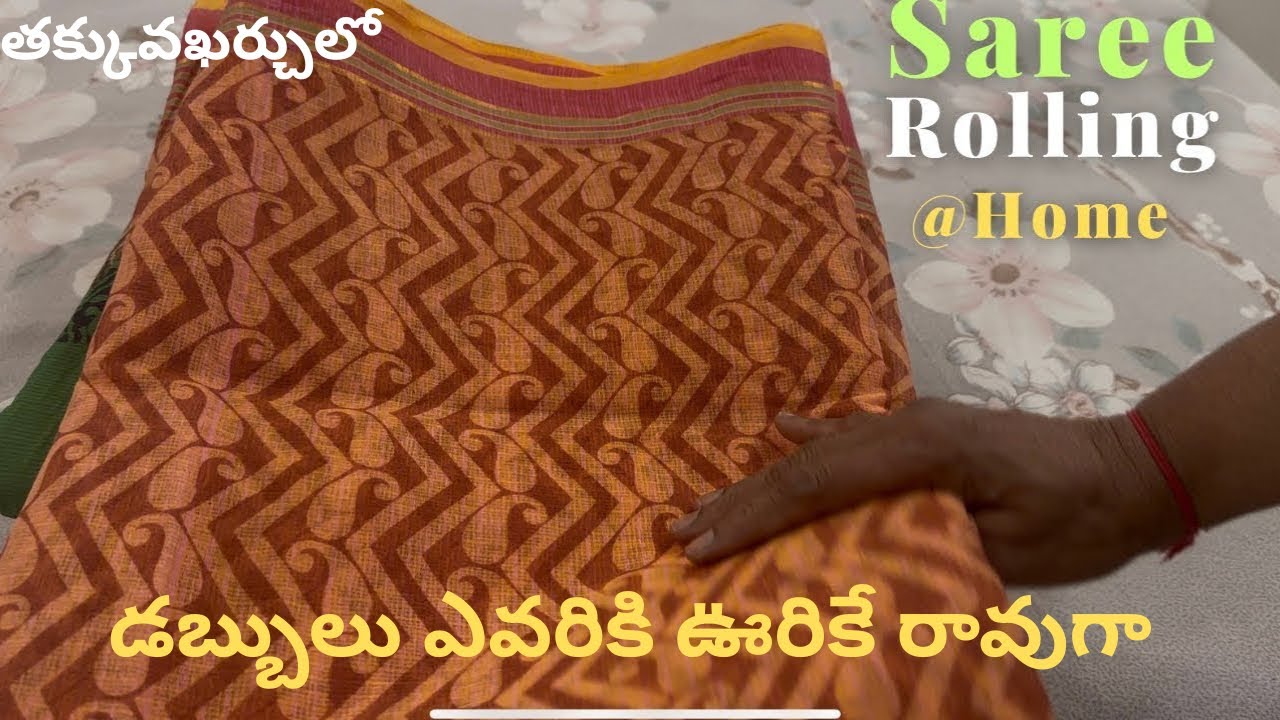
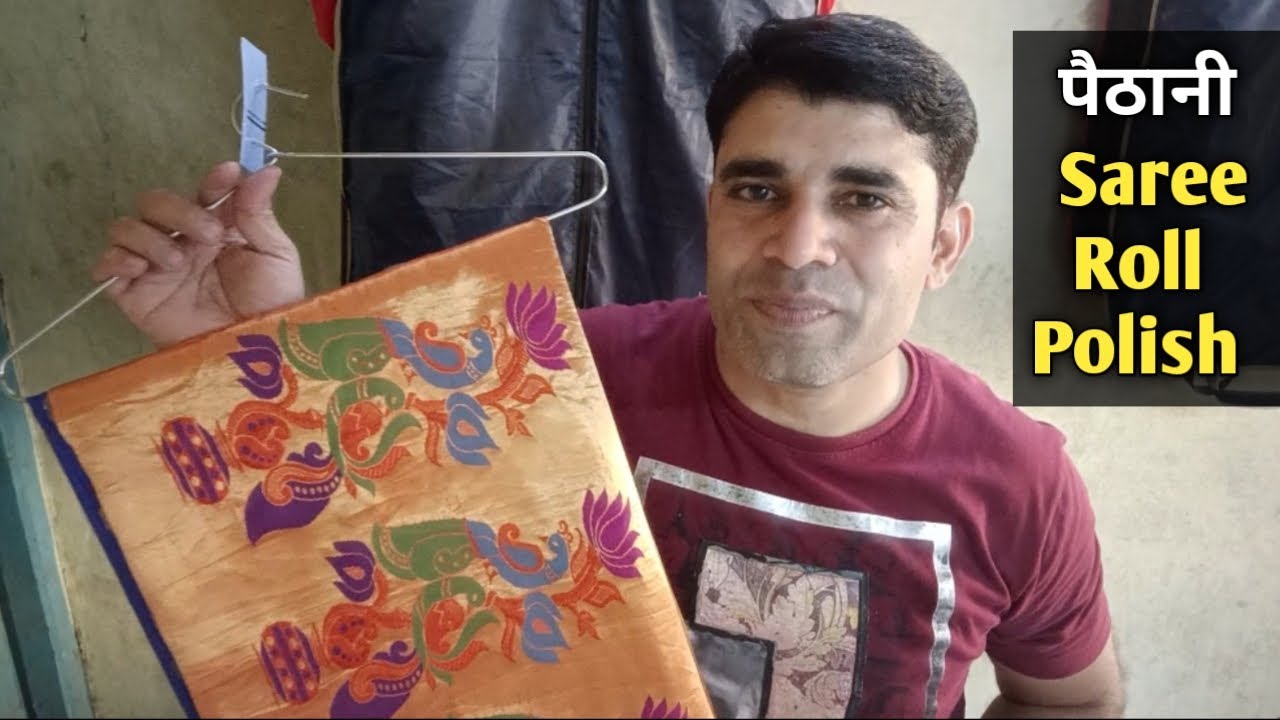
How To Make Saree Rolling At Home
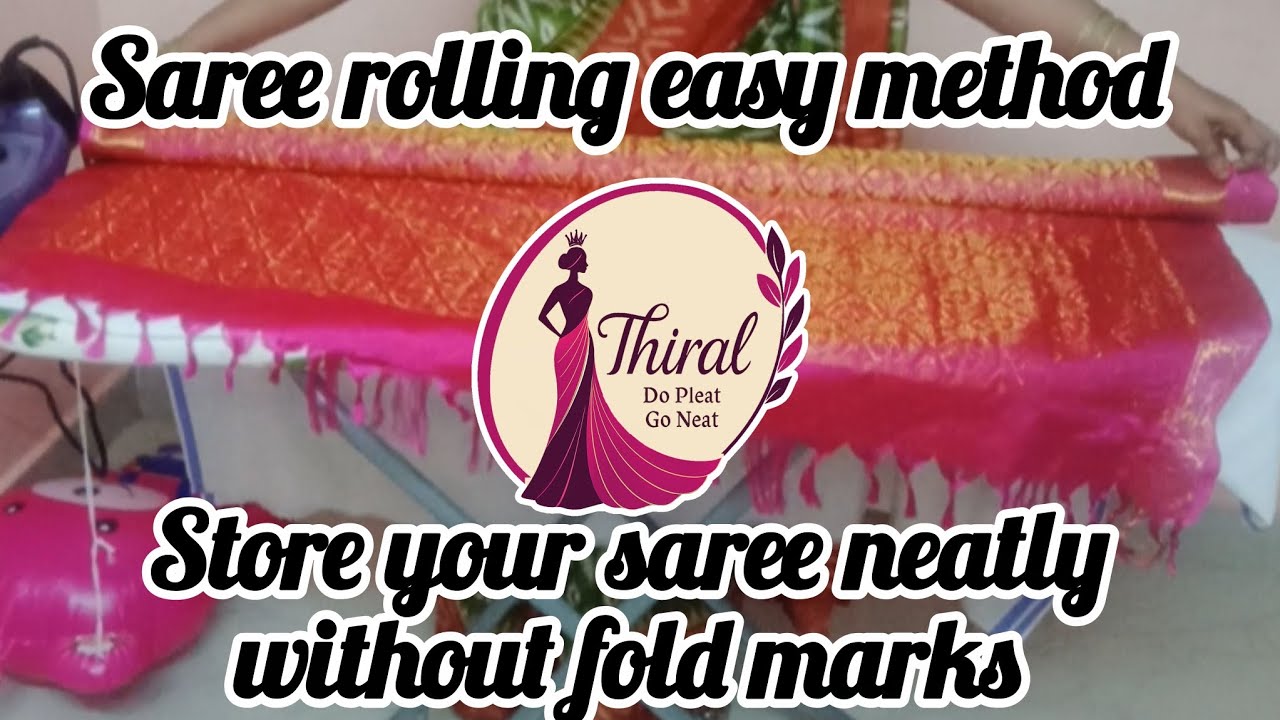
Let’s be real: the algorithm has been screaming at us for months. Scroll through any Reels tab or TikTok For You Page, and you’ll hit a cacophony of silk rustling, wooden thuds, and the triumphant exhale of a woman who has just transformed a six-meter murder weapon into a perfectly cylindrical, donut-shaped tower of elegance. Yes, we are talking about the saree rolling phenomenon—the unlikely viral successor to sourdough starters and “quiet luxury.” It started as a niche hack from a few hyper-organized aunties on YouTube and has since detonated into a full-blown aesthetic movement, complete with dedicated hashtags, ASMR soundscapes, and heated comment-section warfare about the “right” way to fold a pallu.
But why now? In an era where our attention spans are shorter than a micro-mini, why are millions of us hypnotically watching women fold, press, and roll six yards of fabric into a neat little parcel that promises zero creases and zero hassle? Because it’s the perfect metaphor for modern life: we want the tradition, the glamour, and the cultural clout, but we want it compressed, portable, and ready-to-wear in ninety seconds flat. It’s the hackification of heritage, and frankly, it’s deliciously addictive to watch. The internet has decided that the saree is no longer just a garment; it is a technology, and we are all desperate to master its firmware.
The current status? It’s a status flex. Posting a flawless saree roll is the new “morning green juice” – it signals that you have your life together, your linen is starched, and your ancestral wardrobe is optimized for IKEA-style storage. But let’s not pretend it’s easy. The first time you attempt it, you will look like you’re wrestling a sleepy python. The second time, you’ll create a fabric burrito so lumpy it could double as a wellness pillow. The third time? That’s where the magic happens, and that’s where we come in to dissect the cult, the chaos, and the cloth.
Must Read
The Cult of the Crease: Inside the Rolling Subculture
Let’s peel back the silk curtain. The saree-rolling community is a bizarre microcosm of internet culture at large. On one side, you have the Purists—the self-appointed saree sommeliers who insist that rolling is a crime against drapery. They argue that folding creates stress lines on delicate zari and that the only acceptable method is the ancient art of stacking (laying the saree flat in a drawer, which, let’s be honest, requires a walk-in closet the size of a Mumbai parking garage). These commenters are often found typing furiously under tutorials, referencing their grandmother’s technique with the reverence of a scripture scholar. They’ll say things like, “My Nani rolled her Banarasi in a specific twist that took 40 years to perfect,” and you can almost smell the musty sandalwood through the screen.
On the other side, you have the Chaos Agents—the girls who roll their sarees into tight, aggressive spirals that resemble cinnamon rolls, shove them into vacuum-sealed bags, and proudly display them in under-bed storage boxes. They are the ones who treat saree rolling like a competitive sport, timing themselves with stopwatches and comparing “roll density” like it’s a bodybuilding metric. The toxicity emerges when the two factions collide. A video of a soft, loose roll will trigger a comment war that rivals geopolitical debates. “Too loose, you’ll get crease marks!” “Too tight, you’ll crush the jacquard!” It’s exhausting, but it’s also a fascinating reflection of how we gatekeep traditional knowledge in the digital age. We’ve turned a practical storage solution into a moral litmus test, where your rolling technique supposedly reveals your level of respect for your heritage. The subculture is thriving because it gives us a low-stakes arena to fight about high-stakes identity.
Culturally, this shift signifies a move from irreverent convenience to ceremonial hustle. The saree, once reserved for weddings and religious functions, is now being reclaimed as everyday wear by a generation that demands efficiency. Rolling is the bridge between the heavy, ornate past and the sweatpants-loving present. It’s the radical act of saying, “I will wear my grandmother’s Kanjivaram to a brunch, but I will store it like a sleeping bag.” The internet loves this paradox because it validates our desire to have it all—the heritage and the convenience—without compromising either. The real drama isn’t in the folds; it’s in the ownership of the narrative.

How to Roll Like a Pro (Without Losing Your Sanity or Your Silks)
Okay, let’s get tactical. You’ve seen the videos, you’ve liked the posts, but you’re still staring at a pile of silk that looks like a crime scene. Here’s the pragmatic, no-BS guide to navigating this trend without turning your living room into a fiber-arts war zone. First, resist the urge to do it standing up. This is not a standing activity. You need a flat, clean surface—a bed or a large dining table. Spread the saree out completely, wrong side up (yes, the reverse side is your friend). The goal is to transfer the inner fabric onto itself to minimize friction against the outer, visible layer. You are not folding laundry; you are performing a surgical procedure on your own wardrobe.
Second, the “Blouse Piece” is not a joke. That little strip of fabric is the anchor of your entire roll. You have to fold it in half lengthwise first, then start rolling from that end. Think of it as the tip of a pastry bag—if it’s messy, the whole churro is doomed. Roll it tightly, but not with the force of a boa constrictor. You want it firm enough to hold its shape, but soft enough that you’re not crushing the weave. A good rule of thumb is to imagine you’re rolling a yoga mat, not a carpet. You need surface tension, not compression damage.
Third, here’s the viral hack that nobody tells you about: the “Inverted Pallu” trick. Instead of folding the pallu separately at the end, let it hang off the edge of the table as you roll the main body. As you reach the end, wrap the pallu over the rolled cylinder, tucking the loose end into the center. This creates a protective outer layer, so when you store it, the most fragile part of the saree (the heavily embroidered end) isn’t rubbing against your plastic drawer. It’s the difference between a luxury handbag and a trash compactor. Your zari will thank you with literal sparkle.

Fourth, and this is where the internet fights, let’s talk about storage accessories. You do not need a $50 muslin pouch. You need an old cotton bedsheet or a clean pillowcase. Wrap your rolled saree in cotton. Never wrap it directly in plastic—plastic traps moisture, leading to mildew and that heartbreaking musty smell that no amount of lavender sachets can fix. And yes, you can vacuum-seal them if you’re moving, but for daily storage, let them breathe. The fabric is organic; it needs oxygen. Finally, do not roll a saree that is already creased. Iron it first. Rolling a wrinkled saree is like applying mascara to a sleepy eye—it just amplifies the flaws. Start crisp, end crisp.
If you’re using the “donut” method (which is the viral star), do not make the knots too tight. The goal is to create a spiral that you can squeeze slightly to open up the center, creating a bagel shape. This allows air to circulate through the center, preventing that nasty odor. And for the love of all that is draped and holy, tag your rolls. A sticky note or a fabric tag with the saree’s name and color will save you from unrolling twenty different silks to find that one mustard-yellow piece for Diwali. That’s not fastidiousness; that’s strategic intelligence.
FAQs: The Internet’s Burning Questions on Saree Rolling
Does rolling really prevent creases, or is it a viral myth?
Here is the unadulterated truth: rolling is superior to conventional folding, but it is not magic. Folding creates sharp, perpendicular creases at the fold lines, which are the devil’s work on silks and georgettes. Rolling distributes the fabric’s natural tension along a continuous curve, meaning the fibers bend gently instead of breaking at a sharp angle. The result is that a rolled saree typically comes out with soft, drapey waves that fall away with a quick steam or a few hours on a hanger. However, if you roll a saree that’s already heavily pleated from wear, or if you roll it too tightly, you will create permanent “roll marks” that are just as annoying as fold marks. The secret is a medium-density roll—think of a firm handshake, not a death grip. And you absolutely must store it on its side (vertically if possible), not stacked flat like pancakes. Stacking rolls can flatten the bottom edge and create pressure dents over time. So yes, it works, but you have to work with physics, not against it.

The deeper debate here is about heavy embroidery. Viral videos usually feature lightweight linens or cottons. If you’re rolling a heavily embellished bridal Lehenga or a Banarasi with thick gold zari, the rolling method needs adjustment. You need to interleave sheets of soft acid-free tissue paper between the layers as you roll. This prevents the heavy threads from gouging into the fabric opposite them. Without the tissue, the weight of the embroidery can create deep dents that are irreversible. So, the answer to the question is nuanced: for daily wear, rolled is a YES; for heirloom couture, roll with a buffer layer. The internet often forgets this nuance in its quest for a singular hack.
Is it okay to roll silk sarees, or should I only roll cotton and linen?
This is the comment-section blood sport. The hard-and-fast rule is that any saree can be rolled, but the roll’s diameter matters. For fragile silks like pure Mulberry or Muga, you want a wider diameter roll—looser, with more air in the center. A tight, thin roll can stretch the warp and weft threads over time, leading to a distorted silhouette when draped. Silks are protein fibers; they have memory. If you force them into an unnaturally tight spiral, they will retain that spiral shape, making the saree cling awkwardly at the hips. Cottons and linens, being sturdier plant fibers, can tolerate a tighter roll because they have more “give” and bounce back easier. But the universal warning applies to all: do not roll a wet or damp saree. That is a recipe for permanent shrinkage and mold. Always ensure your silk is bone-dry, and if you live in a humid climate (looking at you, Mumbai), add a silica gel packet inside the cotton wrap to absorb excess moisture.
Another sub-topic that sparks rage is the “airing out” debate. Some experts insist that silk needs to be unrolled and aired every three months to remove stress from the fibers, even if you aren’t wearing it. Others say this is an old-wives’ tale propagated by people who just like the theater of unrolling six meters of fabric. Our take? Airing is beneficial, but only if you are re-rolling it incorrectly afterward. If you’re confident in your roll, you can leave it for six months without issue. The real threat is not the rolling, it’s the moths. Moths are attracted to the protein in silk. So, before you roll, make sure the saree is impeccably clean (even a tiny sweat mark attracts pests), and place neem leaves or cedar balls in the storage area. A rolled silk is a secure silk, as long as it’s clean and dry.

How long does it take to master the viral saree rolling technique?
Let’s set realistic expectations, because watching a 30-second video makes it look like you should nail it on your first try. On average, it takes three to five attempts to achieve a roll that doesn’t look like a lumpy, discarded tote bag. The first time, you’ll spend twenty minutes untangling the pallu from your cat. The second time, you’ll realize you rolled the entire thing wrong-side out, meaning the outer layer is now the “wrong” side, which looks odd if you display them in open shelving. But by the third attempt, your muscle memory kicks in. The key is to stop treating it as a precision craft and start treating it as a flow state. The roll is only as stressful as you make it. Athletes call it “deliberate practice”—you need to go slow to go fast. Rushing causes lumpy folds and uneven tension.
The psychology of this is fascinating. Viewers often fail because they are trying to mimic the speed of influencers who have done this a thousand times. They see the rapid hand movements and think speed is the goal. It is not. Accuracy is the goal. Fluidity and rhythm are the goal. A proper roll takes about 3 to 4 minutes for a novice—not 30 seconds. If you time yourself and hit 2 minutes, you’re doing great. Mastering the technique is about learning to feel the fabric’s parameters, understanding where it resists, and adjusting your pressure. It’s a tactile learning curve. Don’t let the algorithm bully you into thinking you’re inadequate because you can’t do it in one take. The influencers have multiple ruined sarees in their closet too; they just edit out the failures. Give yourself grace, and maybe a glass of wine for the process.
So, is this rolling rave a fleeting fad or a permanent feature of our sartorial software? The evidence points to the latter. In a world grappling with fast fashion’s waste and the desire to reconnect with craft heritage, saree rolling represents a pragmatic bridge between the two. It’s not just about storage; it’s about accessibility. By making the saree easier to manage, we’ve lowered the barrier to entry for a generation that was previously terrified of the drape. It’s the same logic behind athleisure—we took a formal garment and made it fit into a busy, chaotic schedule. Rolling isn’t a gimmick; it’s an evolution of utility. The fact that it looks incredibly satisfying on camera is a bonus that fuels its virality, but the underlying utility is what will keep it alive.
Ultimately, the rollout is a metaphor. We are all just giant, beautiful, complicated pieces of fabric—full of stories, creases, and heavy embroidery. The saree roll teaches us that we can be delicate and durable simultaneously. It reminds us that we can take something ancient and treat it with modern logic without losing its soul. Whether you’re a chaotic roller or a stacking purist, the trend has successfully forced us to talk about our textiles, our time, and our ancestors. And in the grand scroll of internet life, that’s a pretty impressive return on a six-yard investment. So go forth, roll your wealth, and remember: a smooth roll is just a series of small, confident decisions. Just like everything else worth doing.