How Thick Are 1.57 Mid Index Lenses

Okay, let’s be real for a second. When your eye doctor starts throwing around numbers like “1.57 mid index,” your brain probably does the equivalent of a dial-up modem sound. What on earth does that even mean? Don’t worry, friend—I’ve got your back. We’re going to crack this lens code together, and I promise it’s way less scary than it sounds.
The Short Answer (Because You’re Busy)
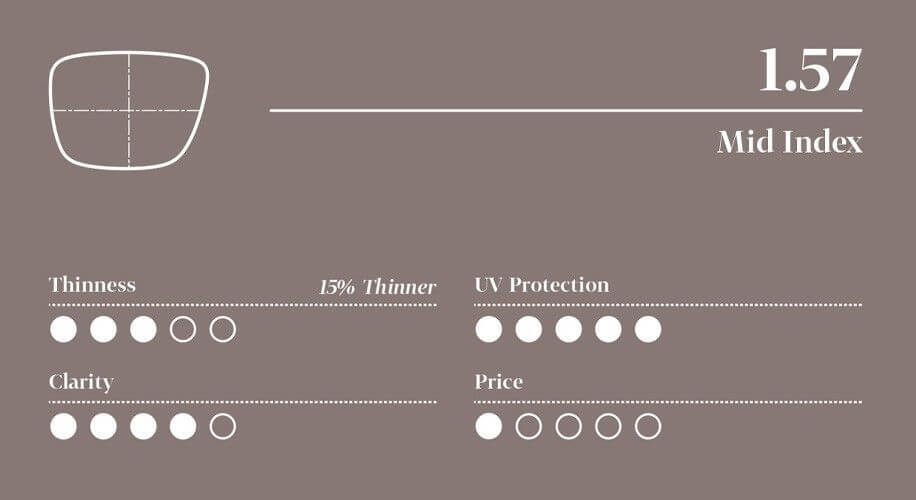
Simply put, a 1.57 mid index lens is moderately thin—noticeably slimmer than standard plastic, but not invisibly skinny like a high-index lens. Think of it as the “goldilocks” of lenses: not too chunky, not too fancy, just right for a lot of folks. In millimeters, the edge thickness usually lands somewhere between 2.5mm and 4.5mm, depending on your prescription and frame size. But hold on—let’s unpack that before you start picturing a microscopic ruler.
What Does “Index” Even Mean?
Here’s the nerdy secret: the “index” is just a measure of how fast light bends as it passes through the lens. A higher index means light bends more efficiently, so you need less material to correct your vision. Less material = thinner lens. It’s like using a super-strong espresso shot instead of a giant watery latte to get your caffeine fix.
Must Read
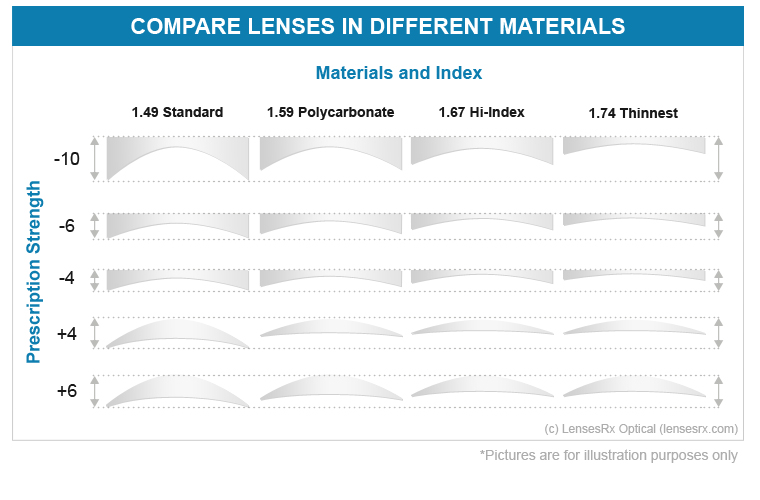
Standard plastic lenses are usually around a 1.50 index—they work fine, but they can look like tiny glass hockey pucks if you have a strong prescription. A 1.57 index is a step up, offering a sweet spot for people with mild to moderate nearsightedness (that’s the minus numbers) or farsightedness (the plus numbers).
So, How Thick Is It, Really?
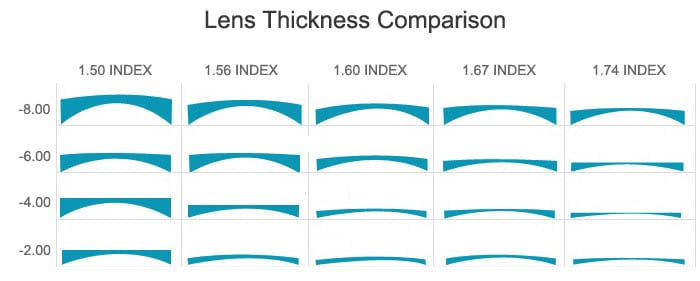
Let’s play a guessing game. If you have a prescription of, say, -2.00, a 1.57 lens will be almost 20% thinner than standard plastic. That’s the difference between feeling like you’re wearing bottle caps and feeling like you’re wearing, well, normal glasses. For a -4.00 prescription, the edge might be around 3.5 to 4mm thick—still totally manageable, but you’ll notice a bit of heft if you look at the lens from the side.
Now, here’s the kicker: the frame matters more than the lens itself. If you pick a giant, round, hipster frame, even a 1.57 lens will look thick around the edges. Choose a smaller, oval or rectangular frame, and suddenly your lenses look way thinner than they actually are. It’s like magic, but with geometry.
The “Coke Bottle” Test
You know those awful jokes about thick glasses looking like the bottom of a soda bottle? Well, with 1.57, you’re safely out of that danger zone for most prescriptions up to about -5.00. You’ll look like a stylish human, not a science experiment. For prescriptions beyond -6.00 or +4.00, you might want to spring for a 1.67 or 1.74 index—those are the supermodels of lenses, ultra-slim and slightly pricey.

Fun With Numbers (And a Little Joke)
Let’s do some math, but the easy kind. Imagine your lens edge is like a stack of three quarters. That’s roughly 4mm. A 1.57 lens often feels like that—solid, but not overwhelming. If you go to a 1.67, you’re down to two quarters. Honestly, the difference is only noticeable if you’re a superhero with microscope vision or you’re obsessively staring at your own profile in the mirror (no judgment, I do it too).
Why does this matter? Because nobody wants to look like they’re wearing magnifying glass shards on their face. The whole point of mid-index is to give you a sleeker look without emptying your wallet. It’s the “budget-friendly glow-up” of the eyewear world.
The “But Wait, There’s More” Section
One thing to keep in mind: 1.57 lenses are not as scratch-resistant as higher-end materials, but most come with a free anti-scratch coating anyway. And if you’re super active, they might be a tad heavier than feather-light 1.74s. But for everyday desk work, Netflix binging, and pretending to read menus at restaurants, they’re phenomenal.
Also, they handle reflections pretty well, especially if you add a good anti-glare coating. You’ll finally be able to take a selfie without a giant white box glare covering your eyes. That alone is worth the price of admission, right?

So, Should You Get Them?
If your prescription is mild to moderate, and you want to avoid the “thick lens” look without paying luxury-car prices—then yes, 1.57 is your trusty sidekick. You’ll get a clean, slim profile that makes people say, “Nice glasses!” instead of, “Wow, can you see through those?”
And if you’re still on the fence, just remember: thickness is not a measure of intelligence. Albert Einstein had thick glasses, and he was a genius. But you can be a genius with thinner ones, and that’s just a win-win.
The Happy Ending
So there you have it: 1.57 mid index lenses are the friendly, dependable middle child of optics—not too thick, not too fancy, but always there to make you look sharp. Next time you’re at the optometrist, you can nod confidently and say, “I’ll take the 1.57, please,” and wow them with your newfound nerdery. You’ll walk out feeling lighter, seeing clearer, and smiling because you finally understand the secret code. Go ahead—blink twice and enjoy the view. You earned it, you beautiful, thin-lensed legend.