How Much Would It Be To Rent A Uhaul
There is a moment in every adult’s life—often punctuated by the smell of cardboard and the low-grade panic of a Sunday evening—when you find yourself staring at a beige, boxy vehicle that promises mobility but delivers only math. Renting a U-Haul is less a transaction and more a rite of passage, a secular sacrament for the modern nomad. It’s the vehicular equivalent of a shrug: functional, unglamorous, and universally understood. But beneath that utilitarian orange and white livery lies a complex pricing ecosystem that has evolved from a single 1945 Ford truck into a multi-billion-dollar logistics empire, one that now dictates the rhythm of American relocation with algorithmic precision.
The question “How much would it be to rent a U-Haul?” is deceptively simple, like asking how much a flight to Paris costs. The answer depends on the season, the wind, the lunar cycle of real estate leases, and whether you’re moving from Arizona to Texas on a Tuesday in July. Today, with fuel surcharges, environmental fees, and the looming specter of “equipment availability,” the cost is a living organism. Yet, understanding the anatomy of this price tag is not just about saving money—it’s about reclaiming agency in a world that increasingly feels like it’s moving you around against your will.
The Hidden Mathematics of Moving Metal
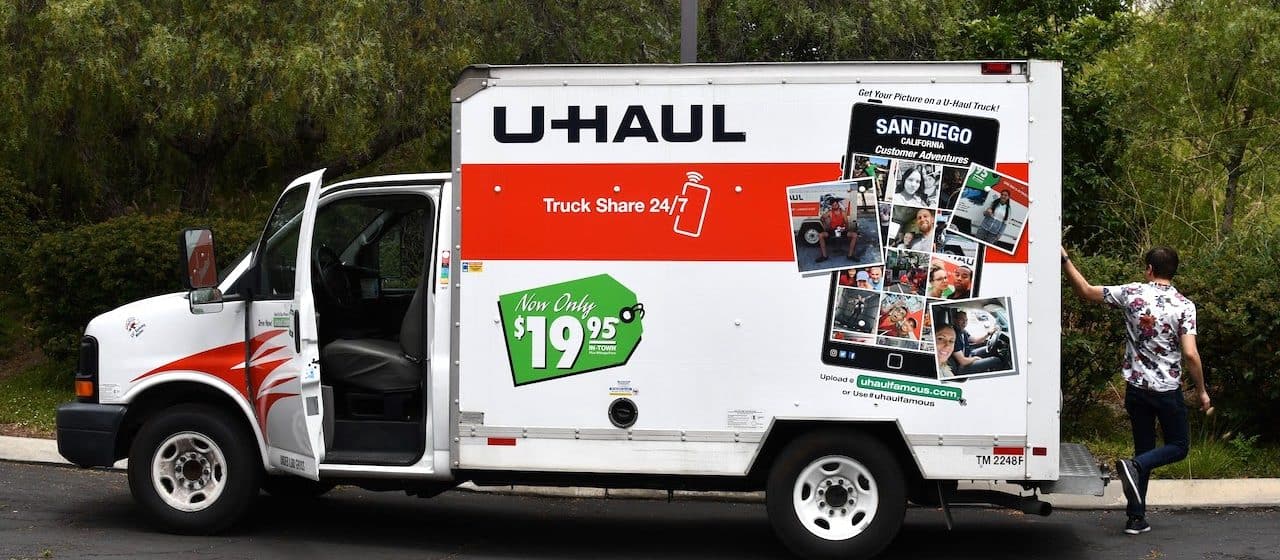
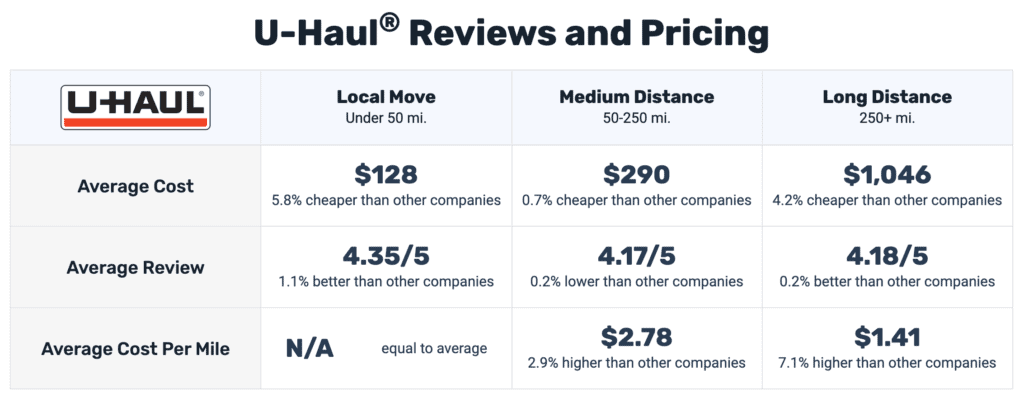
Most people assume the base rate is the cost. That is a beautiful, naive assumption, much like believing the sticker price on a car includes the floor mats. A 10-foot U-Haul truck might advertise a “from $19.95” rate, a siren call that should immediately trigger your fight-or-flight response. That number is the entry fee to a labyrinth of variable costs, the most notorious being the per-mile charge. Unlike car rentals that offer unlimited mileage, U-Haul’s classic business model pivots on this. For a local move, you might pay anywhere from $0.79 to $1.19 per mile, which means a 20-mile trip suddenly transforms that $20 into a $45 expedition. For a one-way relocation, the mileage is often bundled into a “flat rate” calculated by a proprietary dispatch algorithm, but this is where the real drama unfolds—prices can fluctuate by hundreds of dollars week to week based on fleet repositioning.
Must Read
The psychological warfare extends to the “equipment” itself. You’ll be gently persuaded—some would say ambushed—into purchasing the SafeTrip insurance package, which costs between $10 and $14 extra per day. The rationale is sound: your personal auto insurance likely doesn’t cover a 26-foot box truck, and the liability exposure is terrifying. But the human brain, already exhausted from bubble-wrapping dishware, often capitulates. This is the dark magic of the upsell. Then there are the accessories: the furniture dolly ($15), the appliance dolly ($30), the moving blankets ($8 each), and the packing kit which, at $79.99, contains boxes you could have stolen from a liquor store for free. The true cost of a U-Haul is not the vehicle; it’s the psychological toll of realizing you are paying a rental company to lend you the stress you could have induced yourself, at home, for free.
Culturally, the U-Haul has become a strange icon of American impermanence. There’s a grim humor in spotting a fleet of them parked outside a suburban duplex on a rainy Saturday, the universal sign of a lease dispute or a relationship’s quiet implosion. In 2019, a viral meme dubbed the U-Haul the “second most reliable partner” in life, a commentary on how moving often signifies a fresh start, a ghosting of one’s previous geography. The price you pay, therefore, is also a toll for emotional closure. And in 2020, during the pandemic exodus, the company’s pricing algorithm famously glitched into a frenzy, with some one-way rentals costing as much as a cross-country flight. It was the market’s raw id showing: when everyone wants to leave simultaneously, the cardboard truce is over.
Scenarios, Sanity Checks, and Strategic Savings
Let’s break down the gray cash. Scenario One: The Urban Quarter-Mile Shift. You’re moving from a studio in Brooklyn to a slightly larger studio in Queens. Distance: 4 miles. The base rate for a 10-foot truck might be $29.95 if you’re lucky on a weekday. Add 4 miles at $0.99 each, and you’re at roughly $34. But add the $14 insurance, $5 environmental fee, and the mandatory $10 processing fee, and you’re looking at $63 before gas. The trick here is to ask for a utility trailer or a pickup truck instead; often, those have lower base rates and the mileage is more forgiving, turning a $60 ordeal into a $40 convenience. The real win is timing—rent for a 2-hour block early on a Tuesday, use the “in-town” rate that includes 50 miles, and treat the process like a surgical strike rather than a ceremonial exodus.

Scenario Two: The Cross-Country Exodus. You are moving from Denver to Portland, a journey of 1,200 miles. A 15-foot truck, the “sweet spot” for a one-bedroom apartment, will run you a base one-way rate of anywhere from $1,100 to $1,800 depending on the week. This price includes the miles, but the black box of supply-and-demand reigns supreme. If you move mid-month (between the 4th and the 14th), you can save 15% percentage. If you move on a Sunday or Monday, you save another 10%. But the dark horse here is the fuel cost. A 15-foot truck gets about 10 miles per gallon. At $3.50 a gallon, that Denver-to-Portland trip is $420 in gas alone. Add a hotel stop for $120, and you are eating a $2,500 week, all so you can keep a used IKEA sofa. The ethical alternative? Use U-Haul’s U-Box containers (starting at $159 per month for storage plus transport) and fly yourself to your new life, leaving the driving to an 18-year-old in a semi-truck.
Scenario Three: The Two-City Tango. Sometimes, the price isn’t about distance but direction. A move from Los Angeles to Las Vegas might be $499, but the reverse route—Vegas to LA—is often $299. Why? Because U-Haul needs empty trucks in LA to serve its high-volume local market; they’ll practically pay you to bring one back. This is called fleet repositioning, and you can exploit it by asking the customer service rep directly: “Where are your low-volume one-way lanes this month?” It feels like insider trading, but it’s just geography. Always request a quote for a truck one size smaller than you need, too; the 15-foot is 30% more expensive than the 10-foot, but the 10-foot holds shockingly more than you think if you’re disciplined about throwing away your cinder-block bookshelves.
The final actionable takeaway is the “dump run” hybrid. If you are moving locally, do not rent the bigger truck to move everything at once. Rent the 10-foot, move the heavy furniture, and on the final hour of your rental, drive your trash and donations to the landfill and Goodwill simultaneously. U-Haul charges a $20 “after-hours drop-off” fee because their machines need to process your return. If you return between the hours of 7 AM and 5 PM, you skip that fee. But if you time your rental to end at 4:59 PM on a Thursday, you not only save $20 but also beat the weekend rush, where base rates double. The system punishes weekend warriors; the weekday warrior is the prince of the pavement.
Common Questions From the Driver’s Seat
Do I really need to buy U-Haul’s insurance if I have my own auto policy?
The short answer is a qualified “no,” but the long answer will make you sweat. Your personal auto insurance covers you for liability—damage you cause to others—on any rented vehicle under 26 feet in most states. However, the critical gap is physical damage coverage for the truck itself. Your auto policy typically excludes rental moving trucks from comprehensive and collision coverage. That means if you scrape a low-hanging tree branch and tear the roof, you are personally on the hook for the $8,000 repair, not the $10 rental fee. The SafeTrip plan (around $14/day) covers this damage, plus loss of use, and is generally worth it if you lack credit card coverage. Check if your premium travel credit card offers secondary truck rental insurance—some do, but it’s rare. If you have a spare $14, buy it. The peace of mind is worth more than the coffee you’ll skip.
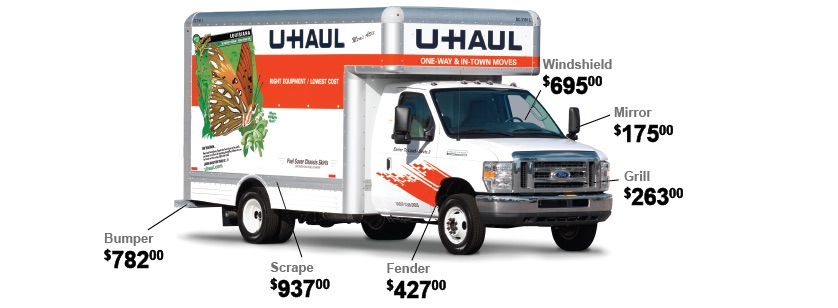
However, there is a philosophical twist. The deductible on SafeTrip is a hefty $500, which you still pay if there’s damage. The real protection is that you won’t be sued for the total replacement cost. If you are moving a studio apartment and drive like a monastic grandpa, you might roll the dice. But the horror stories of windshields cracking from a pebble on the highway are legion. My advice: pay the $14, treat it as a toll for the universe’s unpredictability, and move on. It’s the cheapest nightmare avoidance you’ll ever purchase.
Why is the price of a one-way rental so much higher in the summer?
It’s a perfect storm of human desperation and real estate cycles. Approximately 65% of all U-Haul rentals occur between May and August, because families move when school is out and leases traditionally turn over on September 1st and July 1st in major cities. U-Haul’s algorithm sees the demand surge and dynamically reprices its fleet. A 15-foot truck that costs $400 in February might be $1,500 in June for the same route from Chicago to Atlanta. Furthermore, the one-way price reflects the cost of empty repositioning—the truck you’re driving to Texas has to be driven back to Chicago eventually, or it sits in a deprioritized market. That empty leg costs U-Haul money, which they pass to you.
The dark psychological layer here is the feeling of being priced out of your own timeline. You can’t postpone your job offer because the rental truck is expensive, so you absorb the cost. This is a textbook case of inelastic demand. To mitigate, book your truck as early as possible—U-Haul opens reservations 12 months in advance, and locking in a June date in February will freeze the price. Also, consider moving on the 15th of the month or the 30th; those dates have lower demand because professional movers are booked solid, but the U-Haul fleet is relatively idle. You pay for the privilege of moving on a conventional date; move like a contrarian and keep $500 in your pocket.
Can I rent a U-Haul for a one-way trip and drop it off anywhere?
Technically, yes, but practically, it’s a game of musical chairs. U-Haul has over 21,000 locations, and you can drop your truck at any of them, but the cost of that flexibility is built into your quote. If you drop a truck in a destination that U-Haul perceives as a “low-demand” area (e.g., rural Montana), you will pay a massive surcharge because they now have to pay a driver to retrieve it or the truck sits idle losing money. Conversely, dropping a truck in a high-demand area (e.g., a dense metro like Phoenix in October) might actually reduce your quoted price, because you are assisting their supply chain. This is why a one-way rental from New York to Los Angeles might be $800, but the reverse is $650.

You also must account for the environmental reality of the drop-off. If you choose a location that is not a 24-hour facility, you’ll have to time your arrival perfectly. U-Haul’s after-hours drop-off means you leave the keys in the lock box, but they reserve the right to inspect the truck the next day, and if there is damage, they will charge your card without immediate recourse. My advice is to take a photo of the odometer and the truck’s sides immediately upon parking. The “anywhere” aspect is a convenience, but it’s also a waiver of your right to argue in real-time. You are trading accountability for freedom, which is essentially the American contract.
What fuel policy should I expect, and how do I avoid the refueling fee?
U-Haul operates on a “full-to-full” policy, meaning you receive the truck with a full tank and must return it full. If you don’t, they will charge you for the missing fuel at an exorbitant rate—often $8 per gallon, which is nearly triple market price. More insidiously, they add a $25 “refueling service fee” on top of the fuel cost. So, returning a truck with a half-empty tank (15 gallons missing) could cost you $120 in fuel plus $25 in fees, a $145 mistake that could have been a $40 stop at a gas station 2 miles away. The gas gauge in these trucks is also notoriously laggy; it’s an analog needle that feels dipped in molasses.
The trick is to locate a gas station within 1 mile of the drop-off location before you leave your origin. On your final day, fill up, drive to the U-Haul, and let the truck idle for two minutes before turning it off. This allows the fuel level to settle. Furthermore, track your mileage per 100 miles. A 15-foot truck should average 10 mpg. If you’re getting 7 mpg, you’re driving too fast (over 65 mph) or the truck is overloaded, which is both dangerous and burning cash. The dark humor of this is that U-Haul’s fuel gauge is the one piece of machinery they calibrate to be pessimistic; do not trust it. Trust the odometer and the math in your head.
Is it cheaper to rent a U-Haul trailer instead of a truck for moving?
Often, yes, but it’s a Faustian bargain involving your car’s transmission. A 5x8 utility trailer can be rented for as low as $29.95 for a local day, versus $39.95 for the smallest truck. The trailer requires no mileage charge if you’re towing it with your own vehicle (some locations include 50 miles). For a one-way move, you might pay $250 to trailer your stuff across state lines, versus $1,200 for a truck. The catch is that you are now responsible for the towing capacity of your sedan. If you have a Honda Civic, you physically cannot tow 2,000 pounds safely. You will burn your transmission, overheat your brakes, and void your car’s warranty. The hidden cost is the kids’ college fund you’ll spend on a new clutch.

Moreover, the trailer has zero cargo protection. It’s open-air, your boxes will get rained on, and tailgaters will see your heirloom dresser strapped to plywood. The emotional cost is watching your life’s clutter get buffeted by wind at 60 mph. The trailer is for the minimalist pragmatist—someone who owns a pickup truck and a futon. For everyone else, the truck is the safer bet despite the price. The exception is the U-Box container, which is essentially a shipping container door-dropped and trucked by U-Haul. It’s $159 per month plus a $59 transportation fee, but you have to load it yourself over 3 days. It’s the slow-motion, contemplative way to move, but it’s cheaper than a one-way truck when you factor in the massive time cost of driving a box truck for 40 hours.
In the end, the price of a U-Haul is never just a number on a screen. It’s a mirror held up to your priorities, your risk tolerance, and your tolerance for administrative hassle. We like to think we are cogs in a machine of our own making, but when the rental agent slides the contract across the counter and you initial the “do not drive on ferries” clause, you’re reminded that every journey is an act of negotiation with systems older than you. The corporation calculates its margins; you calculate your square footage. The overlap is where your money goes.
We rent these rolling white elephants because they represent a promise of autonomy—the idea that we can scoop up our lives, drive them somewhere else, and start again. That promise is worth something intangible, which is why we pay for the temporary stress. The darkly funny truth is that U-Haul knows this; they price the truck, but they also price the escape. When you complain about the $1,400 bill, what you’re really complaining about is the cost of change itself, which has always been obscenely expensive.
So go ahead, book the truck. Take the mid-week slot. Buy the dolly. Drive slowly. The money is temporary, but the memory of having conquered the physical weight of your own existence is permanent. Just remember to bring a screwdriver to check the spare tire—and a credit card with a high limit. The road ahead is measured in dollars, but the destination is measured in hope.