How Long It Takes To Develop An App
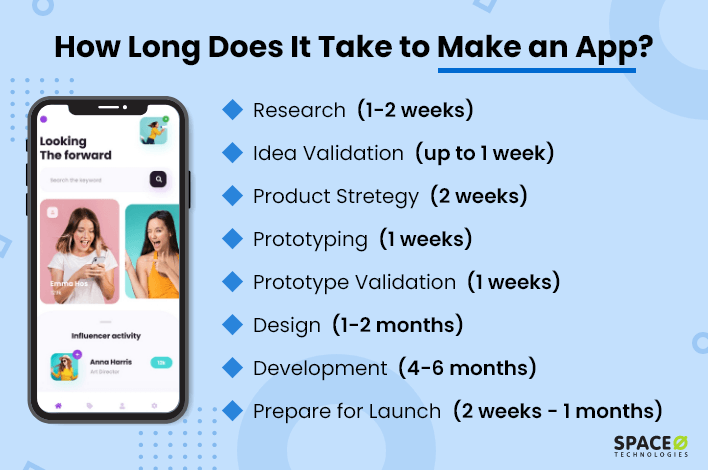
There is a peculiar, almost haunting stillness that settles over a room when you’ve just committed to building an app. It’s not the silence of focus, but the quiet of a thousand unseen possibilities. We often approach this digital creation with the logic of an engineer, but the reality is that we approach it with the fragile psychology of a human being desperate for validation, for completion, and for a tangible proof that our hours of solitary work mean something. Beneath the flickering cursor and the endless lines of code lies a question that torments us more than any technical bug: When will this be done? And while we demand a calendar date, what we are truly seeking is a psychic release from the uncertainty that gnaws at our self-worth.
Our brains are fundamentally ill-equipped for the non-linear, amorphous timeline of software development. In our evolutionary past, effort translated directly to survival; you hunted, you harvested, you built shelter, and you saw a result within a day. App development, however, breaks this ancient contract. You can pour your soul into a feature on a Tuesday, discover it is obsolete by Friday, and spend the weekend questioning the reality of your own productivity. This cognitive dissonance—where the feeling of effort is completely detached from the measurement of progress—is why the question of "how long" feels so fraught. It is not a question of clocks; it is a question of emotional endurance.
The Seductive Fallacy of the "Two-Week Build"
The first psychological hurdle is the scarcity of tangible feedback. When you plant a seed, you monitor the soil. When you write a poem, you read it back. But with an app, you are assembling a complex ecosystem of invisible states, transitions, and user flows. The mental load required to hold this entire architecture in your head is colossal, and the brain rebels against this sustained pressure. This is where the infamous "two-week build" myth originates. It’s a defensive mechanism; we tell ourselves it will be quick because the alternative—acknowledging a six-month emotional rollercoaster—is too terrifying to face. We are not lying about time; we are bargaining with our own anxiety, hoping that a compressed deadline will force the clarity that our chaotic thoughts refuse to provide.
Must Read
This brings us to the devastating psychological trap of the Solar System Effect. Early on, the app feels like the Sun—big, bright, and central to your life. But as you dive deeper, you discover the asteroids, the moons, the gravity wells of edge cases. Every "simple" button requires a decision tree. Every animation has a loading state. The initial vision, which once felt solid, begins to fragment into a thousand tiny, overwhelming details. This is often when the second-guessing begins. You ask, "Is this taking too long?" but the real question your psyche is asking is, "Am I inadequate because I didn't anticipate this complexity?" This internal shame is far more damaging than a missed deadline, because it attacks your core identity rather than just your scheduling ability.
Furthermore, we must confront the Zeigarnik Effect, which dictates that our brains obsess over unfinished tasks. Unlike a novel that sits in a drawer, an app sits in your mind, constantly running in the background. You might be at dinner, and suddenly realize a logic flaw. This is not passion; this is a neurological loop of unresolved tension. This relentless mental chatter makes it impossible to accurately judge how much time has passed, because you are emotionally living inside the project 24/7. The perceived duration stretches and compresses based on your mood, not on the actual work done. A day of tedious debugging feels like a week, while a breakthrough hour feels like a mere minute, scrambling your internal clock and making any external timeline feel arbitrary and cruel.
Navigating the Emotional Fog: A Mindful Timeline
To survive this process, you must stop viewing time as a linear line from start to finish. Instead, think of it as a spiral. You will revisit the same screens, the same login flows, and the same data structures, but each time you do, you will be at a slightly higher level of understanding. The first step in this new mindset is implementing the Rule of Functional Slices. Do not attempt to build the "whole" app. Identify the absolute smallest, ugliest, most primitive version of your core value—a single button that does one thing—and complete that. Not "start" it, complete it. This visual anchor of a finished micro-task is crucial. It provides the dopamine hit that your brain desperately needs, breaking the cycle of endless abstraction and grounding you in reality.
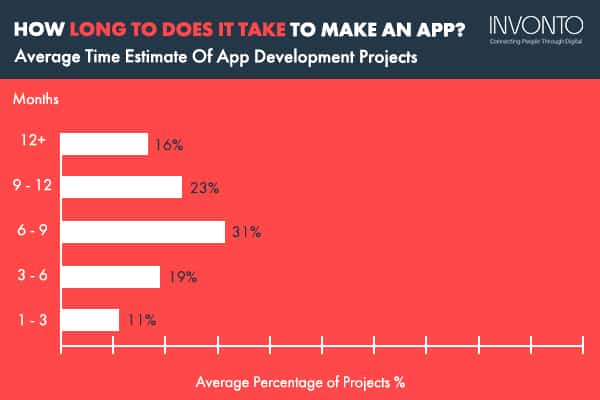
Secondly, you must schedule active incubation. Our culture celebrates hacking, grinding, and pushing through. But for a complex cognitive task like app development, the opposite is often true. Your brain solves problems during periods of diffuse thinking—when you’re walking, showering, or staring at the ceiling. If your timeline is so rigid that you cannot step away, you are essentially cutting off the primary source of creative problem-solving. You are not wasting time when you take a long break; you are literally allowing your subconscious to serialize the data. Consider this non-negotiable "away time" as part of the development process. It is not a pause in the work; it is the deeper work happening beneath the surface. This requires a terrifying act of self-trust, but it is the only way to prevent burnout and chronic fatigue.
Another vital coping mechanism is the practice of Timeboxing with Forgiveness. Look at your calendar and block out a chunk of time—say, three hours. But instead of saying, "I must fix the authentication bug," say, "I will spend three hours interacting with the authentication bug." The goal is the interaction, not the conquest. If you fix it, fantastic. If you only map out why it’s broken, that is also a win. This subtle linguistic shift removes the guilt of incompletion. You are no longer failing at a task; you are succeeding at showing up for your craft. This protects your mental health because it separates your self-esteem from the outcome of a single session, allowing you to accumulate small victories without the crushing weight of expectation.
Finally, create a "Done" Checklist that focuses on your behavior, not the app's features. For example, "I pushed code today," or "I asked for help," or "I looked at my old code without feeling shame." This redefines what success looks like on a daily basis. The app might not be finished in three weeks, but you can be a finished, emotionally stable human being in three weeks. This distinction is paramount. By shifting the metric of success from the external product to the internal process, you regain agency over your happiness. You realize that the timeline was never the enemy; the toxic relationship with the timeline was the enemy. Once you accept that the process is the product, the "how long" question loses its terrifying power and becomes simply a journey of continuous learning.
Frequently Asked Questions on the Emotional Journey
Why do I feel so anxious when I think about setting deadlines for my app?
The anxiety is a direct result of the fear of judgment—both from others and, more paralyzingly, from yourself. A deadline creates a moment of reckoning where you will have to look at your output and decide if it was "good enough." This triggers a deep-seated fear of inadequacy. Our brains are wired to avoid social rejection, and an app is an extension of our identity. If the app misses a deadline, we translate that into "I am a failure," rather than "The scope was miscalculated." This is a misinterpretation of causality, where your worth becomes tied to your velocity.
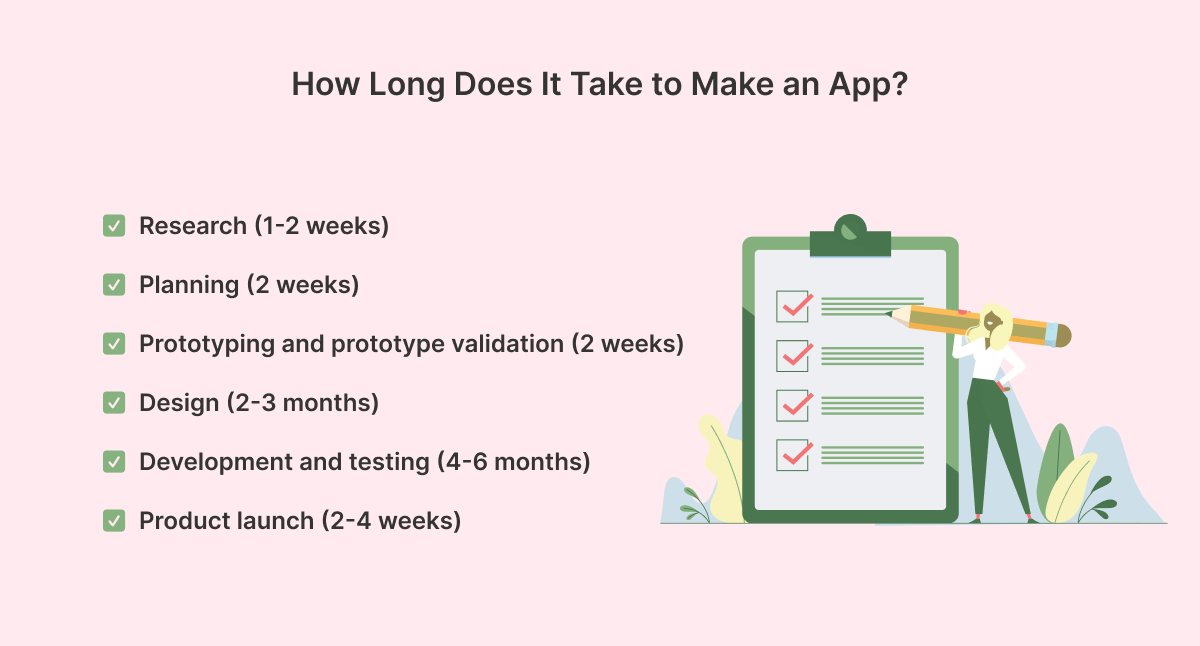
To combat this, you need to decouple your identity from the project timeline. When you set a deadline, frame it as a scientific hypothesis, not a moral imperative. "I hypothesize this will take ten days," is a guess based on current data. When it takes fifteen, you are not a bad person; you are simply a scientist whose hypothesis was incorrect. You update the model, you adjust, and you move on. The anxiety dissipates when you realize that a timeline is a flexible tool for navigation, not a shackle for punishment. Treat the deadline as a compass that says "north," but allow yourself to take detours through the woods to find the waterfall.
How do I handle the frustration of unexpected bugs that stretch the timeline?
An unexpected bug feels like a personal attack. It interrupts the narrative you have constructed in your head about how smooth and brilliant you are. This frustration is rooted in the illusion of control. We believe that if we think hard enough, we can predict every outcome. But in software, there is an infinite regress of interacting variables. When a bug appears, the healthiest emotional response is not anger, but curiosity. Shift your mental framework from "Why is this happening to me?" to "Oh, interesting, how is this happening?" This subtle detachment allows you to observe the problem as a puzzle rather than a threat.
Practically, this requires a ritual of physical separation. When you hit a wall, step away from the keyboard. Go make tea. Splash water on your face. This micro-break resets your amygdala, the fear center of the brain, which is responsible for the rage response. When you return, your prefrontal cortex—the logical center—is back online. Remind yourself that the bug is not "wasting" your time; it is teaching you the limits of your current understanding. In the long arc of personal growth, these frustrating moments are the ones that eventually build the deepest expertise. The app might be delayed, but your character and problem-solving skills are developing precisely because of the obstacle, not in spite of it.
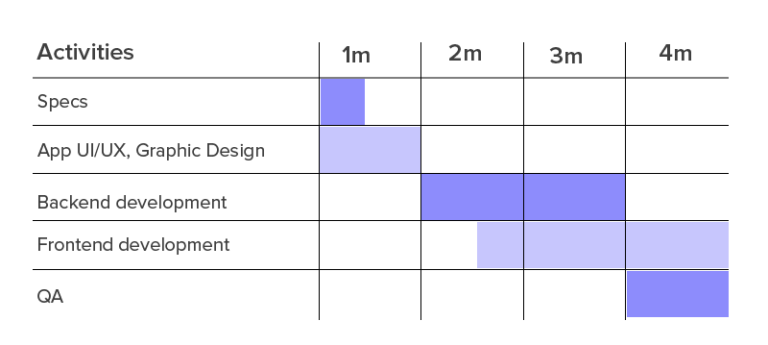
Is it normal to lose all motivation halfway through the development process?
It is not only normal, it is biologically inevitable. This is the "Valley of Despair," a phase where the novelty of the idea has worn off, but the rewards of completion are not yet visible. Your brain is starved of the novelty chemical, dopamine. In the beginning, excitement carried you. In the end, pride will carry you. But the middle is a dead zone of pure, unadulterated effort. Losing motivation here is not a sign of weakness; it is a sign that your brain is trying to conserve energy for something it perceives as doomed.
The secret to surviving the valley is to lower the resolution of your goals. When you lack motivation, you cannot look at the mountain ahead. So, stop looking. Look only at your feet. The goal for the day becomes "open the project file." That’s it. If you achieve that, you are winning. The next day, the goal is "compile the code." This is the art of "micro-progress." By shrinking the scope of expectation to nearly zero, you bypass the brain's resistance mechanism. You are tricking it into doing the work by removing the fear of the work. Remember, motivation is a feeling that follows action, not the other way around. By taking the tiniest action, you are quietly reminding your brain that the project still exists, and that you are still the captain of the ship.
How do I know if I'm spending too much time on a feature?
This is where the "Sunk Cost Fallacy" does the most damage. You might have spent ten hours on a button animation that no one will notice because the idea of abandoning it feels like admitting defeat. The psychological trick here is to ask yourself a brutal question with a timer: "If I started this feature from scratch tomorrow, would I build it this way?" If the answer is no, you are staying out of stubbornness, not value. The time you have already spent is gone; it is a sunk cost. Continuing to invest in a losing endeavor is not perseverance; it is a gambling addiction.
Emotionally, we cling to features because they represent our identity. We don't want to delete pixels we birthed. To counteract this, institute a "Redesign Timebox." Give yourself exactly 30 minutes to solve the problem perfectly. If you cannot do it in 30 minutes, you do not have a solution; you have a fantasy. At the 30-minute mark, you must either strip the feature back to its absolute basic functionality or delete it entirely. This rule protects your timeline and your mental health. It forces you to prioritize the wholeness of the app over the perfection of a single part. This practice builds resilience, teaching you that the ability to "kill your darlings" is a higher-level skill than the ability to build them.
How do I deal with the fear that my app will be irrelevant by the time I launch it?
This fear, known as "Opportunity Cost Anxiety," is a paralysis induced by looking at the market too closely. You see a competitor release a feature you planned for next month, and you feel a visceral sense of defeat. This is a psychological mirage. The market is vast, and timing is a fickle mistress. The fear of irrelevance is really a fear of wasted effort. You are afraid that your precious time will result in a product that is a digital ghost. But consider this: the time you are spending is not lost if you learn. The act of building is the reward.
To overcome this, you must shift your validation metric from "Did my app get downloads?" to "Did I keep my promise to myself?" Your app is a snapshot of your capabilities at a specific moment in time. It is a portfolio piece, a learning artifact, a testament to your grit. Even if it launches "old," the skills you honed in the process are timeless. The market changes, but your improved ability to solve problems, to manage stress, and to debug a complex system does not depreciate. You are not building an app; you are building a better version of yourself. When you frame it this way, the launch date becomes irrelevant. The relevance is in the transformation you underwent to get there.
Mastering the timeline of app development is ultimately a masterclass in delayed gratification. In a world of instant streaming and same-day delivery, your app asks you to wait, to sit with discomfort, and to trust a process that offers no immediate reward. This is a profound discipline. It teaches you that good things—really good things—are marinated in uncertainty and stress. The emotional stability you gain from navigating this chaotic timeline will bleed into every other area of your life. You will become more patient in relationships, more resilient in your career, and more compassionate with yourself when things don't go according to plan.
The next time someone asks, "How long will it take?" you can respond not with a date, but with a sentiment: "It will take exactly as long as it needs to for me to become the person who could build this." The app is a byproduct; the journey is the destination. The time you spend staring at a screen, wrestling with logic, and crying over a server error is not time wasted. It is time invested in the quiet, often messy, art of becoming. And that, my friend, is a build that requires a lifetime.