How Long Is It To Become A Nurse

So, you’ve binged every episode of Grey’s Anatomy and now you’re convinced you’re ready to scrub in. Or maybe you just love the idea of a career that’s equal parts science, chaos, and genuine human connection. Either way, the question burning in your mind is probably: how long is it to become a nurse?
The short, slightly annoying answer is: it depends. But the good news? It’s way more flexible than you think, and there’s a path for just about every timeline. Let’s break it down like a smooth playlist—no fast-forwarding, just the right vibe for your life.
The Classic Routes: Two to Four Years
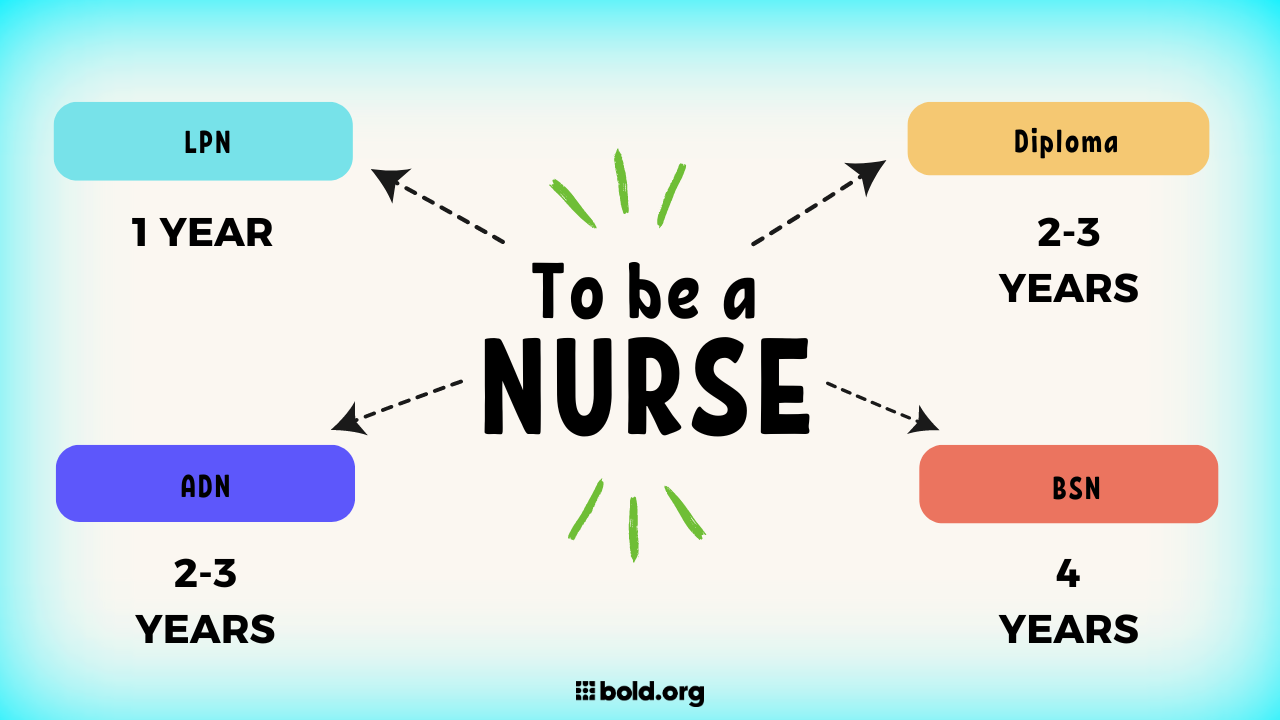
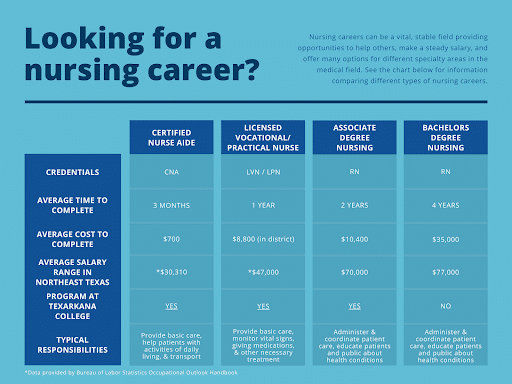
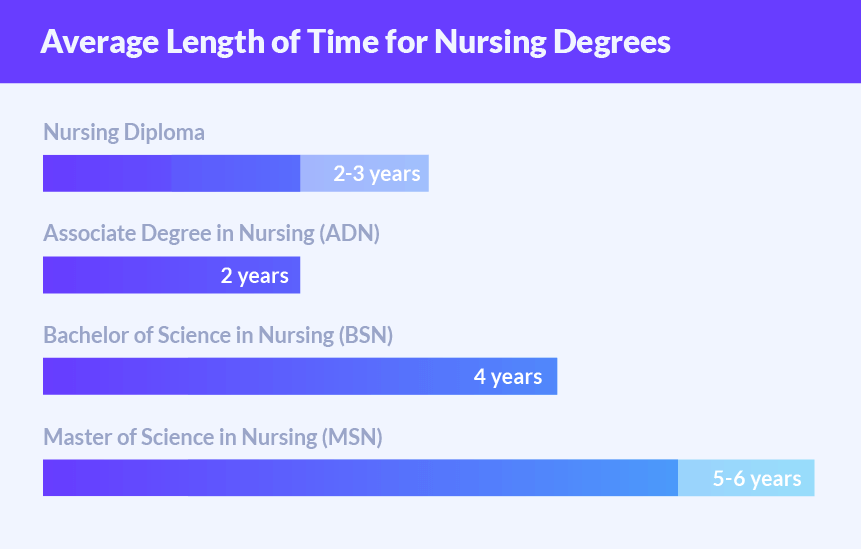
If you’re starting from scratch, the most common paths are the Associate Degree in Nursing (ADN) and the Bachelor of Science in Nursing (BSN). The ADN typically takes about two years, while the BSN takes four. That’s the difference between a sprint and a leisurely jog with a few scenic detours.
Must Read
Here’s the kicker: many hospitals now prefer BSN-prepared nurses, but an ADN gets you in the door faster. You can always start with the ADN, start earning, and then do an RN-to-BSN bridge program online while you work. Think of it as the “buy now, upgrade later” approach to your career.
Fun fact: Florence Nightingale, the OG nurse, didn’t have a degree at all—she just had relentless energy and a lantern. You’re already ahead of her.
What About the Fast-Track? Accelerated Programs
Already have a bachelor’s degree in, say, art history or marketing? You’re not doomed to a life of passive income blogs. Accelerated BSN programs (ABSN) are designed for career-changers, and they pack everything into 12 to 18 months of intense, immersive study. It’s like a bootcamp for empathy and pharmacology.
These programs are brutal—think “drinking from a firehose while running on a treadmill”—but they’re perfect if you’re highly motivated and don’t mind living on coffee and flashcards. The payoff? You’ll be a nurse in under two years, and you’ll have a story that makes you sound like a healthcare superhero at parties.
Just a heads-up: ABSN programs require you to have already completed prerequisites like anatomy and microbiology. If you haven’t, add another semester or two of night classes. Real talk: that biology class you skipped in college could come back to haunt you, but hey, at least you know the difference between a mitochondria and a meme now.
Licensing and the NCLEX: The Final Boss
Once you graduate, you’re not a nurse yet—you’re a highly educated, sleep-deprived person with a diploma. The next step is the NCLEX-RN, a national licensing exam that’s part multiple-choice quiz, part anxiety simulation. Most people take it within a few weeks of graduating, and you need to pass before you can legally touch a patient.
Don’t panic. The pass rate for first-time test-takers is around 80%, and you’ve survived nursing school, which is basically twenty years of drama squeezed into two. You’ll be fine. Just remember: the NCLEX isn’t testing if you’re a good person—it’s testing if you know when to give insulin versus when to call for backup.
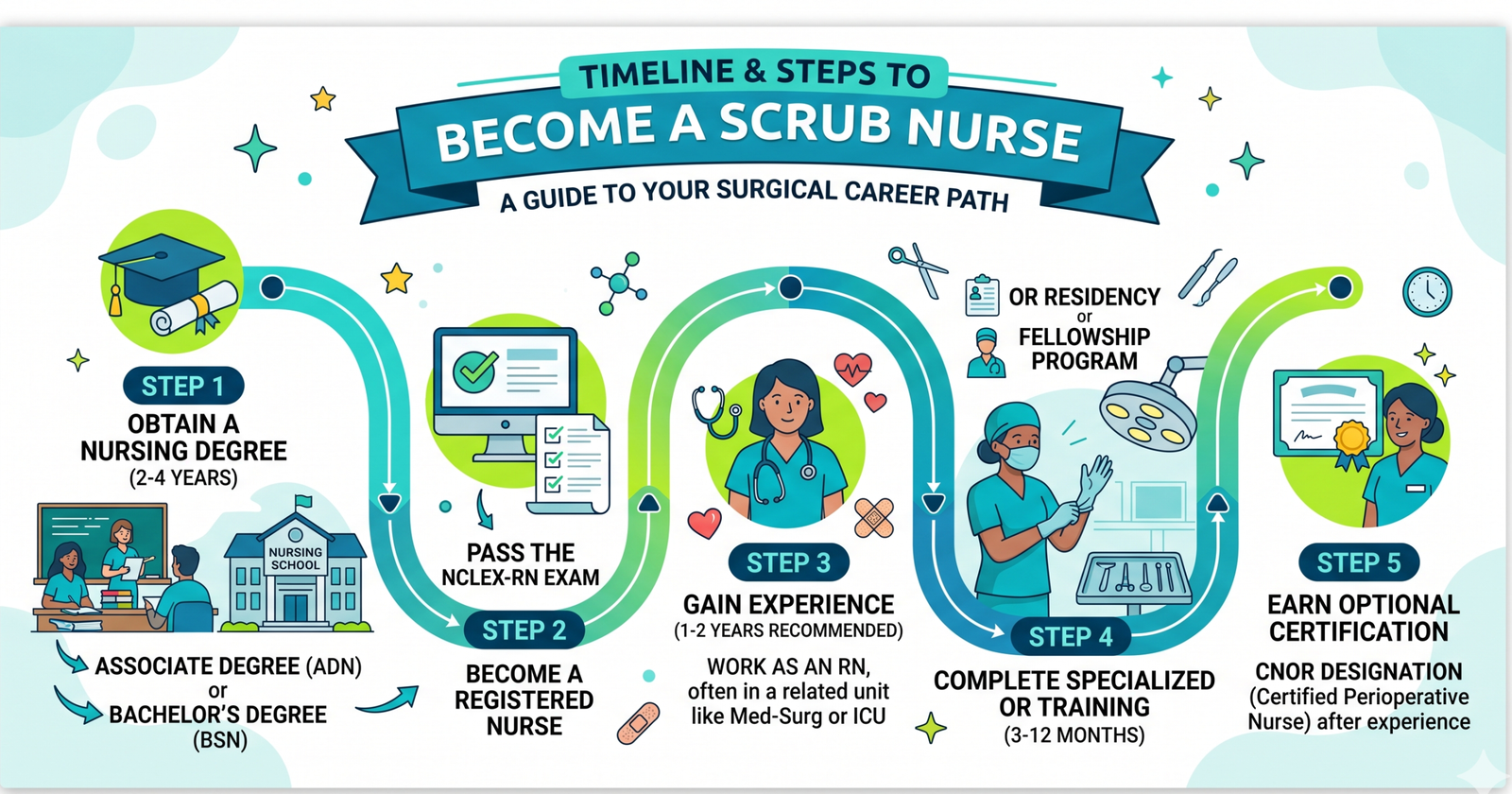
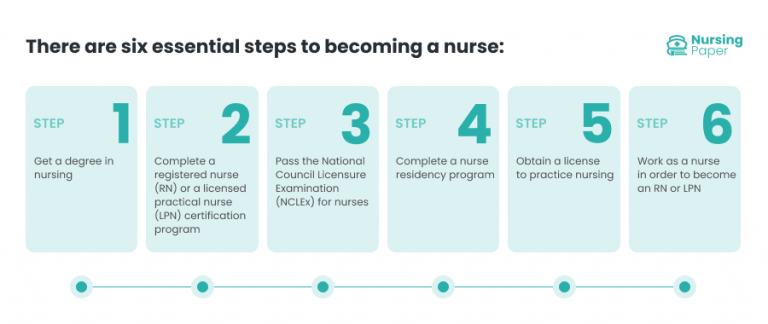
Total time from zero to licensed RN? Two to four years, depending on your route. Add a few months for application processing and your state’s bureaucracy—because nothing screams “modern healthcare” like waiting in line at the Department of Health.
The Long Game: Going Further
If you decide you want to become a Nurse Practitioner (NP) or a Nurse Anesthetist (CRNA), add another two to four years on top. That’s a solid six to eight years of total schooling, but you’ll be earning six figures and making autonomous decisions. It’s like the difference between being an adorable sidekick and being the superhero with the cape.
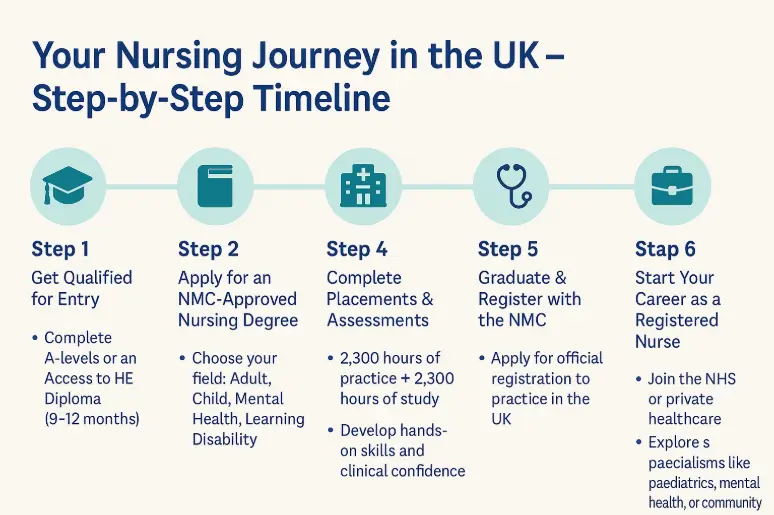
Here’s a little cultural nugget: in the UK, the path is more standardized—three years for a degree, then the “preceptorship” year where you’re still learning on the job. In the US, we’ve turned everything into a choose-your-own-adventure, which is both liberating and mildly exhausting. But hey, flexibility is our love language.
Why Time Isn’t the Real Issue
Here’s the thing nobody tells you: the clock starts ticking the moment you decide. Two years from now, you’ll be two years older whether you’re in scrubs or still scrolling TikTok at 2 a.m. The question isn’t just “how long does it take?”—it’s “how long are you willing to wait to start a life you’re actually excited about?”
I met a nurse once who started at 45 after raising three kids. She said the hardest part wasn’t the coursework; it was convincing herself she wasn’t too old. She’s now a charge nurse in the ER, and her stress level is lower than yours on a Sunday afternoon.
So, whether you’re looking at a two-year ADN, a four-year BSN, or a rapid-fire ABSN, the real timeline isn’t about months and semesters—it’s about showing up. And if you do, you’ll find that the journey to the bedside is always, always worth the wait. Plus, you’ll finally get to use that “stat” phrase in a non-ironic way.
Now go hydrate, and maybe start flipping through those anatomy flashcards. Your future self—scrubs pressed, stethoscope dangling—will thank you.