How Do You Blur Out Faces In Videos
In the quiet aftermath of recording a memory—a child’s first wobbly steps, a friend’s tearful toast, a candid moment of laughter—we often find ourselves confronting an unexpected intruder: a stranger’s face in the background, a passerby caught mid-stride, or an ex-partner who has since become a ghost. Our brains are hardwired for narrative, and when we watch a video, we unconsciously scan every face for emotional significance. A face is not just a visual object; it is a portal to a story, a trigger for a memory, or a source of social anxiety. When we see an unwanted face, our primal threat-detection system activates, whispering questions of consent, privacy, and unresolved emotional residue. Blurring a face, then, is not merely a technical act—it is a profound act of psychological curation, a way of saying, "This story is about this, not that."
In our hyper-connected age, where every pixel is laden with social currency, the decision to blur a face becomes a modern ritual of empathy. We are not just editing footage; we are editing the emotional landscape of our shared reality. The relevance of this topic extends far beyond the "how-to" of software. It touches on our innate desire to protect the vulnerable, to honor the past, and to reclaim our own narrative voice. When you blur a face, you are engaging in a silent conversation with future viewers, telling them, "Here is what matters, and here is what does not." This act of deliberate obscurity can be both a shield and a scalpel, carving out a space for mental clarity in an otherwise cluttered digital world. Let us explore this delicate art, not as a technical chore, but as a journey into the very heart of how we see and remember.
The Hidden Psychology of Visual Noise and Emotional Triggers
Imagine scrolling through your camera roll months after a significant life event—a wedding, a farewell party, a difficult conversation you recorded for posterity. Your eyes are drawn to the protagonist, but your brain is subconsciously cataloging every other face in the frame. Neurologically, our fusiform face area (FFA) is a specialized brain region that processes faces faster than any other object. This means that a blurred face or an un-blurred stranger can hijack your attention, pulling you out of the nostalgic moment and into a spiral of questions: Who was that? Did they see me? Are they okay with this being online? This cognitive dissonance is a real source of mental friction. By leaving faces un-blurred, we often unknowingly preserve a low-level anxiety that prevents us from fully experiencing the memory we intended to capture.
Must Read
The emotional triggers here are subtle but powerful. For many, the fear of being identified (or identifying someone else) in a vulnerable moment taps into a deep-rooted fear of judgment. We project our own social insecurities onto the pixels. Perhaps the face belongs to someone you are no longer close to; seeing their sharp features in your video resurrects a dormant grief or anger. Leaving them visible is like keeping an unopened letter on your desk—it taunts you. Conversely, the act of blurring is a cognitive release. When you drag that slider and watch the face dissolve into a soft, anonymous smudge, you are symbolically erasing the emotional weight that person carries in your life. It is a form of self-soothing, a way to say to your own amygdala, "This is safe; this is contained; this is no longer a trigger."
Moreover, there is a narcissistic bias at play. We tend to assume that our videos are about "us" and our immediate circle, but every face in the background is a person with their own complex life and privacy rights. When we refuse to blur, we are implicitly declaring our own needs superior to theirs. This can create a subconscious guilt, a nagging feeling that we have violated a social contract. This guilt, even if unspoken, corrodes the joy of sharing the video. Blurring becomes an act of radical humility. It acknowledges that the world is full of stories we do not own, and by obscuring the faces of incidental strangers, we are actively clearing our own conscience, allowing us to share content without the toxic baggage of having "exposed" someone. The mental hurdle is not the technical skill; it is the surrender of control over the entire frame.
From Anxiety to Art: A Mindful Approach to Obscuring Identities
To master this skill is to master a new language of respect. The first step is not opening editing software, but rather, opening a dialogue with yourself about intent. Ask yourself: "Why am I blurring this face?" Is it to protect a minor? To honor a request? To prevent a legal repercussion? Or is it to ease my own heart? This introspective question pivots your mindset from a passive editor to an active guardian. Begin with a simple breathing exercise. As you scan your footage, treat each face you encounter as a threshold. When you decide to blur, you are not "ruining" the video; you are weaving a golden thread of protection through it. This shift in perception is the bedrock of a healthier relationship with your digital memories.
![11 Best Free Apps for Blurring Faces in Photos and Videos [2026]](https://images.wondershare.com/filmora/article-images/how-to-blur-face-in-videos-16.jpg)
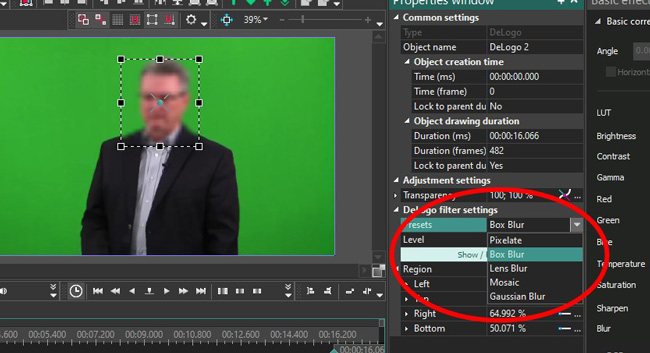
Step-by-step, the routine should be a ritual, not a chore. First, watch the video once through without touching anything. Take notes on your emotional reactions—where did your stomach tighten? Where did you feel a flash of unease? These are your target zones. Next, choose your tool. For a beginner, free platforms like DaVinci Resolve or CapCut offer easy "face tracking" features. But do not click "apply" immediately. Zoom in on the face you intend to blur. Look at it. Acknowledge its humanity. Then, when you hit the "blur" button, imagine a soft fog rolling in, a gentle shroud of anonymity. Increase the intensity until the face is indistinguishable, but not so much that it becomes a jarring black box. The goal is a fluid, organic obscurity that allows the eye to glide past without emotional friction.
For those who frequently record events, create a "pre-blur" checklist to reduce cognitive load. Before you hit record, you can mentally prepare, but for existing footage, adopt a rule of thumb: if in doubt, blur. When you err on the side of obscurity, you are choosing peace over perfection. Moreover, consider the temporal aspect of mental health. You might feel fine sharing a video today, but what about in five years? The faces you leave un-blurred today are pixels that could resurface in court documents, job interviews, or social media scrapes. Blurring is a form of future-proofing your mental well-being. It is an investment in the peace of your future self, who will not have to worry about leaked footage or re-ignited controversies.
Finally, embrace the imperfection of the blur. In a culture obsessed with 4K clarity, a blurred face is a rebellious act of prioritization. It declares that the soul of the video is in the action, the context, and the emotion, not in the background cast. When you stop seeing blurring as a "defect" and start seeing it as a "feature," you unlock a new level of artistic expression. You become a curator of attention, guiding your viewers to look where you want them to look. This mindful control translates into your daily life, reinforcing the idea that you are the author of your own perception, and you have the power to blur the things that diminish you and sharpen the things that elevate you.
Frequently Asked Questions: The Emotional Roadmap to Blurring
Q1: Does blurring a face ruin the "authenticity" of a video?
This is a profound question about the nature of art versus documentation. On a purely technical level, yes, you are altering the raw data of the moment. But from a psychological perspective, authenticity is not about raw data; it is about emotional truth. If a video contains a stranger who makes you or your audience feel uncomfortable, paranoid, or distracted, then the video is inauthentic to your intended message. The blur removes a layer of social noise, allowing the core emotion—the laughter, the tears, the connection—to shine through with greater intensity. You are not hiding reality; you are focusing it.
Culturally, we often confuse "gritty realism" with "unedited chaos." True authenticity is the honest portrayal of a relationship. If you are recording a birthday party, the authentic moment is the child blowing out the candles, not the random adult walking behind them. By blurring the background face, you are making a curatorial decision that prioritizes the human connection you actually care about. This does not diminish the event; it elevates it. Your mental well-being is improved because you are sharing a story without collateral damage, and that allows you to engage with your own content without a lingering sense of dishonesty or carelessness.
Q2: I struggle to let go of the "perfect shot" if a face is in it. How do I cope?
The obsession with perfection is a cognitive distortion known as "all-or-nothing thinking." You believe that because a face is in the background, the entire video is flawed. This is a trap of perfectionism that leads to anxiety and paralysis, often causing you to delete the video entirely—losing a precious memory because of a peripheral detail. To cope, challenge that distortion. Ask yourself: "Is the stranger's expression the central narrative? Is their innocent presence actually ruining the memory, or is it just a visual detail I noticed?"
Coping with this anxiety requires a radical reframe. Instead of viewing the blur as a "loss," view it as an upgrade. You are taking a raw, messy reality and transforming it into a refined, intentional piece of mental property. The blurred face is not a blemish; it is a decorative element, a modern impressionist smudge that adds texture and mystery. When you feel the urge to discard the video, pause and force yourself to blur the face. Then, watch it again. Notice how your chest relaxes. Notice how the memory returns. You have saved the video and saved yourself from the grief of forgetting a beautiful moment. The blur becomes a bridge across your own burning bridge of perfectionism.
Q3: Is it disrespectful to blur someone who is a public figure or a known person?
This is a slippery slope of ethics and personal boundaries. While public figures often forfeit certain privacy rights in the name of journalism, your personal video is not a news broadcast. If you are recording a personal vlog and a celebrity walks by, you have a choice. From a mental well-being standpoint, blurring them is a powerful exercise in detachment. It says, "You are not the star of my story; I am." This is crucial for those who suffer from "main character syndrome" in others or who feel overshadowed by charismatic individuals.
Psychologically, leaving a public figure un-blurred can trigger a "fame bias" in your viewers, drawing their attention away from your personal narrative and onto the celebrity. This can cause you to feel undervalued or bitter, as if your life is only interesting when adjacent to someone "important." Blurring them is a radical act of self-respect. It recalibrates the power dynamic. You are asserting that your journey, your friends, and your family are the focal points. This is not disrespect; it is a healthy boundary. It protects you from the psychological trap of comparison and ensures that your video serves your personal growth, not the ego of a stranger.
Q4: How do I handle a face that moves a lot? Getting a perfect blur is stressful.
The technical frustration here is a mirror for a deeper psychological issue: the fear of losing control. When a face is moving erratically, your brain's desire for order clashes with the chaotic reality of the footage. This can lead to "editing fatigue," a state of burnout where you just give up. To address this, shift your goal from "perfect tracking" to "sufficient obscurity." You do not need a flawless blur; you need an effective one. Use the "over-blur" technique—make the blur radius larger than necessary. This creates a safety margin so that even if the tracking slides, the face remains anonymous.
Emotionally, you must practice patience with the process. The stress you feel is not about the software; it is about your internal critic demanding a sterile, flawless output. Give yourself permission to use the "keyframe" method if auto-tracking fails. Manually set blur points at the start, middle, and end of the movement. It is okay if the blur is a few frames behind. As long as the identity is obscured, you have achieved your ethical and emotional goal. This practice of accepting "good enough" in your editing will bleed into your life, teaching you that progress is better than perfection, and that a little wobble in the blur is a reminder that life is rarely a steady shot.
Q5: Will blurring faces make me feel like I have "erased" people from my life?
This is a profoundly emotional question that touches on grief and memory. Yes, blurring a face can feel like a symbolic erasure, especially if the face belongs to a former partner or a departed friend. This act can trigger a wave of sadness, as if you are finalizing that chapter of your life. However, it is vital to understand that blurring is not deleting. The person existed; the memory is intact. What you are blurring is the visual distraction of their presence, not their historical impact.
Reflect on your intention. If you are blurring a face to protect yourself from painful memories, that is a form of self-preservation, not dishonesty. You are creating a "soft-focus" memory, allowing the event to exist in your mind as a positive blur rather than a sharp point of pain. This is a cognitive reappraisal technique used in therapy—changing how you visually represent a memory to change its emotional valence. By choosing to keep the video but blur the face, you are keeping the love or the lesson while discarding the daily sting of visual recognition. It is an act of profound emotional intelligence, proving that you can hold space for the past while prioritizing your present peace.
Mastering the art of blurring faces is an exercise in emotional sovereignty. It teaches you that you are not a passive receiver of memories, but an active editor of your inner world. Each time you choose to obscure, you are making a micro-decision to value privacy over exposure, peace over chaos, and mental clarity over digital clutter. This discipline extends beyond the video editor. You begin to "blur" toxic thoughts, "mute" harmful comparisons, and "focus" on the faces and voices that truly matter. The result is a life that feels lighter, more intentional, and less burdened by the weight of uninvited visual noise.
Ultimately, the blurred face is not a flaw; it is a testament to your empathy. It is a silent promise to the world that you see people, not just objects. And in that seeing, you find a deeper connection to your own humanity. So the next time you open your editor and reach for that blur tool, do not sigh in frustration. Take a breath. Know that you are not just fixing a video. You are healing a perception. You are constructing a reality that is safe for your mind to dwell in—a reality where the focus is always on the love, the laughter, and the life you are choosing to live.