How Do I Sell Stocks On Robinhood
Let’s be real for a second: selling stocks on Robinhood used to feel like the financial equivalent of whispering in a library. You’d log in, see your shiny green numbers, and maybe consider cashing out—only to be paralyzed by the fear of missing out on the next moonshot. But then came the meme stock era, the infamous GameStop squeeze, and a tidal wave of Reddit-fueled hysteria that turned the entire app into a casino with a slick UI. Suddenly, “sell” wasn’t a dirty word; it was a power move. It was the plot twist in your personal drama, the moment you flexed on your group chat with a screenshot of your realized gains (or losses, if you’re a masochist).
Fast forward to 2025, and the conversation has shifted from “How do I buy the dip?” to “How do I exit without triggering a taxable event and a mental breakdown?” The internet is flooded with TikTok financial gurus, X (formerly Twitter) shitposters, and Discord moderators dissecting every tap and swipe. Everyone is suddenly a day trader, but nobody knows how to press the red button. The cultural zeitgeist has turned selling into a psychological battlefield—are you a disciplined investor or a paper-handed coward? Spoiler: you’re probably just a human being with a phone, trying to afford rent. Let’s unpack the chaos, the clout, and the actual mechanics of cashing out on the most controversial brokerage of our generation.
The current status of selling on Robinhood is a delicious irony. The app that democratized trading, that made buying fractional shares of Tesla as easy as ordering a burrito, now finds itself at the center of a generational anxiety spiral. It’s not just about hitting “sell”; it’s about timing, tax implications, and the existential dread of watching your portfolio dip 5% five minutes after you exit. This isn’t just a tutorial—it’s a cultural autopsy of why we’re all obsessed with the exit ramp.
Must Read
The Screen-Life of a Paper Hand: Why Selling Is Now a Personality Trait
Step into any financial subreddit or TikTok comment section, and you’ll immediately notice the tribal warfare. The “diamond hands” crowd—those who hold through hell and high water—have elevated suffering into a virtue. They mock anyone who sells as a “paper hand,” a cowardly weakling who lacks conviction. Meanwhile, the “profit takers” are out here screenshotting their withdrawals, clapping back with that one meme: “I didn’t lose 50%, I just locked in a 2% gain, respect the grind.” This toxic dichotomy has turned a simple transaction into a referendum on your character. It’s like the gym bro culture, but instead of deadlifting, you’re dodging capital gains taxes.
What’s even weirder is how the act of selling has become a form of social currency. On Discord servers, people post “sell alerts” with the gravity of a wartime dispatch. On Instagram, financial influencers film reaction videos to their own exits, complete with dramatic zooms and fake tears. The subculture is no longer about wealth accumulation; it’s about the spectacle of the sale. You’re not just liquidating assets—you’re crafting a narrative. Are you the shrewd billionaire who saw the warning signs, or the chaotic degenerate who sold at 9 AM, bought back at 11 AM, and lost your lunch money? The internet loves a villain origin story, and your Robinhood transaction history is the first chapter.
This shift didn’t happen in a vacuum. It’s a direct byproduct of the 24/7 news cycle, where CNBC headlines scream at you while your doomscrolling feeds you contradictory predictions. The gamification of investing—those celebratory confetti animations when you make a trade—has rewired our brains. Selling isn’t a mundane task; it’s a dopamine hit. Every tap feels like pulling a slot machine lever, and the reward is a temporary escape from the algorithmic grind. But under the neon glow of the app, there’s a quiet desperation. We’re all trying to outsmart a system designed to keep us distracted, and selling is our desperate attempt to grab the wheel.

Your Exit Strategy: How to Sell Without Losing Your Shirt (or Your Mind)
First, let’s get one thing straight: selling on Robinhood is objectively easy. You open the app, tap on your stock, hit the “Sell” button, choose your order type (market, limit, stop-loss), and confirm. It takes fewer steps than ordering a latte. The hard part is the decision-making process, which is where most people spiral. To navigate this minefield, you need to approach it like a digital detox, not a Las Vegas trip. Start by setting a profit target and a loss tolerance before you even open the app. Write it on a sticky note. Tattoo it on your wrist. This pre-planned approach removes the emotional volatility from the equation, transforming you from a panicked gamer into a cold-blooded strategist.
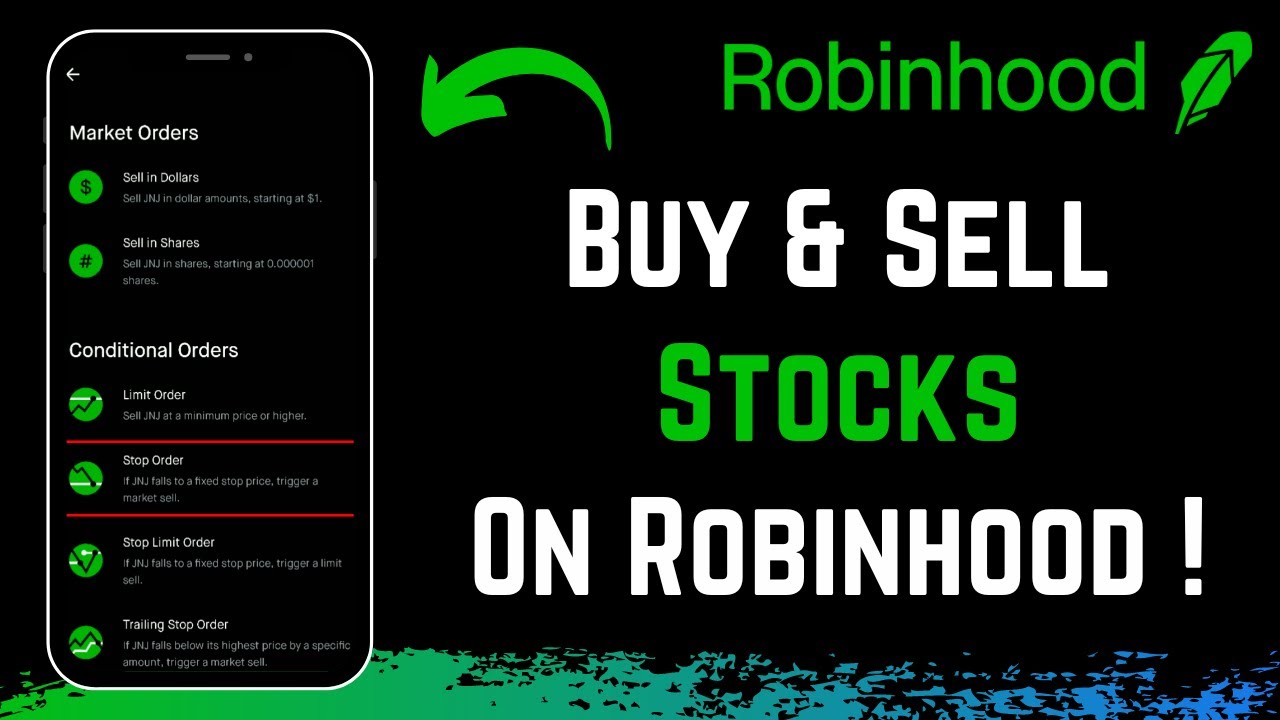
Next, you need to master the order types like you’re learning the cheat codes to a video game. A market order is for the impatient—it executes instantly at the current price, but you might get a slightly worse fill during high volatility. A limit order is your precision strike; you set the exact price you want, and you’ll wait forever if necessary. For the love of all that is holy, use a stop-loss if you’re prone to checking your phone every five minutes. This little feature automatically sells your position if it drops to a certain price, acting as your guardian angel when you’re in a meeting or, more likely, doomscrolling on the toilet. Robinhood’s interface makes these options surprisingly accessible, but the internet is full of horror stories about people who skipped the tutorial and watched their portfolio vanish faster than a Snapchat message.
Now, let’s talk about the elephant in the room: taxes. The IRS is the ultimate party crasher. If you hold a stock for less than a year, you’re looking at short-term capital gains, taxed at your ordinary income rate—which is a brutal ass-kicking. Hold it for over a year, and you get the long-term rate, which is significantly friendlier. So, before you hit that sell button, check your holding period. Is the stock up 20% in three months? Great, wait another nine months if you can. Unless the company is embroiled in an active scandal—like a CEO getting caught using the company card for OnlyFans—the tax savings are worth the patience. You can also use tax-loss harvesting, which is fancy Wall Street speak for selling your losers to offset your winners. It’s the financial equivalent of turning your mess into a tax deduction.

Another critical tip: don’t sell everything at once. Unless you’re fleeing a collapsing dictatorship, stagger your exits. Sell 25% now, see how it feels, and then reassess. This “scaling out” strategy is beloved by professional traders because it reduces the risk of selling all your shares at a local bottom. Think of it like eating a pizza—you don’t inhale the whole thing in one bite (unless you’re a monster). Take a slice, let it cool, and see if you’re still hungry. This also helps psychologically; you’re not making a final, irreversible judgment call. You’re just trimming the fat, leaving room for potential upside. And if the stock crashes after your first sale, you’ll feel like a genius instead of a grief-stricken wreck.
Finally, turn off the noise. Before you sell, log out of X, close the subreddit, and mute the “finfluencer” who screams “BUY THE DIP” into their microphone at 6 AM. The most dangerous thing you can do is consult the crowd right before executing a trade. The crowd is a hive mind of anxious parrots. Instead, use a simple heuristic: if the company’s fundamentals have changed (e.g., they lost their main client, or the CEO is now a fugitive), sell. If the price is just fluctuating because the market is having a tantrum, hold. This is your money, your life, and your sleep schedule. You don’t need the approval of strangers who have a fraction of your net worth. Trust your pre-planned targets and execute with the cold confidence of a robot who just watched Terminator 2.
FAQs: The Burner Questions Everyone’s Too Embarrassed to Ask
Will selling my stocks instantly trigger a tax audit from the IRS?
No, sweet summer child. Selling a single stock is about as likely to trigger an audit as eating a salad is to make you a vegan. The IRS audits roughly 0.4% of individual tax returns, and they’re primarily interested in high-income earners, crypto whales, and people claiming enormous charitable deductions. You’re not on their radar for a $5,000 gain. However, that doesn’t mean you should ignore reporting it. Robinhood will send you a 1099-B form at the start of the next tax season, which lists every sale and the cost basis. It’s super easy to upload this into TurboTax or whatever software you use. The punishment for not reporting? You’ll get a nasty letter, plus interest and penalties. So, just report it. It’s 15 minutes of your afternoon, and it keeps the IRS from sending ominous mail to your door.

That said, there is a persistent internet myth that Robinhood is “snitchier” than other brokers, which is pure nonsense. The law requires all brokers to report sales to the IRS. Robinhood just does it with a cleaner app interface. The real issue is that many newbies don’t understand which sales matter. If you sold a stock at a loss, you still need to report it, but you can use that loss to offset gains. That’s not snitching; that’s smart tax planning. Ignoring this because you’re scared of the big, bad government is like not brushing your teeth because you’re scared of the dentist. You’re only hurting yourself, and the eventual cost is far worse.
What’s the best time of day to sell? Is there a “magic hour”?
The internet is obsessed with this. Some say the first 30 minutes after market open (9:30 AM ET) is prime because of high volatility—good for scalpers, terrible for the faint of heart. Others swear by the last hour (3:30 PM ET), when institutional investors rebalance and prices can spike. The boring truth? There is no magic hour. Studies show that intraday timing is largely a crapshoot for individual stocks unless you have access to institutional-grade data. However, the worst time to sell is usually right at 9:30 AM, when the market is knee-deep in “pre-market hysteria” and spreads between bid and ask prices are annoyingly wide. You might get a terrible fill if you’re using a market order.
Your best bet is to avoid the first 15 minutes of trading unless you’re a professional adrenaline junkie. Wait until at least 10:00 AM, when the initial chaos stabilizes. Alternatively, focus on extended hours trading, but beware—Robinhood offers it, but the liquidity is thin, and the price swings are wild. You could set a limit order at $50, and the stock trades at $49.50 and never fills. That’s not a glitch; that’s just reality. Instead of obsessing over the clock, obsess over your order type. A limit order with a price slightly above the current bid will give you a more predictable outcome than streaming the minute-by-minute chart. Trust the process, not the pinky promise of a TikTok guru who claims to have “cracked the code.”

If I sell, can I buy the same stock again the next day without breaking any rules?
Absolutely, but you’ll be dancing with the Pattern Day Trader (PDT) rule. If you have a margin account with less than $25,000, you are only allowed to make three day trades within a rolling five-business-day period. A day trade is defined as buying and selling (or selling and buying) the same stock on the same calendar day. If you sell on Monday and buy back on Tuesday, that’s not a day trade. That’s just a regular, boring (and taxable) transaction. However, if you sell at 10 AM and buy back at 2 PM, you just used one of your three precious day trades. Get flagged too many times, and Robinhood will restrict your account for 90 days, freezing you out of the action.
The internet lore is full of people who accidentally violated the PDT rule and got locked out for three months, leading to a Twitter meltdown. To avoid this, check if you’re on a cash account instead of margin. In a cash account, you don’t have the $25k requirement, but you have to wait for funds to settle (usually two business days) after a sale before using them again. This is annoying but safe. The cultural takeaway? Panic-selling and then FOMO-buying back in is a vicious cycle that the PDT rule is designed to curb. It’s the SEC’s way of saying, “Calm down, you’re not a day trader, you’re just gambling.” So, if you sold to escape a plummeting stock, resist the urge to “buy back in” for at least overnight. You’ll save money and your account’s freedom.
The great Robinhood sell-off saga isn’t just a financial mechanic; it’s a mirror reflecting our generational relationship with risk, control, and instant gratification. We’re the first cohort raised on digital interfaces that reward impulsive behavior with confetti and sound effects, and we’re now trying to apply old-world financial wisdom to an app designed by former gaming industry folks. Is selling on Robinhood a passing fad? Hardly. The act of selling is eternal—it’s the yin to buying’s yang. But the way we do it, the anxiety we attach to it, and the tribal rituals we’ve built around it are absolutely a product of our hyper-connected, trend-obsessed era. The “sell” button won’t disappear, but our nervousness might.
Ultimately, the move is to reclaim your power from the algorithm. Selling isn’t a betrayal of the “movement” or a sign of weakness; it’s a lifeboat. It’s the most adult thing you can do in a sea of adulting chaos. You’re not paper-handed; you’re just using your hands to, you know, do something productive. So, the next time you feel that dopamine spike as your finger hovers over the “Sell” button, remember: you’re not capitulating. You’re curating your own financial narrative. And if anyone calls you a coward, just send them a screenshot of your tax form and watch them go silent. That’s the ultimate flex.