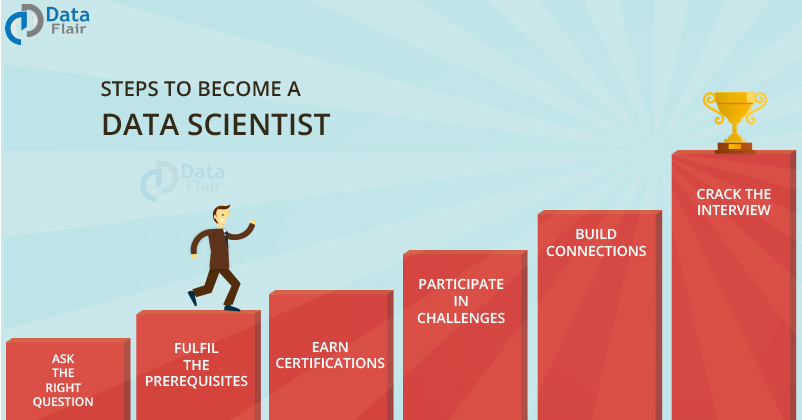
How Can I Become A Data Scientist
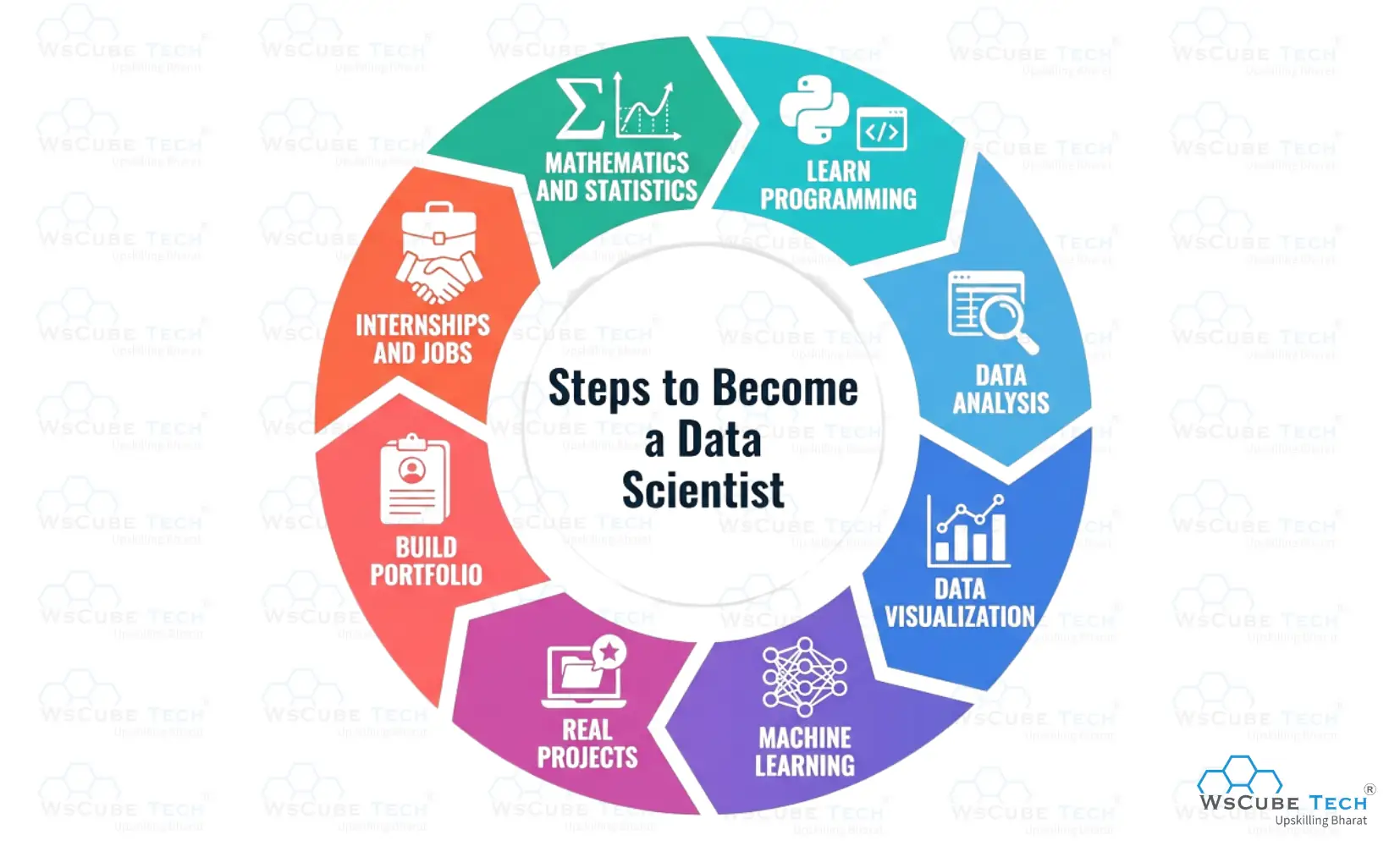
So, you’ve decided you want to become a data scientist. Congratulations—you’ve chosen a career that pays like a hedge fund manager but sounds like a wizard to your relatives. The reality? You’ll spend 80% of your time cleaning data that looks like someone dropped a puzzle in a blender, and 20% of your time explaining to your boss why the model said “yes” to a loan for a hamster with a credit score of 12. But hey, the other 10% is pure magic—and yes, I know that adds up to 110%, which is exactly the kind of math you’ll need to master.
First, let’s bust the biggest myth: you do not need a PhD in quantum astrophysics. Sure, the job title sounds like a bureaucratic alien from a sci-fi movie, but the core skill is just curiosity mixed with stubbornness. Think of it as being a detective who refuses to sleep until they find out why your app’s users stop tapping the “buy” button right after seeing a picture of a sad-looking avocado. Most working data scientists came from physics, economics, psychology, or even philosophy—one of my colleagues literally has a degree in 18th-century French poetry. She now predicts customer churn better than anyone, because she understands that humans are irrational, poetic messes.
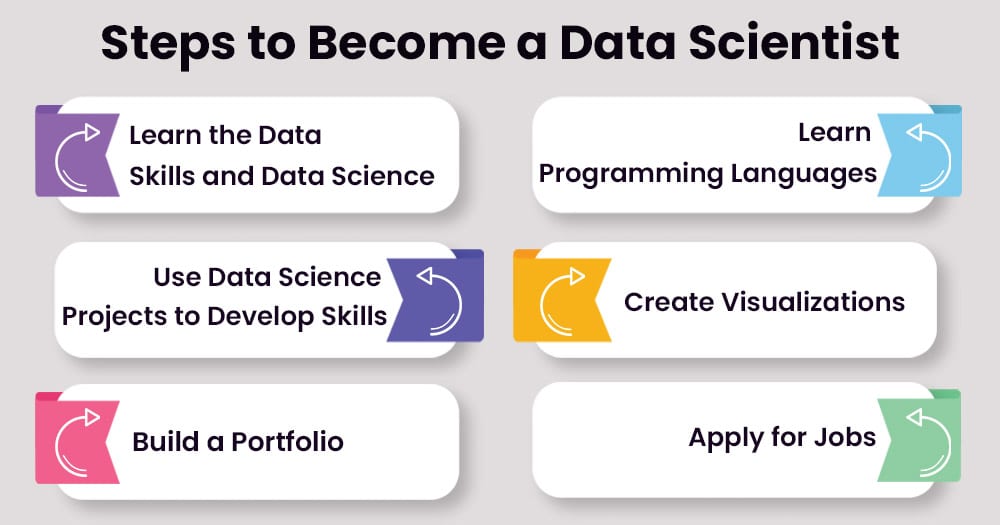
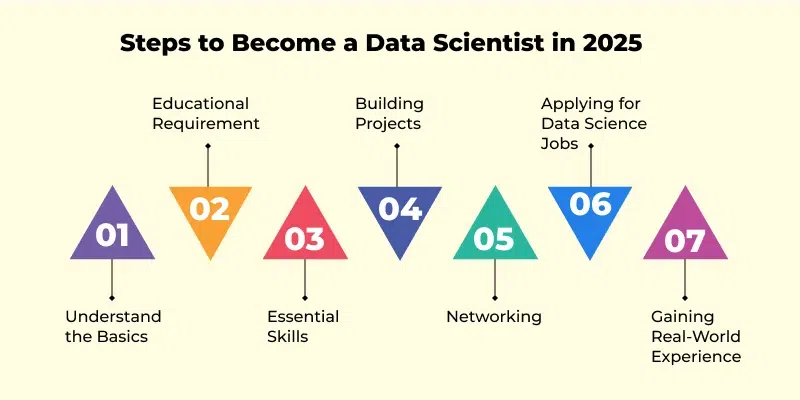
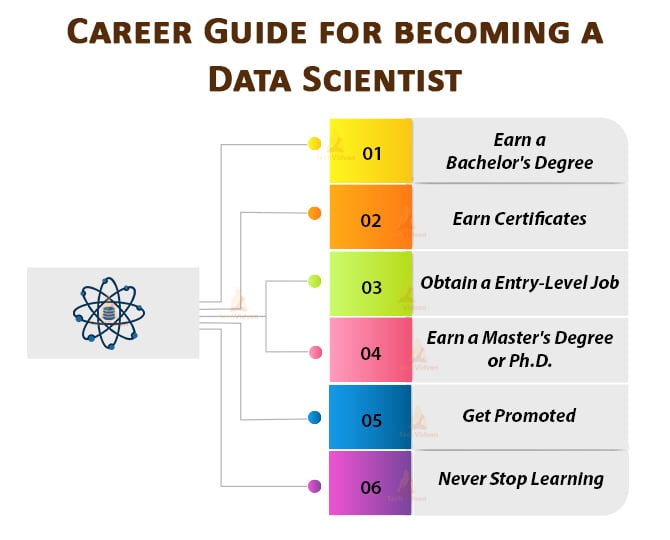
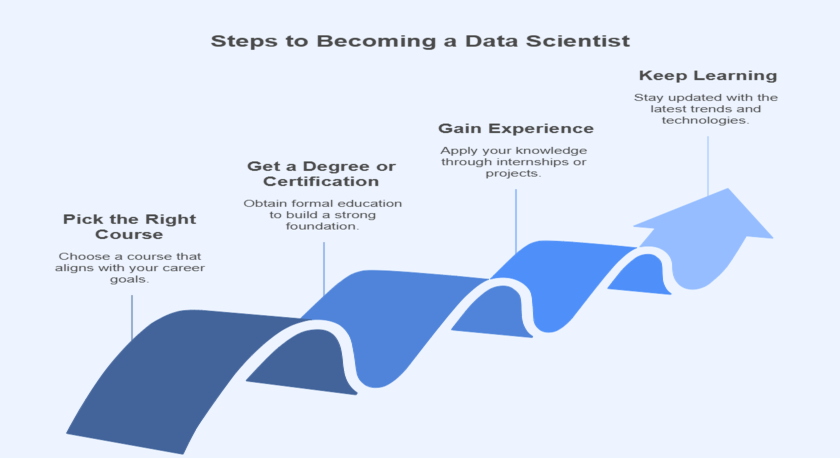
Step One: Learn the Language (No, Not Python Yet)
Before you write a single line of code, you need to learn SQL. Yes, that weird acronym from 1979 that sounds like a sneeze. SQL is the universal language of databases, and it’s ridiculously easy—like asking questions to a very literal robot. “Give me all customers who bought cat food more than twice.” The robot does it, and you feel like a god. Surprising fact: 90% of data science job interviews ask SQL, even for “machine learning” roles. You might train a neural net, but you’ll still need to extract the data to feed it, and if you can’t do that, you’re just a person shouting “AI!” into a void.
Must Read
Step Two: Python and ‘The Math’ (But the Fun Math)
Next, pick up Python—not the snake, the language. It’s the Swiss Army knife of data, and it reads almost like English, if English had a severe case of brackets. You’ll learn libraries like pandas (which, despite the name, is not a cute bear but a way to torture spreadsheets into submission). As for statistics, you don’t need to derive the normal distribution from scratch—that’s like asking a chef to grow wheat before making bread. You just need to know when to use a t-test, when to say “correlation isn’t causation,” and when to dramatically shrug your shoulders and say, “The data is noisy,” which is the data scientist’s version of “It’s not you, it’s me.”
Step Three: Build a Portfolio (Your ‘Look, I Made This!’ Shelf)
You can’t just say “I know data science”—you need proof. So, pick a dumb project you love, like predicting the next emoji you’ll use based on your caffeine intake. Put it on GitHub—that’s the social network for code, where people will silently judge your variable names. Then write a blog post about it, because nobody hires a silent genius; they hire someone who can explain the genius to a toddler. Think of it as show-and-tell, but instead of a pet rock, you bring a random forest model that predicts the popularity of memes with 87% accuracy. (And yes, someone did that, and yes, it was glorious.)
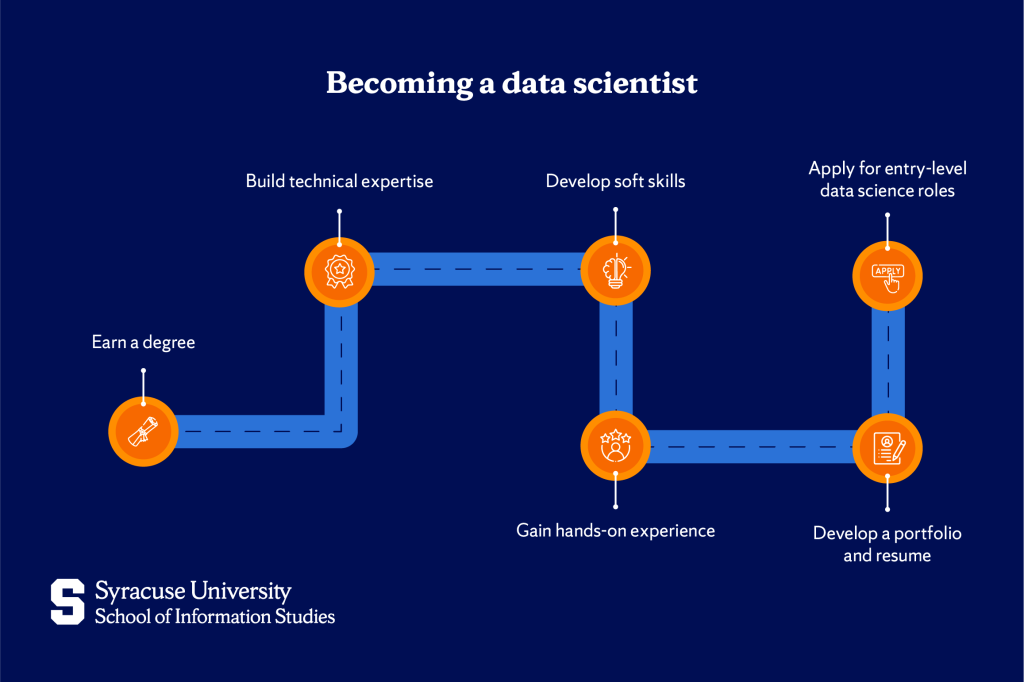
Step Four: The Interview Circus (Join the Clowns)
Here’s the part they don’t tell you: the interview will include a whiteboard, and you’ll be asked to “write the code for a binary search” while three strangers watch you like you’re a street performer juggling chainsaws. Do not panic. Practice with friends, talk to your rubber duck, and remember that the interviewer once bombed this exact question too. Meanwhile, a shocking 40% of data science job postings ask for experience in “deep learning,” but most day-to-day work is just merging tables and fixing dates. So, oversell a little—call yourself a “storyteller with data,” and then actually learn to make charts that don’t look like a child’s crayon explosion.
The Final Truth (Prepare for Sandwich)
Becoming a data scientist takes about six months of intense focus if you’re disciplined, or two years of “I’ll do it tomorrow” if you’re human. But here’s the beauty: the field is so new that everyone is still making it up as they go. You don’t need to be a genius—you need to be someone who enjoys solving puzzles and doesn’t cry when a server crashes at 3 p.m. on a Friday. So grab a coffee (you’ll live on it), open a free course, and start messing up data. The only prerequisite is a tolerance for the phrase “it works on my computer,” and the willingness to become the office hero who finally explains why last month’s sales went off a cliff. Go on—the data is waiting, and it is incredibly messy. Perfect.