How Can I Apply For A Job Online
There was a time, not so very long ago, when the act of seeking employment was a ritual steeped in the tangible. It began with the whisper of a newspaper’s pages, the particular, inky scent of the classifieds section, and the frantic scribble of a pen circling a promising advertisement. The process was a physical pilgrimage: you would don your finest attire, print your résumé on heavy, watermarked paper, and hand-deliver it to a receptionist who would place it, with a conspiratorial nod, onto a towering pile of other hopefuls. The ritual was not merely about the information contained within the document; it was about the presentation, the firmness of your handshake, and the subtle art of making eye contact through a glass door. This was the era of the “hidden job market,” where success was often less about your qualifications and more about your proximity to opportunity, a fact that made the hunt feel less like a transaction and more like a courtship, a slow dance of formalities and social cues that has, in the blink of an eye, been replaced by a digital whirlwind.
The initial human necessity behind this ritual was, of course, survival and self-actualization—the need to trade labor for security and to find purpose in a community. But the pre-digital method was also a profound exercise in signal detection. The employer was looking for clues of character: neatness, punctuality, and the ability to follow instructions. The candidate was looking for clues of stability and respect. This two-way street of assessment was built on a foundation of time; the time it took to physically move a document from one desk to another acted as a natural filter, a buffer that allowed for deliberation and considered judgment. The application process was a marathon, not a sprint, and the finish line was often a physical space—a conference room, a front office—where the final judgement was passed. We have traded that marathon for a series of high-speed sprints, but the emotional weight of the starting line, that first moment of vulnerability, remains strikingly familiar.
Now, the entire universe of employment fits into the glowing rectangle of a smartphone. We swipe, we tap, we autofill our life stories into uniform text boxes. The nostalgic hum of the printer and the tactile thrill of licking an envelope have been replaced by the sterile click of a mouse and the anxiety-inducing status of “Application Received.” Yet, as we stand on this precipice of algorithmic recruitment and AI-driven interviews, it is worth taking a long, analytical look back. To understand how to apply for a job online today, we must first understand the ghostly echoes of the past—the forgotten steps, the bizarre faux pas, and the technological leaps that have redefined the very concept of a “first impression.” This is your guide, not just to the ‘how,’ but to the why and the where we are going, a journey through the digital landscape with a rearview mirror firmly in place.
Must Read
The Great Migration: From Paper Trails to Digital Footprints
The transformation did not happen overnight; it was a slow, creeping digitization that began in the early 1990s. The first major turning point can be pinpointed to the rise of the internet bulletin board systems (BBS) and, subsequently, the early corporate websites that hosted “careers” pages—often nothing more than a static PDF of a job description and an email address. In 1994, the creation of the first online job board, The Online Career Center, marked a seismic shift. It was a cooperative effort by a group of large companies to post listings in a centralized, digital location. The novelty was bewildering; the idea of emailing a résumé instead of faxing it felt almost illicit. The very notion of a “digital footprint” was born here, and the rules were dangerously unclear. Sending a .doc file was a gamble, as your carefully formatted, serif-font résumé might open as a garbled mess of symbols on the recruiter’s end. This was the Wild West of the job application, a time when the most critical advice was, “Save it as plain text, just to be safe.”
The late 1990s and early 2000s brought about a more structured, yet infinitely more impersonal, era with the rise of the Applicant Tracking System (ATS). This is the forgotten, bizarre workhorse of the job hunt. Before this, a human read every résumé. Afterward, a machine did. In 1998, the software company Resumix and others pioneered the concept of scanning résumés for keywords. This created a bizarre worker behavior: the “keyword stuffing” of résumés. Candidates would list extraneous skills, hide white-text keywords in the margins of their documents, or include entire paragraphs of jargon just to fool the machine. The human art of the cover letter was slowly strangled by the algorithmic demand for “synergy” and “object-oriented programming.” It was a bizarre era where you were not writing for a person, but for a parser. The advice shifted from “make it beautiful” to “make it match the job description verbatim.” This was a dehumanizing hack, and it felt deeply, intrinsically wrong—a violation of the old, human-centric rituals of the past.

As the 21st century progressed, the decade of the 2000s introduced the social element. LinkedIn, founded in 2003, didn't just ask for a résumé; it demanded a network. The concept of the “invisible” job market became paradoxically transparent. Recruiters could now stalk your profile before meeting you, and your professional headshot became a critical piece of the application. The old advice about dressing neatly for an interview was replaced by the modern anxiety of your “online presentation.” For the first time, your past lived forever in a digital amber. A bad comment on a forum or an unprofessional photo from a college party became relevant, begging the question: How do I curate a persona that is both authentic and hireable? The job application expanded from a single document to a holistic digital identity, and the initial wonder of this power quickly gave way to a cautious, calculated performance.
The era of the 2010s streamlined everything into the one-click application. Giants like Indeed and Glassdoor aggregated jobs from across the web, and companies like Amazon and Google introduced the “Apply with your resume” button—a feature that pulled your saved data and filled in the blanks for you. This was the ultimate modernization of the concept of “convenience,” yet it backfired spectacularly. The low friction meant a flood of unqualified applicants, forcing recruiters to rely even more heavily on the ATS. The waiting period stretched out. You could apply for fifty jobs in an hour, but the rejection emails became automated, often arriving weeks later, or not at all. The nostalgia for a human response—a simple, typed letter saying “thank you for your interest”—grew stronger as the silence from the digital void became the new normal. This era taught us that convenience is a double-edged sword, and that true connection often exists in the friction we tried so hard to eliminate.
Hacking the Classics: The Modern Alchemy of the 2020s
Today, the classic principles of the application—clarity, relevance, and professionalism—have been hacked and rebuilt for a world that moves at the speed of a scroll. The modern candidate is no longer a passive sender of documents but a data architect. The primary hack is the manipulation of the ATS algorithm itself. We no longer hide keywords in white text; instead, we strategically integrate the exact phrasing of the job description into our “About” sections and work summaries, treating the software as a clever opponent to be outsmarted rather than a gatekeeper to be feared. This is a subtle form of modern alchemy, turning the cold, analytical code into a tool that works for you. It’s a game of digital chess where you know the rules, and you play to win, but the game has lost the charm of spontaneity.
Gone are the days of the cover letter as a formal letter; it has been repurposed as a short, punchy email or a “Summary” section at the top of your profile. The “elevator pitch” has morphed into a 30-second video introduction, as some modern platforms now allow for video resumes. This is a direct response to the speed of social media. The word “viral” has entered the job hunt; a well-crafted, unique application—perhaps a one-page infographic or a hand-coded HTML link embedded in a PDF—can be shared and celebrated, bypassing the silent void of the ATS entirely. This modern hacking is about reclaiming the human story in a digital format. It’s a pushback against the robotic filter, a desperate attempt to say, “Hey, I’m a person, not just a list of skills.” The classic principle of “following up” has also been modernized, but with a calculated twist: a strategic comment on a LinkedIn post, a brief, polite follow-up email 48 hours after applying—not too pushy, but persistent enough to be remembered in a sea of digital noise.
Navigating the Algorithmic Maze: Your Top Questions, Answered
Is it better to apply through a job board or directly on the company’s website?
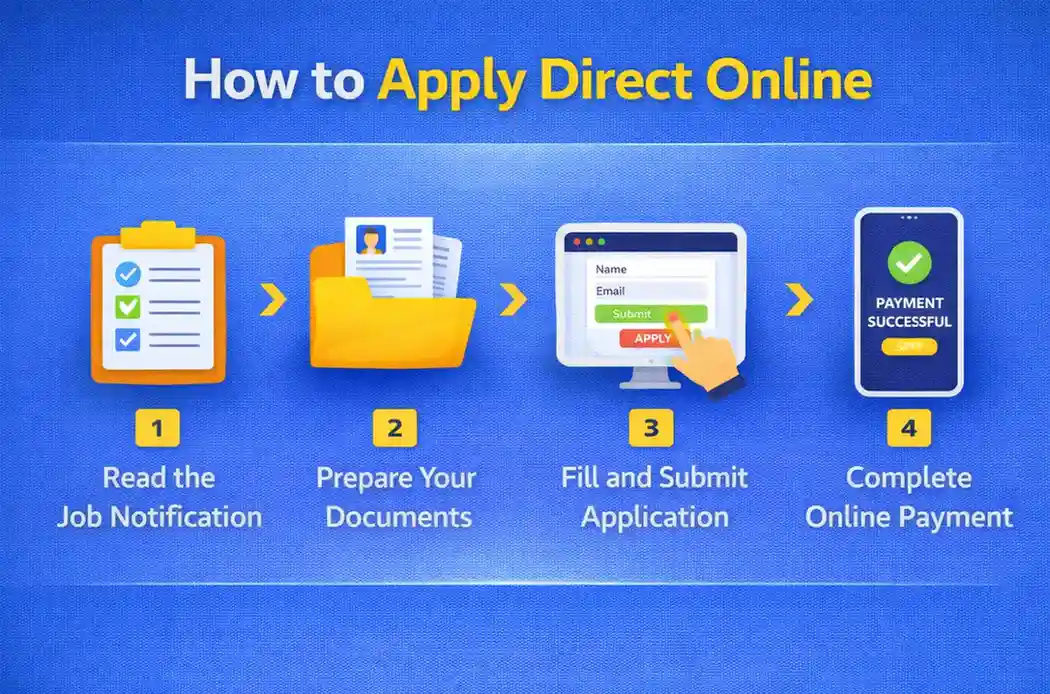
This is the modern equivalent of the age-old question, “Should I mail it or hand-deliver it?” In the late 1980s, hand-delivering your résumé showed initiative; it allowed you to introduce yourself to the receptionist and potentially charm the hiring manager if they were passing by. Today, the power dynamics have shifted. The ATS treats applications from the company website and external job boards differently. Applying directly on the company’s career portal is almost always the superior choice. It signals a genuine interest in the specific company, rather than a shotgun blast of applications to every aggregator. Furthermore, the data is parsed directly into their system, reducing the risk of a malformed file or a lost email due to a third-party scrape. It’s the digital equivalent of taking the time to find the right door and knocking on it directly, rather than leaving a carrier pigeon outside the city gates.
However, that doesn’t mean the job boards are useless. They are your scouting tools, your classifieds. They are excellent for discovery and for understanding market trends, salaries, and required skills. But once you find the job, you must immediately migrate to the source. This is a hack that requires strategy. The board gets the credit for the click, but the company gets the credit for the application. The myth of the past was that “who you know” was the only way in; today, the myth is that where you apply is more important than how you apply. In reality, applying directly is a factor you can control, and it tilts the odds in your favor. It shows a historical respect for the process—a move that echoes the old-fashioned formality of seeking out the establishment’s front office rather than relying on a third-party middleman.

How important is the “perfect” résumé format in the age of artificial intelligence?
In the mid-90s, the perfect résumé was a work of art—white, 20-pound bond paper, a serif font like Times New Roman, and absolutely no graphics or columns, because they would confuse the fax machine or the early scanners. The aesthetic was paramount; it reflected your professionalism. Today, the rules are astronomically different, but just as stringent. The “perfect” format is now a monotone, single-column, chronological masterpiece that is screen-reader friendly and ATS-parseable. Decorative fonts, tables, and icons are the new kiss of death. The AI doesn’t care if it’s beautiful; it cares if it’s structured. You must label your sections clearly—“Professional Experience,” “Education,” “Skills”—and use standard bullet points, not custom glyphs. This is a difficult pill to swallow for our nostalgic hearts that long for the tactile beauty of a printed page.
The function of the résumé has shifted from a presentation document to a data-storage file. You are writing for a robot, but the ultimate consumer is still human. Therefore, you must create a two-layered approach. The first layer is the ATS-optimized version (plain, chronological, keyword-rich). The second layer is the modern human-readable version—your personal brand, expressed through your LinkedIn profile and your portfolio. The modern hack is to treat your résumé as the raw data and your LinkedIn profile as the humanized story. The AI parses the raw data; the human reads the story. Ignoring the format for the machine is suicide, but so is neglecting the narrative for the human. Bridging this historical myth—that the résumé was a single artifact—with the modern reality that it is a fragmented piece of a larger digital puzzle is the key to success.
Should I follow up after applying online, or is that considered annoying?
Ah, the etiquette of the follow-up. In the 1980s, a follow-up phone call was de rigueur. You waited exactly one week and then called the company’s HR department, asked for the hiring manager, and introduced yourself with confidence. It was an expected part of the dance. You were perceived as enthusiastic and proactive. But the digital age has created a peculiar paradox of boundaries. Recruiters are flooded with emails, and the concept of the “spamming” candidate has emerged. The AI doesn’t care about your follow-up; it has already moved on. The anxiety is genuine: “Will I be seen as persistent or pestering?” The modern answer is nuanced, and it requires a deep understanding of strategy over nostalgia.

The old rule of thumb was “wait one week.” The new rule is “wait 5-7 business days,” but the method is entirely different. Do not call. Do not send a generic “just checking in” email. The modern, effective follow-up is a value-add. This means sending a brief, concise email that adds something new to your application—perhaps a link to a relevant project you forgot to mention, a thoughtful insight related to a problem the company is facing, or a congratulatory note about a recent company milestone. This is the modern hack: the follow-up is no longer about asking for a status update; it’us about reinforcing your candidacy with new information. This bridges the historical need for initiative with the modern disdain for interruption. It’s a calculated, thoughtful gesture, not a needy plea. It treats the application as a live, evolving conversation rather than a dead document, a philosophy that echoes the beautiful, human interaction of the past, just repackaged for the high-frequency algorithms of today.
Looking twenty years into the future, the online application process as we know it will likely be unrecognizable. We are already seeing the early stages of AI-driven interviews, where a virtual avatar analyzes your facial micro-expressions, vocal tone, and speech patterns to assess your cultural fit and honesty. The application will likely be a series of gamified assessments and situational judgment tests, scored by neural networks in milliseconds. The concept of writing a résumé might evaporate entirely, replaced by a continuous, real-time data stream from your professional history—your certifications, your project outcomes, and your collaborative reviews, all compiled into a “professional blockchain.” The human necessity of the past—the desire for a fair chance—will be challenged by these opaque algorithms. We must be vigilant, insisting that the cold, calculating machines remember the human warmth of the paper chase.
Yet, as we hurtle toward this hyper-efficiency, a counter-movement will inevitably emerge. We see hints of it now—the rise of the “viral” human-centric application, the demand for remote work that values output over presence, and the yearning for a human connection in a digital void. The future will not be purely algorithmic; it will be a hybrid. The nostalgia for the handshake, the eye contact, and the thoughtful, handwritten note will become even more powerful and differentiating tools. In 2044, the most successful candidates will be those who can seamlessly bridge the binary world of the algorithm and the analog world of human empathy. The job application will become a test of your ability to be both a data point and a soul. And for those of us who remember the ink on our fingers, this future is not a threat, but a beautiful, complex puzzle waiting to be solved.