Google Drive Free Resume Templates
In an era where first impressions are increasingly forged in the digital ether, the humble resume remains a strange paradox: it is both a relic of a bygone bureaucratic age and the sharpest tool in your professional arsenal. We spend hours agonizing over kerning, font choices, and the precise wording of our “core competencies,” yet the canvas upon which we paint our professional lives is often a blank, intimidating white void. Enter Google Drive’s free resume templates—the silent, underrated workhorse of the modern job hunt. It is not merely a collection of digital paper; it is a psychological safety net, a design shortcut, and a cultural artifact that speaks volumes about how we work, create, and sell ourselves in the cloud.
The history of the resume stretches back to Leonardo da Vinci’s letter to the Duke of Milan, but its digitization took a distinctly democratic turn when Google Docs launched in 2006. For years, the "template" was king in the desktop era of Microsoft Word, but it was clunky, prone to formatting catastrophes, and tethered to physical hard drives. Google Drive changed the game by shifting the entire paradigm to the cloud, making collaboration immediate and accessibility universal. Today, these templates are not just about utility; they are a cultural phenomenon. They represent a collective sigh of relief for millions who know they are not graphic designers but desperately need to look like they are, all while hoping the Wi-Fi holds up during a deadline.
The Hidden Psychology of the Pre-Formatted Grid
Let’s talk about the dark side of the template—the "The Devil Wears Prada" of the job application world. We all know the feeling: you open a template, it looks clean, you fill it out, and you feel a smug sense of accomplishment. Then you realize that thousands of other applicants are using the exact same layout. This is the "Panopticon Effect" of modern hiring; you are subtly signaled as a conformist, a cog in the machine, a follower of the path of least resistance. However, the psychological relief of starting from a grid cannot be overstated. A blank page induces a specific type of paralysis known in cognitive psychology as "choice overload." The template provides a cognitive offload, freeing your brain to focus on the content of your achievements rather than the mechanics of the page break.
Must Read
There is a subversive beauty in the template, though. It acts as a subtle test of your digital literacy. When you edit a Google Docs template, you are engaging in a micro-interaction of discernment. Do you know how to remove the unnecessary section? Can you adjust the margins so that your text doesn't spill onto page two? The hiring manager isn’t just reading your career history; they are subconsciously judging your ability to navigate constraints. It is a bit like a modern-day Rorschach test—your creativity within the boundaries reveals your true working style. Those who simply upload without altering the header image from a generic mountain landscape are signaling a lack of attention to detail, while those who tweak the color palette to match their personal brand are showing initiative.
Culturally, these templates have birthed a new dialect of professional language. The "Serif Classic" speaks of conservative law firms; the "Sans-Serif Minimalist" screams startup bro. The template has become a form of sartorial choice for the digital age. We are all, in a sense, building our own "Imposter Syndrome Armor" out of these pre-built structures. We hide our insecurities behind the clean lines, hoping that the aesthetic will mask the gap in employment history or the lack of a prestigious degree. Yet, this is where the magic lies: the template serves as a leveller. It gives the underdog a fighting chance against the entitled Ivy League grad, because for a brief moment, both their documents look equally professional.
Scenarios, Case Studies, and the Art of the Pivot
Consider the case of Maria, a mid-level marketing manager who was laid off during a tech purge. She spent three weeks writing her resume from scratch, tweaking every bullet point until it screamed "synergy." The result? A cluttered, two-page mess that ATS (Applicant Tracking Systems) kept rejecting. Desperate, she turned to a Google Drive template—specifically the "Ladder" layout. She was forced to condense her experience into short, punchy lines. The template’s rigid structure acted as a strict editor, eliminating her rambling prose. Within two weeks of using the template, she landed three interviews. The constraint didn't limit her; it liberated her from her own verbose tendencies.

Then there is the scenario of the career pivot. James, a high school history teacher, wanted to move into corporate training. His traditional resume was a chronological graveyard of lesson plans and grading duties. He needed a functional resume, but he didn't know how to build one. He found a Google Drive template designed for this exact purpose—with a large "Skills" section at the top and a minimized "Experience" section at the bottom. This template allowed him to highlight his presentation skills, curriculum design, and conflict resolution before ever mentioning his "classroom management" duties. The template served as a visual lie detector, proving his transferable skills were more valuable than his specific job titles.
For actionable takeaways, stop treating the template as a final destination. Treat it as a wireframe. The first thing you should do is open the template and immediately change the font. This tiny act of rebellion breaks the "template curse" and makes it yours. Secondly, delete the section that says "References Available Upon Request." This is a relic of the 90s and wastes precious space. Thirdly, use the "Page Setup" to adjust margins to 0.5 inches on the top and bottom, but keep the left and right at 0.75. This tricks the eye into seeing more content and less white space, maximizing your "value per square inch." Finally, always export to PDF before sending. This locks in your formatting, preventing the digital chaos of font substitution on a recruiter’s old Windows laptop.
The most effective users of Google Drive templates treat them as a collaborative canvas. Share the document with a friend or mentor, and use the "Suggesting" mode to see their edits in real-time. This turns the resume from a solitary torture session into a productive team exercise. Moreover, use the version history. If you had a fantastic resume for a corporate job, and you pivot to a startup role, don't write a new one. Go into your Google Drive, right-click, and "Make a Copy" of the original template. Now you have a baseline. This allows you to maintain a "resume ecosystem," where you have a Master Template and several spinoff versions tailored to specific industries, all living harmoniously in the cloud.
The Scribe’s FAQ: Navigating the Template Matrix
Are Google Drive resume templates ATS-compliant?
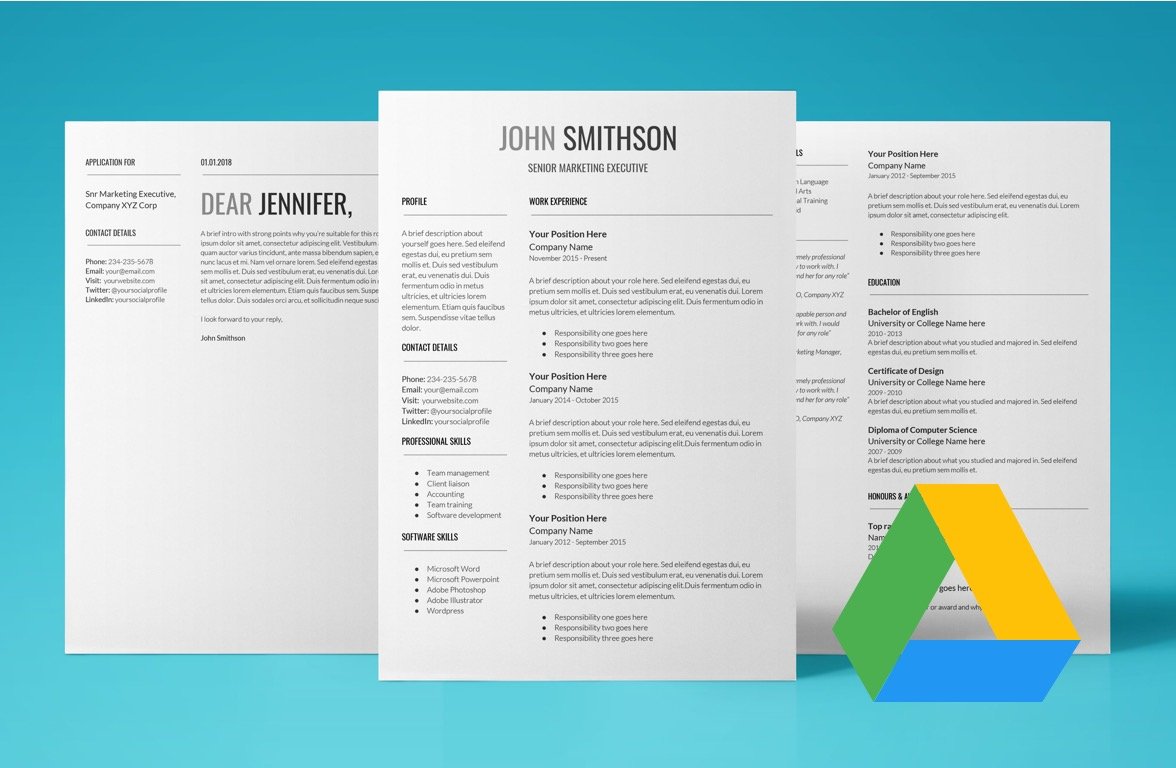
This is the million-dollar question. Most templates provided by Google are surprisingly compliant. They tend to use standard fonts like Arial, Calibri, or Georgia, which are readable by optical character recognition software. They also generally avoid the visual heresy of text boxes and tables (which are the mortal enemies of Applicant Tracking Systems). However, you must be careful. Some of the more "creative" templates feature text in headers, which some ATS systems ignore. The safest bet is to use a simple, single-column template, which Google Drive offers in abundance under the "Minimalist" and "Simple" categories. If your industry values design (e.g., advertising), you can risk a two-column layout, but for corporate giants, stick to the classics.
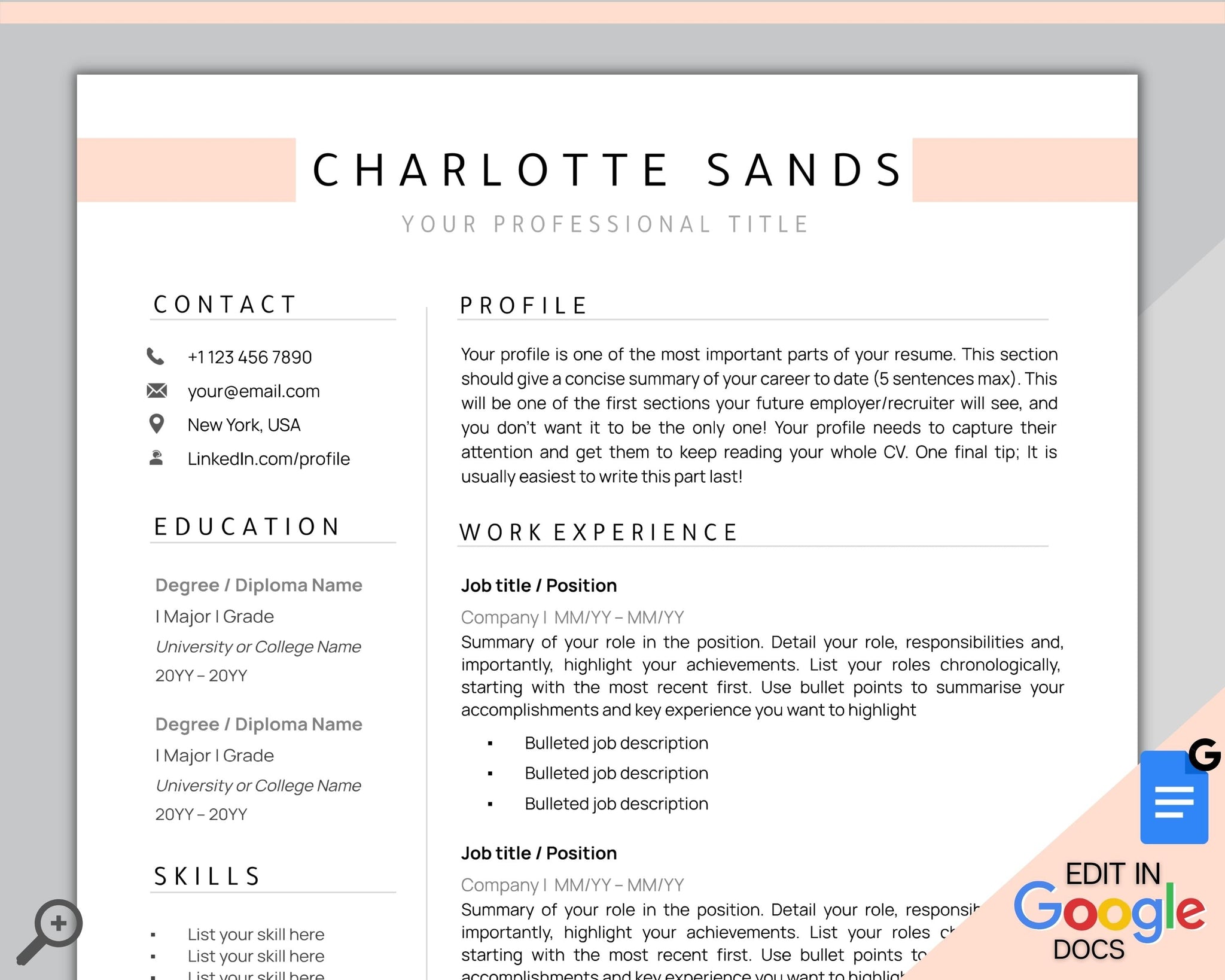
However, compliance is not just about the template; it’s about your edits. If you replace a standard bullet point (•) with a custom icon or a checkmark (✓), you risk breaking the parser. Likewise, do not put your name and contact info in the header—put it in the body of the document. The ATS bots are notoriously short-sighted. The Google Drive template gives you a safe container, but you must fill it with "clean code" (i.e., simple text). Think of it as a safe car, but if you drive it into a lake (use Wingdings font), it will still sink.
Can I use these templates for free without copyright issues?
Yes, absolutely. This is perhaps the most empowering aspect of the Google Drive ecosystem. Unlike many freelance design marketplaces that sell "resume kits," Google’s template gallery is licensed for personal and commercial use. This means you are free to use them for your own job applications, and even if you are a career coach helping clients, you can use these templates as a base. The templates are designed by Google and various third-party partners, but they are distributed under a Creative Commons license that allows for modification and adaptation without attribution. You do not need to credit Google or the original designer on your resume.
That said, you cannot take a Google Drive template, rebrand it, and sell it as your own standalone product on a marketplace like Etsy without significant modification. The spirit of the license is for personal utility, not direct resale of the asset. However, for the 99% of us using them to get a job, the legal implications are nil. You are not stealing; you are borrowing a structure. It is the difference between using a public library to write a book versus photocopying the library book and selling it. You are the author of your content, and the template is merely the shelf on which you place it.
How do I change the template’s color scheme without breaking the format?
This requires a delicate touch, akin to performing micro-surgery on a digital paper. First, avoid using the "Paint Format" tool (the paint roller icon) on the entire document, as this will paste the styles over everything and cause a chaotic cascade of font changes. Instead, click on the specific text (like your name or the section headers) and manually change the color using the "Text Color" (A with a color bar) tool. For fonts, click on the "Font" dropdown and select "More fonts" to search for a new typeface. Do not change the font of the title and the body text simultaneously—change them separately.
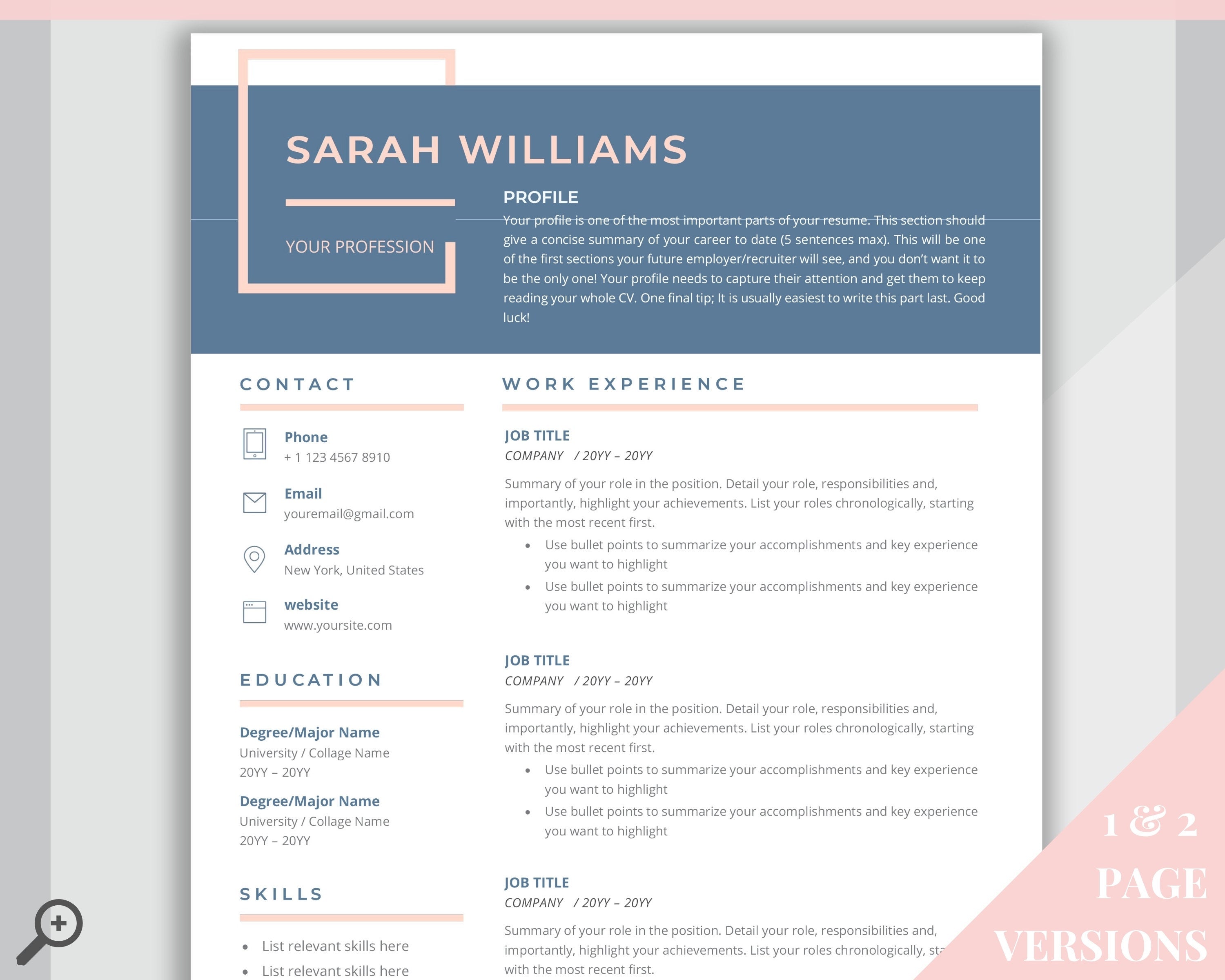
To change the background or accent lines, you have to click on the line itself. Many Google templates feature horizontal lines under headings. If you click on the line, a tiny "Format" menu pops up. Here you can change the line weight and the exact hex color. Use the eyedropper tool in the color palette to sample a color from a company logo you are applying to. This will make your resume look bespoke. Finally, after all your color tweaks, zoom out to 50%. If the text overlaps or the spacing looks wonky, immediately hit "Ctrl+Z" (Undo) and try again. The template is forgiving, but only if you are cautious.
Is it better to download the template as Word or use it solely on Google Docs?
For the editing phase, use Google Docs exclusively. The cloud autosave is a lifesaver. But for the submission phase, you must export to PDF. Sending a standard .docx file to a recruiter is a gamble. Even if your formatting is perfect in Google Docs, it will likely shift when opened in an older version of Microsoft Word, resulting in a bullet point that jumps to the wrong place or a header that runs off the page. The PDF is the universal language of "finality." It ensures that your resume looks exactly as you intended, regardless of the device or software the recruiter uses.
However, you should also keep a "Master Copy" in Google Docs format for editing and tailoring. Never edit the PDF directly (you can't easily). If you need to submit a .docx because the application portal specifically asks for it (some government agencies do), then you should download the file as .docx and then immediately open that downloaded file to check for errors. More often than not, you will find a weird margin issue that you need to fix, and then you will have to upload it as is. In that scenario, the Google template might save you, as the default styles in Google Docs are generally more compatible than some other platforms.
How can I leverage templates to beat the "8-Second Attention Span" of recruiters?
The key is white space management. A recruiter spends, on average, 7.4 seconds scanning a resume. The Google Drive template helps you win this race by providing built-in "visual rest stops." Do not fill every single line with text. Use the space creatively. For your job titles, make them bold. For the dates, make them italic and right-aligned. This sets up a "F-pattern" reading flow—the reader’s eyes scan horizontally across the top, then down the left side, then horizontally again. Ensure your most important stats (like "Increased sales by 40%") are in the left section of each bullet point, as that is where the eye lands first.

Furthermore, use the template's ability to create "chunking." In your skills section, don't list 20 skills in a single line. Use the columns feature (via the "Format" Menu) to split the skills into three distinct columns of short categories: "Management," "Technical," "Soft Skills." This visually organizes the chaos. And this is the brutal fact: the template is a skeleton. It provides the bones of layout, but you must apply the flesh of "quantifiable achievements." A template can make a bad resume look neat, but it cannot make it look impressive. Use the template to buy you those 7 seconds, but your words have to close the sale.
At its core, the use of a Google Drive resume template is a profound admission of human imperfection. We are saying, "I don't have all the answers, and I need a little bit of help to look my best." In a hyper-individualistic society that worships the "self-made man," this reliance on a communal blueprint feels almost rebellious. It connects us to the ancient traditions of guilds and craftsmen, who used standard blueprints to pass on knowledge from master to apprentice. We are all apprenticing for the job we want, and the template is our master tool.
This process reflects a larger human truth: we are terrified of the void, but we thrive in the scaffold. The structure of the template is a metaphor for society itself. We have laws, codes, and norms that guide us, and within those boundaries, we express our unique personality. The resume template is the law; your career history is your personality. It is a delicate dance between conformity and distinction. We must wear the uniform to get past the gatekeeper, but we must flash a unique insignia to be remembered.
So, the next time you open Google Drive and select a template, don't feel a pang of guilt or laziness. Feel a sense of strategy. You are using the accumulated wisdom of design psychology to present your most authentic self—just within a slightly better-looking frame. In a world that demands we be both unique and standard, the template is our quiet middleman, negotiating a truce between who we are and what the market demands. It is not just a document; it is a survival tool, and it is free.