Delhi Airport Metro Time Schedule

There was a time, not so long ago, when the journey from the heart of New Delhi to its international gateway at Indira Gandhi International (IGI) Airport was a gamble with time itself. Before the sleek, silver snakes of the Airport Metro Express burrowed beneath the city’s chaotic skin, the commute was a ritual of anxiety. You would either haggle with a taxi driver who swore he knew a shortcut through Mahipalpur’s tangled bylanes, or you would brace yourself for the claustrophobic lurch of a DTC bus, its windows rattling in protest against the potholes of the old NH-8. The city’s pulse was a frantic, honking rhythm, and the airport was a distant, unreachable mirage for those who miscalculated the traffic. It was in this pre-2011 world that the concept of a dedicated airport metro line felt less like infrastructure and more like a fever dream—a fantasy of punctuality in a city that had long since surrendered to the tyranny of its own congestion. The initial necessity was not merely convenience; it was a desperate plea for predictability, a way to reclaim hours of one’s life that were otherwise swallowed whole by the urban sprawl.
The story of the Airport Metro Express is not just a tale of concrete and steel; it is a narrative about the changing psychology of a metropolis. Before its inception, Delhi’s relationship with its airport was one of adversarial distance. The city treated the airport as an external entity, a periphery to be endured, not a central node of connectivity. The early 2000s saw a tentative proposal, but the engineering hurdles were immense. The Yamuna’s shifting sands, the dense urban fabric of Dhaula Kuan, and the need to cross the Delhi Ridge forest all posed existential threats to the project. Yet, the human necessity was undeniable. Business travelers were losing millions in missed connections, while families were missing international flights for weddings and funerals because they had miscalculated the "hour-long" journey that often stretched to three. This was the quiet desperation that the new metro line promised to cure—a promise that, at first, seemed too good to be true.
When the line finally opened in February 2011, it was a revelation wrapped in a security cordon. The initial fare of ₹150 felt exorbitant to the average commuter, but for the globe-trotter, it was the price of sanity. The journey from New Delhi Station to Terminal 3 was a blur of 18 minutes—a feat that defied the laws of Delhi traffic. But the early days were fraught with technical gremlins. The trains, built for speeds of 135 km/h, often crawled, and the much-vaunted "airport-grade" comfort was occasionally disrupted by unexplained halts in the dark tunnels. It was a pristine but fragile lifeline, a high-wire act that the city watched with bated breath. The schedule, rigid and unyielding, was the gospel that commuters began to follow, planning their lives around the Airport Metro Time Schedule with a devotion previously reserved for religious calendars. It was a new kind of civic religion, one where the train’s punctuality was the only sermon that mattered.
Must Read
The Anatomy of a Schedule: From Trial to Triumph
To truly appreciate the Airport Metro Time Schedule today, one must look back at its bizarre and often forgotten evolution. In the initial months of 2011, the schedule was a tightly guarded secret, a state secret of sorts. Trains departed from New Delhi Station at irregular 20-minute intervals, and the last train from the airport left at a shocking 11:30 PM, abandoning the countless red-eye flight passengers who landed past midnight. This created a bizarre subculture of "airport squatters," travelers who would deliberately book late flights, only to find themselves stranded in the gleaming terminal, waiting for the first 4:45 AM train, sleeping on the uncomfortable benches near the metro gates. The schedule was not a convenience; it was a gatekeeper, dictating the very possibilities of human movement. It was a relic of a bygone era when the metro treated the airport like a special event venue, not a 24/7 hub of global transit.
The years between 2013 and 2017 were the "wild west" of the schedule, marked by a catastrophic suspension of service. In July 2014, the service was shut down entirely due to structural issues in the viaducts—a scandal that silenced the silver trains for over a year. During this hiatus, the Time Schedule became a painful memory, a ghost of punctuality that mocked the city’s return to the traffic jams of yore. When the service resumed in 2015, the schedule was rewritten, but the ghosts of the past lingered. The frequency was increased to 15 minutes, but the "last train" was still stubbornly early, at 11:30 PM. It was only in 2016 that a small but revolutionary addition was made: the Last Train from the Airport was pushed to 11:30 PM, and the New Delhi departure to 11:00 PM, a concession to the growing nighttime economy. Yet, the true transformation was the introduction of the "YashoBhoomi" extension in September 2023, which added a new terminal stop and shifted the entire schedule’s logic, turning the line from a point-to-point shuttle into a multi-nodal corridor.
The forgotten vintage facts are poignant. Did you know that for the first two years, the line did not operate on Sundays for the first half of the day, a bizarre concession to maintenance crews who believed the city rested on the Sabbath? Or that the early trains had a "luggage penalty" if your suitcase exceeded 25 kg, with guards at the gate wielding weighing scales like medieval gatekeepers? The most bizarre treatment was the "silence rule"—a proposal in 2012 to ban all phone conversations inside the train, which was quickly scrapped after a public outcry from business executives who needed to close deals before landing. The schedule, in those days, was not just a list of times; it was a list of restrictions, a social contract that demanded you behave like a seasoned air traveler even before you entered the terminal.
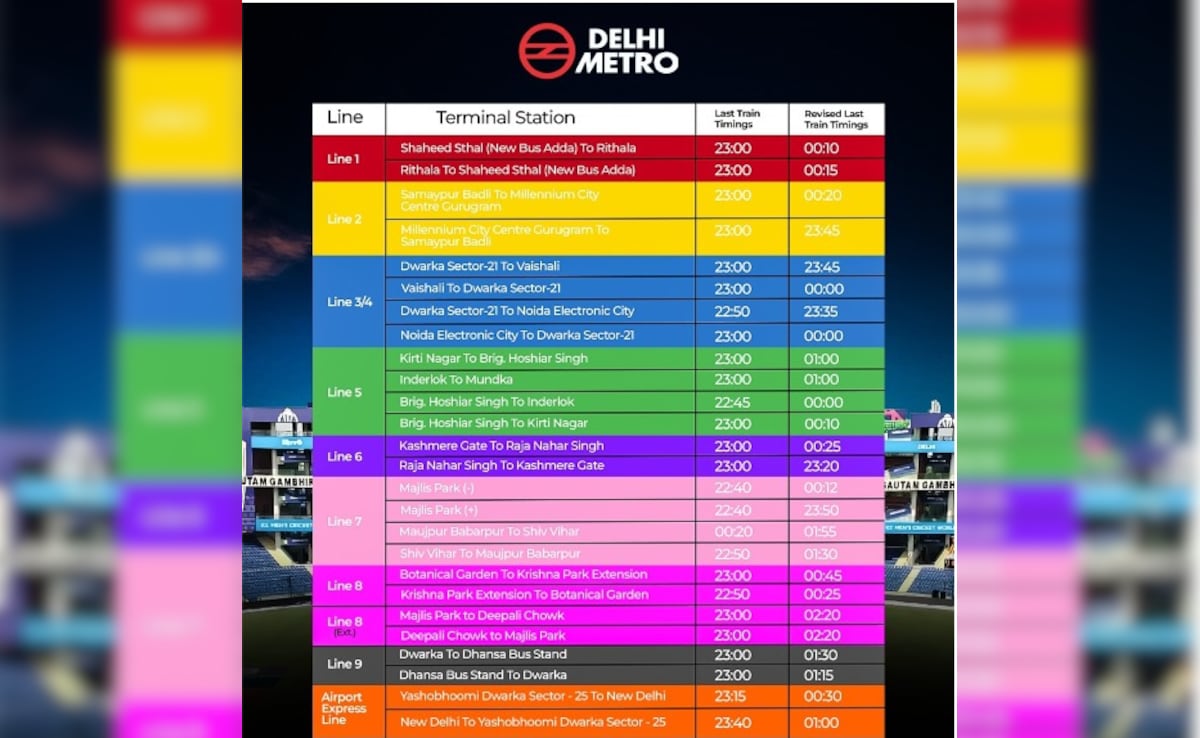
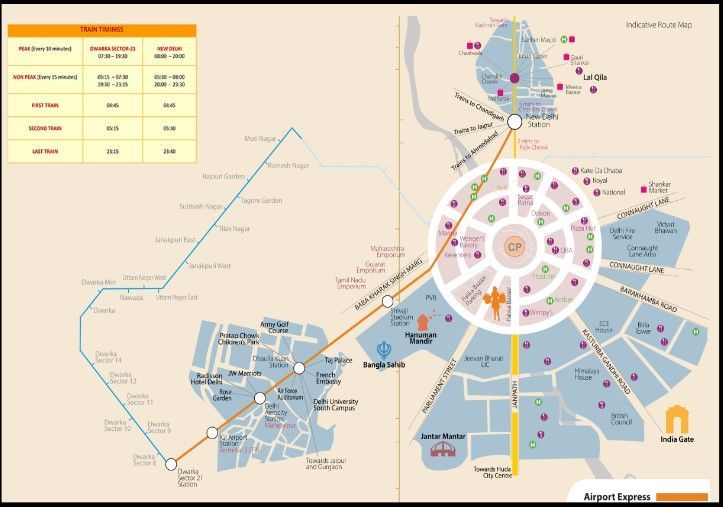
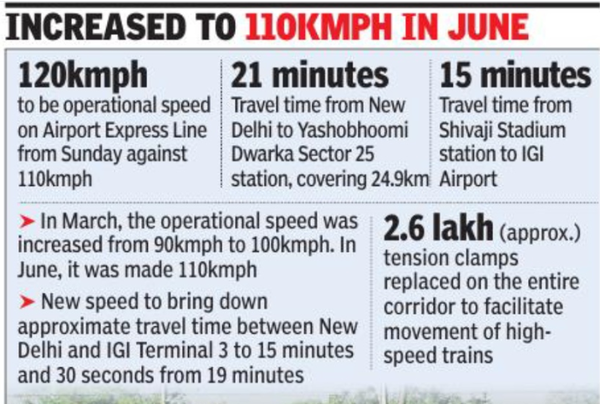
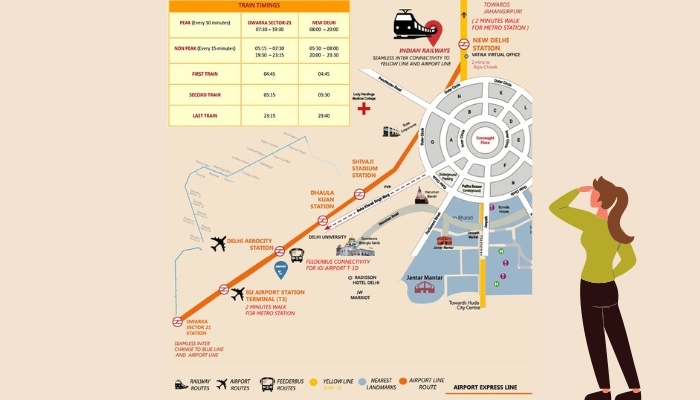
Looking closer at the current timetable, one sees a sophisticated ballet. The trains now run at a crisp 10-minute frequency during peak hours (8 AM to 8 PM), with a slightly relaxed 15-minute gap in the early morning and late night. The first train from New Delhi departs at 4:45 AM, a nod to the early-bird international flights, while the last train from the airport has been stretched to 11:30 PM, a slight but symbolic victory. What is often overlooked is the "counter-flow" schedule—the fact that the last train from the airport often carries the weary workers who clean the terminal, a demographic the schedule was never originally designed for. This evolution from a rigid, elite shuttle to a democratic public utility is the quiet, unheralded revolution. The schedule now acknowledges that the airport is not just a departure lounge; it is a place of employment, a temporary home for thousands, and the metro line must serve them all, not just the suit-wearing executives.
The Modern Hack: Algorithms and the Death of the Printed Timetable
The classic principle of a fixed timetable—the paper chart that one memorized—is now being ruthlessly hacked by real-time data. The modern traveler no longer asks "What time is the next train?" but rather "What is the current occupancy of the next train?" through dedicated apps. The DMRC has integrated the Airport Metro Time Schedule into its official mobile platform, but the real hacking happens through third-party aggregators. Google Maps now shows you the live departure countdown, synced with the metro’s GPS, and overlays this data with your flight’s check-in deadline. This is a seismic shift from the 2011 ethos, where missing a train by 30 seconds meant waiting 20 minutes in a sterile corridor, staring at a digital board that seemed to mock you. Today, the schedule is not a static document; it is a dynamic stream, a living entity that breathes with the city’s pulse.
This modernization has also brought about the concept of "dynamic scheduling" during fog season in Delhi—a period from December to February when flight delays cascade, and the metro schedule is often kept flexible by the control room, holding trains for an extra 5 minutes if a massive flight delay is detected. This is the classic principle of fixed departure times being violated for the greater good, a hack that prioritizes human need over operational rigidity. The modern day sees a push towards contactless entry and automatic fare adjustments based on time-of-day congestion, a subtle pricing hack to spread the passenger load. The schedule is no longer a master to obey; it is a suggestion that bends to the realities of weather, security alerts, and the unpredictable nature of human travel. This is the genius of the 21st-century metro: it is a system that learns, adapts, and ultimately, forgives the tardiness of its passengers.
Frequently Asked Questions: Bridging Myths and Modern Fact
1. Is the Airport Metro service truly 24/7, or is that a myth?
The myth of a 24/7 service is a persistent one, often born from the misconception that any international city must have a round-the-clock rail link. This is categorically false for the Airport Metro Express. The service, as of 2025, operates from approximately 4:45 AM to 11:30 PM on both ends, with the last full journey starting roughly half an hour before the final departure. In the early days of 2011, the service was even more restrictive, ending at 11:30 PM, leaving a gap of nearly five hours where the airport was only accessible by road. This gap was a graveyard for the budget traveler, forcing many to sleep in the terminal. The modern fact is that the DMRC has no immediate plans for 24/7 operation due to the mandatory night-time maintenance of the tracks and the overhead electrical systems, which require a complete shutdown for safety inspections. So, while the schedule has expanded, the myth of the "night owl metro" remains a fantasy, a nostalgic dream of a city that never sleeps, but its metro does.
Interestingly, the historical myth persists because of a brief experiment in 2017 during the Commonwealth Games, where the service was extended until 1:00 AM for two nights. This created a false precedent. Travelers who experienced that grace period still speak of it with reverence, assuming it a standard that would be maintained. But the reality is that the last train from New Delhi at 11:00 PM and from the Airport at 11:30 PM is a hard stop, and any claims of a "midnight express" are urban legends. The modern workaround for those landing late is the "Airport Shuttle Bus" to the nearest Yellow Line station, a compromise that the schedule has never been able to eliminate. Therefore, check the live app, not the folklore, to avoid a very expensive taxi ride home.
2. Why is the journey so fast, and why does the schedule vary so much during different times of the day?
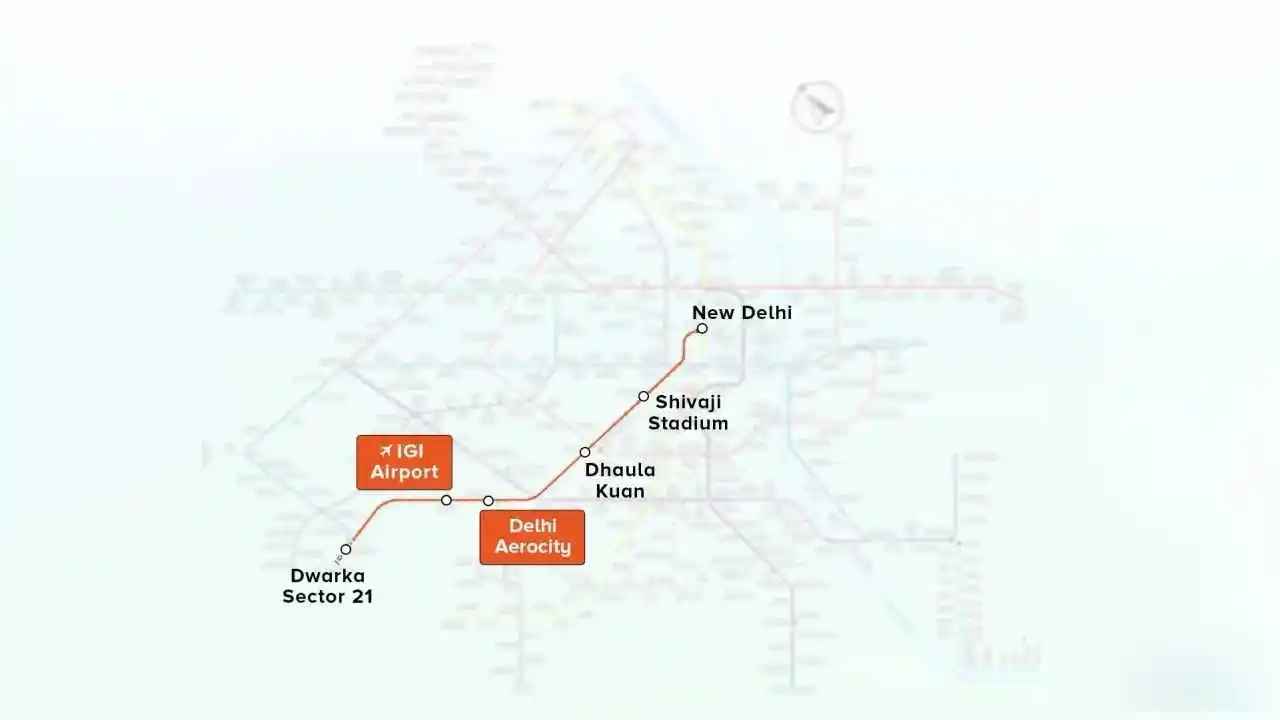
The speed of approximately 18-20 minutes for the 22.7 km journey is not a miracle but an engineering masterpiece. The line uses a dedicated corridor with no level crossings and a standard gauge track that allows for high acceleration and deceleration. The historical design from 2009 was based on the need to compete with air travel for the Delhi-Jaipur route, but the primary goal was the airport. The schedule varies because of the "headway" requirements—the minimum safe distance between trains. During peak hours (morning and evening), the frequency is ramped up to 8-10 minutes, requiring the trains to run closer together, which demands a more complex signaling system. Conversely, in the midday slump (between 2 PM and 4 PM), the frequency drops to 15-20 minutes, a period when the schedule is more relaxed, allowing for slower running and energy conservation. This is not a glitch but a calculated operational strategy to manage electricity costs and wear-and-tear on the brakes.
Historically, the schedule was uniform, with a strict 15-minute interval all day. This caused massive overcrowding during morning business rush hours and ghost trains during the afternoon. The modern schedule, revised in 2023 with the YashoBhoomi extension, is a responsive algorithm that anticipates passenger flow based on flight arrival data provided by the airport authority. The DMRC has essentially built a predictive model. If a batch of wide-body flights from Europe lands at 5:30 AM, the schedule automatically programmes a "dispersal train" at 5:40 AM. This is a far cry from the static 2011 timetable, where a train would leave empty even if 200 passengers were rushing towards the gates. The variability is the price of efficiency; it is the system's way of saying, "We are not a bus; we are a precision instrument."
3. Is the Airport Metro line still the most reliable way to catch a flight, or have roads caught up?
In a head-to-head comparison, the metro retains the crown for reliability, but the margin has narrowed due to the new Dwarka Expressway and the expansion of the NH-48. The historical reality of 2011 was that the metro was the only option if you wanted guaranteed timing; the roads were a lottery. Today, the modern taxi aggregators (Ola/Uber) use real-time traffic prediction, and the new expressways have cut the car journey from central Delhi to about 45 minutes in light traffic. However, this is always a gamble. The metro’s schedule is immune to protests, VIP movements, and monsoon flooding—the three great plagues of Delhi roads. The metro’s schedule is deterministic; it will leave when it says it will, and it will arrive when the app predicts. The road journey is stochastic, subject to the chaotic whims of a million other drivers.
The modern fact, however, is that the metro is no longer always the fastest if you are staying at a hotel near the airport. The extension to YashoBhoomi has made the "airport" itself a multi-terminal complex, and the schedule now includes a dedicated loop that might add 5 minutes if you are going to Terminal 3 versus Terminal 1. In the old days, there was one stop: the massive T3. Now, the schedule is more complex, and first-time users often mistake the YashoBhoomi station for a terminal. The bottom line remains that for the majority of travelers from central Delhi, the 18-minute sprint on the metro is unbeatable. The schedule is a contract, and unlike a taxi driver, it never lies. It is the only entity in Delhi that is never late and never cancels, a bastion of punctuality in a city that thrives on glorious chaos.
Looking ahead twenty years, the Airport Metro Time Schedule will likely dissolve into an ethereal, on-demand stream of consciousness. The concept of a "timetable" will be obsolete, replaced by "slot-based" travel where you book your exact seat and viewing car, much like an amusement park ride. The trains of 2045 will be autonomous, driverless, and potentially even maglev, reducing the journey to under 10 minutes. The schedule will not be a fixed grid but an AI-driven, moment-by-moment negotiation between passenger demand, flight radar data, and weather satellites. You will not ask "when is the next train"; your biometric watch will know your flight time, will check you into the train, and will subtly reroute you if your gate changes. The nostalgia for the printed paper schedule of 2011 will be akin to our current nostalgia for paper maps—a quaint artifact of a time when we had to actively seek information rather than have it whisper into our ears.
Ultimately, the future of this line is not about speed but about seamlessness. The airport metro will become the first true leg of the flight, a pre-boarding experience where baggage is checked in at the station, and security is cleared before you even see a runway. The schedule will be the least important thing because the system will guarantee a "time-to-gate" of exactly 6 minutes from wherever you stand in the station. The human necessity that birthed this line—the need for certainty in a world of chaos—will have been fully satisfied. The legacy of the current schedule, with its 10-minute intervals and 11:30 PM cut-offs, will be remembered as the crude but effective skeleton upon which a fully cognitive transport system was built. It was the first step in teaching Delhi that time, when harnessed correctly, can be a friend, not a foe.