Geico Rideshare Insurance Florida

Picture this: you’re in Miami, latte in hand, Waze glowing, and a passenger hops in for a quick ride to South Beach. You’re technically “working,” but your personal auto policy just gave you a digital side-eye. That’s because the gap between your daily driver and your “gig mode” is a real thing, and in the Sunshine State, it’s practically a legal maze.
Here’s the kicker: your standard GEICO policy is like a beach umbrella—it covers you at the shore, but not in the storm. When you log into the Uber or Lyft app, you shift into a commercial twilight zone where your personal coverage blinks out faster than a neon sign in a hurricane. That’s where GEICO Rideshare Insurance Florida slides in, not as a hero cape, but as a sensible cross-body bag.
The Three Phases of the Rideshare Dance
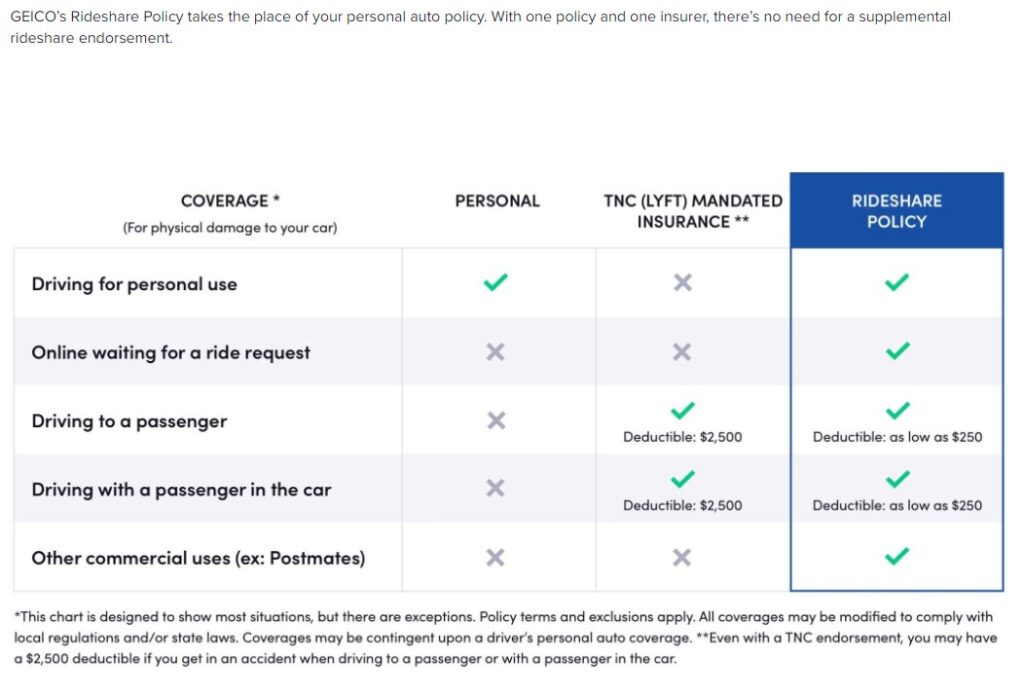
Rideshare coverage isn’t one-size-fits-all; it’s a three-act play. Act One: app on, waiting for a ping—this is the “grey zone” where most personal policies say, “Sorry, not sorry.” Act Two: you’ve accepted a ride, heading to pick up your passenger. Act Three: the passenger is in the car, and you’re driving toward glory (or traffic).
Must Read
GEICO’s rideshare endorsement is designed to stitch together these phases, filling the liability gaps that Uber’s contingent coverage leaves behind. In Florida, where rainstorms arrive uninvited and I-4 is a real-life video game, that gap can mean the difference between a fender-bender and a financial cliff dive.
Key detail: Without this endorsement, your personal policy might deny claims during Phase One—even if you’re legally parked and just refreshing the app. It’s like having a gym membership but not being allowed to use the water fountain.
Why Florida is a Special Snowflake
The Sunshine State has a no-fault insurance system, which means your PIP (Personal Injury Protection) covers your own medical bills, regardless of who caused the crash. But here’s the twist: rideshare companies are exempted from certain PIP requirements in Florida, so your personal PIP is your only lifeline if you’re hurt while driving for a gig. GEICO’s rideshare add-on makes sure that lifeline doesn’t turn into a frayed rope.
Also, Florida’s minimum liability limits are famously low—$10,000 for property damage. That’s not even enough to replace a Tesla’s side mirror. The rideshare endorsement bumps up your coverage to commercial-grade levels (typically $1 million for liability), which is like trading a folding chair for a front-row seat at the arena.
Fun fact: Florida has over 200,000 active rideshare drivers, making it the third-largest market in the U.S. That’s more drivers than there are alligators in the Everglades, and trust me, you don’t want to wrestle either one without protection.
How It Works (Without the Jargon)
You don’t need a separate policy—that would be like buying a second car just for groceries. Instead, you add a rideshare endorsement to your existing GEICO auto policy for a few extra bucks a month. Think of it as a subscription to peace of mind, like adding guac to your burrito bowl.

Once you’re in the app, GEICO’s coverage takes over where your personal policy stops. During Phase One, the endorsement provides liability coverage on top of Uber’s contingent limits. For Phases Two and Three, GEICO acts as a primary payer, so you don’t have to fight with a mega-corporation’s claims team while you’re still shaking off adrenaline.
Pro tip: This endorsement usually costs between $6 and $20 a month, depending on your driving record and vehicle. That’s less than two fancy oat-milk lattes, and it protects your entire gig income.
What It Doesn’t Cover (Because Honesty Matters)
It won’t cover delivery of food or packages—that’s a different endorsement (GEICO has one for that too, but don’t mix them up). It also won’t cover damage to your own car during Phase One unless you add collision and comprehensive, which is optional but smart if your car is newer than a 2008 Honda Civic.
And please, for the love of the Turnpike, don’t use your car for rideshare without telling GEICO. That’s like showing up to a potluck with an empty Tupperware—technically legal, but deeply frowned upon.
The Cultural Context: Miami vs. Tampa vs. Orlando
In Miami, rideshare is a lifestyle—people use it to avoid the Valet Guys and the salsa traffic. In Orlando, it’s a theme-park survival tool. In Tampa, it’s the bridge between Ybor City’s nightlife and suburban sobriety. Each city has its own chaos, and GEICO’s Florida-specific rideshare endorsement is built to handle all of it.
One driver told me she once had a passenger spill a full smoothie on her backseat during a lightning storm. Her personal policy wouldn’t have covered that mess, but her rideshare endorsement’s comprehensive coverage did. Small victories, people.
Also, know that Florida’s rideshare laws (F.S. 627.748) require companies to provide $1 million in liability coverage during active rides. But the law doesn’t mandate your insurance company to step up during phase one—that’s your problem, unless you have this endorsement.
The Bottom Line: Don’t Be a Statistic
Rideshare driving is a hustle, a side gig, sometimes a lifeline. But it’s not a hobby—it’s a commercial activity with real risks. Adding GEICO Rideshare Insurance in Florida is the responsible, grown-up move that takes five minutes online and saves you from a potential six-figure headache.
Think of it like sunscreen at the beach: you could skip it, but why would you? A sunburn heals; an uncovered liability claim does not.
So before you hit “Go Online” on your next shift, take thirty seconds to add the endorsement. Your future self—stuck in a construction zone on I-75—will thank you.
Daily reflection: We live in a world where convenience is king, but clarity is the crown. The extra few dollars a month for rideshare coverage isn’t just an expense; it’s a conversation with your own future. In a state that’s equal parts paradise and plot twist, protecting your hustle is the ultimate act of self-care.