Frontier X Heart Rate Monitor Review
Let’s be honest: most heart rate monitors are about as exciting as watching paint dry on a treadmill. They’re usually a boring strap that squeezes your ribs like a clingy ex, or a watch that beeps at you for existing. So when I heard about the Frontier X, a “smart” heart rate monitor that straps to your chest and promises to measure your heartbeat like a NASA telemetry system, I scoffed. Then I tried it, and now I’m pretty sure my old monitor was just a rubber band with a calculator glued to it.
The Good, The Weird, and The Shockingly Athletic
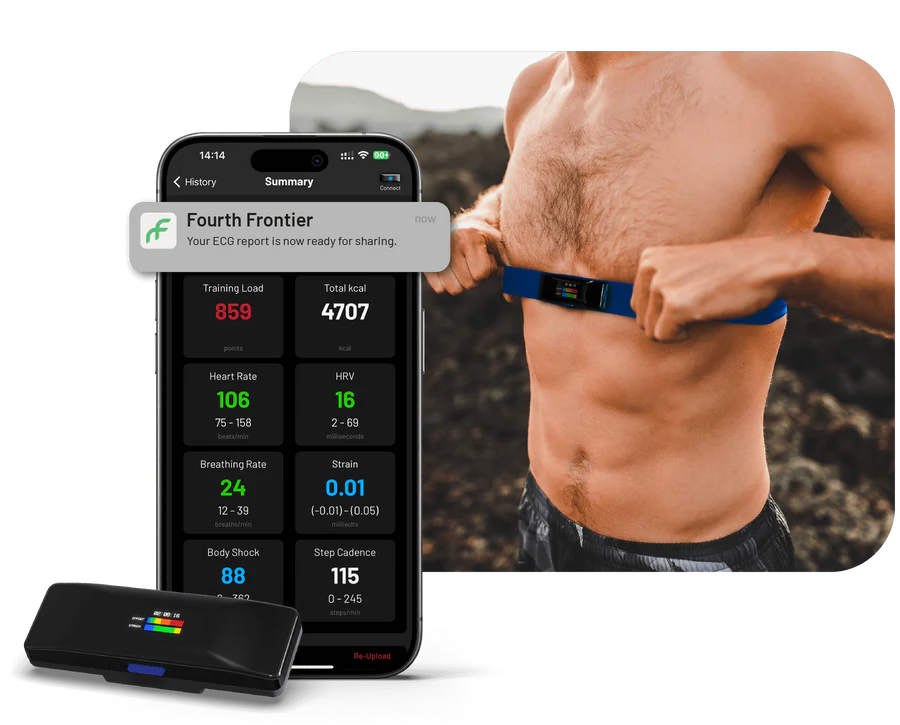
First, the elephant in the room: this thing looks like a futuristic spaceship component. It’s a sleek, slim device that clips onto a soft fabric strap, and it doesn’t lie flat like a pancake—it sticks out just enough to make you feel like a cyborg. But here’s the kicker: you will forget it’s there after about thirty seconds. Unlike those rubbery death traps, this strap is so breathable and light that I actually checked twice to make sure I was wearing it.
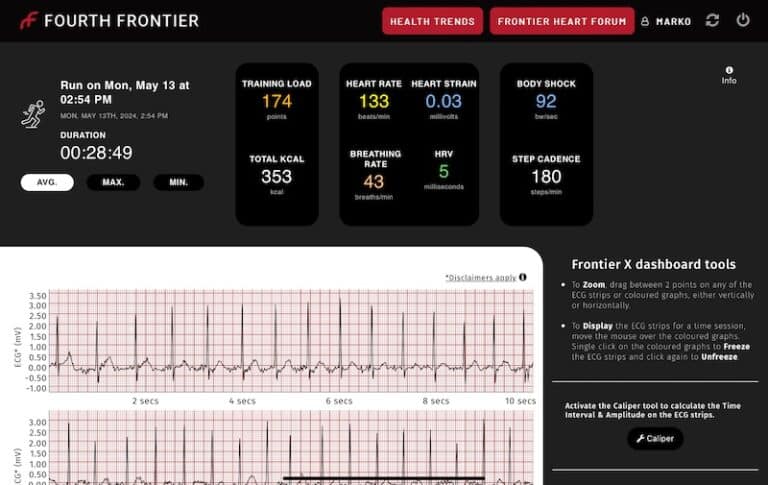
Now, the real magic isn’t the comfort—it’s the data avalanche. We’re not just talking beats per minute. This bad boy tracks your heart rate variability, breathing rate, skin temperature, and even your posture. Yes, you read that right. It tells you if you’re slouching while running, which is both a fitness tip and a personal attack on my couch posture.
Must Read
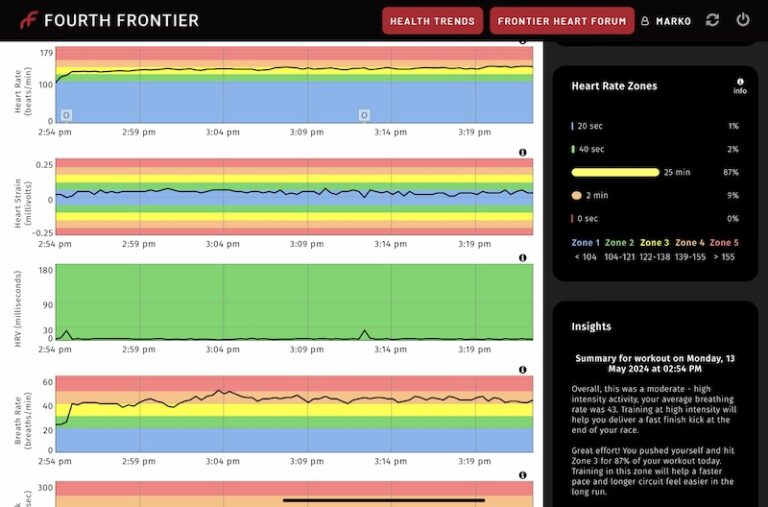
But wait, there’s more! The Frontier X also measures “cardiac load” and “strain”. That’s not just gym-bro jargon; it’s a scientific way of saying, “You’re working hard, champ, but your heart is throwing a tiny tantrum.” I ran a 5K and later saw a graph that looked like a mountain range designed by a caffeinated architect. It was simultaneously terrifying and beautiful.
What It Did to My Ego (and My Runs)
Here’s where things get hilarious. The app’s real-time voice coaching is like having a drill sergeant who’s also a statistician. After a sprint, it calmly said, “Your heart rate is 172, and your respiratory rate is 44. Please consider the possibility of dying.” Okay, it didn’t say that, but it might as well have. The alert for “high strain” made me stop to check if I was having a heart attack. I wasn’t—I was just running after a bus.
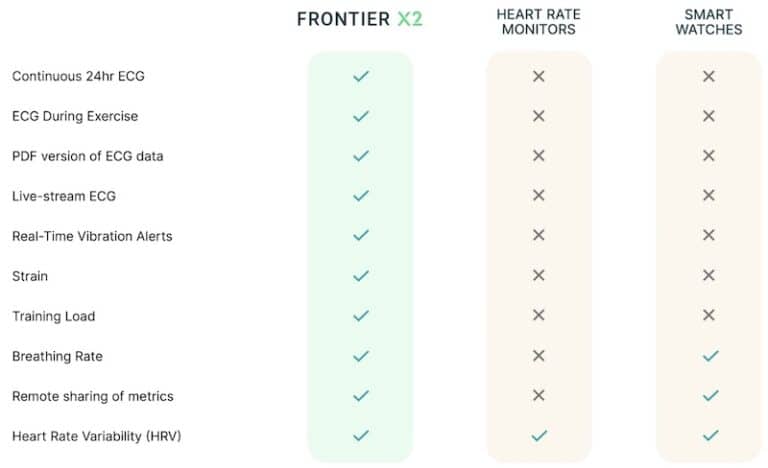
Surprising fact: this device is used by NFL players and Olympic athletes. So while I’m using it to see if my dog-walking counts as cardio, pros use it to avoid injury. That’s like handing a professional chef a thermonuclear reactor to boil an egg. But honestly, the data made me feel like a professional too, until I saw my “efficiency” score. Let’s just say my heart and I are not on the same page about what “efficient” means.
The Nitty-Gritty You Actually Care About
Battery life is stellar—about 24 hours on a single charge, which is longer than my motivation lasts. It’s also waterproof, so you can swim, shower, or cry in the pool without breaking it. The Bluetooth connection is rock-solid, unlike my ex’s excuses. And the best part? You don’t need a phone on your arm while running. The device stores up to 6 hours of data and syncs later, which is great because my phone usually dies from low battery and high anxiety.

Now, the price tag: around $350. That’s not cheap, but neither is a new pair of sneakers that you’ll throw out in six months. For that money, you get a personal cardiologist, a posture police officer, and a fitness coach all rolled into one. Just don’t expect it to make you run faster. It will only tell you, in glorious detail, exactly how slow you are.
In conclusion, the Frontier X is the fitness geek’s dream and the casual jogger’s nightmare. It’s overkill—gloriously, absurdly overkill—and I love it. If you want to turn your morning run into a scientific experiment, buy it. If you prefer ignorance being bliss, go back to your stopwatch. But for me? I’ll be staring at my own heart’s charts, pretending I’m in a mission control room, and ignoring the fact that I’m just out of breath from tying my shoes.