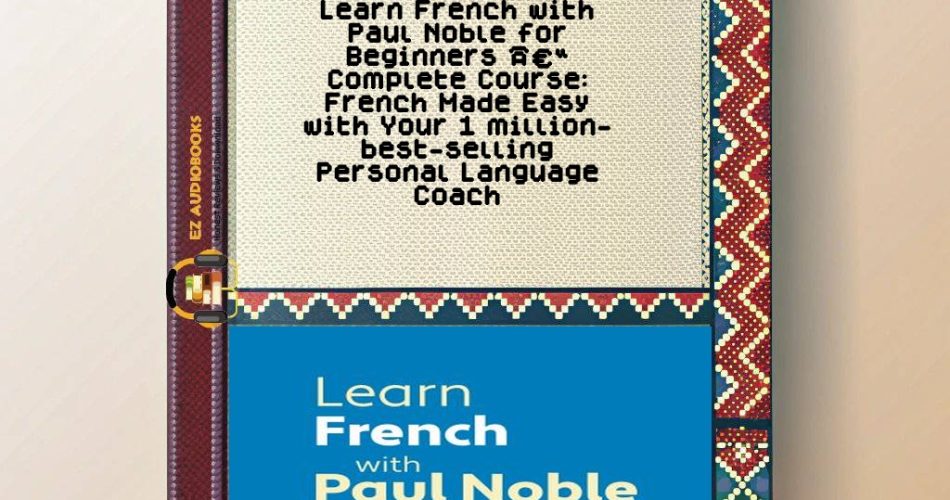
French Audio Books For Beginners

Picture this: you’re halfway through your morning coffee, the city is still waking up, and instead of doom-scrolling, your ears are soaking up the melodic lilt of Parisian French. It’s not a dream; it’s the everyday magic of French audio books for beginners. They turn a mundane commute or a lazy Sunday cleanup into a private language immersion session, no passport required.
Forget the dusty grammar drills of high school. The modern secret to learning French is all about input—hearing the language as it’s actually spoken, with its rhythm, its sighs, and its charming little hesitations. Audio books are the perfect gateway because they let you listen like a child, absorbing sounds before you ever worry about perfect conjugation.
Why Your Ears Are the New Textbook
Your brain is wired to learn by ear long before it learns by eye. When you listen to a story, you’re not just memorizing vocabulary; you’re building an intuitive map of how French words flow together, complete with all the liaisons and elisions that make it sound so smooth. This is something no flashcard app can ever teach you.
Must Read
The real beauty? You don’t have to understand every single word. Your goal is to catch the gist, recognize key phrases, and let your brain do the heavy lifting of pattern recognition. It’s like listening to a song you love before you know the lyrics—you hum along, and eventually, the words just click into place.
Start with Small Bites, Not a Feast
The biggest mistake beginners make is diving into Victor Hugo or Marcel Proust. Stop right there. You need stories that are short, simple, and highly repetitive. Think of it like training for a marathon: you start with a gentle jog, not a sprint through the Alps.

Look for collections of short stories or classic fairy tales narrated in slow, clear French. The “Le Petit Prince” might be a bit advanced, but there are wonderful re-imaginings of simple tales that use basic sentence structures and everyday vocabulary. The repetition in these stories is your best friend—it reinforces learning without feeling like a chore.
Find Your Perfect Voice Match
Not all narrators are created equal. Some speak with a rapid-fire Parisian accent that might sound like a machine gun, while others have that soft, drawling Southern French tone that is far more forgiving to a rookie ear. Sample before you commit. Most apps let you listen to a 30-second preview, so use it like a wine tasting.
Also, check the narration speed settings on your app. Audiobook platforms like Audible or Libby often allow you to slow down the playback to 0.75x speed. This is a game-changer. It gives your brain that extra split second to process the words, and as you get better, you can gradually creep the speed back up to normal.

The "Read & Listen" Double Tap
Here’s a pro-tip that feels like cheating: get the printed version of the book and the audio version at the same time. Listen to a chapter while following along with your eyes on the text. This dual-input method builds a strong visual-auditory bridge that locks vocabulary into your long-term memory.
It’s even better if you read a passage first, then listen to it without looking. You’ll be amazed at how much you understand once you’ve already seen the structure. This is the closest thing to walking around with a personal French tutor without the hourly rate.

Culture is in the Delivery
Listening to French audio books isn’t just about the language; it’s about the cultural nuance. You hear the subtle irony, the dramatic pauses, and the way a simple “ah bon?” can mean a hundred different things depending on the tone. These are the bits that get lost in translation on paper.
Fun fact: Did you know that France has a rich tradition of audiobooks specifically for dyslexic children? The government subsidizes high-quality, slow-paced recordings to help with reading comprehension. This means there’s a massive, high-quality library of beginner-friendly French audio content out there, just waiting for you. You are not the only adult listening to children’s books. It’s a legitimate, culturally approved learning method.
Another little trick: always listen with one earbud out if you’re walking outside, but when you’re at home, use good headphones. The closer the sound is to your ear, the more you hear the subtle e’s and u’s that are the true signature of a French accent. It’s all about catching those delicate distinctions.

A Daily Ritual, Not a Homework Session
The key to success is making this feel like a treat, not a task. Pair your listening with something you already love—a morning walk, an evening stretch, or while you’re chopping vegetables for dinner. The more you associate listening with pleasure, the faster your brain opens up to receiving the new language.
Try to commit to just 10 minutes a day for the first week. That’s it. You don’t need to finish a chapter; you just need to be present. Do this, and suddenly, you’ll find yourself muttering phrases under your breath when you’re alone, which is honestly the funniest and best sign of progress.
So, slip on those headphones and press play. Let the words wash over you. You’ll be surprised to find that eventually, the sound of French isn’t just noise—it’s a story that makes you feel a little more at home in the world, even if your feet are still firmly on your living room floor.