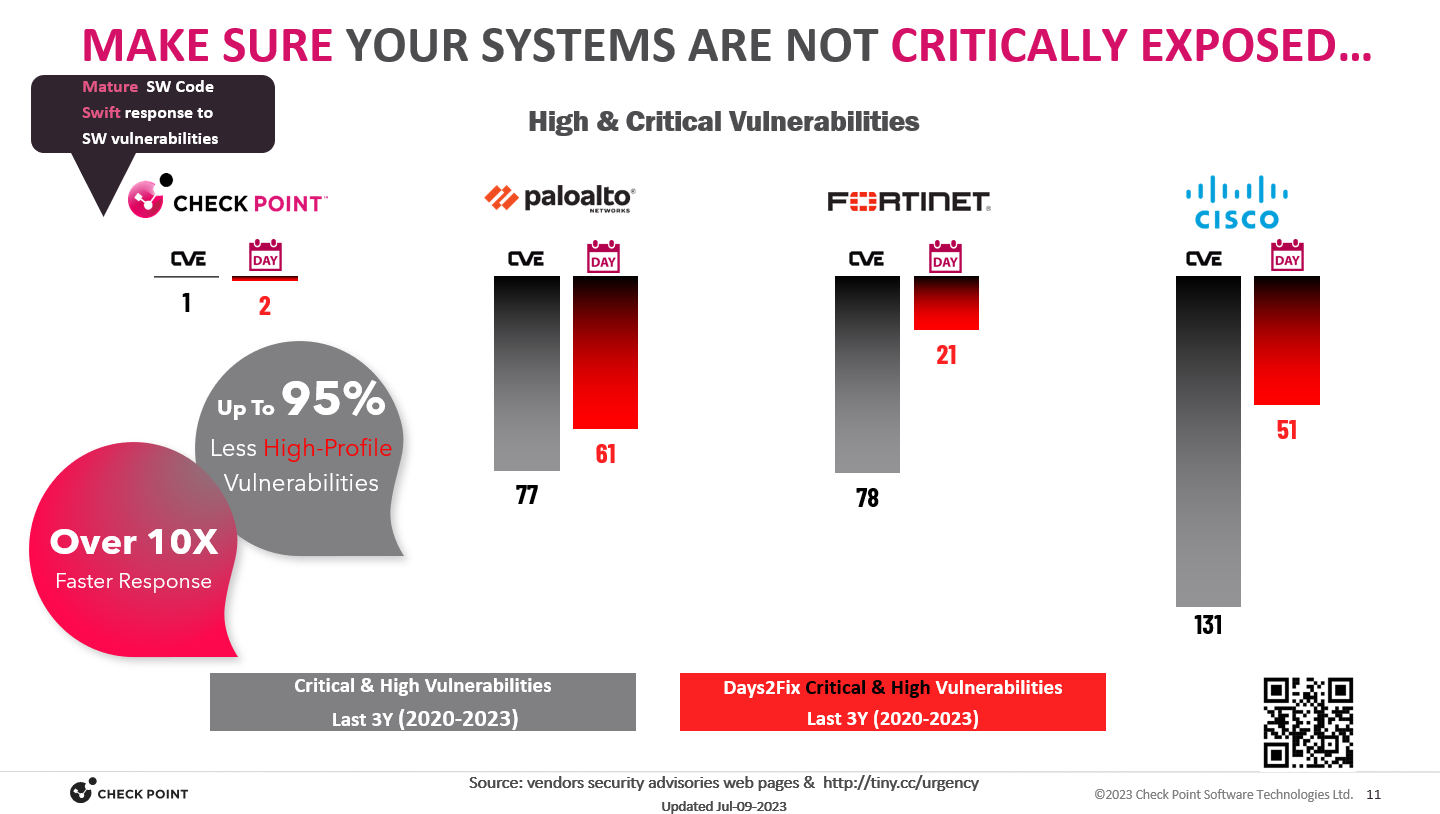
Fortinet Vs Checkpoint Vs Palo Alto
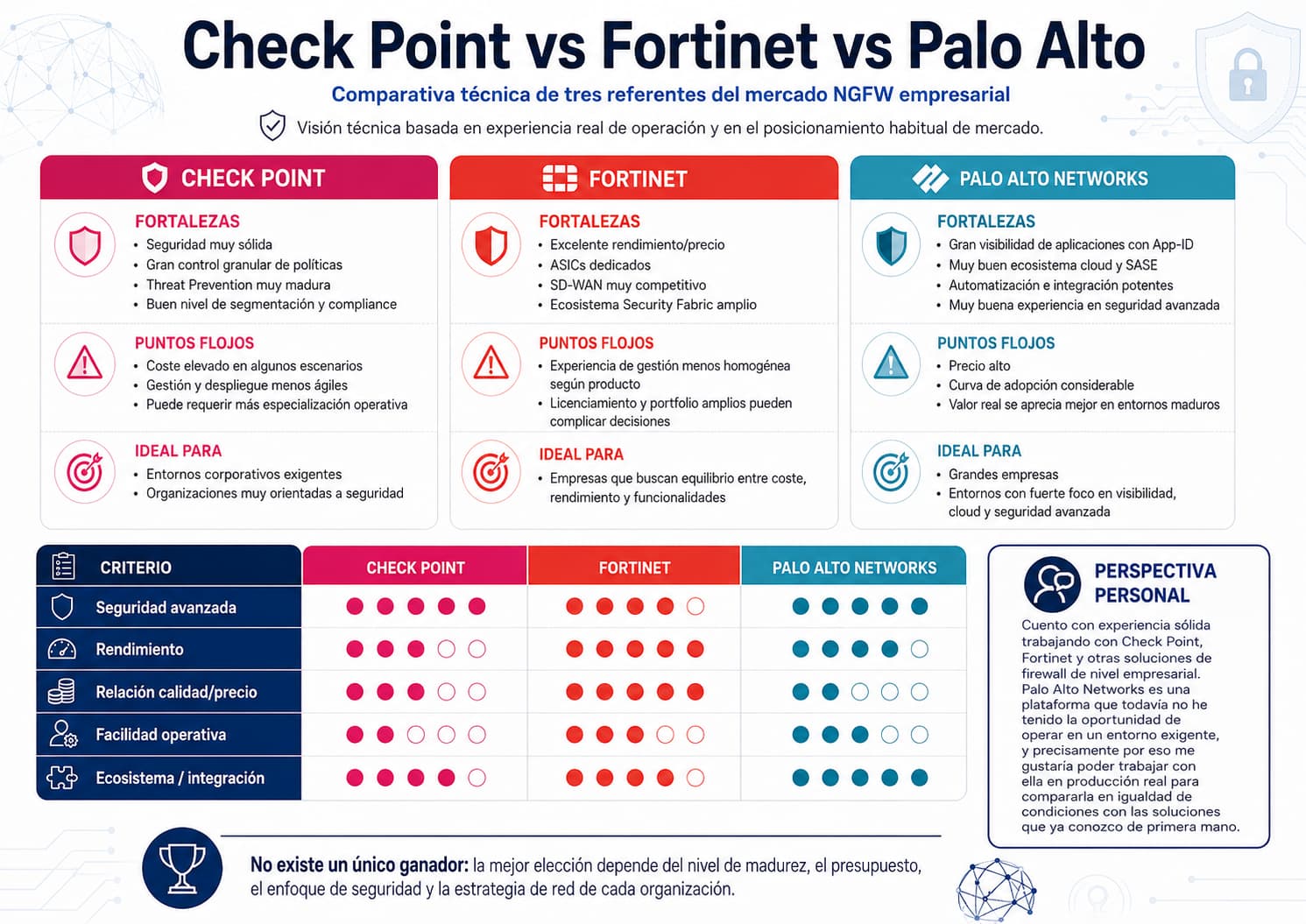
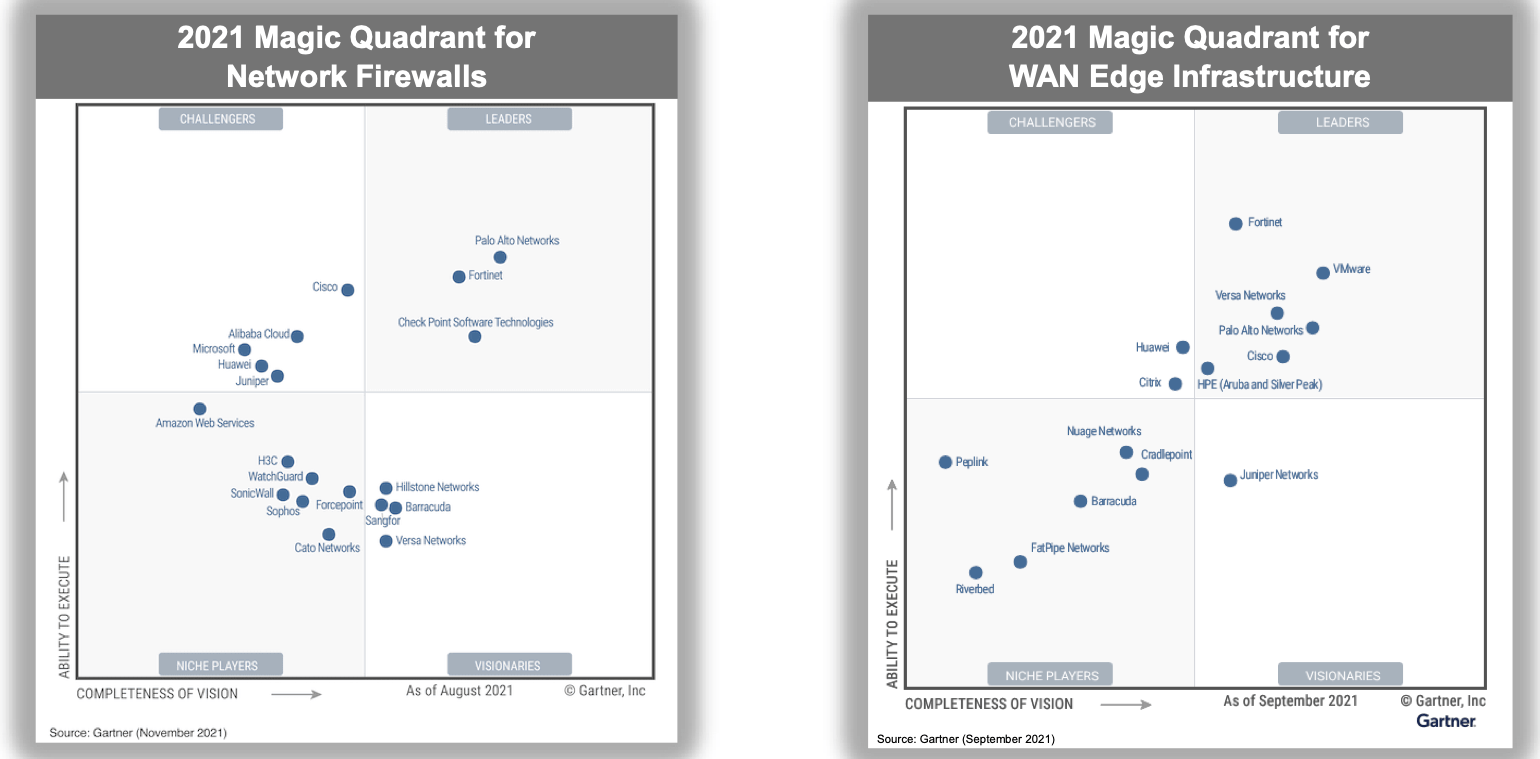
In the pantheon of digital gatekeepers, there’s a holy trinity that keeps CTOs up at night and CISOs employed: Fortinet, Check Point, and Palo Alto Networks. These aren’t just software vendors; they are the modern-day equivalent of the three Fates, weaving the threads of network security, access control, and threat intelligence that determine whether your company survives the next quarter. While the rest of the world obsesses over the latest iPhone or electric vehicle, the real technological arms race is happening in the silent, blinking server racks where these titans wage war against an invisible, relentless enemy. It’s a multibillion-dollar chess game where the pawns are zero-day exploits and the kings are your most sensitive data assets.
But choosing between them isn’t just a technical decision; it’s a philosophical one. It’s a choice between the ruthless efficiency of a Swiss bank vault (Check Point), the sprawling, adaptable fortress of a military garrison (Fortinet), and the sleek, AI-driven penthouse of a tech mogul (Palo Alto). Historically, Check Point was the undisputed pioneer, inventing the stateful inspection firewall in 1994. Then came the challengers with ASIC-driven speed and, finally, the cloud-native disruptors. Today, the decision is less about “if” you need them and more about which flavor of paranoia suits your organizational temperament.
The Unspoken Psychology of Perimeter Defense
Here’s a dark fun fact: the term “firewall” originally referred to a physical wall in automotive engineering, designed to separate the engine from the passenger cabin to prevent fires from incinerating the driver. The psychological transference to network security is almost poetic—we are all drivers in a vehicle that is perpetually on fire, hoping the barrier holds. In the world of Check Point, this psychology is one of obsessive control. Their software blade architecture feels like a Swiss watchmaker’s workshop: intricate, precise, and slightly intimidating. The user interface (SmartConsole) hasn't changed drastically in two decades, which infuriates young engineers but delights security veterans who value muscle memory over flashy dashboards. There’s a certain comfort in knowing that the tool you used in 2008 still functions flawlessly, much like a beloved vintage Leica camera.
Must Read
Fortinet, on the other hand, operates on the psychology of maximalist survival. Their secret weapon isn’t just software; it’s the FortiASIC—a custom silicon chip that offloads processing from the CPU, allowing for breathtaking throughput. Culturally, Fortinet is the Costco of security: everything is bulk, integrated, and surprisingly affordable. They don’t want you to buy a firewall; they want you to buy an entire ecosystem where the firewall, the switch, the access point, and the endpoint protector all speak the same secret language. The psychological trick here is simplicity through integration—reducing the anxiety of a multi-vendor Frankenstein architecture.
Then there is Palo Alto Networks, the enfant terrible that disrupted the duopoly with the “single-pass” architecture. Their psychology is aspirational fear. They sell the idea that your network is a sentient being that needs an AI brain to survive. With the introduction of Cortex and Prisma, Palo Alto has transcended the hardware layer, moving into a realm where zero-trust is not just a policy but a state of mind. The cultural impact is undeniable; Palo Alto has become the Tesla of cybersecurity—simultaneously the most loved and most criticized player in the market. Owning a Palo Alto firewall signals to your board that you are forward-thinking, even if the licensing costs require a second mortgage. They don’t just sell a product; they sell the terrifying notion that without their machine learning, you are already compromised.
Choosing Your Poison: Scenarios, Case Studies, and Practical Takeaways
Let’s get dirty with practical reality. Imagine you are the IT director for a sprawling logistics company with 500 remote sites, each connected via 100 Mbps links. Your budget is tight, and your team is small. Fortinet is your winner. The FortiGate series excels in this exact scenario. Their SD-WAN features are best-in-class, allowing you to replace expensive MPLS lines with broadband while maintaining encrypted tunnels. A case study from a mid-west manufacturing firm showed that swapping their legacy Cisco gear for Fortinets cut their WAN costs by 40% while improving latency. The takeaway? If you have a distributed, branch-heavy network, Fortinet’s hardware-driven approach is the pragmatic, cost-effective choice that doesn't compromise on security features like advanced routing and intrusion prevention.
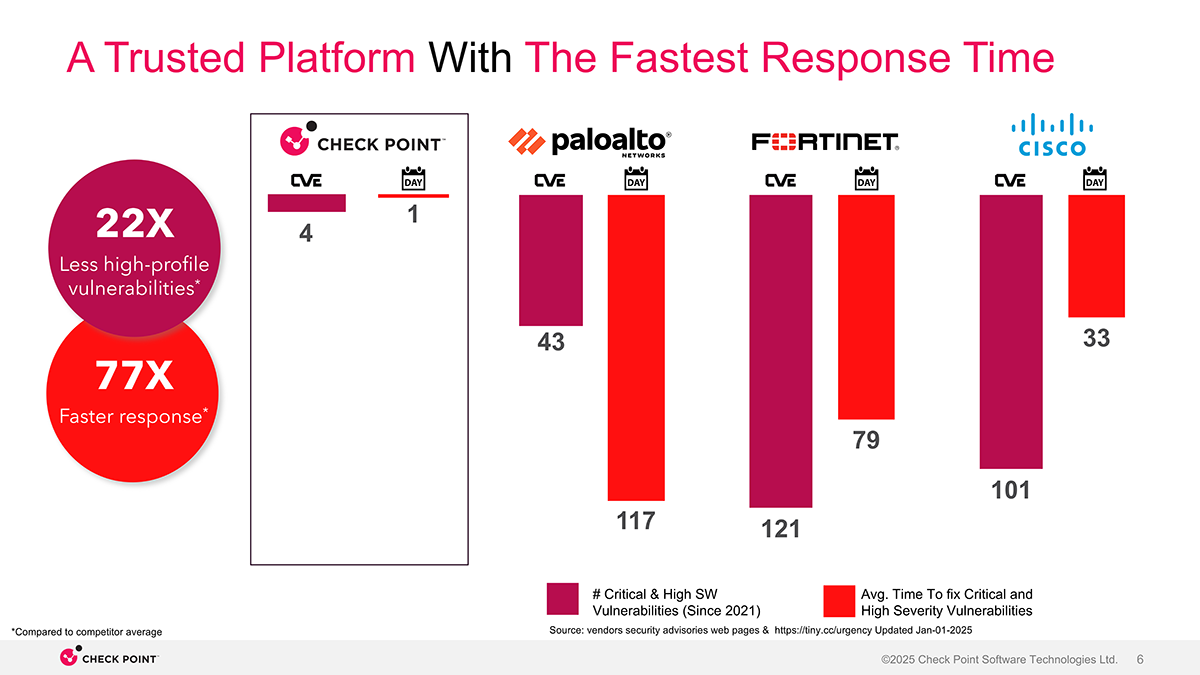
Now, consider a scenario involving a multi-national bank with a rigid compliance framework (e.g., SWIFT, PCI-DSS). They need granular control, deep packet inspection, and a forensic trail that can survive a federal audit. Here, Check Point remains the formidable dinosaur that refuses to die—but in a good way. Their firewalls are legendary for their identification capabilities and their ability to block thousands of applications without degrading performance. In a recent case study from a European banking consortium, Check Point’s Maestro orchestration tool allowed them to scale horizontally by grouping multiple gateways into a single logical unit, handling over 1 Tbps of traffic. The takeaway for you: if your need is for precise, highly granular policy control that feels like writing code for a space shuttle, Check Point offers unmatched depth. However, be prepared for a steeper learning curve.
What if you are a cloud-native startup that runs everything in AWS and GCP? You have no physical servers, and your developers deploy code 50 times a day? Palo Alto Networks is your ally. Their Prisma Cloud platform is the gold standard for Cloud Native Application Protection Platforms (CNAPP). A real-world example involves a fintech startup that was facing a severe misconfiguration issue; their S3 buckets were publicly readable. Prisma’s Code-to-Cloud pipeline automatically detected the misconfiguration during the CI/CD build, blocking the deployment and saving the startup from a massive breach. The actionable takeaway here is that Palo Alto excels when your security must live in the codebase, not just at the network edge. Their next-generation firewall (PAN-OS) is also incredible, but their ecosystem truly shines in the public cloud landscape.
Finally, the psychological impact of your choice dictates your hiring roadmap. Choosing Fortinet allows you to hire “generalists” who can manage broadband and security. Choosing Check Point forces you to hire “specialists” who understand the nuances of encryption and policy management—a rare breed. Choosing Palo Alto attracts talent who love automation but also demands continuous training budgets to keep up with their quarterly feature updates. One practical insight: do a “cost per protected Mbps” analysis. Fortinet wins there spectacularly. Do a “cost per prevented breach” analysis. Palo Alto can justify itself if the breach would have cost you millions in fines. It’s about mapping your risk appetite to the vendor’s cultural DNA.
Your Five Most Urgent Cybersecurity Questions, Answered
1. Which of the three vendors offers the best performance per dollar spent?
Without a doubt, Fortinet offers the most aggressive performance-per-dollar ratio, especially in the mid-range hardware segment (e.g., the 200F and 400F series). The secret lies in their proprietary ASIC chips, which offload the heavy lifting of encryption and threat detection from the CPU. This means you can push 10 Gbps of real-world throughput with a firewall that costs less than a compact car. In contrast, Palo Alto Networks and Check Point tend to require more robust hardware or higher licensing tiers to achieve similar throughput, often pushing you into the six-figure range for data center models.

However, the calculus changes when you factor in feature updates and maintenance. Palo Alto’s licensing is notoriously expensive, but it includes their Threat Prevention and WildFire sandboxing services, which are heavily automated. Check Point’s licensing has historically been more à la carte, which can either save you money or cost you more depending on how many “blades” you activate. If you are a budget-conscious organization, Fortinet’s Unified Threat Management bundle is the value king, but be aware that their user interface, while improving, still feels clunkier than Palo Alto’s elegant web-based dashboard.
2. Is Palo Alto truly more secure than the others, or is it just marketing hype?
This question is the holy grail of security podcasts. Palo Alto invests heavily in marketing and has a cult-like following, but the security claims have substance. Their Machine Learning (ML) engine is integrated directly into the firewall’s data plane, allowing them to stop unknown, file-based threats pre-encryption. Their WildFire sandbox is one of the fastest and most accurate in the industry, boasting nearly 99% detection accuracy. However, “more secure” is a relative term. A firewall is only as good as its rulebase and its administrator. A poorly configured Palo Alto is just as vulnerable as a poorly configured Fortinet.
Check Point, conversely, often relies on a smaller, more focused rule set but uses massive TCP reassembly and deep protocol inspection that can catch anomalies that AI models might miss. Fortinet’s threat intelligence network (FortiGuard) is also massive, fueled by hundreds of thousands of appliances in the wild. The practical reality is that Palo Alto excels against unknown zero-days due to its AI, while Check Point excels against evolved attack vectors that hide in SSL traffic. For most SMBs, the security gap is negligible; for an enterprise with data worth billions, Palo Alto’s automation often reduces the "Mean Time to Detect" (MTTD) significantly.
3. Can these firewalls handle the "Zero Trust" architecture?
All three can, but they approach it with different philosophies. Check Point was the first to coin the term "Zero Trust" in their marketing, but their execution is heavily reliant on the network boundary. Palo Alto has pivoted entirely to a Zero Trust model, integrating their firewalls with their identity and access management (IAM) tools to enforce policy based on user identity, not just IP addresses. Fortinet, through their Fabric Management Center, offers a comprehensive path to Zero Trust by treating every device—from the OT (operational technology) sensor on the factory floor to the user’s laptop—as a potential attacker.
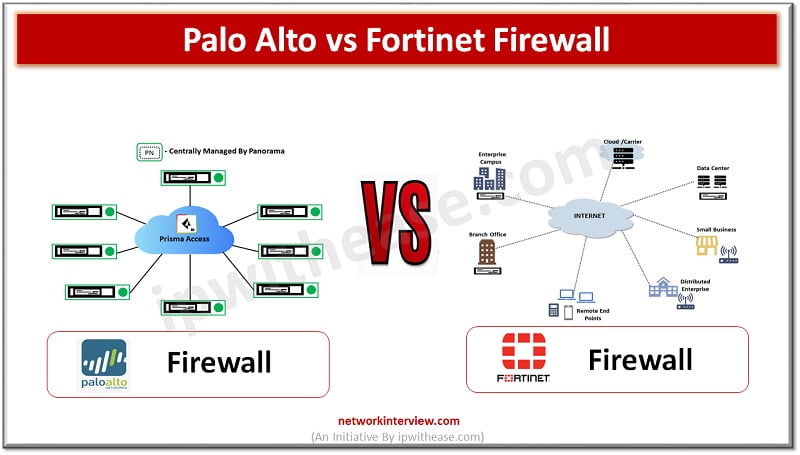
In a practical sense, if you are building a true Zero Trust architecture where the network is presumed compromised, Palo Alto’s Prisma Access is the most seamless way to deploy this globally, especially for remote workforces. Fortinet’s approach is cheaper but requires more manual configuration to segment the network effectively. Check Point’s approach works best in static data center environments. The choice here depends on your architecture: if you’re in the cloud, Palo Alto leads; if you’re hybrid, Fortinet’s hardware flexibility helps; if you’re legacy on-premise, Check Point is your bridge.
4. Are these products easy to manage, or do I need a doctorate in network security?
Here is the dark truth: they are all difficult to master, but user-friendliness varies. Fortinet’s FortiGate interface is the most "designed for the modern engineer"—it loads quickly, has excellent web filtering visuals, and the CLI (command line interface) is surprisingly intuitive. Palo Alto’s Panorama management console is visually stunning but can be confusing due to the sheer number of menus and policies you can stack. Check Point’s SmartConsole is a Windows application that feels ancient; however, once you learn the logic of "Objects" and "Policy Layers," it becomes second nature—like learning Vim or Emacs.
The real differentiator is automation. Palo Alto allows deep integration with Terraform and Ansible out of the box, making it a dream for DevOps teams. Fortinet has FortiManager which is powerful but often requires professional services to set up correctly. Check Point is improving but still struggles with native cloud automation. My advice? Do not let the GUI be your deciding factor. Check the API documentation. If your team is proficient in Python, Palo Alto offers the least friction. If you prefer a visual drag-and-drop policy matrix, Fortinet wins. If you are forced to use multiple vendors due to legacy systems, Check Point’s ability to centralize third-party logs is a lifesaver.
5. What will the next five years look like for these vendors?
The next five years will be dominated by the integration of Generative AI into the security stack, and all three are racing to win. Palo Alto is leading the charge with "Cortex XSIAM," which aims to replace traditional SIEMs with an AI-driven data lake that automatically correlates events. Fortinet is embedding advanced AI into their FortiGuard labs to improve threat prediction and is focusing heavily on the OT/ICS sector, which is ripe for attack and under-protected. Check Point is investing in "Infinity" architecture, designed to unify network, cloud, and endpoint security under a single management plane, but they are also embroiled in a battle to modernize their look and feel.

Look for a consolidation of features. The firewall box as we know it is dying; it is becoming a "security compute module." The vendors that survive are the ones that embrace the Secure Access Service Edge (SASE) model. Fortinet has made massive strides with FortiSASE, Check Point is partnering with third-party ISPs, and Palo Alto is acquiring the entire stack. Your future choice will be less about port numbers and more about which vendor’s AI you trust to make split-second decisions to quarantine a device. The ethics of AI-driven security will become the new battleground—and your choice of vendor is your vote for that future.
So, what does this all mean for the average person, the one who doesn't know a SYN packet from a SYN-ack? It means that every time you log into your bank, scroll through Instagram, or send a Slack message, these silent guardians are negotiating the terms of your digital existence. The choice between Fortinet, Check Point, and Palo Alto is a microcosm of the human condition: we want absolute freedom (Palo Alto’s innovation), absolute safety (Check Point’s rigidity), and absolute economy (Fortinet’s pragmatism). We are forever trying to find the balance between the thrill of the frontier and the comfort of a locked door.
In our daily lives, we make these same trade-offs unconsciously. We choose the unknown indie route in a GPS over the safe highway; we decide whether to hand our passwords to aggregator apps without reading the fine print. The cybersecurity industry merely formalizes this human anxiety. The CISO choosing Fortinet is the pragmatist who drives a reliable Toyota; the one choosing Palo Alto is the early adopter who buys the flying car; the one choosing Check Point is the archivist who still writes letters by hand. None are wrong; they are just different philosophies against the same storm.
Ultimately, the firewall is a mirror. It reflects our collective fear of the unknown and our desire to control our environment. Whether you are protecting a fortress or a startup, the logic remains identical: you are creating a line in the sand against chaos. The next time you face a difficult decision, remember the three titans. Don't just ask "which is faster?" or "which is cheaper?" Ask yourself, "What kind of protection do I believe I need to sleep at night?" Because in a world that grows more digitally chaotic by the second, the security you choose is, at its heart, a pact with your own peace of mind.

-1.png)