
Easy Slow Songs To Play On Piano

Let’s be real for a second: your TikTok FYP has officially entered its "sad girl at a grand piano in a dimly lit apartment" era. You’ve watched the same sped-up, reverb-drenched cover of a Phoebe Bridgers deep cut loop for three hours, and somehow, you’ve convinced yourself that you could do that. The algorithm is a diabolical matchmaker, feeding you endless clips of people playing "Moonlight Sonata" with one hand while crying into a matcha latte. The "easy slow piano song" has become the new ASMR—a digital flex that screams I have emotional depth and also, I have time on a Tuesday afternoon.
But here is the brutal, unvarnished truth that nobody on social media will tell you: slow does not equal simple. In the viral piano economy, "easy" is the biggest bait-and-switch since the "quiet luxury" trend convinced people that beige sweatpants cost $900. We are in the midst of a cultural pivot where the piano is no longer an instrument—it’s a therapy prop. It’s the aesthetic backdrop for a 15-second video where you stare longingly out a window after playing a Cmaj7 chord. The trend has exploded because it offers the illusion of mastery without the graft. And yet, we all still click, save, and repost the same three chords, hoping that sustained velocity will somehow equate to emotional intelligence.
So, before you spend your rent money on a weighted 88-key digital slab and a subscription to a sheet music app, let’s dissect this phenomenon. We’re going to navigate the murky waters of "easy slow songs," separating the legitimate beginner gold from the algorithmic snake oil. Because let’s face it: if you can’t play "Clair de Lune" without triggering a hand cramp, you’re not ready for the cinematic close-up—you’re ready for a reality check. And I’m here to give it to you, with a witty side of velocity and a sprinkle of sustainable piano practice.
Must Read
The Algorithmic Abyss: Why "Sad Piano" Is Eating the Internet
The subculture surrounding easy slow piano is a bizarre Venn diagram of lo-fi hip-hop producers, anime OST fanatics, and ex-theater kids seeking validation. These groups have collided with TikTok’s "cozy" aesthetic to create a new genre: NostalgiaCore. The appeal isn’t the music itself; it’s the vibe of the music. We aren’t listening for technical brilliance; we’re listening for a feeling of controlled melancholy. The internet has commodified vulnerability, and the piano is the easiest vehicle for that because it looks complex. A slow arpeggio gives the impression of skill, even when you’re just holding down the sustain pedal and hitting white keys in a pattern that a toddler could decode.
The toxicity here is subtle but real. Social media dynamics have shifted from "Look what I learned" to "Look how my trauma sounds." Every video is captioned with a vague caption like "for the ones who get it," which is just a coded way of saying "please validate my interpretive ambiguity." This creates a feedback loop where beginners are terrified of playing anything upbeat because it breaks the illusion of deep introspection. The cultural shift has made the piano a solitary, guilt-ridden activity. If you’re not playing something that could soundtrack a breakup montage, are you even doing it right? The answer is no, according to the algorithm. So, people are quitting because they attempt "Comptine d'un autre été" after two weeks and realize that while it is slow, it requires an insane amount of finger independence—which you cannot fake with a filter.
Moreover, the "easy" label is weaponized by content creators to push engagement. They’ll show a hand placement that covers two octaves, claiming it’s "beginner friendly," only to hit a run of 12 sixteenth notes at half speed that require the dexterity of a concert pianist. It’s the musical equivalent of a fitness influencer posting a "full body workout" that requires a $3,000 Pilates reformer. The result is a massive crash-out period where newbies feel stupid, sell their keyboards, and move on to the ukulele. The ones who stay are the ones who realize that slow music requires a faster brain to interpret the space between the notes.

How to Navigate the Trend Without Losing Your Sanity (or Your Wallet)
First, let’s establish a rule: If it sounds like a lullaby, it’s probably not easy. Stop downloading the sheet music for "River Flows in You" by Yiruma. Yes, it’s beautiful. Yes, it’s slow. No, you cannot play it after a week. You need to recalibrate your definition of "easy." For the sake of your mental health, we are looking for songs that have a static hand position, a repetitive left-hand pattern, and a melody that moves mostly by step—not leaps. Think of it as the capsule wardrobe of piano: a few versatile pieces that you can mix and match without needing an advanced fashion degree.
Your first port of call is the sacred trinity of beginner slow bangers: "Imagine" by John Lennon, "Let It Be" by The Beatles, and "Clocks" by Coldplay. I know, I know—it’s basic. But there’s a reason these songs have survived the cultural purge: they are built on triads and simple inversions. "Imagine" is essentially four chords (C, F, G, Am) repeated ad infinitum. The trick is to play the left hand as single notes (root position), not full chords, and let the right hand carry the melody slowly. This gives you the feeling of playing something profound while actually just practicing your hand-off coordination. If you want a piece that sounds sad but is technically a breeze, look up the ending of "Interstellar" (the simple organ part) or the main motif from "The Notebook"—just the right hand alone can carry the emotional weight while your left hand rests on a single C note.
Let’s talk about pedal discipline. The sustain pedal is your best friend and your worst enemy. Viral pianists rely on it heavily to mask sloppy timing. If you hold the pedal down for an entire phrase, your mistakes will blend into a mushy, romantic fog. That’s fine for a TikTok video, but it’s terrible for building actual skill. A pragmatic approach is to practice without the pedal until you can play the right hand melody flawlessly at 50% speed. Then, add the pedal only on downbeats. This forces you to articulate. It also saves you from the auditory crime of dissonant overlapping notes that sound like a cat walking on a synth.
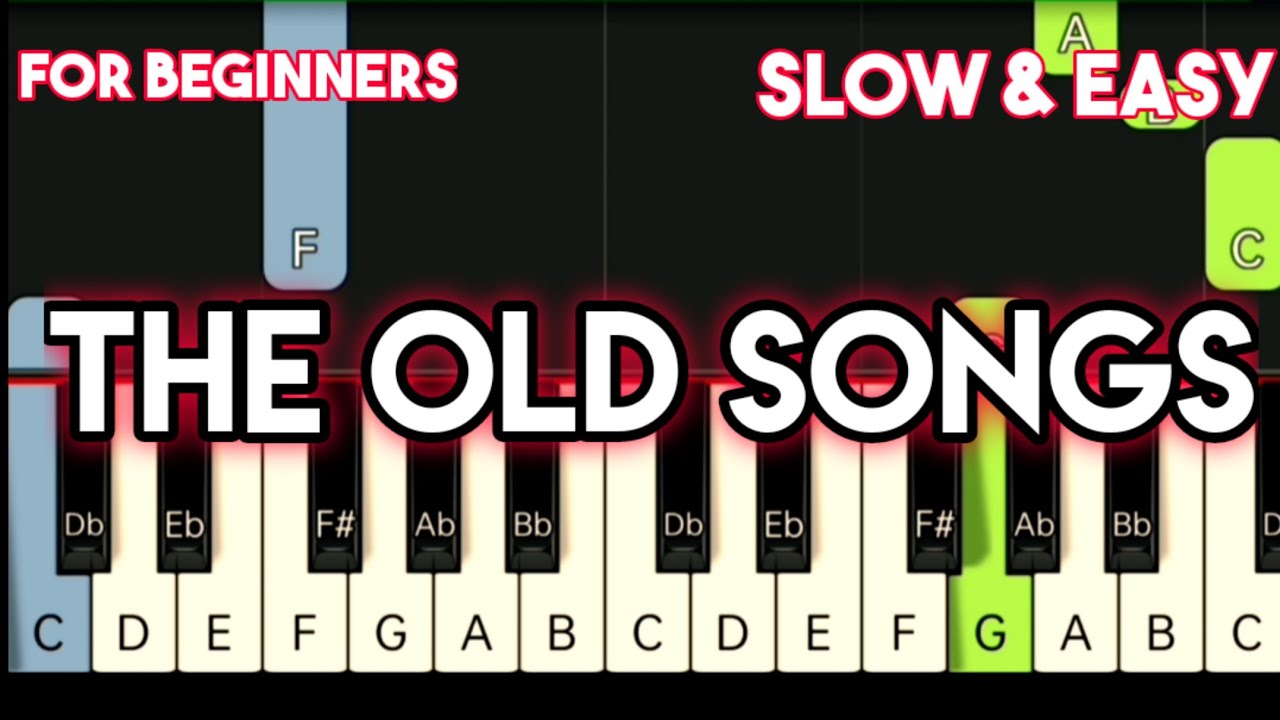
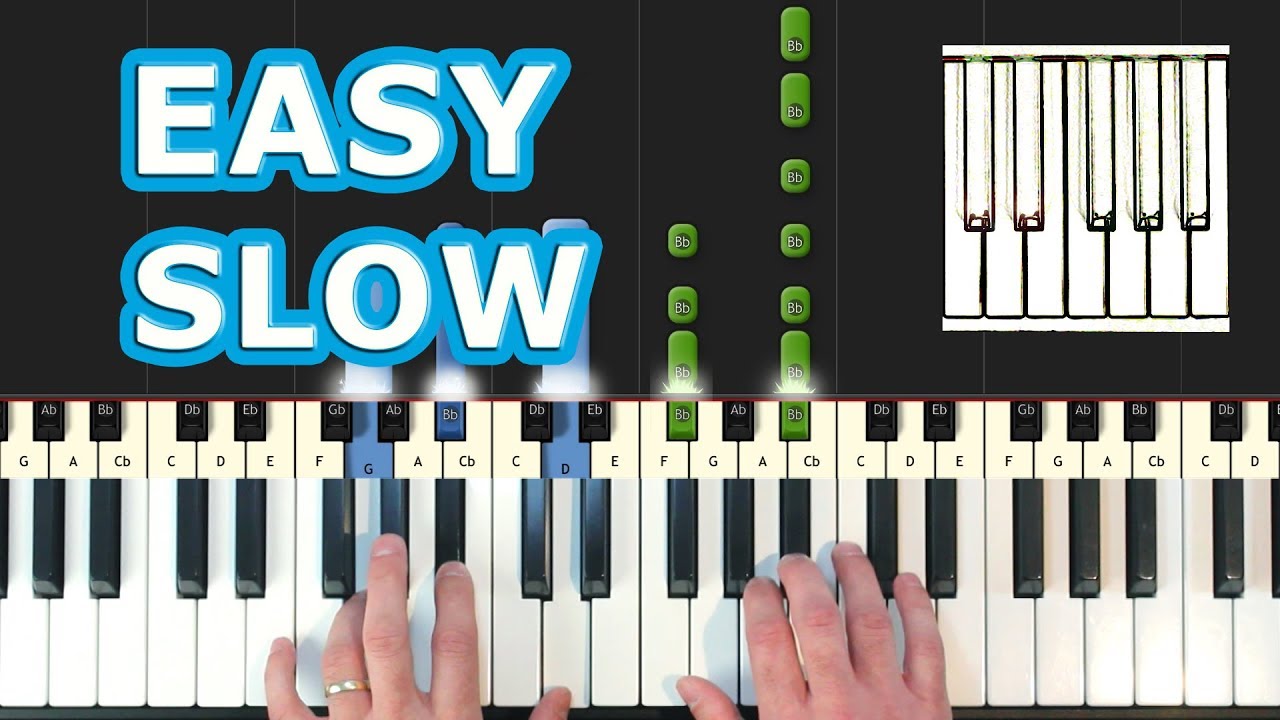
Another vital tactic: transpose the song. This is the internet’s best-kept secret for "easy" arrangements. If you find a sheet music arrangement that looks good but has a ton of black keys, go to a digital keyboard and hit the transpose button. Play "Clocks" in E major instead of E-flat major. The sound is exactly the same, but the physical geography is easier. You are not cheating; you are using the tools of modern technology to bypass unnecessary frustration. Similarly, don't buy the "official" book. Use YouTube tutorials that show a synthesia-style falling notes visualization. But here’s the critical rule: Watch the hands, not the lights. Try to copy the finger numbers (1-5) rather than just the notes. This prevents you from developing weird, contorted hand positions that will cause repetitive strain injuries later.
Finally, budget like a cynic. The "easy slow piano" trend is designed to make you buy things. You do not need a $200 sustain pedal or a subscription to a "pro" app. Go to a secondhand music store or browse eBay for a 61-key unweighted keyboard. It won’t feel like a grand, but it’s perfect for these simple pieces. The goal is to be playing 30 minutes a day, not to have a beautiful instrument that you photograph for Instagram. Allocate your money for a quality bench (your back will thank you) and a tuner app (free). Resist the urge to buy the "special edition" sheet music book that promises "cinematic" arrangements. Those are just the originals with extra octaves added to fill the page. Keep it simple. Keep it slow. Keep it cheap.
The 3 FAQs That Spark Internet Warfare
1. Is "Clair de Lune" actually easy, or am I being gaslit by the internet?
Full stop: You are being gaslit. "Clair de Lune" is not easy. It is slow, but slowness is a deceptive metric. The difficulty lies in the voicing—you have to bring out the melody above the arpeggios while keeping the accompaniment whisper-quiet. It requires a refined, controlled legato touch that takes years to develop. The internet gaslights you because the tempo is slow, so it looks manageable. However, the hand spans are wide, the modulations are tricky, and the rhythm is deceptive (it’s in 9/8 time, which feels like a waltz but with an extra beat). Do not attempt this as your first song. You will cry, and not in the aesthetic way. A better alternative is the first movement of Beethoven's "Moonlight Sonata", but only the first page. Play just the first 8 bars. That’s challenging but manageable, and it gives you 90% of the dopamine with 20% of the difficulty.

The discourse around this piece is deeply toxic. Purists will scream that you must earn the right to play Debussy, while casuals will argue that playing it at 40% tempo with mistakes still "counts." I land in the middle: play it if you want, but be prepared for the rough edges. The issue is that people post videos of themselves butchering page two and caption it "practicing!" which sets impossible standards for others. The real tragedy is that the piece is so overplayed that it has lost its original subtlety. We’ve turned a French impressionist masterpiece into elevator music. If you truly want an easy Debussy-esque vibe, try "La Fille aux Cheveux de Lin"—it's shorter and harmonically less dense.
2. Should I learn by reading sheet music or by watching Synthesia tutorials?
This is the classic "books vs. screens" debate. The answer is: Both, but in phases. Synthesia tutorials are excellent for getting the physical motor pattern into your fingers quickly. They show you exactly which keys to press and when. However, they are disastrous for long-term musicality because they don't teach you why a chord works, nor do they provide dynamic markings. You become a parrot, not a speaker. Sheet music, on the other hand, is the user manual to the human soul—it tells you to play piano (softly) or crescendo (getting louder), which is the essence of expressive slow music. But reading sheet music is a slow, tedious learning curve for a beginner.
The pragmatic strategy is to use Synthesia to learn the notes (get the muscle memory), then immediately switch to the sheet music to learn the dynamics (the phrasing, the pedaling, the accents). Start with a Synthesia video that has highlighted finger numbers. Then, print out a free sheet music PDF from IMSLP. Cross-reference them. Synthetic tutorials will give you the skeleton; sheet music will give it flesh. If you rely solely on Synthesia, you’ll hit a wall where you can play the song but have no idea how to make it feel alive. And for a slow song, feel is everything. A slow song without dynamics is just boring.

3. Do I need a weighted keyboard to play "sad" piano songs properly?
Here’s the hot take that will get you ratioed: No, you don't. Weighted keys simulate the resistance of an acoustic piano, which helps build finger strength and allows for subtle dynamic control (how hard you strike the key). However, for the "easy slow" genre—which is mostly arpeggios and simple melodies—a semi-weighted or even a quality unweighted synth action keyboard is perfectly fine. The modern digital keyboards offer "touch response" sensitivity, meaning they register how hard you hit them. That’s enough for a beginning to slightly alter the volume between the melody and the bass.
The keyboard warriors on Reddit will scream that you must buy a fully weighted 88-key hammer-action keyboard or you’re not a “real” pianist. This is ivory-tower elitism. The reality is that an unweighted keyboard is lighter, cheaper, and easier to play fast arpeggios on—which actually makes learning slow songs less fatiguing on your forearms. The risks of unweighted keys are that you might develop a heavy-hand style if you come back to an acoustic piano, but that’s a problem for future you. For the present trend, focus on the sound engine. Look for a keyboard with a good "Grand Piano" sample that has a long sustain. The nuance is in the sustain, not the key weight. Spend your money on a decent pair of headphones instead of chasing key weight.
Is this slow piano trend a flash in the pan or a permanent lifestyle shift? Look at the data: streaming services report that "ambient" and "study" playlists have doubled in the last three years. The aesthetics of quietude aren’t going anywhere. The pandemic normalized being indoors with your feelings, and the piano has become the physical anchor for that sentimentality. It fills the silence that we are so afraid of. This isn't just about music; it’s about the monetization of calm.
But the specific trend of "easy slow songs" will eventually mutate. The novelty of playing the same four sad chords will fade, and the algorithm will pivot to something more obscure (hello, "Medieval folk lute covers"). However, the skill you build—the patience to play slowly and deliberately—is permanent. That transferable discipline is the real gift. Whether you stick with piano or move to another hobby, learning to appreciate the space between the notes is a life hack, not just a musical technique. So, keep playing. Keep it slow. Keep it lazy. But keep it real. Your fingers will thank you, and your feed will be a little bit more bearable.


![Top 10 Easy Piano Songs for Beginners [Pop & Fun Songs]](https://vocalremover.easeus.com/images/en/images/easy-piano-songs-for-beginner.jpg)