Does The Second Hand On A Rolex Tick
Somewhere between the algorithmic dust of a “luxury watchtok” rabbit hole and a group chat where someone unironically asked if their new Rolex was “broken,” a question detonated across the internet: Does the second hand on a Rolex tick? It sounds absurd, right? Like asking if water is wet. But in the hyper-curated, terminally online arena of horology, this isn’t a dumb question—it’s a cultural litmus test. The viral clips of smooth-sweeping hands, the “tick vs. glide” debates, and the smug faces of collectors have turned this tiny mechanical detail into a full-blown social media showdown. Everyone from finance bros to TikTok sleuths is now weighing in, and the discourse is surprisingly volatile.
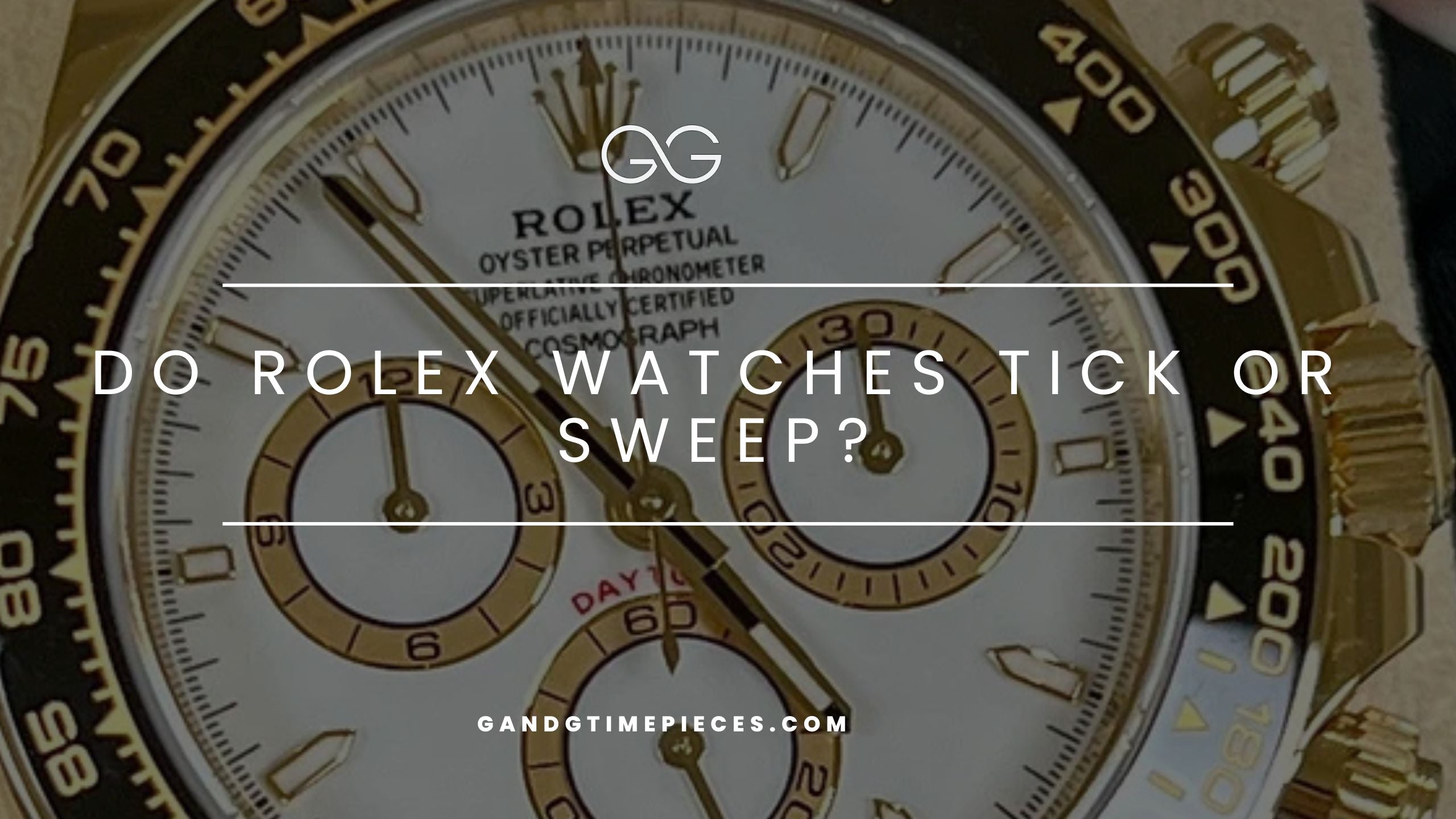
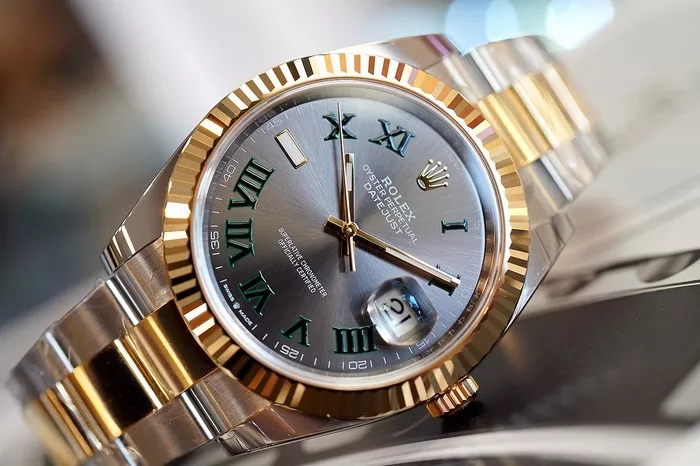
You’ve seen the videos: a macro lens zoomed in on a Submariner’s dial, the second hand gliding with an almost liquid smoothness, while a commenter screams “FAKE!” because their quartz Casio clicks. The truth, however, is a deliciously ironic twist. Rolex doesn’t “tick” like a Timex; it sweeps. But here’s the kicker—it also technically does tick, just at a frequency so high (8 beats per second, or 28,800 vibrations per hour) that the human eye perceives it as a flawless, hypnotic glide. This single nuance has become a badge of honor for the initiated and a trap for the pretenders. It’s the horological equivalent of knowing the difference between a meme and a deep-fried meme—if you have to ask, you’re already outside the velvet rope.
And oh, how the internet loves a velvet rope. The “does it tick” saga has evolved into a broader commentary on status, gatekeeping, and the fragility of flexing. It’s no longer just about a watch; it’s about authentication anxiety. In a world where a $20 rep from a shady website looks 95% accurate in a selfie, the movement’s behavior becomes the final boss in the game of “real or fake.” This article isn’t just about gears and springs—it’s about the psychology of validation, the absurdity of luxury, and why a tiny metal wheel is currently holding the internet’s collective attention span hostage.
Must Read
The Weird, Wonderful, and Toxic Subculture of Sweep vs. Tick
Dive into any Reddit thread on r/Rolex or the comments section of a luxury unboxing video, and you’ll find a bizarre ecosystem. On one side, the “Sweep Purists”—usually seasoned collectors who treat a quartz movement with the same disdain you’d reserve for pineapple on pizza. For them, the sweeping second hand isn’t just a feature; it’s a philosophical statement. It represents the triumph of mechanical engineering over disposable consumerism. They’ll post time-lapses of their Explorer’s hand moving in a perfect, fluid arc, captioned with phrases like “Perpetual motion, perpetual class.” They are the high priests of this digital temple, and they wield the sweep as a weapon against the uneducated masses. To them, the very question “does it tick” is an insult, a sign of a medieval mind unable to grasp Renaissance art.
On the other side, you have the “Tick Trolls”—a chaotic, often mischievous faction that loves to point out the semantic loophole. They’ll zoom in on a slow-motion clip, freeze-frame the hand between beats, and scream, “SEE? IT’S NOT SMOOTH! IT’S INTERMITTENT! IT TICKS!” They aren’t entirely wrong, but they’re also not entirely right. This faction thrives on the chaos, weaponizing technicalities to trigger the Purists. Then there’s the third layer: the Entirely Unhinged—the commenters who argue that if a watch is quartz, it’s “more accurate,” so anyone paying $10k for a mechanical watch is a “sucker.” This sparks a flame war about heritage, craftsmanship, and the soul of an object. The toxicity is palpable, but it’s also incredibly entertaining. This isn’t a conversation about timekeeping; it’s a battle for cultural dominance in the comment section, with each side using the second hand as their standard-bearer.
This subculture has also birthed a new wave of skeptical consumerism. Young buyers, raised on unboxing videos and “is it real?” checkers, now use the smooth sweep as a primary authentication metric—often incorrectly. The rise of “mirage fakes” (super clones with modified movements that also sweep) has shattered this simple test, pushing the discourse into even more paranoid territory. Now, the question “Does the second hand on a Rolex tick?” is a gateway drug into a rabbit hole of escapement angles, beat error, and amplitude—terms that would make your average person’s eyes glaze over, but for the internet’s watch gremlins, it’s the only language that matters.
How to Survive the Rolex “Tick” Discourse Without Losing Your Wallet or Your Mind
First, let’s get the technical basics straight so you don’t get ratio’d at a dinner party. A genuine, modern Rolex (post-2000s) uses a mechanical movement with a sweeping second hand. It moves 8 times per second. If you hold it close, you’ll see a fluid, uninterrupted glide, not a jerky “tick-tock.” However, if you film it in super slow motion (240fps or higher), you will see distinct micro-steps. So, the answer to the title is: Yes, it technically ticks, but it presents as a sweep. Memorize this. This is your shield. This stops you from sounding like a fool when a know-it-all tries to gaslight you. The “smoothness” is the result of the balance wheel oscillating at 4Hz, which is faster than the standard 3Hz (or 2.5Hz) of cheaper automatics. Knowing this immediately elevates you from “casual” to “informed enthusiast.”
Second, do not buy a watch solely to prove a point on the internet. The viral trend has spawned a wave of “entry-level” purchases from people who just want to post a video of a smooth sweep. You will see a flood of homage watches (like Seiko’s Presage or Tissot’s Powermatic) flooding your feed, and people pretending they’ve “beaten the system.” That’s fine—those are great watches—but don’t conflate “sweep” with “Rolex.” The obsession with the brand’s specific mechanics often leads to financial overreach. If you buy a watch because you want to be part of a TikTok debate, you’ll hate it in three months when the algorithm moves on to “titanium vs. steel” or “sapphire vs. hesalite.” Buy for your wrist, not for the algorithm.
Third, embrace the “So What?” test. When you see a commenter screaming “THAT’S A QUARTZ LOL” at a video of a Grand Seiko (which has a Spring Drive movement that sweeps even more smoothly than a Rolex), just smile. The internet rewards outrage, but your sanity shouldn’t be collateral damage. You can learn to spot the difference: a quartz watch typically has a second hand that lands exactly on the tick marks, while a mechanical sweep often has a slight wobble or hesitation. But even this isn’t foolproof. High-end quartz (like the Grand Seiko 9F) has a “twin pulse” that mimics a sweep. The only way to be sure is to listen to the movement—mechanicals have a distinct “whirring” sound, not a high-pitched tick. But please, for the love of god, don’t put your ear against a stranger’s wrist in an elevator.
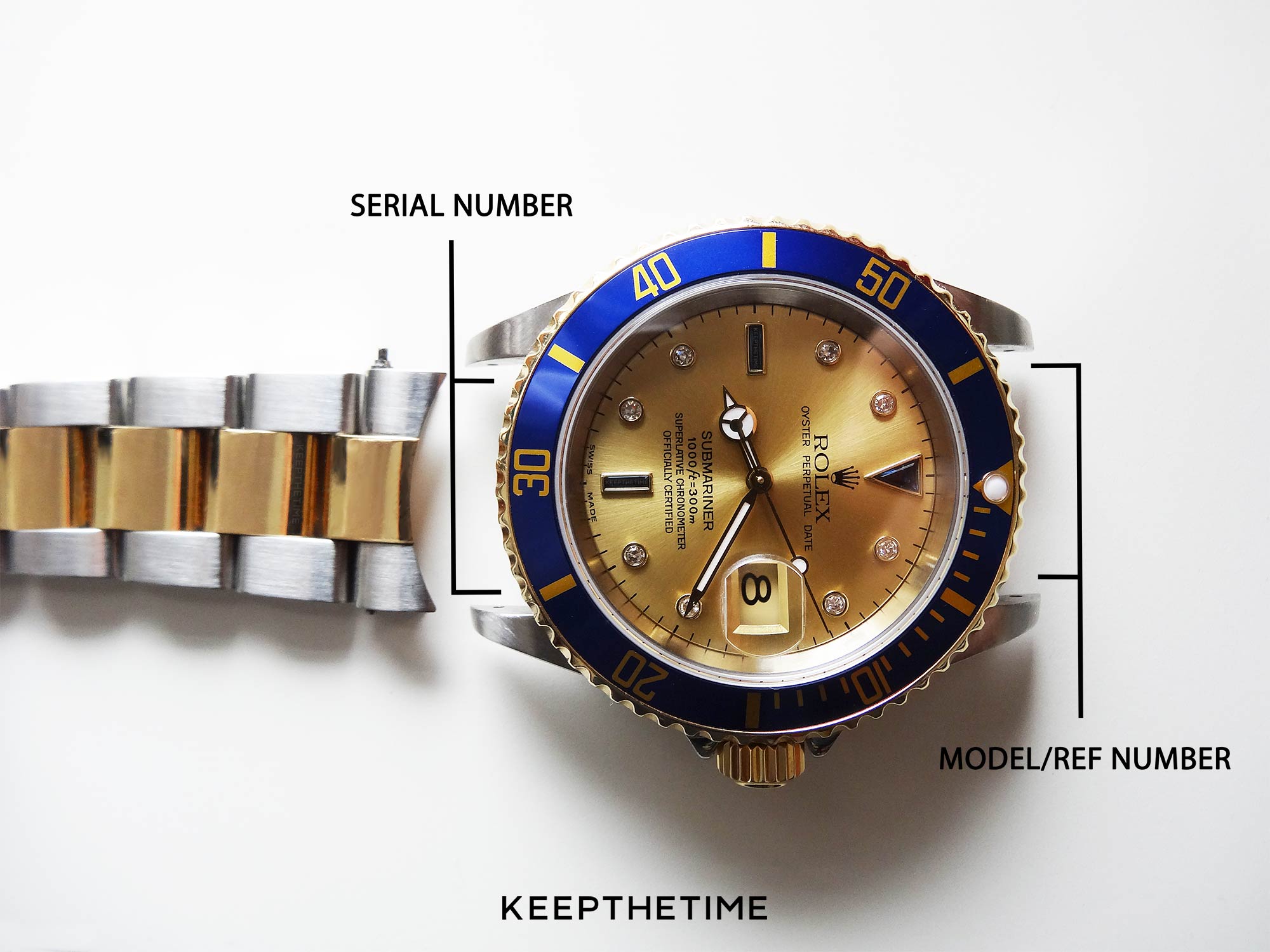
Fourth, if you’re in the market for a second-hand Rolex (pun very much intended), use the sweep as a preliminary check, not a definitive one. A genuine Rolex will have a smooth, continuous sweep. If you see a jerky, second-by-second tick, it’s either a fake, a vintage mechanical in desperate need of service, or a base-level quartz—which Rolex doesn’t make. However, don’t rely on this alone. Modern super-fakes use modified movements (like the Shanghai 3135) that also sweep at 28,800 bph. You must combine this visual check with a weight test, a case-back check, and a trip to a reputable dealer. The “tick test” is just the appetizer; the main course is professional authentication. Being obsessed with the second hand’s motion is a great way to miss a glaringly bad fake with a misaligned date window.
Finally, curate your feed. Mute the words “Rolex tick” and “sweep vs. tick” on Twitter (X, sorry). Unfollow the accounts that gatekeep with aggressive glee. Follow instead the watchmakers and historians who explain the why—the engineering, the history of the escapement, the sheer artistry of reducing friction to create that glass-smooth motion. The trend is fun for a week, but the knowledge is permanent. You can appreciate the mechanical choreography without shouting at a teenager who just bought their first Seiko. The goal is to enjoy the precision, not to weaponize it. You’ll find that once you stop caring about the argument, the beauty of the motion becomes much more relaxing to watch.
Your Burning Questions, Answered (Without the Snobbery)
Q1: Is it true that a Rolex second hand doesn’t move for a few seconds when you wind it?
This is a fantastic piece of trivia that often gets twisted into “proof” that a watch is broken. Yes, when you manually wind a modern Rolex (like a Submariner or a Datejust) via the crown, the second hand often remains motionless for the first few seconds of winding. This is not a defect; it’s a clever overload protection mechanism. The manual winding gears are designed to disengage from the auto-winding rotor to prevent damage. When you wind, you’re directly powering the mainspring, but the gear train might not immediately engage until the mainspring tension reaches a certain threshold. So, you’ll turn the crown, the hand is stationary, and then suddenly—whoosh—it starts sweeping.
This quirk often fuels the “tick” debate because impatient users think their watch is a quartz model that’s “hibernating” or a mechanical model that’s seized. The reality is that this slight hesitation is a hallmark of Rolex’s robust engineering—it’s a safety clutch. It’s also noticeable if you’re hacking the seconds (pulling the crown out to set the time); the hand stops, and you can align it perfectly, but upon pushing the crown back in, there can be a tiny micro-delay before the motion resumes. So, the next time someone posts a video of a Rolex “not moving” during a winding sequence, remember it’s not a tick, it’s a whisper—a mechanical pause before the ballet.
Q2: If a Rolex sweeps, why do fakes with quartz movements get caught so easily by the “tick test”?
Because cheap fakes use a standard quartz movement that increments the hand once per second, which is horribly obvious. A quartz movement’s second hand goes “tick…tick…tick…” with a decisive, mechanical snap, and it usually lands perfectly on the minute markers. The counterfeiters don’t bother upgrading to a sweeping quartz (which is more expensive) because they’re flooding the market with $50 reps. A genuine Rolex’s sweep is so smooth that it appears to be a constant, flowing line—there’s no discernible pause. The human eye can detect frequencies up to about 60Hz, but the 8Hz beat of a Rolex is so fast that your brain interprets it as continuous motion, not a series of jumps.
However, the internet’s reliance on this test has caused massive collateral damage. Some high-quality quartz watches (like the Grand Seiko 9F) have a “shock drive” system that fires the hand twice per second, making it look like a high-beat mechanical—but it’s still quartz. And here’s the ugly twist: the modern “super clone” fakes now use 28800 bph mechanical movements, meaning they also sweep beautifully. So, the “tick test” is now akin to checking if a car has a steering wheel—it’s required, but it doesn’t prove it’s a Ferrari. The test only catches the lazy counterfeits; it fails completely against the dangerous ones, which is why you must never use this as your sole method of authentication.

Q3: Does the “sweep” mean a Rolex is more accurate than a quartz watch?
Absolutely not. This is where the conversation gets spicy. A standard quartz watch (like a $40 Casio) is accurate to about ±15 seconds per month. A top-tier Rolex with a COSC certification is accurate to about -4/+6 seconds per day. So, in terms of raw timekeeping, a cheap quartz battery-powered movement destroys a Rolex. The “sweep” is not about accuracy; it’s about continuity of motion. The mechanical movement is a tiny, intricate orchestra of gears and springs, and the sweeping second hand is a byproduct of that complexity. It’s like comparing a vinyl record to a digital MP3—the MP3 is more accurate, but the vinyl has a physical soul, a presence, a warmth that audiophiles crave.
The irony is that the sweeping hand is actually a disadvantage for precise time-reading. If you need to time something to the exact second, a quartz’s distinct “tick” gives you a hard, clear boundary. A Rolex’s sweep is a blur, making it harder to read the exact moment a second passes. This whole debate highlights the shift in luxury culture—we’re no longer buying tools; we’re buying theater. The mechanical movement is a piece of wearable art that sacrifices the last 5% of accuracy for 100% of charm. So, if you’re arguing about tick vs. sweep, you’re arguing about the wrong metric. The real argument is about what you value: flawless utility or mesmerizing emotion.
So, is the “Does a Rolex tick?” phenomenon just a flash in the pan of internet culture, a fleeting meme that will be replaced by next week’s “green dial vs. blue dial” drama? Partially, yes. The specific, viral outrage about the second hand is a symptom of a deeper, more permanent shift. We have moved into an era where authenticity is the ultimate luxury, and verification has become a spectator sport. The thirst for this kind of knowledge—even the silly, pedantic corners of it—is not going away. The internet has democratized information, but it has also democratized paranoia. The question will evolve, but the underlying mechanism—our collective need to know if something is real, worthy, and exclusive—is a permanent fixture of modern digital life.
As for the watch itself, the mechanical sweep will remain. It’s a beautiful anachronism in a world of battery-powered, phone-synced smartwatches. It’s a deliberate choice to embrace inefficiency for the sake of craft. So, the next time you see a Rolex on a wrist or a macro video on your feed, don’t ask if it ticks. Ask yourself if you can appreciate the tick in the tock—the micro-second of mechanical hesitation that makes it human. The fad will die, but the fascination with a tiny wheel moving at 28,800 times an hour? That’s eternal. And honestly? That’s far more interesting than a status symbol. That’s a story on your wrist.