Do Belly Slimming Patches Really Work

In the amber glow of a 1990s infomercial, sandwiched between a ThighMaster and a “psychic” love-reader, there was a promise whispered with the hushed urgency of a state secret: a small, beige, medicated-looking square that could melt belly fat while you slept. We, the children of the cassette tape and the cordless phone, were a generation raised on the gospel of the “miracle patch.” The idea wasn’t born in a laboratory, though; it was a direct descendant of a much older, more tactile human longing. Long before the first transdermal nicotine patch hit pharmacy shelves in 1991, civilizations had been slathering their abdomens in mustard plasters, wrapping them in wet burlap, and insisting that heat, friction, and bizarre botanical concoctions could pull stubborn fat from the body’s core. The initial necessity wasn’t just vanity—it was a quest for control. In an era before personalized nutrition and digital body scans, the act of doing something physical, of applying a potion to the very spot of insecurity, felt like a form of alchemy, a ritualistic attempt to shape destiny with a sticky backing and a foil pouch.
The late 20th century was a peculiar time for weight loss. We were caught between the last gasp of Victorian-era corsetry—which promised physical reshaping through sheer force—and the dawn of a hyper-scientific, molecule-level understanding of metabolism. The patch, specifically the belly patch, was the perfect hybrid of these opposing forces. It offered the passive restructuring of a corset (wear it, forget it, let the external force work) but with the active, high-tech mystique of a lab-engineered compound. I remember the near-cultish devotion to brands like “Slim Patch” and “Herbal Magic Patch,” which were sold not just on television but in the back pages of women’s magazines, nestled between ads for psychic hotlines and get-rich-quick schemes. The packaging was always the same: a serene woman in a white leotard, hands resting on a flat, glowing belly, the patch itself a tiny, hidden rectangle on her navel. The science was vague—usually referencing “seaweed extract” or “garcinia cambogia”—but the rhetoric was absolute. They didn’t suggest; they declared.
But the deeper truth, the one that hooked our grandparents, was the promise of bypassing willpower. We saw dieting as a grim, grindstone affair—a Monday morning punishment of grapefruit and lettuce. The patch was a rebellion against that misery. It promised that you could be lazy, passive, even gluttonous, and the patch would do the heavy lifting. This was the “humble beginning” of the modern wellness hack: the idea that our body’s most stubborn area, the belly, could be treated like a localized problem, a plumbing issue that a simple external application could fix. It ignored the systemic reality of fat storage—which is dictated by hormones, cortisol, and genetics—in favor of a simpler, more seductive narrative: the spot-treating band-aid. It was a beautiful, naive dream, born from a genuine human desire to find an off-switch for our anxieties, a way to manage our bodies without the existential dread of a gym membership.
Must Read
The Golden Age of Quackery: From Radioactive Corsets to Vibrating Belts
To truly appreciate the belly patch, we must look back to its bizarre ancestors, the forgotten vintage gadgets of the early 20th century. In the 1920s, the “relaxicisor” or the “Slendertone” belt was the rage—a heavy, electric-powered belt that vibrated your midsection so violently that, in some advertisements, they claimed it could “dissolve” cellulite through sheer mechanical agitation. Women would sit in chairs, strapped into these buzzing monstrosities, while reading movie magazines, convinced that the shaking was physically breaking up fat cells. This was the era of the “reducing belt” and the “massage machine,” which worked on the principle of brute force, often leaving users bruised but believing that pain was proof of progress. A decade earlier, in 1911, you could buy a “Radioactive Reducing Cream” that was rubbed directly onto the abdomen, promising to “stimulate cellular metabolism” with radium. The irony, of course, is that the radiation often caused cellular damage, but the heat and tingling sensation fooled users into thinking something profound was happening.
The mid-century brought us the “Girdle and the Sweat Suit” philosophy, which was less about chemistry and more about dehydration. The 1950s saw the rise of rubber “Sauna Shorts”—thick, unbreathable neoprene shorts that you wore under your clothing to induce profuse sweating. The logic? If you sweat, you lose weight. You did lose weight—water weight, which returned the moment you took a sip of water. But the visual result was immediate: a temporarily flattened stomach, a phenomenon that fueled the myth of spot-reduction. Meanwhile, in the 1960s, a fringe dermatologist named Dr. Herbert published papers on “Enzyme Lipolysis,” suggesting that certain plant enzymes, if applied topically, could “eat” fat deposits. This gave birth to the “Enzyme Wrap,” where patients were slathered in a paste of papaya pulp and cinnamon, then wrapped in plastic cling film. You’d lie in a warm room for 45 minutes, and upon unwrapping, your skin would be red, tight, and slightly diminished in circumference—not from fat loss, but from vigorous fluid displacement and mild inflammation. This was the direct, albeit crude, great-grandparent of the modern belly patch.

The 1980s brought the infamous “Champion Juicer” and a renewed focus on internal cleansing, but it also saw the introduction of “Iontophoresis” devices. These were battery-powered gadgets that claimed to use a low-level electrical current to drive fat-burning molecules through the skin. You’d place a damp pad soaked in “aminophylline” (an asthma medication!) on your stomach, and the current would push the drug into the fat layer. Aminophylline was later shown to have a negligible effect on fat, but the sensation of a mild electric buzz was compelling. It felt medical, invasive, and therefore, logical. These devices were expensive, costing upwards of $200 in today’s money, and were often sold via mail-order catalogs with a money-back guarantee that, unsurprisingly, was rarely honored. This was the first real attempt at “transdermal delivery” for fat loss, and it taught marketers one crucial lesson: consumers were willing to pay a premium for complexity, as long as it required zero effort on their part.
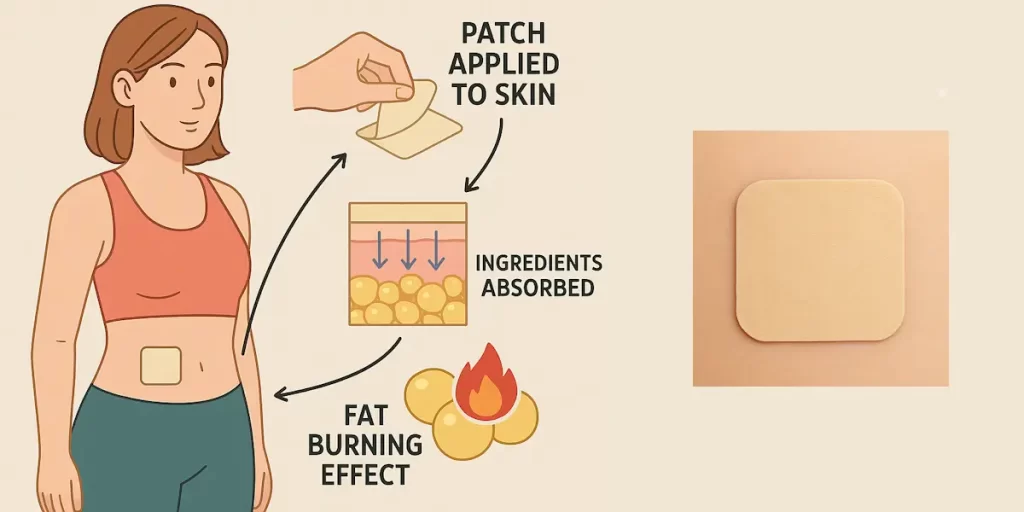
By the time the actual “patch” emerged in the early 1990s, the market was primed. The FDA had just approved the nicotine patch, which was a massive success. The same penetration-enhancing technology—which used a porous membrane and skin permeation enhancers like alcohol or urea—was adapted for herbs. The first belly patches were essentially herbal compresses with an adhesive. They contained caffeine, which is a mild diuretic, and green tea extract, which has a tiny thermogenic effect. When applied to the skin, they often caused a slight warming or tingling sensation. That sensation was the entire trick. It created a placebo effect of such potency that millions of units were sold. The patches did not work for fat loss, but they did work as a psychological crutch. They provided a daily ritual, a moment of self-care, and a false sense of agency over one’s body, which, for many, was worth the $29.99 price point alone. It was a masterclass in marketing the unprovable.
The Modern Hack: Biosensors, Micro-Needles, and the Quantified Self
Today’s belly patch is a far cry from the herbal sticker of the 90s. The classic principle—that the skin is a viable route for delivering active compounds—has been modernized and, surprisingly, validated by legitimate science. The modern hacks are no longer about herbal lipolysis but about smart technology. We now have “biosensing” patches that stick to the abdomen and monitor sweat chemistry, analyzing lactate and cortisol levels to give you a real-time readout of your stress and metabolic state. They don’t burn fat; they track it. But the most fascinating evolution is the “micro-needle” patch. These are small arrays of dissolvable, microscopic needles that painlessly pierce the outer layer of skin, delivering a precise dose of a compound deeper into the dermis. Currently, this is used for delivering hyaluronic acid for skin tightening or even insulin, but researchers at MIT and Harvard have experimented with micro-needle patches loaded with brown-fat-stimulating agents—compounds that could theoretically convert white fat to beige fat, which burns calories.

For the fast-paced modern world, these patches are still being sold as “hacks,” but the terminology has shifted. It’s no longer about “melting” fat, but about “optimizing cellular signaling.” Brands now combine caffeine with yohimbine and synephrine—stronger stimulants—but they also add a “smart chip” that pulses a micro-current to enhance absorption. This is the fusion of the 1970s electric devices with 2010s nanotechnology. The modern consumer is told that the patch is a “delivery vehicle” for a “biohacking stack,” not a miracle cure. It’s marketed as an adjunct—something to pair with a healthy diet and exercise, a way to “amplify” results. This is a massive pragmatic shift. While the classic patches promised to replace discipline, the smart patches promise to complement it. They are less of a lie and more of a highly sophisticated placebo with a faint glimmer of legitimacy, leveraging the psychological nostalgia of the “sticker” while nodding to the demands of the quantified self-movement.
Frequently Asked Questions: The Sticky Truth
1. Do they actually burn fat, or is it just a psychological trick?
From a strict physiological standpoint, no topical patch can induce spot-reduction of fat. Fat is released from cells via hormonal signals—primarily adrenaline—which are triggered by a calorie deficit and exercise. The compounds used in patches (caffeine, green tea, carnitine) are not absorbed deeply enough in high enough concentrations to cause lipolysis (the breakdown of fat). The 1998 study published in the Journal of the American College of Nutrition examining aminophylline creams was damning: it found no significant difference in fat cell diameter between the treated and untreated sides of the abdomen. However, the psychological trick is real. The “tingling” or “warming” sensation often triggers the placebo effect, which can alter your subjective body image. You feel thinner, and that can lead to better posture and reduced cortisol (the stress hormone that stores belly fat). So, while they don’t burn fat, they can, via the placebo effect, reduce stress-related water retention.
Historically, this has been the case. The 1920s vibrating belts didn’t break fat, but they did stimulate lymphatic drainage, which reduced swelling for a few hours. The modern patch, especially those with capsaicin (the chili pepper extract), causes a localized vasodilation—blood rushing to the surface—which can make the skin look temporarily tighter and smoother. To truly answer the question: they are not a metabolic tool, but they are a powerful perceptual tool. If you believe the patch is working, you may unconsciously make better food choices, carry yourself taller, and breathe more deeply, all of which contribute to a flatter belly appearance. The “work” is not in the patch; it’s in the mind it activates.

2. Are the modern “micro-needle” patches any more effective than the old herbal stickers?
The efficacy increase is significant on a delivery level, but minimal on a fat-loss level. Micro-needle patches, which emerged around 2015 in the cosmetics industry, bypass the skin’s outermost barrier (stratum corneum) which blocks almost everything. They can deliver a compound up to 500 microns deep, reaching the dermis. This is why they are so effective at delivering collagen stimulators or hair growth factors. For fat loss, they can deliver compounds that inhibit the formation of new fat cells, but they cannot destroy existing ones. The old 1990s stickers worked on the principle of occlusion—trapping sweat against the skin—which caused a temporary “sweat effect” that was purely water loss. The micro-needle patch is superior because it actually introduces a biochemical into the tissue, which can trigger a mild inflammatory response. This inflammation causes the body to send water to the area, paradoxically making it look puffier initially, but potentially improving skin elasticity over time.
However, the fat underneath remains stubbornly untouched. The dream of a needle that physically breaks down a fat cell without inflammation is still science fiction. The micro-needle patch is a triumph of pharmaceutical engineering—a brilliant way to administer drugs without a syringe, but it is not a metabolic magic bullet. It is, however, a more honest representation of what a patch should be: a drug delivery device. It harkens back to the 1960s iontophoresis machines but without the cumbersome wires. For the consumer, the difference is that you might feel a slight prickling sensation for two minutes, followed by a redness that subside quickly. It is a more potent placebo, ironically, because it feels more “medical.” But the results on a measuring tape will still be disappointing if you’re not also managing your caloric intake.
3. Is there any historical precedent for a “magic” external weight-loss tool that actually worked out?
In the entire history of weight loss, no external application—cream, wrap, belt, or patch—has ever produced clinically significant, long-term fat reduction on its own. However, there is one fascinating exception: the “Thermal Energy” devices like the “Cryolipolysis” or “CoolSculpting” machines developed in the 2010s. While not a patch, it uses external application of extreme cold to induce apoptosis (cell death) in fat cells. This is real. It works. The fat cells are crystallized and then gradually excreted by the body over months. This is a triumph of physical science applied externally—a concept that the early 20th-century device makers were grasping at but lacked the technology to achieve. The “vibrating belts” of the 1920s were trying to mechanically disrupt fat; CoolSculpting actually does it, but through temperature, not kinetic energy.

Another rare historical "success" is the use of highly-compressive garments combined with intense exfoliating scrubs in Victorian hydrotherapy spas. The physical friction of the scrub (often made of horsehair) would deeply exfoliate the skin, and the compression garment would hold the skin in a new, tighter position. While this didn't reduce fat, it did reduce the appearance of cellulite and sagging skin, offering a temporary structural improvement. So, the answer is: we have cracked the code on external modification (freezing fat, laser lipolysis) but not on external metabolism (topical drugs that burn fat). The patch of the future might combine a micro-needle with a cryogenic element, but the current iteration is still firmly in the placebo category, blessed with good marketing and a delusion we all share—that the skin is a door we can unlock to our stubbornest insecurities.
Looking ahead, twenty years from now, the belly patch will likely be a sophisticated biological computing device. It will contain a tattoo-like sensor that continuously monitors your interstitial fluid—not just for glucose, but for free fatty acids and inflammatory cytokines. It will be paired with an AI that adjusts a micro-dosing pump within the patch, releasing a personalized cocktail of GLP-1 agonists (the active ingredient in Ozempic) and mitochondrial uncouplers directly into the abdominal subcutaneous fat. This patch won’t just “reduce” fat; it will act as a real-time metabolic regulator, altering your body’s fuel preference dynamically. You might wake up, and the patch will have already detected your elevated cortisol from a bad night’s sleep and released a calming peptide to blunt the stress-induced fat storage. It will be worn continuously for months, a subcutaneous guardian that erases the line between external device and internal organ.
The evolution from the herbal sticker to the biological patch mirrors our broader relationship with health: from passive hope to active data-driven engineering. In the next two decades, the nostalgia for the simple, buzzing belts of the 1950s will feel as quaint as a bloodletting leech. We will look back at the 2020s patch as the final, desperate gasp of the “quick fix” era, the last time we believed a sticker could fool our biology. The future is not about melting fat, but about restructuring the very metabolism that creates it. We will stop applying miracle cures and start cultivating biological partnerships with our own cells. The patch will become a whisper, not a shout—a quiet, intelligent companion that knows our belly’s secrets better than we do, and guides it gently, not with shock, but with precision. And when that day comes, the infomercials of our youth will finally, mercifully, die a well-deserved death.