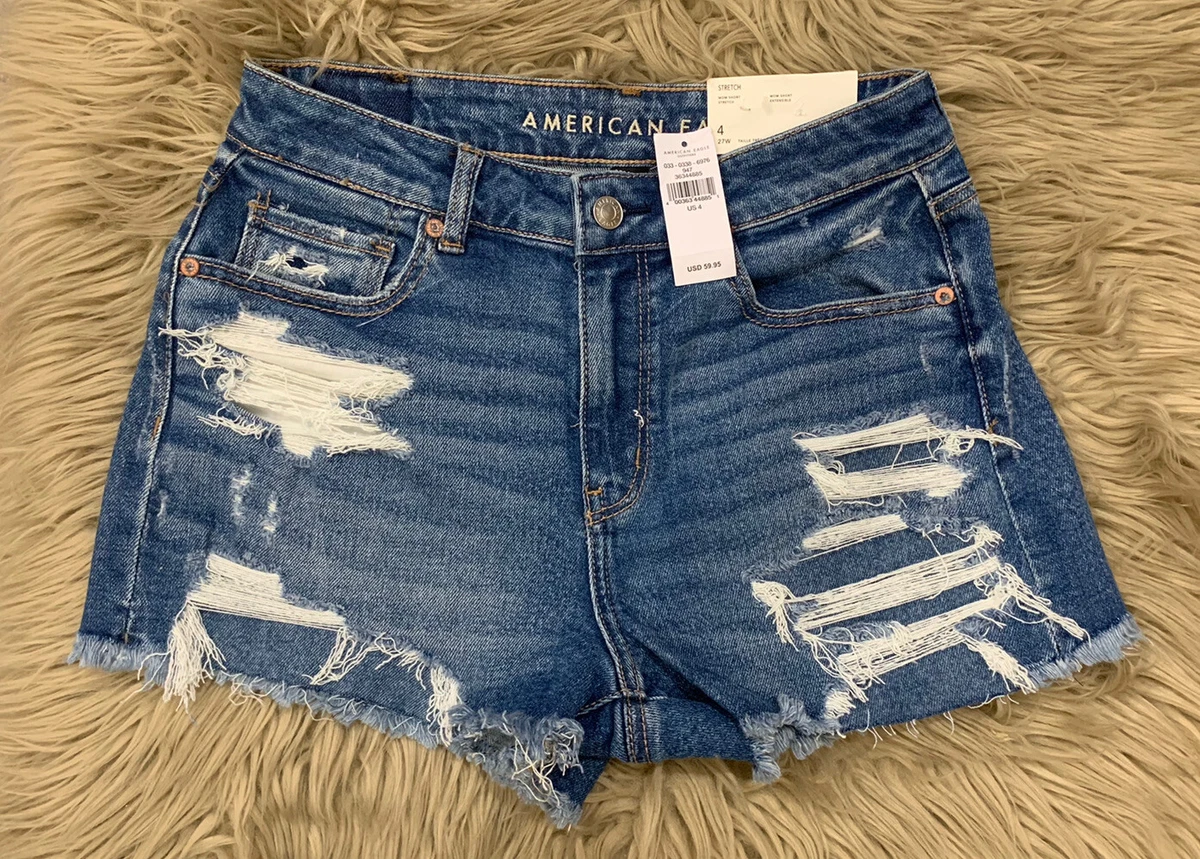
American Eagle Jeans Short Inseam

Let’s be real for a second: if your social media feed hasn’t been hijacked by a fever dream of ankle-grazing denim, capri-adjacent optics, and the furious sound of measuring tapes being whipped out, you’re either living under a rock or you’re tall. American Eagle’s short inseam jeans have officially mutated from a practical necessity into a full-blown cultural event, the kind of niche obsession that TikTok algorithms feast on. It started as a whisper in the comment sections—"wait, they come in a 26-inch length?"—and has since detonated into a full-throated roar, with Gen Z and elder Millennials alike treating the brand’s size-inclusive inseam matrix like the holy grail of pantology. This isn’t just about finding pants that don’t puddle; it’s about a specific, almost militant rejection of the "one length fits all" fashion industrial complex.
The current status of the short inseam is messy, in the best way possible. It’s no longer just for the petite girls who suffered through years of tailoring bills; it’s for the 5’6” crew who are tired of looking like they’re wearing water skis, and for the fashion girlies who understand that a clean, cropped break looks objectively cooler than a frayed, muddy drag. The discourse has shifted from "does this exist?" to "why didn't this exist sooner?", and American Eagle, with its dizzying array of options—we’re talking X-Short for the 4’11” queens and Short for the 5’4” warriors—has positioned itself as the reluctant messiah of leg-length liberation. Everyone is talking about it because it’s the rare internet trend that actually solves a problem instead of creating a new, expensive one.
But let’s not pretend this is purely altruistic. The beauty of the short inseam boom is that it has exposed the lazy default of the fashion industry, forcing a once-stodgy mall brand to become the standard-bearer for proportional inclusivity. We are living through a denim renaissance where the hemline is the new neckline, and AE is holding the measuring stick. It’s a vortex of fit-pics, haul videos, and angry Reddit threads about whether the 28-inch "Short" is actually too long, and honestly, we wouldn't have it any other way.
Must Read
The Cult of the Hem: Who Knew Ankles Could Be This Controversial?
Dive deeper into the rabbit hole, and you’ll find that the American Eagle short inseam isn't just a product category—it’s a subculture with its own warring factions. On one side, you have the "Ankle-Nazi Anarchists", a group of purists who argue that a true short inseam should hit exactly at the malleolus (that bony bit on your ankle) and not a millimeter lower. They are the gatekeepers, posting high-resolution zoom-ins of their stacked sneakers to prove that the fabric does not, in fact, touch the floor. On the other side, you have the "Half-Cuff Heretics", who buy the Short length, realize it’s still an inch too long, and commit the cardinal sin of cuffing them anyway, thereby negating the entire purpose of the purchase. The social media dynamics are brutal; one wrong fit-pic and you’ll be ratioed into oblivion by a legion of 5’2” women who swear the X-Short is the only path to enlightenment.
This toxic culture is fueled by a very real, very specific shift: the death of the pants-puddle. For a decade, fashion was dominated by baggy, floor-swallowing silhouettes that looked great on 5’10” models but made the rest of us look like we were drowning in tarps. The short inseam movement is a direct rebellion against that, a sharp pivot toward a utilitarian, "I have my life together" aesthetic. It’s about showing the ankle—the forbidden sliver of skin—as a power move. It’s also inherently narcissistic in the most productive way; it forces you to confront your own proportions, to measure your own limbs, and to demand that a corporation cater to your specific geometry. The weird part is that we’ve turned a basic measurement into a personality trait. "I’m a 26-inch short inseam" has replaced "I’m a Scorpio" in bio. It’s chaotic, it’s harmless, and it’s incredibly fascinating to watch the algorithm pit the 5’0” crowd against the 5’7” crowd in a battle for who is truly, authentically "short."
Surviving the Denim Gauntlet: A Pragmatic Guide to Not Losing Your Mind
Alright, you’re sold. You want the short inseams. You want the clean hem. But navigating the American Eagle website feels like trying to solve a Rubik's cube while wearing oven mitts. Here’s the tactical breakdown on how to conquer the system without spiraling into a 3-hour rabbit hole or breaking the bank. First, you absolutely must measure yourself—and not just once. Ignore your size on other brands; AE’s sizing is famously quirky. Grab a soft tape measure, put on your tightest leggings, and measure from the crotch seam down to where you want the hem to fall. Write it down. If you want a flood-level look for sneakers, that’s likely a 26 or 27 inches for a 5’4” frame. If you want a casual, slight break, you might be a 28. Do not guess. The return process is a soul-sucking expedition into the seventh circle of shipping hell.

Second, understand the fabric voodoo. Not all 'Short' is created equal, and fabric weight dictates the hang. A stiff, 100% cotton rigid denim in a 27-inch inseam will look completely different from a stretchy, 91% cotton blend in the same length. The rigid denim will hold its shape, giving you that structured, cropped look, but it won’t budge if you accidentally size down. The stretch versions will cling to your shin like a desperate ex, often bagging out at the knee and making the hemline creep up awkwardly. Read the description for the "Stretch" level. If you’re buying the "Curvy" fit (which you should if you have any hip-to-waist ratio), remember that the inseam might run slightly different due to the extra room in the seat. Be prepared to order two lengths and send one back. Yes, it’s annoying. Welcome to the high-stakes world of micro-lengths.
Third, scout the reviews like a hawk. This is where the hive mind becomes your best friend. Search for reviews from women who list their height and their weight, ideally someone within a two-inch radius of your own stature. If a 5’5”, 140lb reviewer says the 28-inch Short is "just right," but a 5’3” reviewer says it’s a "puddle," you know the truth lies somewhere in the middle. Also, look for the phrase "ankle grazer"—this is code for "intentionally short enough to show off your summer pedicure." Cross-reference that with the number of "hem badges" or "tight ankle opening" mentions. The goal is to filter out the noise and find your exact twin. It’s like using the internet to find your long-lost biological fit-family. Weird, but effective.
Lastly, and this is crucial, do not buy full price. American Eagle runs sales like it’s their only job—40% off, 50% off, clearance events that would make a Black Friday shopper weep. The short inseams will inevitably end up on the sale rack, especially the seasonal colors like "Canyon Rose" or "Faded Basil" that nobody asked for. Sign up for their rewards app, stack your coupons, and wait it out. The beauty of denim is that it doesn’t expire. You don’t need the latest drop; you need the one that fits. If you can snag a pair of $60 jeans for $25 because you used a birthday coupon plus a student discount, you have achieved the ultimate life hack. You haven’t just bought jeans; you’ve beaten the system.

And if you get the fit wrong? Don’t panic. Learn how to do a "blind hem" or find a tailor (yes, they still exist) to take them up an inch. But honestly, AE’s return policy is famously forgiving. Just keep the tags on, don’t wash them, and be ready to ship them back. The pursuit of the perfect ankle is a marathon, not a sprint. Treat every miss as a data point, and eventually, you’ll have a drawer full of perfectly cuffed, perfectly angled, perfectly you jeans.
The FAQ of the Gapped Ankle: Internet Debates, Settled (Mostly)
Is "Short" the same as "Ankle" length? And which one is for me?
Look, the terminology is a minefield. At American Eagle, a "Short" is the inseam category, but within that, you have lengths like "26" and "27." An "Ankle" length is usually a fitting style, meaning it’s designed to hit at the ankle bone. In AE terms, an "Ankle" fit is typically a shorter inseam regardless of the category, but it’s a different cut, often tapered. The dirty secret is that a "Short" in the Mom jeans cut will fit entirely differently than a "Short" in the skinny jeans. It’s infuriating. The best strategy is to ignore the names like "Ankle" or "Flood" and focus solely on the numerical inseam. The measurement doesn’t lie. If you are 5’5” and want a clean, stitch-level break, you’re almost certainly a 27-inch. If you are 5’2”, you’re likely a 25 or 26. Do not be seduced by the aesthetic label; the number is your master.
The bigger debate is whether you should size down in the "Short" to get a cropped look without a "flare" at the bottom. This is a classic error. The width of the leg opening is not connected to the inseam length. Buying a size 0 when you’re a size 4 will only make the denim crush your hips and stretch out weirdly at the knees, creating a baggy "balloon" effect at the ankle—a cardinal sin. Your waist size is for your waist; your inseam is for your legs. They are two independent variables that must be solved separately. So, if you are a size 6 with a 27-inch inseam, do not buy a size 4. You will look like you’re wearing a child’s pants that were attacked by a thrift-store shrink ray. Trust the process.

I’m 5’7”. Are short inseams a total no-go for me?
Here’s where the internet’s height inflation kicks in. Absolutely not. In fact, a "Short" inseam is often the secret weapon for tall women who want an aggressively modern, "high-water" look that is very now. The distinction that matters is not your total height, but your torso-to-limb ratio. A 5’7” woman with a long torso and short legs will have the same inseam as a 5’4” woman with long legs. Stop comparing yourself to the global average and start measuring your actual bones. If you are taller, searching for the AE "26-inch" might be the exact length you need for a trend-forward, tucked-into-boots look. The problem arises when taller women buy "X-Short" by accident, thinking "smaller number = better." That is a recipe for a fashion disaster involving your ankles getting frostbite. You want the hems to hit you at the top of your foot, not the bottom of your calf.
Furthermore, there is a distinct subculture of tall women who use short inseams to create a "straight-leg but edited" silhouette. They buy the 28-inch "Short" (which, in AE’s weird sizing, might actually measure 29) and wear it with platform sneakers, effectively cropping out the excess fabric that would otherwise ruin a perfectly good loafer. It’s about visual intent. You are not buying these jeans because you are short; you are buying them because you want a specific optical illusion. It’s a tool in your wardrobe kit. Ignore the gatekeepers who say you’re stealing the inventory. Denim is denim; take what fits.
Is it more sustainable to buy short inseams, or is it just fueling overconsumption?
Oh, this is the morally gray area of the trend. On one hand, buying a precise inseam means you are less likely to have to tailor or discard a pair because they are too long. You are cutting out the middleman (the tailor) and saving water by not having to wash a pair you just hate. On the other hand, the fact that AE offers 14 different inseam options means the customer is more likely to buy more pairs, trying to chase that perfect fit, which results in massive shipping emissions and potential textile waste from returns. The eco-conscious move is to treat your required inseam as a "lock" and only vary your washing or fabric choices. Be a "uniform dresser"—find your perfect pair in a dark rinse and a light wash, and stop browsing. The algorithm wants you to buy five pairs of the same jean in slightly different washes, but that’s a runaway train of capitalistic waste.

However, there is a sustainability argument that short inseam options are a low-key climate victory. Globally, the average woman is 5’3”, yet for decades, denim was cut for a 5’8” mannequin. This meant that billions of jeans were hemmed with chemical-laden threads or cut off and re-serged, creating waste. By normalizing the short inseam, AE is shifting the default, which could force other brands to produce more proportional clothing, thereby reducing the need for alterations and the waste associated with ill-fitting garments. Buying a short inseam is not a virtue signal, but it is a vote for a more rational system. As long as you are buying exactly what you need and wearing it until it disintegrates, you are on the right side of history, one exposed ankle at a time.
So, is this a fad or the beginning of a permanent paradigm shift? The darker, more cynical answer is that it’s a fad destined to be absorbed by the fashion cycle, turning into a fall 2026 obsession with "maxi lengths" that will again discriminate against the vertically challenged. But the pragmatic truth is that the demand for shorter inseams is not a style preference; it’s a biological reality for half the population. Once a brand like American Eagle proves that making a 25-inch inseam is profitable, the shareholders will demand it forever. The trend cycle may move on to different silhouettes—skinny, baggy, kick-flare—but the option of a short inseam will likely remain, like a stubborn ankle bracelet that refuses to unclasp.
We are moving toward a future where clothing is sold like bespoke coffee—extra short, tall, decaf, oat milk. It’s a quiet revolution where the hemline has become a battleground for personal autonomy. You are not just wearing jeans; you are wearing a protest against the tyranny of the one-size-fits-all dress form. And if that means we have to measure our leg bones with a suspicious tape measure at 2 AM, so be it. The ankles are free, the fits are precise, and the American Eagle short inseam is here to stretch the industry’s imagination, one perfectly cropped stride at a time.