Discover Card For Bad Credit Score
There is a peculiar silence that falls over a room when you hand over a card and it is declined. It is not merely a financial transaction that fails; it is a moment of profound psychological exposure. For those with a less-than-perfect credit score, this silence can feel like a verdict on their character, a public confirmation of a private shame. Our brains are wired for tribal belonging, and in the modern world, financial solvency has become a proxy for reliability, intelligence, and worth. When we feel we have failed that test, the amygdala—our primal fear center—lights up, interpreting the rejection not as a data point, but as a threat to our social standing and survival.
Yet, the path to financial rehabilitation is rarely about the numbers alone. It is a journey through the murky waters of guilt, self-forgiveness, and cognitive restructuring. The mere idea of a "Discover Card for bad credit" often feels like an oxymoron, a mirage in a desert of rejection letters. We convince ourselves that the algorithm has seen into our souls and found us lacking. But the truth is more nuanced and infinitely more hopeful. The modern financial ecosystem, while intimidating, offers tools designed not to punish, but to rebuild. The challenge lies not in the application process, but in the internal work required to believe we are worthy of a second chance.
The Invisible Scars: When Financial History Becomes Personal Identity
Consider the story of Maya, a graphic designer in her late thirties. After a messy divorce that left her with unpaid joint debts, she avoided opening her mail for a year. Every time she thought about her credit score, she felt a wave of nausea. It wasn't the math that paralyzed her; it was the story she told herself—that she was financially irresponsible, a "messy" adult who couldn't handle life. This is the core emotional trigger of bad credit: the conflation of a financial event with a moral failing. We engage in catastrophic thinking, projecting a future of poverty and dependence, all because a three-digit number failed to meet a threshold.
Must Read
The cognitive bias at play here is known as the "negativity bias." Our brains remember the bill we couldn't pay far more vividly than the ten we paid on time. This distorted memory reinforces a cycle of avoidance. We avoid checking our score for fear of confirmation, which delays the first crucial step toward recovery. Furthermore, there is the "spotlight effect"—the belief that everyone is watching our financial missteps. In reality, the bank teller does not know your history; the application portal is anonymous. But in our minds, we feel naked, exposed, and judged. This psychological burden often leads to decision paralysis, where inaction feels safer than risking further rejection.
Another hidden hurdle is the shame spiral triggered by security deposit requirements. For many, being asked for a secured card (which requires a cash deposit upfront) feels demeaning. It triggers a primal sense of being untrusted, akin to a child being sent to the corner. But here, we must reframe the narrative. A secured card is not a punishment; it is a training wheel. It acknowledges the current state while providing a safe space to practice. Yet, until we accept this metaphor, the deposit feels like a confirmation of our worst fears—that we are not safe drivers of our own destiny. The emotional labor here is immense, but recognizing that this is a stepping stone, not a cage, is the first act of self-compassion.
Rewiring the Mindset: A Blueprint for Emotional and Financial Recovery
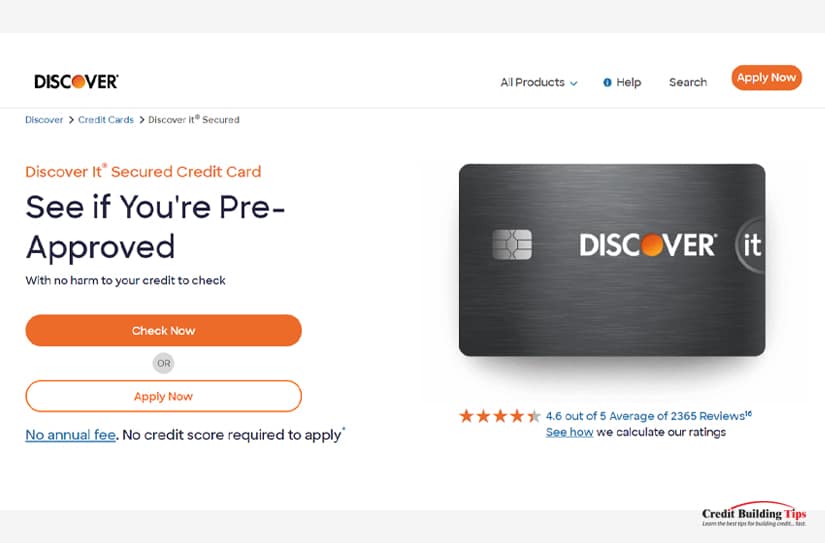
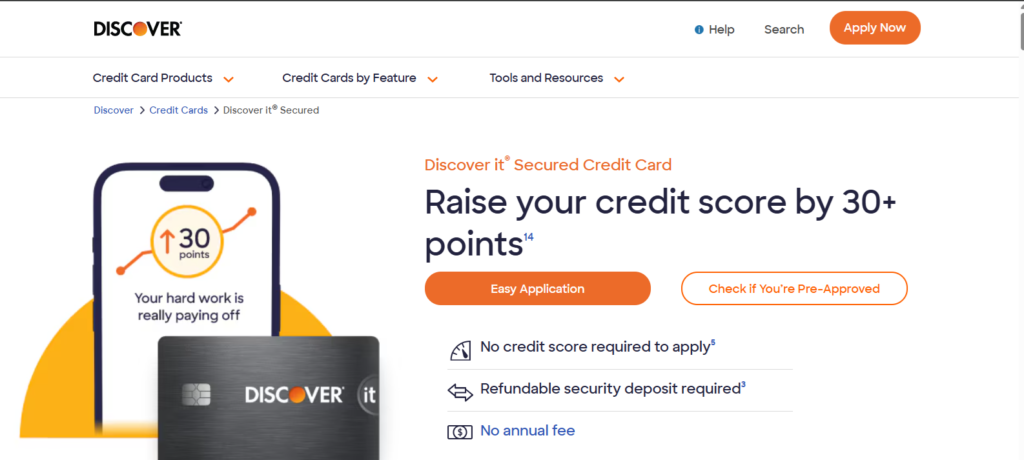
To approach a tool like the Discover Secured Card—arguably the most accessible entry point for those with poor credit—we must first embark on a routine of mental preparation. Start with a "Digital Declutter." For one day, do not check your balances, your score, or your statements. Instead, write down on paper every single fear you have about money. Externalizing the anxiety removes its power from your subconscious. Then, perform a "Narrative Rewrite." Look at that list and ask yourself: Is this a fact, or is this a fear? If it is a fear, label it as such. This simple act of labeling creates cognitive distance, allowing your prefrontal cortex (the logical brain) to re-engage.
Next, we move to the practical application of a secured card, but with a psychological contract. Before you even apply, determine your "Why." Why do you want this? Is it for the safety net? Is it to eventually buy a home? Write this down and attach an emotion to it. When you receive the card, do not immediately rush to spend. Instead, perform a "Ceremony of Intent." Hold the card, acknowledge that it represents a deposit of your own money, and recognize that you are now in a partnership with yourself. The first three months are not about building credit; they are about building trust with your own habits. Use the card for a single recurring subscription (like Netflix or a phone bill) and set up autopay. This removes the cognitive load of remembering and reduces the chance of a late payment—which is your primary source of anxiety.
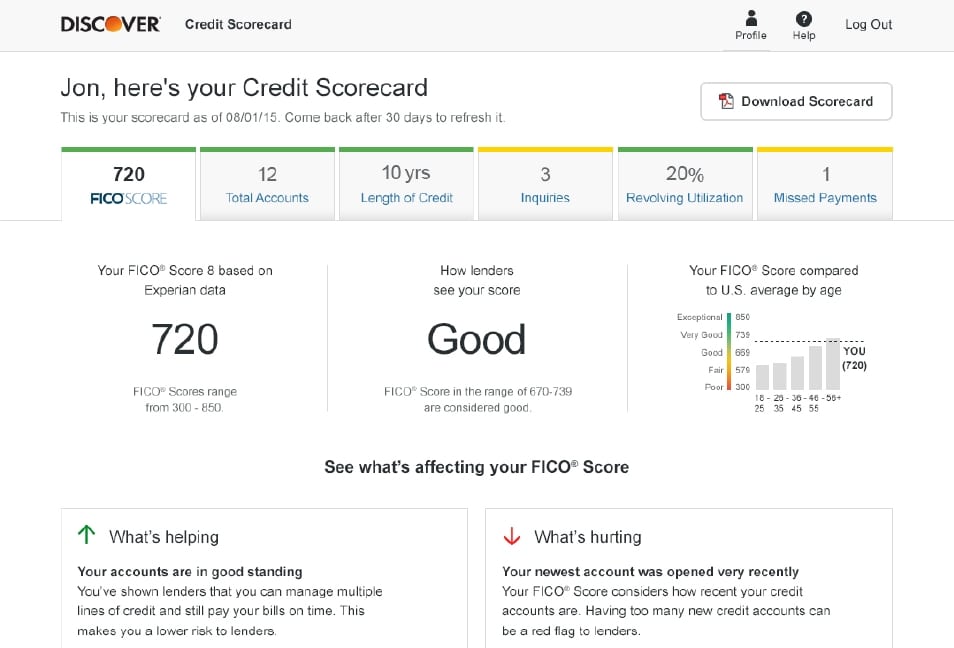
As you see your utilization rate remain low and your payments go through, you will experience a neurochemical reward. Dopamine, the motivation molecule, is released not just when you achieve a goal, but when you observe progress. To amplify this, create a "Visual Tracker"—not just for the score, but for your mood. Each week, rate your financial anxiety from 1 to 10. You will likely see that as the card works in the background, your anxiety lessens, even before the score improves. This dissociation between your emotional state and the number is the ultimate goal. The score will fluctuate; your nervous system does not have to.
Additionally, consider the "Buddy System" for accountability. Share your goal with a trusted friend, not to monitor you, but to celebrate small wins. "I paid my card on time for three months" is a monumental achievement on the psychological battlefield of bad credit. Verbalizing this victory solidifies it in your neural pathways. Finally, embrace the concept of "Forgiveness Loops." If you miss a payment, do not spiral. Say out loud, "I am human, I made a mistake, and I will fix it." Then, call your issuer immediately. The act of proactively seeking a solution—rather than hiding—is a powerful antidote to the shame that trapped you initially.
Frequently Asked Questions: The Emotional Roadmap
Is getting a Discover Secured Card a sign that I have "given up" on having good credit?
Absolutely not. From an emotional perspective, this question stems from a perfectionist mindset. We often view our financial journey as a linear path from "bad" to "good," and any intermediate step feels like a failure. However, a secured card is not a downgrade; it is a strategic retreat. Think of it as a physical therapist for your financial muscles. Just as you would use a lighter weight to recover from an injury before lifting heavy again, a secured card allows you to rebuild the fundamental habit of punctuality. It is a testament to your resilience, not your surrender.
Moreover, the psychological relief of having a working card that you can use without fear is immense. It restores a sense of autonomy. You are not "giving up" on good credit; you are actively building the foundation for it. The shame associated with secured cards is societal, not personal. When you can reframe this tool as an intelligent, low-risk laboratory for your behavior, you will feel a sense of empowerment. You are taking control of the pace of your recovery, which is the very definition of self-agency.
How do I stop the panic attacks when I open my banking app?
This is a classic conditioned response. Your brain has associated the app with a threat (a decline, a low balance). To rewire this, you must practice "Graded Exposure." Start by opening the app for only five seconds each day, just to look at the welcome screen, then close it. Do not look at the balance. After a week, increase it to ten seconds and look only at your recent transactions, not your score. This slow immersion reduces the amygdala's overreaction. Simultaneously, practice "Box Breathing" before opening the app: inhale for 4 seconds, hold for 4, exhale for 4, hold for 4. This activates your parasympathetic nervous system, signaling to your body that you are safe.
Another crucial technique is to separate your identity from the data. When you see a late payment or a high utilization, say to yourself: "This is a record of a past behavior, not a prediction of my future." You must also schedule "Financial Worry Time" into your day—15 minutes where you allow yourself to feel the anxiety fully. Outside of that window, if a worry arises, write it down and tell yourself, "I will address this during my worry session." This containment strategy prevents anxiety from colonizing your entire day, giving you breathing room to enjoy life without the constant hum of financial dread.
What if I still feel unworthy of credit even after getting approved?
This is a profound psychological hurdle known as "Imposter Syndrome" applied to finance. You may feel that the bank made a mistake or that you are "fooling" them. This feeling stems from a fixed mindset—believing that your current state is your permanent character. To combat this, you must practice "Cognitive Dissonance" intentionally. When you use your card responsibly, you are acting in a way that is contrary to your negative self-image. The discomfort you feel is the dissonance. To resolve it, your brain will eventually adjust your self-image to match your behavior.
To accelerate this, keep a "Victory Journal." Write down not just your payments, but the proactive choices you make. "I chose to cook at home instead of ordering takeout to keep my balance low." This is evidence of your worth. You are not a passive victim of your credit score; you are an active architect. It is also vital to practice self-compassion. Speak to yourself in the third person. Instead of "I am irresponsible," say, "She is building a new identity, and it takes time." This emotional distance allows for patience, which is the soil where true growth occurs.
I’m terrified of missing a payment due to forgetfulness. How do I manage that fear?
This fear is actually a healthy sign—it means you care. However, terror is unproductive. The operative word here is control. The fear comes from a feeling of lack of control over your own memory. The solution is externalizing that control. Set up not one, but three layers of reminders. First, a calendar alert five days before the due date. Second, a phone alarm on the due date. Third, and most importantly, call your bank and see if they can set the due date to align with your payday. This alignment reduces the cognitive friction of "where is the money coming from?" You are pre-solving a problem that hasn't happened yet.
Furthermore, understand that an automatic payment system is not a "crutch"; it is an intelligent life hack. By setting up autopay for at least the minimum amount, you are removing the failure point. The fear of forgetting is often more draining than the actual forgetting. Once you automate it, a huge cognitive load is lifted. Engage in a "Worst-Case Scenario" exercise: If you miss a payment, what actually happens? A fee and a late mark. That is not a death sentence; it is a blemish. By imagining the worst and realizing you can survive it, you take the sting out of the fear. Your resilience is a muscle, and this philosophical exercise will strengthen it.
My partner has good credit. I feel like a burden. How do we navigate this emotionally?
This is a delicate and powerful relational dynamic. The feeling of being a burden is rooted in a fear of rejection and a perceived power imbalance. It’s crucial to understand that your credit score is a data point about one period of your life; it is not a measure of your relational contribution. Open, vulnerability-based communication is the antidote. Say to your partner, "I feel shame about my score, and I feel like I'm holding us back. I'm working on it, but I need your patience." Often, partners are more concerned about secrecy than about the score itself. Your honesty is a form of emotional wealth.
To shift the dynamic, focus on your comparative advantage. If your partner handles the mortgage, perhaps you handle the grocery budgeting with your new secured card. This creates a sense of contribution, not dependence. Furthermore, you must reframe the timeline. A credit score is not built overnight. Ask your partner to join you in celebrating micro-milestones—not just the score, but the consistency of your behavior. This turns your recovery into a shared project, rather than a solitary struggle. When you share the journey, the burden lightens because it is held by two, not one. This is where true intimacy is forged—not in perfection, but in the shared vulnerability of rebuilding.
Mastering the landscape of bad credit is not about becoming a numbers wizard. It is about peeling back the layers of shame to reveal a core of self-trust. When you look at a secured card as a tool for mindfulness rather than a symbol of failure, you transform a mundane financial product into a vehicle for personal growth. Each on-time payment becomes a meditation on commitment. Each glance at your balance without panic becomes a victory over your own nervous system. This mastery does not just improve your credit; it improves your quality of presence. You walk into a room not carrying the invisible weight of financial guilt, but with the quiet confidence of someone who is actively steering their ship.
Ultimately, your credit score is a reflection of your past decisions, but it does not dictate your future potential. By choosing to engage with tools like a Discover Secured Card, you are making a powerful declaration: that you are not defined by your history, but by your resilience. The psychological freedom gained here—the ability to separate your worth from your wealth—is a life skill that transcends finance. It spills over into your relationships, your career, and your self-talk. You learn to treat yourself with the same grace you would offer a friend who stumbled. And in that grace, you find a more balanced, forgiving, and ultimately, a more human way to live.