Comcast Business Vs Verizon Fios
Let’s be honest: picking a business internet provider is about as exciting as watching paint dry—until your video call freezes mid-sentence or your cloud backup crawls to a halt. But here’s the thing: the choice between Comcast Business and Verizon Fios can genuinely make or break your workday, your sanity, and your bottom line. We’re not talking about casual Netflix binges here; we’re talking about the digital backbone of your livelihood.
The real purpose of these services is simple: keep you online, fast, and reliable—no matter if you run a five-person startup or a bustling law office. Both providers promise business-grade perks like static IPs, 24/7 support, and service-level agreements. But they go about it in wildly different ways, and that difference affects everything from your monthly bill to how you handle a sudden storm.
Think about common daily uses: uploading large design files to a client, hosting a Zoom board meeting, or syncing your entire team’s work to the cloud before lunch. A hiccup here isn’t just annoying—it’s lost revenue and lost trust. That’s why understanding the tech under the hood matters more than a shiny router.
Must Read
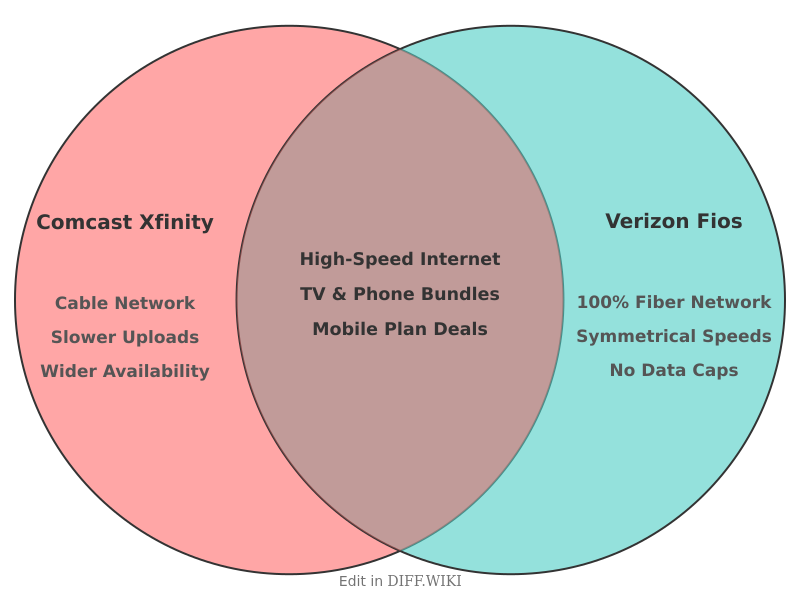
Here’s the big fork in the road: Comcast Business runs on cable (coaxial), while Verizon Fios runs on 100% fiber-optic lines. Fiber is the gold standard—it delivers symmetrical upload and download speeds, meaning your 500 Mbps upload is just as fast as your download. Cable, on the other hand, often gives you a fast download but a painfully slow upload, which kills you if you’re constantly sending big files or backing up to the cloud.
For most small businesses, upload speed is the silent killer. With Comcast, you might see 600 Mbps down but only 25 Mbps up—fine for browsing, terrible for video editing or sending a 2GB presentation. Verizon Fios often gives you equal speeds, like 300 up and 300 down, which feels like driving a sports car on both lanes of the highway. If your work involves any heavy collaboration, fiber isn’t a luxury; it’s a necessity.

But Comcast fights back with broader coverage. Fios is only available in select Northeast and Mid-Atlantic markets, while Comcast Business is practically everywhere. If you’re in a rural area or a state like Texas or Florida, you might not even have the choice—so know your ZIP code before you dream about fiber.
Pricing is another cage match. Comcast often lures you in with a low teaser rate, but that price balloons after 12 to 24 months, and you’ll need to negotiate hard to keep it down. Verizon Fios tends to offer more transparent, stable pricing for business plans, though it can be pricier upfront. Also, watch out for Comcast’s data caps—yes, even on business plans—while Fios typically offers unlimited data, which is a lifesaver for heavy users.

Reliability is where the rubber meets the road. Fiber is less susceptible to interference from weather or nearby electronics, so Fios usually boasts fewer outages and more consistent latency. Comcast has improved, but cable networks can slow down during peak evening hours when your neighbors stream 4K sports. If you run a business that can’t afford a 3 p.m. slowdown, fiber wins the trust test.
So, how do you enjoy (yes, enjoy) your choice more effectively? Start by testing your actual needs, not just the sales pitch. Run a speed test for a week, counting how many times you upload large files. If that number is high, lean Fios. Next, call both providers and ask for a “business retention quote” after getting the other’s price—they’ll often match or beat it. And always negotiate a contract with a no-rate-increase guarantee, so you’re not shocked next year.
Finally, don’t forget the extras: both offer free static IPs, but Fios often includes better router hardware and app-based management for free. Set up automatic billing and enable text alerts for outages, so you’re never blindsided. And if you travel, use a VPN to keep your business data safe, regardless of which provider you choose—reliability doesn’t equal security.
In the end, the winner isn’t about brand loyalty; it’s about matching the tech to your workflow. If you have Fios available and upload heavy files, run—don’t walk—to fiber. If you’re outside its footprint, Comcast can still work, but demand a higher upload tier and a written stability clause. The best internet isn’t the one with the biggest ads; it’s the one that makes you forget it exists because it just works. Choose with your bandwidth needs, not your ego, and you’ll never curse your connection again.