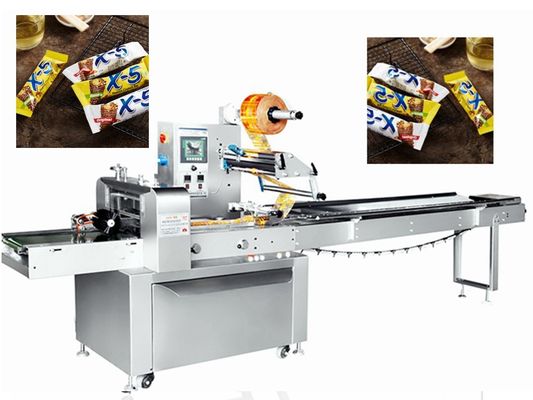
Chocolate Bar Foil Wrapping Machine

There is a quiet alchemy that happens between the moment a molten river of chocolate is tempered and the instant you hear that signature, satisfying snap of foil yielding to your fingertips. We obsess over bean origins, conching times, and percentage labels, yet we rarely pause to consider the unsung mechanical choreographer that drapes our indulgence in its gleaming armor: the chocolate bar foil wrapping machine. This isn't just a piece of industrial equipment; it is the final, crucial guardian of texture, aroma, and the sacred ritual of unwrapping that precedes every bite. From the humble milk chocolate squares of our childhood to the impossibly thin, 80% dark single-origin bars that cost as much as a small paperback, these machines stand as silent sentinels, ensuring that the first sensory experience—the visual shimmer and the tactile crinkle—is as perfect as the taste itself.
The history of this machine is intrinsically linked to the democratization of chocolate. In the late 19th century, chocolate was a luxury product, often sold in bulk or in cumbersome, unhygienic packaging. The invention of the foil-wrapping machine in the early 20th century—pioneered by companies like Otto Hänsel and later Sapal—allowed manufacturers to seal in freshness and create a standardized, portable product. It was this mechanization that enabled the chocolate bar to become a global phenomenon, a portable treat for soldiers in WWI and a staple of the American candy counter. Today, as we navigate a world of artisanal makers and high-speed production lines, the foil wrapper machine has evolved from a simple crimping device into a marvel of servo-driven precision, capable of wrapping hundreds of bars per minute with a gentleness that belies its industrial nature.
The Silent Choreography of Gloss and Crinkle
What we perceive as a simple "foil wrap" is actually a complex, multi-layered ballet of physics and material science. Most machines don't just use pure aluminum; they handle a laminate of foil and a thin tissue paper backing, a combination that provides barrier protection against light, oxygen, and moisture while preventing the foil from tearing on the sharp edges of the chocolate. The machine must navigate a paradox: apply enough pressure to create a tight, hermetic seal, yet remain so delicate that it doesn’t leave a fingerprint impression on the cacao butter beneath. High-end machines utilize ultrasonic cutting and vacuum suction to pick up the precut foil sheets, moving them at high velocity without ever actually touching the chocolate with human-like force. The result is a sleek, taut finish where the foil looks more like liquid mercury draped over the bar than a piece of metal foil.
Must Read
Psychologically, the foil-wrap experience is a masterclass in anticipation. The crinkle sound—measured at roughly 60 to 70 decibels—is a sonic cue that primes our salivary glands before the chocolate even reaches our lips. The ritual of peeling back the foil, rather than using a pre-opened cardboard tab, adds a layer of "effort" that increases the perceived value of the treat. Marketers know this; a bar that unwraps too easily feels cheap, while one that requires careful peeling feels more exclusive. The machine is programmed to create specific "tuck" patterns—candy cane twists, envelope folds, or brush-finished wraps—each designed to evoke a different tactile interaction. The classic "candy twist" at both ends, for instance, is an orphaned relic from a time before machine-sealed crimping, yet we still pay a premium for it because it whispers "traditional craft."
Behind the scenes, there is a dark, practical necessity to these machines that borders on obsessive-compulsive. A misaligned batch can create "foil stress" points, tiny fractures that allow oxygen to seep in, causing chocolate bloom—that unseemly greyish-white film that ruins the aesthetic. The machine, therefore, is fitted with a series of photoelectric sensors that perform an average of 10,000 micro-checks per minute, scanning for the tiniest crease or shift in the foil’s alignment. If the machine detects a bar that is even 0.5 millimeters thicker than standard, it will kick it off the line into a reject bin, destined for remelting. It is a ruthless gatekeeper, ensuring that only flawless, glossy specimens ever reach the retail shelf, preserving the illusion of perfection we expect from modern confectionery.
From Micro-Batch to Mega-Factory: The Practical Realities
For the small-batch craft chocolatier, the choice of a foil wrapping machine is often a story of conflict between art and efficiency. Take the example of a boutique maker in Oregon who produces only 200 bars a day. Purchasing a fully automated servo-driven wrapper costing upwards of $150,000 is financially impossible. Instead, they might invest in a semi-automatic, "tabletop" crimper that requires a human operator to place the bar onto a conveyor and manually align the foil sheet. While slower, this method allows for the use of bespoke paper foils with gilded edges and custom dye-cut shapes that the high-speed machines cannot manage. The human touch here is not a bug but a feature; the slight inconsistencies in the hand-assisted wrapping become signatures of authenticity, giving the product a hand-finished allure that industrial chocolate lacks.
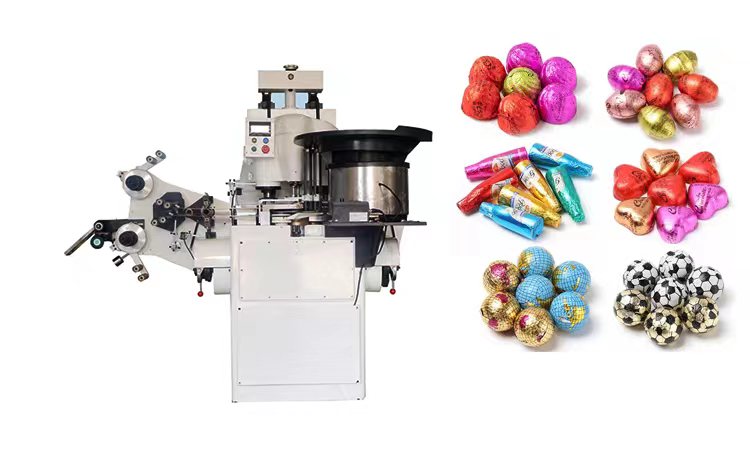
However, for giants like Cadbury or Ferrero, the foil wrapper is the unsung hero of cost-efficiency and shelf-life stability. A medium-format machine can wrap up to 500 bars per minute, operating 24/7. To achieve this, the machine uses a "double-tube" infeed system, where bars move through a cooling tunnel at a precise temperature and avalanche down into measuring buckets in a cascading flow that prevents clustering. The foil itself is fed from massive reels weighing half a ton, unwinding at speeds of 100 meters per minute. The company’s primary concern is "downtime"—every second the machine is idle due to a jam or a faulty seal costs roughly $3.00 in lost production. To mitigate this, modern wrappers employ "tool-less" changeovers, allowing operators to swap the forming heads in under 15 minutes, enabling a factory to wrap thin mint bars one hour and chunky nougat bars the next without sacrificing speed.
There is also the ecological wrinkle in this tale. Pure aluminum foil is infinitely recyclable, but the composite material (foil+tissue) is notoriously difficult to recycle because the two materials must be separated by a chemical process. This has forced a new wave of innovation in the wrapping machine market. We are now seeing machines equipped with UV-curable printing systems that apply grease-resistant coatings directly onto the foil, eliminating the need for the tissue layer entirely. Others are experimenting with "foil-free" solutions—thin metallized films that look like foil but are plastic-based, allowing for single-material recyclability. The modern machine, therefore, is no longer just a wrapper; it is a recycling strategist, with software that calculates the exact cut dimensions to minimize waste scraps, which are then automatically vacuumed and compacted into briquettes for smelting. For the consumer, this means we can enjoy the luxury of the crinkle without the crushing guilt of landfill contribution.
For the home baker or the occasional foodie looking to wrap their own homemade gifts, the concept of these machines translates into hybrid solutions. Desktop models have emerged in the last decade, priced under $2,000, that automate the trickiest part—the tucking of the side flaps. They are essentially small "sleeve wrappers" that help you wrap a bar in rigid cardstock before you manually twist the foil ends with a hair dryer. The actionable takeaway is simple: don't underestimate the power of tight packaging. If you dry-cure your chocolate at home, a vacuum sealer or a simple hand-crimper from a craft store will mimic the machine's function, preventing the dreaded sugar bloom. The lesson from the industrial floor is that tension is everything—too loose and the cocoa butter separates; too tight and you shatter the tempered snap.
The Curious Art of the Foil Wrap: Five Burning Questions
1. Why do some foils have a paper lining while others are pure metal?
This is primarily a function of the chocolate's fat content and the ambient humidity of the region where it’s sold. Pure aluminum foil is incredibly thin—often just 9 to 12 microns thick—and is prone to pinholes and tearing, especially when wrapping a thick bar with sharp ridges. The paper lining (usually a thin sulfate paper) acts as a structural skeleton, providing tensile strength to prevent tearing during high-speed folding. Furthermore, the paper layer acts as a buffer against condensation; when you take a cold chocolate bar from the fridge, moisture can condense on the aluminum, potentially seeping into the chocolate and causing texture degradation. The paper absorbs that moisture, protecting the cacao butter crystal structure. Conversely, pure foil wraps are often used in controlled-climate, premium chocolate shops where the turnover is fast and the bars are kept at a constant 18°C (65°F), eliminating the need for that extra buffer.
There is also a perceptual component. The purely foil-wrapped bar, like a classic Toblerone, feels more "metallic" and premium, evoking a sense of treasure. The foil-on-paper composite, on the other hand, feels more papery and tactilely warm, which is why it is often used for children's chocolates to avoid the sharp edges of aluminum cutting small hands. From a machine perspective, the paper-covered foil is also "wetter" in terms of friction, meaning the folding jaws require less lubrication and have a slower wear rate, extending the lifetime of the tooling parts. So, the next time you unwrap a bar, check the back of the foil—if it's a flimsy pure metal, you’re likely in a low-humidity environment or a specialty store; if it has a paper backing, you are in the land of mass-market practicality.
2. How does a machine avoid melting the chocolate with the heat of the foil sealing jaws?
This is a masterclass in micro-engineering. The sealing jaws, which press the foil together, operate at temperatures between 120°C and 180°C to activate the heat-seal glue on the foil’s interior coating. If those jaws were to remain in contact with the chocolate for even half a second too long, the heat would conduct through the 10-micron foil and cause the outer surface of the chocolate to melt into a sticky mess. To prevent this, the machines use a process known as "dwell time isolation." The jaw is pressed against a cold "catch" plate, which is chilled to -5°C via a glycol circulation system. The heat is applied only to the specific edge strip of the foil (about 2mm wide), while the majority of the jaw surface is cooling. Additionally, the closing speed of the machine is incredibly fast—the entire crimp cycle occurs in under 100 milliseconds, giving the heat no time to travel. High-end wrappers even use pulsed induction heating, where a burst of electromagnetic energy melts a specific adhesive strip without ever raising the jaw temperature itself.
Furthermore, the machine is designed with "touchless" forming. The chocolate bar is held in a rigid stainless-steel pocket during the wrapping process, with the foil being formed around the bar via a series of air jets and mechanical folders that push the foil into shape without direct compression against the bar's face. The pressure is applied to the flanges and edges, not the flat surface. The final clamp, which creates the side-crimp, is cooled by ambient airflow or a forced vortex cooler. This meticulous thermal management ensures that the tempered cocoa butter retains its crystalline structure—the "Beta V" crystals that give chocolate its gloss and snap—so that the finished bar has that perfect, hard "thwack" when broken, undisrupted by the wrapper's machinery.
3. Can one machine wrap different sized bars, or do you need a separate machine for each shape?
Modern "flexible" wrapping machines are akin to Swiss Army knives—they are modular and highly adjustable, but they do require specific forming toolkits. The machine has an adjustable infeed rail system that can be widened or narrowed to handle bars from tiny 20-gram bites to massive 500-gram slabs. However, the star wheels—the rotating devices that index the foil under the bar—must be swapped out to accommodate different bar widths and thicknesses. This is where the "tool-less" changeover system shines: a single operator can replace the forming jaws, foil spool guides, and pusher block in 15–20 minutes. The machine's software then recalibrates the servo timings, adjusting the dwell time and foil tension based on the new bar's weight and viscosity profile (a thicker bar needs more time to be pushed out of the forming pocket).

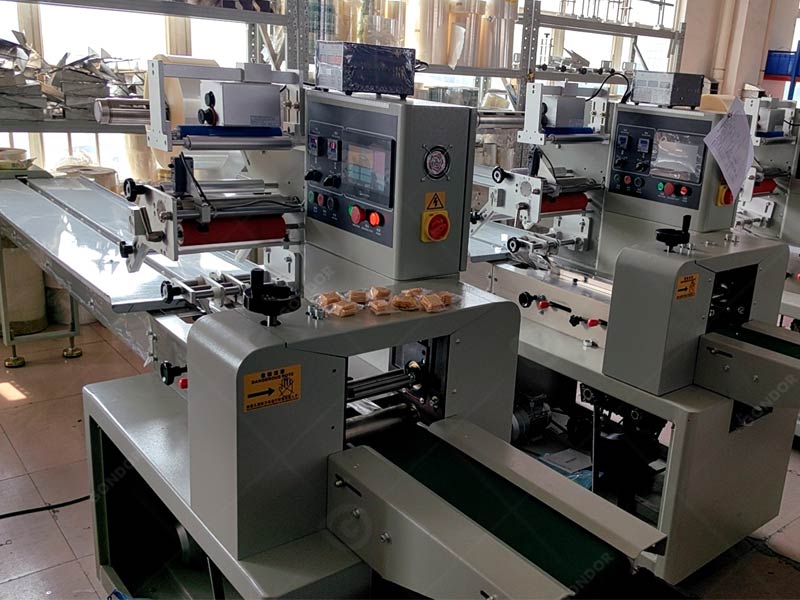
It is a common misconception that you need a different machine for a "flat" bar versus a "chunky" bar. The truth is that the universal machines use a "pocket" system—a cavity shaped exactly like the chocolate bar. Once the bar is dropped into the pre-formed foil pocket (which is re-formed by the machine for each batch), the machine simply folds the edges over from the top. The only real limitations are the wrap style. For example, a "twist wrapper" (like a caramel candy) requires a rotating head that physically twists the foil ends, while a "fin seal wrapper" (like a flat Cadbury bar) uses a simple crimping jaw. You cannot adapt a machine to do both without significant mechanical replacement of the cross-sealing unit. So, while a professional wrapper can handle any size, it cannot handle any style of wrap without a more significant overhaul.
4. Why is the foil wrapper machine so crucial for organic or "bean-to-bar" chocolates?
In the world of premium chocolate, there is a concept known as "temper loss." Bean-to-bar chocolatiers spend hours carefully crystallizing their chocolate to achieve the perfect gloss and snap. Once that tempered chocolate sets, it is extremely sensitive to environmental oxidation. Organic chocolate often uses fewer preservatives (by law, artificial antioxidants like TBHQ are not allowed), meaning it relies entirely on the physical barrier of the foil to sustain freshness. If a standard wrapper uses compromised foil with micro-perforations, the organic bar will develop a stale, flat taste within 30 days, a catastrophic failure for a product that may sit on a store shelf for several months.
Furthermore, these bars are often sold with a high price point justified by the provenance of the cacao. The foil wrap is the only part of the product that touches the chocolate—the cardboard sleeve is external. Therefore, the wrapping film's surface tension and purity are non-negotiable. The machine must handle food-grade, BPA-NI (non-intent) coated foils without introducing any oil-based lubricants from the drive chains onto the product contact surfaces. This requires the use of "clean-room grade" vertical wrapping systems with stainless-steel enclosures and air-filtration systems that remove any dust or metal shavings that could scratch the foil. The meticulous precision of the wrapping machine allows these small-batch producers to guarantee a pristine, untainted flavor profile, which is the core value proposition of the organic market.
5. How has the machine evolved with the rise of "wrapperless" and sustainable packaging trends?
The industry is undergoing a drastic pivot. While foil was the hero for a century, the surge in ESG (Environmental, Social, and Governance) investing has forced chocolate companies to rethink their packaging. The current revolution involves wrapping machines adapted to handle "mono-material" films—polypropylene-based films that look like foil but can be chemically recycled back into plastic pellets. These films are, however, less flexible and have different thermal properties, requiring changes to the tension controls of the machine to avoid billowing or crimping. Furthermore, there is a growing trend of "paper-based" flow wrapping, where a paper film with a high grease resistance (due to a clay coating) is used to wrap the chocolate completely, eliminating the need for an outer carton.

Some pioneering machines now use "cold-seal" technology, where the adhesive is applied as a series of micro-dots on the inside of the film, which bond to themselves under pressure without any heat at all. This reduces energy consumption by 60% and eliminates the risk of any thermal shock to the chocolate. However, the biggest shift is the pressure to remove the foil completely and go "naked"—using a vegetarian-based waxed coating directly on the chocolate that dissolves on the tongue. However, such bars are not stable in retail environments and are susceptible to heat damage, so the wrapping machine has now shifted to a "multi-pack" format, wrapping 10 naked bars as a single unit in a recyclable sleeve. The new generation of machines is less about wrapping the individual bar and more about creating a resilient, protective envelope that keeps the group pristine, signifying a profound shift in how we view the lifecycle of a chocolate purchase.
Looking at these machines, one sees a mirror of our own relationship with gratification. We are creatures who crave the delay of reward—the slow peel of the foil prolongs the anticipation, making the chocolate taste sweeter. The wrapping machine, in its cold, metallic efficiency, is actually a facilitator of romanticism; it ensures that the moment of revealing the glossy brown slab is free of the anxiety of sticky mess or broken pieces. It provides the illusion of effortlessness, the smooth transition from sealed package to delicious reward.
On a deeper, human level, the foil wrapper machine is a testament to our desire for order and preservation. We fight against time, which rots and stales everything, and we use these machines as temporal shields. Every perfectly folded edge represents a pact against entropy. When we unwrap a bar and hear that rustle, we are hearing a thousand tiny mechanical victories over the elements. It is a reminder that even our most pleasurable, seemingly "simple" treats are built upon frameworks of immense, quiet engineering.
So, the next time you hold a chocolate bar in your hand, spare a thought for the unromantic, oil-dripping, sensor-laden machine that brought it to you. It is not just a wrapper; it is a guardian of memory, a keeper of texture, and a silent collaborator in a ritual of comfort that spans generations. The foil is the glove, the machine is the hand, and together they deliver the soul of the cacao—in the only form we truly trust to be perfect.